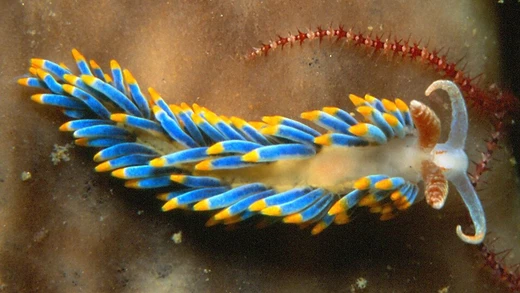
Dendronotus niveus
A dendronotid nudibranch with snowy white coloration and variable diet.

Dendronotus niveus is a shell-less marine gastropod mollusc, specifically a dendronotid nudibranch, belonging to the family Dendronotidae. Its name comes from the Latin *niveus*, meaning snowy white, reflecting its most common colour form.
This species was first described from a single specimen collected at a depth of 17 metres in the Velikaya Salma Strait, Kandalaksha Bay, in the White Sea, Russia. Later studies included many more specimens from both the White Sea and the Barents Sea, found at depths down to 156 metres.
The body of *Dendronotus niveus* can be translucent white, pinkish, or beige, making it similar to *Dendronotus dalli* and white colour morphs of *Dendronotus frondosus*, with which it has historically been confused. Its dorsal appendages and rhinophore sheaths have opaque white pigment at their tips, though this may disappear in adults. The species is set apart from other *Dendronotus* by the branching pattern of its cerata (dorsal appendages), the smooth median tooth of the adult radula, and genetic differences.
Its colour can change with diet. Individuals feeding on the hydroid *Diphasia fallax* were pink, but after feeding on *Hydrallmania falcata* and *Sertularia mirabilis* in a laboratory setting, they turned milky white.
Quick Facts
- Taxon
- Dendronotus niveus
Facts from the source article.
Lore & Background
Dendronotus niveus was described from a specimen collected at 17 m depth at Velikaya Salma Strait, Kandalaksha Bay, White Sea, Russia. Numerous specimens from the White Sea and the Barents Sea to a maximum depth of 156 m are included in the material described. The species is named from the Latin niveus, meaning snowy white, which refers to the most common colour pattern of this species.
Dendronotus niveus has a translucent white, pinkish or beige body which is similar to Dendronotus dalli and white morphs of Dendronotus frondosus with which it has been confused in the past. It has opaque white pigment within the tips of the dorsal appendages and rhinophore sheaths which may disappear in adults. It is distinguished from other Dendronotus species by the branching of the dorsal appendages (cerata), the smooth median tooth of the radula in adults and molecular characters.
Diet influences coloration: Dendronotus niveus feeding on Diphasia fallax were pink in colour but after feeding on Hydrallmania falcata and Sertularia mirabilis in the laboratory became milky white.
Reader's Guide
Dendronotus niveus is significant as a species that was historically confused with Dendronotus dalli and white morphs of Dendronotus frondosus, highlighting the challenges of identifying dendronotid nudibranchs based solely on external appearance. Its description from the White Sea and Barents Sea provides a clear distribution record for this shell-less marine gastropod. The species' etymology, derived from the Latin for snowy white, reflects its most common colour pattern, though the body can also be pinkish or beige. Notably, its diet directly affects its coloration: specimens feeding on Diphasia fallax appear pink, while those consuming Hydrallmania falcata or Sertularia mirabilis become milky white. This dietary influence on pigmentation is a key biological detail. The species is distinguished from congeners by the branching of its dorsal appendages, the smooth median tooth of the radula in adults, and molecular characters, underscoring the importance of multiple diagnostic traits in taxonomy. Its legacy lies in clarifying the diversity of Dendronotus in northern seas and demonstrating how diet can alter external appearance in nudibranchs.
Did You Know?
- The species name niveus is Latin for snowy white, referring to its most common colour pattern.
- Specimens feeding on Diphasia fallax were pink, but after feeding on Hydrallmania falcata or Sertularia mirabilis became milky white.
Frequently Asked Questions
What is Dendronotus niveus?
Dendronotus niveus is a shell-less marine gastropod that belongs to the dendronotid nudibranch group within the family Dendronotidae. It is most easily recognized by its translucent white or pinkish body coloration.
Where can Dendronotus niveus be found?
This species is known from the White Sea and the Barents Sea, where it has been recorded at depths ranging from the shallow zone down to 156 metres.
What does Dendronotus niveus eat?
Its documented prey consists of several hydroid species, specifically Diphasia fallax, Hydrallmania falcata, and Sertularia mirabilis.
What does the name Dendronotus niveus mean?
The specific epithet niveus is drawn from the Latin word for 'snowy white,' a direct reference to the pale coloration that is the most commonly observed form of this nudibranch.
Where was Dendronotus niveus first described?
The species was originally described from a single specimen gathered at 17 metres depth in the Velikaya Salma Strait, Kandalaksha Bay, in Russia's White Sea.
More in Nudibranchs and Sea Slugs, Part 2 1-24
Spotted an error? Know more?
Reader corrections go straight into our review queue. Suggest an edit · How this site is sourced