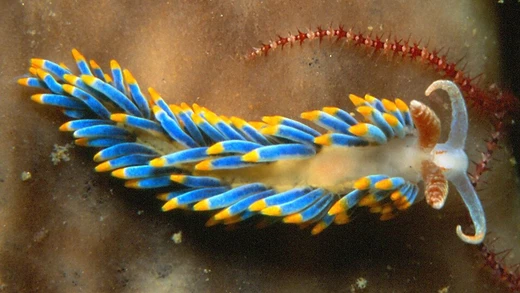
Kankelibranchus incognitus
A striking orange nudibranch from Cuba with branched processes.

Kankelibranchus incognitus is a shell-less marine gastropod mollusk, specifically a nudibranch, belonging to the family Polyceridae. This sea slug was first described from Cuba.
Living individuals display a vivid orange body covered with small black dots, which sometimes cluster into patches just in front of the gills. All elevated structures—including the gills, papillae, and other projections—are pale yellow. The oral veil bears long, branched processes along with simple papillae. Along the flanks and beneath the mantle rim, there are additional branched processes and buds of varying sizes; the largest of these can reach the height of the gills. These branched structures continue onto the tail and the sides of the body. The rhinophores are orange, with a rugged-looking stem and lamellae, and feature a prominent apical mucron; a 7 mm animal has up to 12 lamellae. The eyes are positioned well behind the rhinophores. The gills consist of five unipinnate leaves, all pale yellow, with the anus located behind them. The genital opening is on the right side, at about the anterior third of the body. The front edge of the foot is bilabiate with rounded corners, and the sole of the foot is yellowish with a tiny black dot.
Quick Facts
- Genus
- Kankelibranchus
- Species
- incognitus
Facts from the source article.
Lore & Background
Kankelibranchus incognitus was described from Cuba. The living animals are of a striking orange colour with small black dots all over the body, sometimes grouped in small patches in front of the gills. The gills, papillae and all elevated structures of the body are pale yellow. There are long branched processes on the oral veil, in addition to simple papilla. On the flanks and below the rim of the mantle there are also branched processes and buds of unequal sizes, with the largest reaching the height of the gills; these branched processes continue on the tail and on the sides of the body.
The rhinophores are orange, with the stem and the lamellae of rugged aspect and an apical mucron very apparent, with up to 12 lamellae in the 7 mm animal. Eyes are located well behind the rhinophores. The gills are formed by five unipinnate leaves of a pale yellow colour; the anus is situated posterior to the gill. The genital opening is on the right side, to the height of the anterior third of the body. The anterior edge of the foot is bilabiate, with the angles rounded. The sole of the foot is yellowish, with a tiny black dot.
Reader's Guide
Kankelibranchus incognitus is a species of sea slug in the family Polyceridae, described from Cuba. Its significance lies in its distinctive morphology: a striking orange body with small black dots, pale yellow gills and papillae, and numerous branched processes on the oral veil, flanks, mantle rim, tail, and sides of the body. The rhinophores are orange with a rugged aspect and an apical mucron, and the eyes are positioned well behind them. The gills consist of five unipinnate pale yellow leaves, with the anus posterior to them. The genital opening is on the right side at the anterior third of the body. The foot has a bilabiate anterior edge with rounded angles, and the sole is yellowish with a tiny black dot. These anatomical details, including the presence of both branched and simple papillae and the specific coloration, contribute to the species' identification and its place within the Polyceridae. The species is known only from the original description from Cuba, with no further distribution or ecological data provided in the source.
More in Nudibranchs and Sea Slugs, Part 2 1-24
Spotted an error? Know more?
Reader corrections go straight into our review queue. Suggest an edit · How this site is sourced