Kammerlader
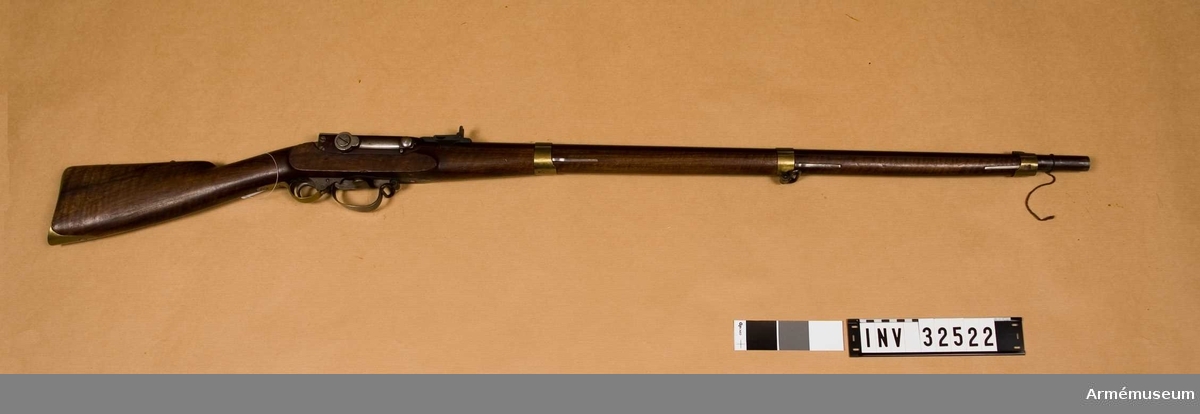
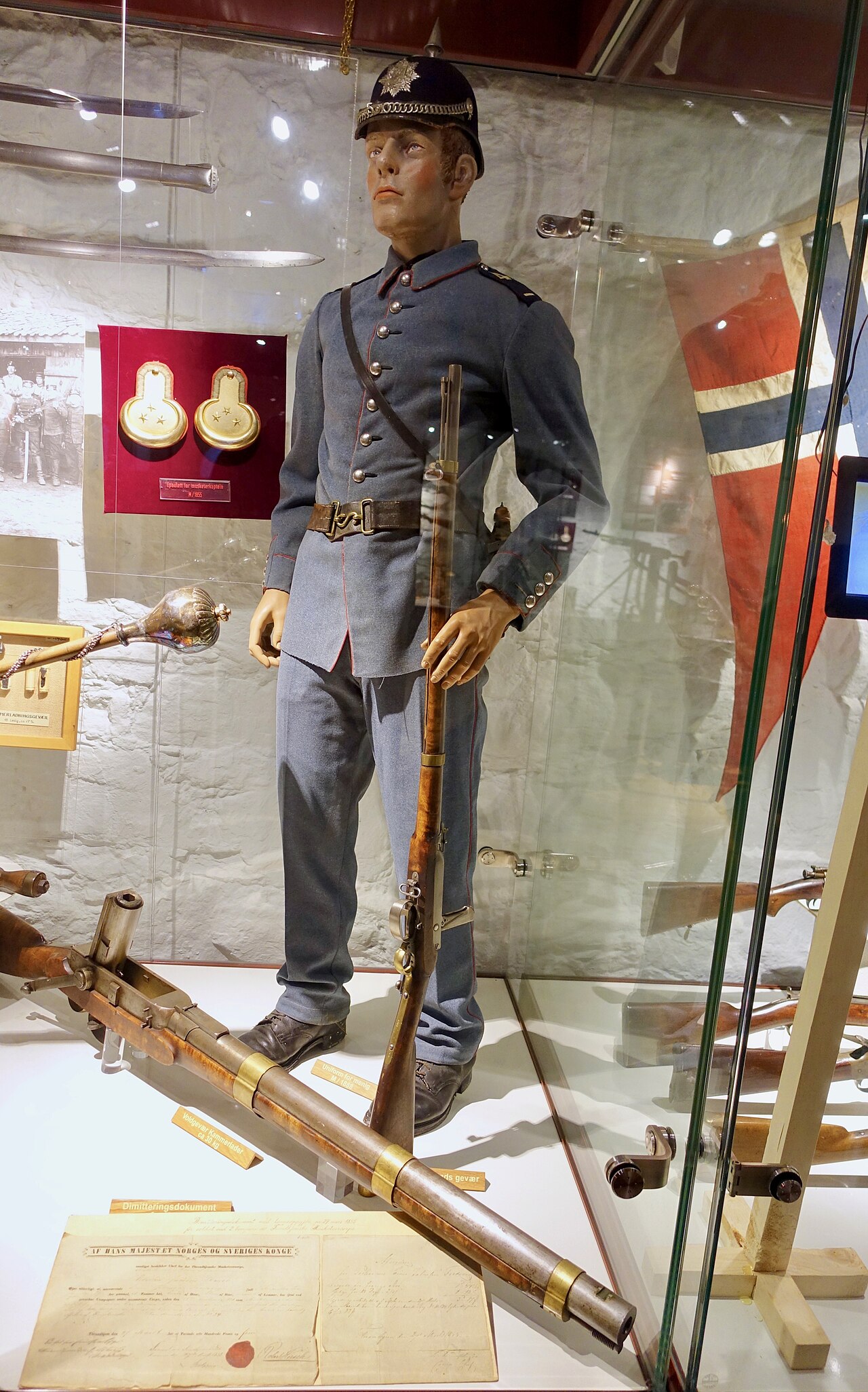
First Norwegian breech-loading rifle, adopted 1842.

Wolfmann · CC BY-SA 4.0
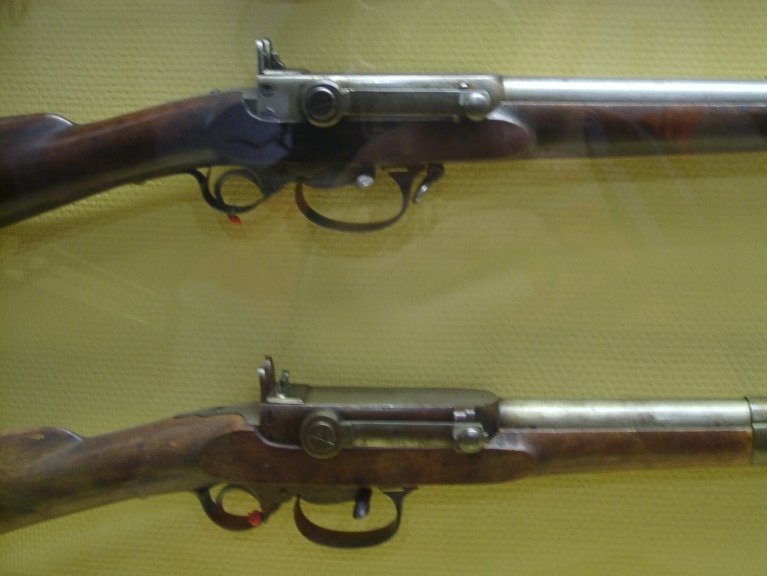
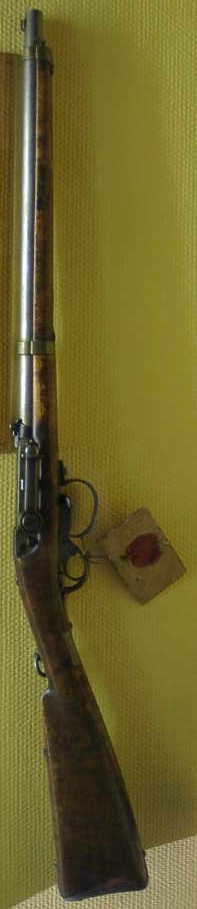
The Kammerlader, meaning "chamber loader," was Norway's first breech-loading rifle and one of the earliest such firearms officially adopted by any military force globally. This single-shot, black-powder weapon used a crank on the side of its receiver to open and close the breech, which made loading far faster and simpler than with older muzzle-loaders. It earned a strong reputation for both speed and accuracy, and would have been especially lethal against tightly packed infantry formations.
Introduced in 1842, roughly 40,000 Kammerladers were produced across more than 80 different models until around 1870. Although earlier flintlock breech-loaders like the Ferguson had appeared decades before, Norway was among the first European nations to widely issue breech-loading rifles to its entire army and navy. Most models underwent some form of modification during their service life.
The Kammerlader was phased out as more modern rifles were adopted. Surplus weapons were either converted to use rimfire cartridges, sold to civilians, or scrapped. Civilian versions were often turned into shotguns or hunting rifles. Unmodified examples are now rare and highly sought after by collectors, commanding high prices.
**Development**
In the early 1800s, the Norwegian Army concluded that warfare was shifting away from massed volley fire toward smaller, independent units. This insight came from studying the American Revolutionary War, the Napoleonic Wars, the 1814 Swedish campaign against Norway, and the Gunboat War, where small, agile gunboats outmaneuvered larger ships. A breech-loading rifle was deemed necessary—more accurate than smoothbore muskets, yet faster to load than the rifles issued to Jeger and Skijeger units. A special committee began evaluating firearm actions in 1837.
- have a smaller caliber than the standard musket; - use reliable caplock ignition (replacing flintlocks); - load faster than a musket, requiring breech-loading; - and be more accurate than smoothbore muskets.
The result was approved on 18 May 1842. The chosen caliber was 18 *lødig* (gauge), meaning 18 round bullets could be made from one Norwegian pound of lead—equivalent to 17.5 mm. From 1842 until the Remington M1867 was approved in 1867, over 40,000 Kammerladers in more than 80 models were built.
Quick Facts
- Origin
- Sweden–Norway
- Service
- 1842–1870
- Used By
- Norway / Sweden
- Design Date
- 1842
- Number
- More than 40,000
- Spec Label
- M1849/55
- Mass
- 5 kg
- Length
- 126 cm
- Part Length
- 78 cm
- Cartridge
- Original: / Minié ball in paper cartridge · Lund conversion: 12.17×44mm RF
- Caliber
- Minié ball: 8 mm · Lund: 12.7 mm
- Rate
- 6–8 rounds/m
Facts from the source article.
Lore & Background
In the early 19th century, the Norwegian Army observed changes in warfare from massed volleys to smaller, independent units, drawing lessons from the American Revolutionary War, the Napoleonic Wars, the 1814 Swedish campaign against Norway, and the Gunboat War. A special committee began considering firearm actions in 1837, seeking a reduced caliber, reliable caplock ignition, quicker loading via breech loading, and improved accuracy over smoothbore muskets. The result was a modern breech-loading rifle approved on 18 May 1842, with a caliber of 17.5 mm.
From 1842 until the Remington M1867 was approved in 1867, more than 40,000 kammerladers in over 80 different models were manufactured. In 1860 the caliber was reduced to about 11.77 mm. During a military sharpshooting competition in Belgium in 1861, the Kammerlader was proven among the most accurate military long arms in Europe, accurate to about 1 km. The rifles were phased out as more modern rifles were approved, and were either modified for rimfire cartridges, sold to civilians, or scrapped.
Reader's Guide
The Kammerlader represents a significant step in military firearm development, being among the first fully successful military breechloaders. Its crank-operated mechanism and use of paper cartridges allowed a higher rate of fire than muzzle-loading muskets—roughly four rounds a minute—though slower than the contemporary German needle gun. The rifle's accuracy, demonstrated at a Belgian competition in 1861, was notable for its time. Norway was among the first European countries to introduce breech loaders on a large scale throughout its army and navy. The kammerlader's legacy includes its influence on later conversions: after 1867, some were modified to use rimfire cartridges via the Landmark or Lund designs, or by replacing the receiver with a Remington action. Today, unmodified examples are rare and sought after by collectors.
Did You Know?
- The Kammerlader was among the first breech loaders adopted for use by an armed force anywhere in the world.
- The caliber was reduced from 17.5 mm to about 11.77 mm in 1860.
- After 1867, some kammerladers were converted to rimfire using the Landmark or Lund designs, or by fitting a Remington action.
Strategic Vision and Standardization
In the early nineteenth century, Norwegian military planners drew lessons from a wide range of conflicts—the American Revolution, the Napoleonic campaigns, the brief 1814 Swedish incursion, and the Gunboat War in which small, agile vessels outmaneuvered larger warships. From these observations the Army concluded that future battles would favor smaller, independently firing units rather than massed volley-firing ranks. A special committee was convened in 1837 to identify a weapon meeting four clear requirements: a smaller caliber than the existing smoothbore muskets, reliable caplock ignition replacing the older flintlock, a breech-loading mechanism to speed up reloading, and superior accuracy. On 18 May 1842 the committee's work culminated in the official adoption of the kammerlader, chambered at 18 lødig, roughly 17.5 millimeters. By 1860 the bore was further reduced to about 11.77 millimeters, reflecting continued refinement. Over the next two and a half decades, more than forty thousand rifles in over eighty distinct model variants rolled off Norwegian production lines, making the country one of the first European states to equip its army and navy with breech-loading firearms on a large scale.
The Crank Mechanism and Loading Sequence
The defining feature of the kammerlader was a crank mounted on the side of the receiver. Rotating this crank swung the breech open, exposing the chamber for loading; rotating it forward locked the breech securely in place for firing. Achieving a reliable gas-tight seal with the metallurgy available in the 1840s was a significant engineering challenge, and the kammerlader is often credited as the first fully successful military breechloader—the slightly earlier German needle gun, by contrast, leaked noticeable gas pressure around its breech. The weapon was designed around paper cartridges, which held a pre-measured charge of black powder and a lead bullet wrapped in paper, streamlining the loading process. A typical sequence ran: cock the hammer, rotate the crank to open the breech, seat a percussion cap on the nipple, pour the powder charge and use the paper as wadding, place the bullet in the chamber, then rotate the crank forward to lock. While a trained shooter could manage more than the roughly four rounds per minute of a muzzle-loading musket, the kammerlader's multi-step procedure kept it below the ten-to-twelve rounds per minute achievable with the needle gun.
Proving Accuracy on the European Stage
The kammerlader earned a formidable reputation for both speed and precision during its service years. Its single-shot black-powder design, combined with the reduced caliber and conical bullet adopted in 1855, made it a genuinely lethal threat against massed infantry formations. The weapon's accuracy received a high-profile validation in 1861, when Norwegian marksmen competed in a military sharpshooting event held in Belgium. There the kammerlader demonstrated consistent hits at ranges approaching one kilometer, a figure that placed it among the most accurate military long arms in all of Europe at the time—an achievement that remains impressive even by modern standards. Throughout its service life, the rifle underwent numerous refinements. Early models featured a fixed rear sight behind the receiver, which was later replaced by a hinged flip-over adjustable sight, and eventually by a tangent-style ski hill sight functionally similar to iron sights on contemporary firearms. In 1860 the bore was reduced to approximately 11.77 millimeters to improve ballistics. Production continued in more than eighty model variants until the Remington M1867 was adopted in 1867, by which point over forty thousand kammerladers had been built.
Retirement, Reuse, and the Collector's Market
As newer, faster-loading rifles entered Norwegian service beginning with the Remington M1867, the kammerlader was gradually withdrawn from military use. The fate of the retired rifles varied: some were re-bored to 12.17 millimeters and converted to accept rimfire cartridges, extending their operational life for a time. Others were sold to civilians, where many were reworked into shotguns or hunting firearms. A significant number were simply melted down for scrap metal. Because of these widespread modifications, finding an unaltered kammerlader in its original configuration has become increasingly difficult. The rifle's historical significance—as Norway's first breech-loading military rifle and one of the earliest adopted by any armed force on a large scale—has made surviving examples highly sought after by collectors. Original, unmodified specimens command premium prices in the firearms collecting world, a testament to the weapon's place in the broader story of nineteenth-century military technology. The kammerlader's legacy endures not only in museum collections but also in the design philosophy it helped establish: that a single soldier's rate of fire and accuracy could be a decisive tactical factor.
Gallery

Frequently Asked Questions
What exactly is a Kammerlader?
The Kammerlader, whose name translates to 'chamber loader,' was Norway's first breech-loading rifle. It was a single-shot, black-powder firearm that represented a major leap forward in Norwegian military small-arms design when it entered service in 1842.
How did the Kammerlader's loading mechanism work?
Instead of stuffing powder and ball down the barrel like a muzzle-loader, the shooter turned a small crank mounted on the side of the receiver to swing the breech open, load a cartridge, and then close it again. This crank-operated action made reloading noticeably quicker and less cumbersome in the field.
Why is the Kammerlader considered historically important?
It was one of the very first breech-loading rifles ever officially adopted by a standing army anywhere in the world, giving Norway a notable edge in infantry firepower during the early 1840s. Its combination of speed and accuracy made it especially dangerous against densely packed enemy formations.
How many Kammerladers were produced and over what period?
Roughly 40,000 examples were manufactured across more than 80 distinct model variants. Production ran from the 1842 introduction until approximately 1870, after which newer designs superseded the design.
What caliber did the Kammerlader fire, and did it change over time?
The original 1842 models used a 17.5 mm (18 lødig) bore. Starting in 1860 the caliber was standardized down to 11.77 mm, a measure equivalent to four Swedish Linjer, for the later variants.
More in Norwegian inventions 1-24
Spotted an error? Know more?
Reader corrections go straight into our review queue. Suggest an edit · How this site is sourced