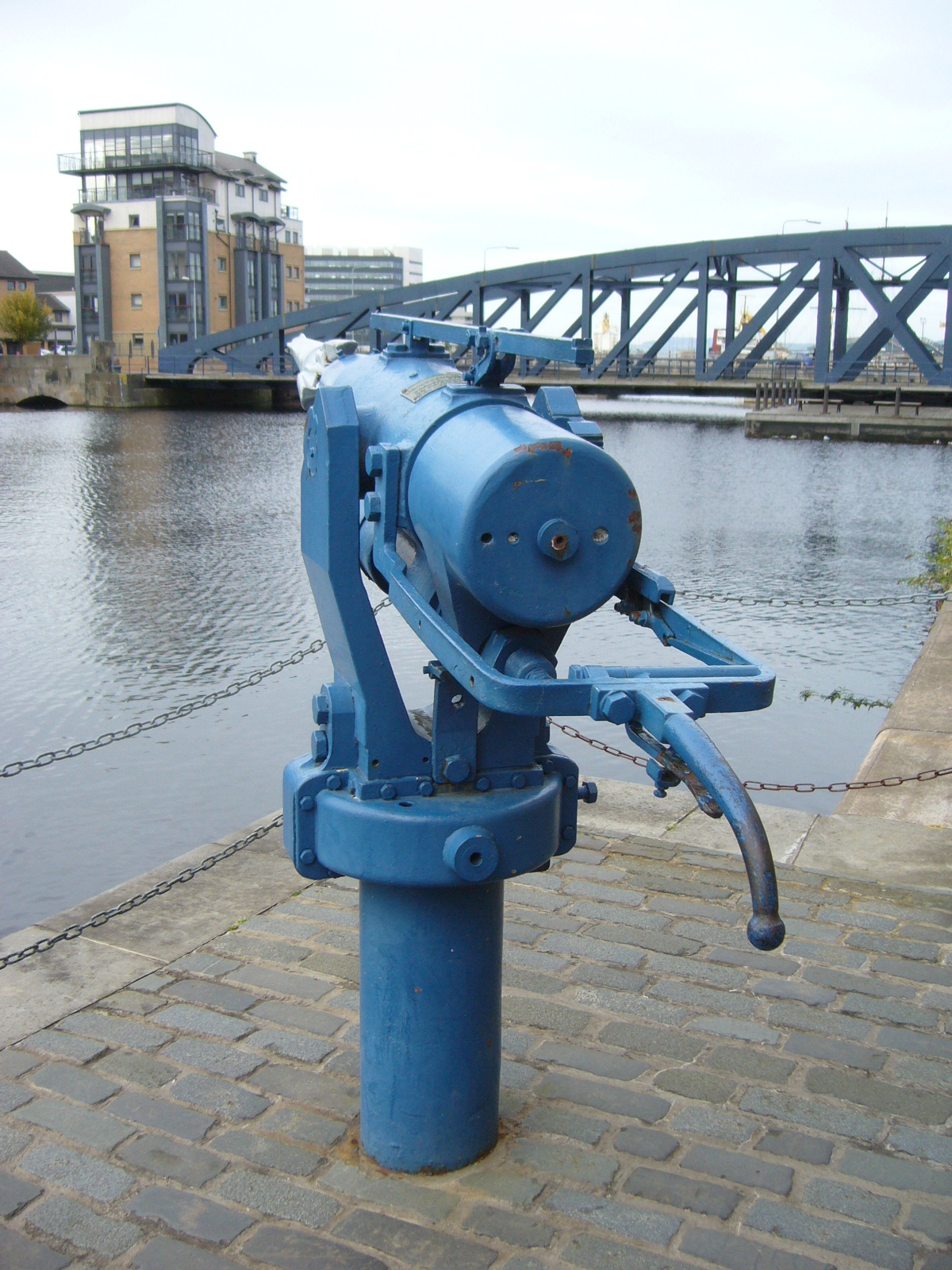
Harpoon cannon
A cannon-fired harpoon for efficient whaling.

Kim Traynor · CC BY-SA 3.0
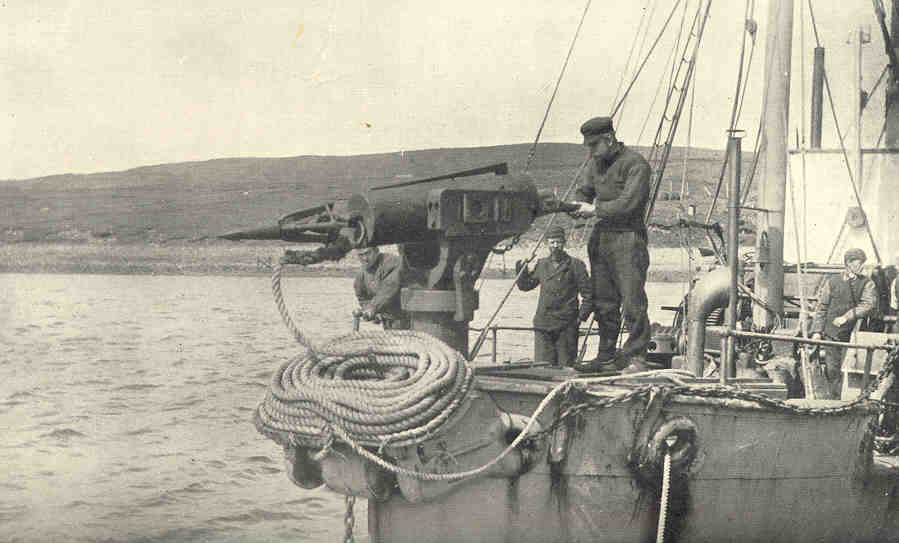
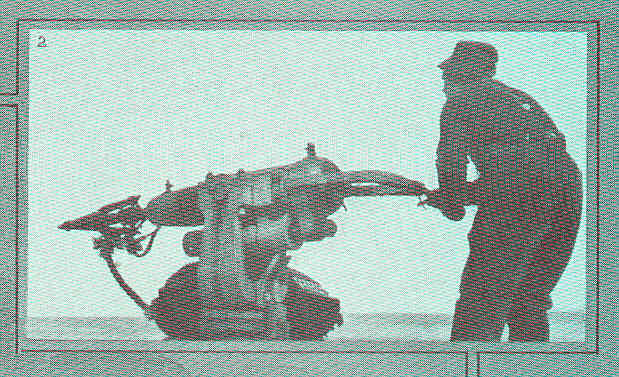
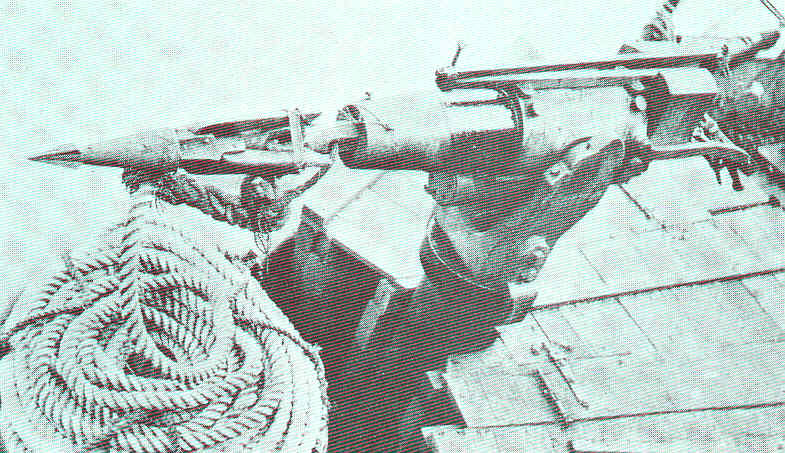
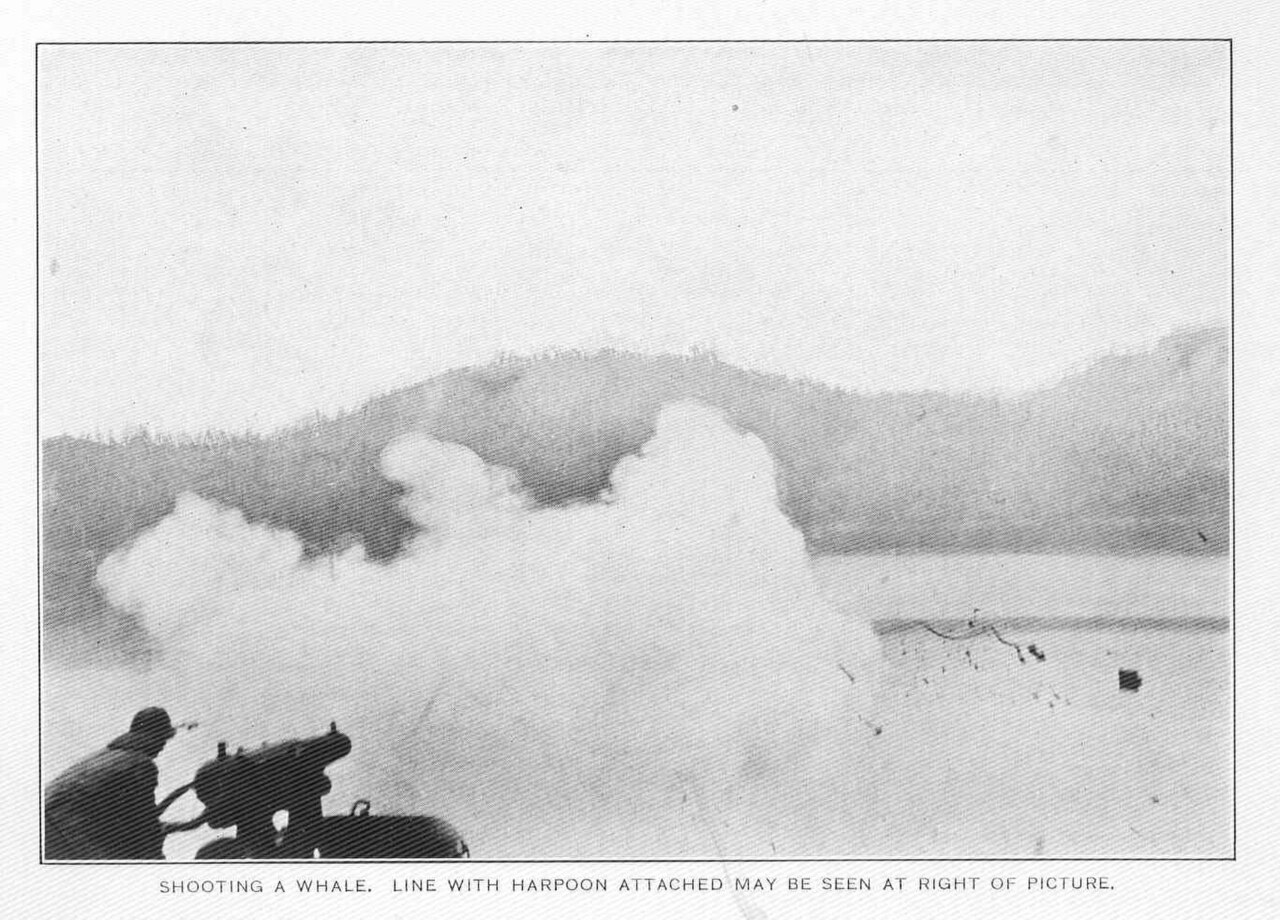
A harpoon cannon is a whaling tool that first appeared in the late 1800s and saw its heaviest use during the 1900s. Mounted on the bow of a whale catcher, it gave the gunner a broad view for aiming. Early models used black powder as a propellant, later replaced by smokeless powder. The weapon fired a large steel harpoon, which could be either a solid piece of metal or fitted with an explosive grenade—first filled with black powder, and later with penthrite (PETN). Today, whaling nations still use harpoon cannons, but typically in smaller calibers. Norway, Japan, and Iceland are among the countries that regularly hunt large whales.
Early attempts to create gun-fired harpoons aimed to improve accuracy over hand-thrown ones, but these efforts mostly failed. The guns were inaccurate, especially from small, moving whaleboats, and baleen whales tended to sink after being killed. Norwegian inventor Svend Foyn modernized the idea. He built a swiveling steel cannon mounted to the bow deck of a steel-hulled, steam-powered whaling ship, which improved accuracy. He also added an exploding steel head to the harpoon, packed with 500 grams of black powder. This killed whales faster than before and made it easier to keep the whale attached to the line. During the 20th century, improved guns and grenades made the kill much quicker, and the most advanced modern technology can kill a whale almost instantly.
Early cannons were muzzle-loading, but later models used breech-loading. Modern whaling uses breech-loaders, except for many Norwegian cannons, which use an improved muzzle-loading design with a breech firing system. In the early 1900s, most cannons resembled the Kongsberg 90 mm model. Its trigger was mounted on the back of a steel handle that moved a thin rod to the firing mechanism in a horizontally sliding breechblock. To load, the rear cover plate was rotated to expose the back of the rectangular breechblock. A handle on top of the breech opened the block, and the spent cartridge case was removed. The block was then reloaded with powder and wadding. A new cartridge was slid into the firing chamber, the breechblock closed by turning the handle counterclockwise, and the rear cover rotated back into place. A harpoon was prepared, inserted into the muzzle, and tied on.
- Developed
- late 19th century
- Most used
- 20th century
- Field
- whaling
- Key innovator
- Svend Foyn (Norwegian)
- Common calibers
- 50 mm, 60 mm, 75 mm, 90 mm
- Modern users
- Norway, Iceland, Japan, Greenland
Lore & Background
Early engineers attempted to develop gun-fired harpoons to improve hit rates from hand-thrown harpoons, generally with little success due to poor accuracy from small moving whaleboats and the tendency of baleen whales to sink when killed. The idea was modernized and perfected by Norwegian Svend Foyn, who developed a swiveling steel cannon mounted to the bow deck of his steel and steam whaling ship, improving accuracy, and attached an exploding steel head filled with 500 grams of black powder. This made the whale's death faster and kept the whale attached to the harpoon line more easily. Modern guns with improved grenades were significantly improved during the 20th century, and the most advanced technologies can kill a whale virtually instantly.
Early cannons were muzzle-loading but were later replaced by breech-loading models, though many Norwegian cannons use an improved muzzle-loading design with a breech firing system. In the early 20th century, almost all cannons were similar to the Kongsberg 90 mm design, which featured a trigger mounted on a steel handle, a horizontally sliding breechblock, and a glycerin recoil cylinder. The loading process involved rotating the rear cover plate, opening the breechblock, removing the spent cartridge, reloading with powder and wadding, inserting a new cartridge, closing the breechblock, inserting a harpoon into the muzzle, and cocking the firing pin.
Reader's Guide
The harpoon cannon revolutionized whaling by dramatically increasing the efficiency and lethality of the hunt. Developed in the late 19th century and perfected by Svend Foyn, it allowed whalers to reliably kill large whales from a distance, reducing the danger and uncertainty of hand-thrown harpoons. The addition of an exploding grenade, initially black powder and later PETN, further shortened the time to death. In the 21st century, harpoon cannons remain in use by Iceland, Norway, Greenland, and Japan, with most employing Norwegian-designed PETN grenades for improved humaneness, though Japan uses domestically manufactured grenades with a lower instant death rate. The design evolved from muzzle-loading to breech-loading, with modern examples including Kongsberg 90 mm and 50 mm cannons, Henriksen 60 mm cannons, and Miroku 75 mm cannons. The harpoon cannon's legacy is tied to the continuation of commercial and research whaling, and its technological refinements reflect ongoing efforts to balance efficiency with animal welfare concerns.
Did You Know?
- The harpoon cannon was developed in the late 19th century and most used in the 20th century.
- Norwegian Svend Foyn perfected the design, adding an exploding steel head filled with 500 grams of black powder.
- Modern PETN grenades achieve an 80% instant death rate in Norway, compared to 40% with Japan's domestically manufactured grenades.
- Iceland uses 90 mm Kongsberg cannons for fin whales and 50 mm cannons for minke whales.
From Whaleboat Fails to Foyn's Breakthrough
Early attempts to replace hand-thrown harpoons with gun-fired ones consistently fell short. Engineers in the late nineteenth century struggled with accuracy, particularly when trying to fire from small, rocking whaleboats. A secondary frustration emerged with baleen whales, which had a tendency to sink once killed, making retrieval difficult. The turning point came through Norwegian inventor Svend Foyn, who reimagined the entire platform. Rather than firing from a small boat, he mounted a swiveling steel cannon directly onto the bow deck of a full steel-hulled, steam-powered whaling vessel. This gave the gunner a wide field of view and dramatically improved aim. Foyn also attached an exploding steel head to the harpoon, packed with roughly 500 grams of black powder. The result was not an instantaneous kill, but the whale died faster than before and stayed more securely tethered to the harpoon line. Over the twentieth century, successive refinements to both the gun and the grenade brought the system to a point where the most advanced versions can now end a whale's life virtually on the spot.
Engineering the Breech: Loading and Firing
The harpoon cannon evolved from early muzzle-loading models into the breech-loading designs dominant in modern whaling, though many Norwegian guns retain an improved muzzle-loading configuration with a breech firing mechanism. In the early twentieth century, nearly all cannons followed the Kongsberg 90 mm blueprint. Firing was initiated by a trigger set on the rear of a steel handle, which pulled a thin rod forward into the horizontally sliding breechblock. The loading sequence was methodical: the operator rotated the rear cover plate to expose the rectangular breechblock, turned a top handle to open it, and removed the spent cartridge case. After charging the chamber with powder and wadding, a fresh cartridge was slid into the firing chamber. The breechblock was closed by rotating the handle counterclockwise, the rear cover was swung back into place, and the harpoon was inserted into the muzzle and tied on. A side handle on the breechblock was then pulled back to cock the firing pin. The entire assembly was solid steel, with a glycerin recoil cylinder beneath the barrel; the inner barrel and breech recoiled while the handle and deck swivel remained fixed on a stationary outer cylinder.
A Global Fleet of Calibers
Although the harpoon cannon is most associated with large-whale hunting, it remains in active service across several nations, typically in smaller calibers. Iceland stands out as the principal user of large-caliber guns, deploying 90 mm cannons built by Kongsberg Våpenfabrikk in its fin whale hunt operated by Hvalur hf., alongside 50 mm KV cannons for minke whales. Norway fields 50 mm KV cannons for its minke whale program and also employs muzzle-loading 60 mm Henriksen cannons. Greenland relies on 50 mm KV guns to hunt minke, bowhead, fin, and humpback whales. Japan takes a different approach, using 75 mm cannons manufactured by Miroku Manufacturing for both its pelagic whaling in the North Pacific and its Antarctic research hunts. The variety of calibers reflects the different species targeted and the operational contexts of each nation's fleet, from the open ocean to coastal waters.
The Grenade and the Question of Suffering
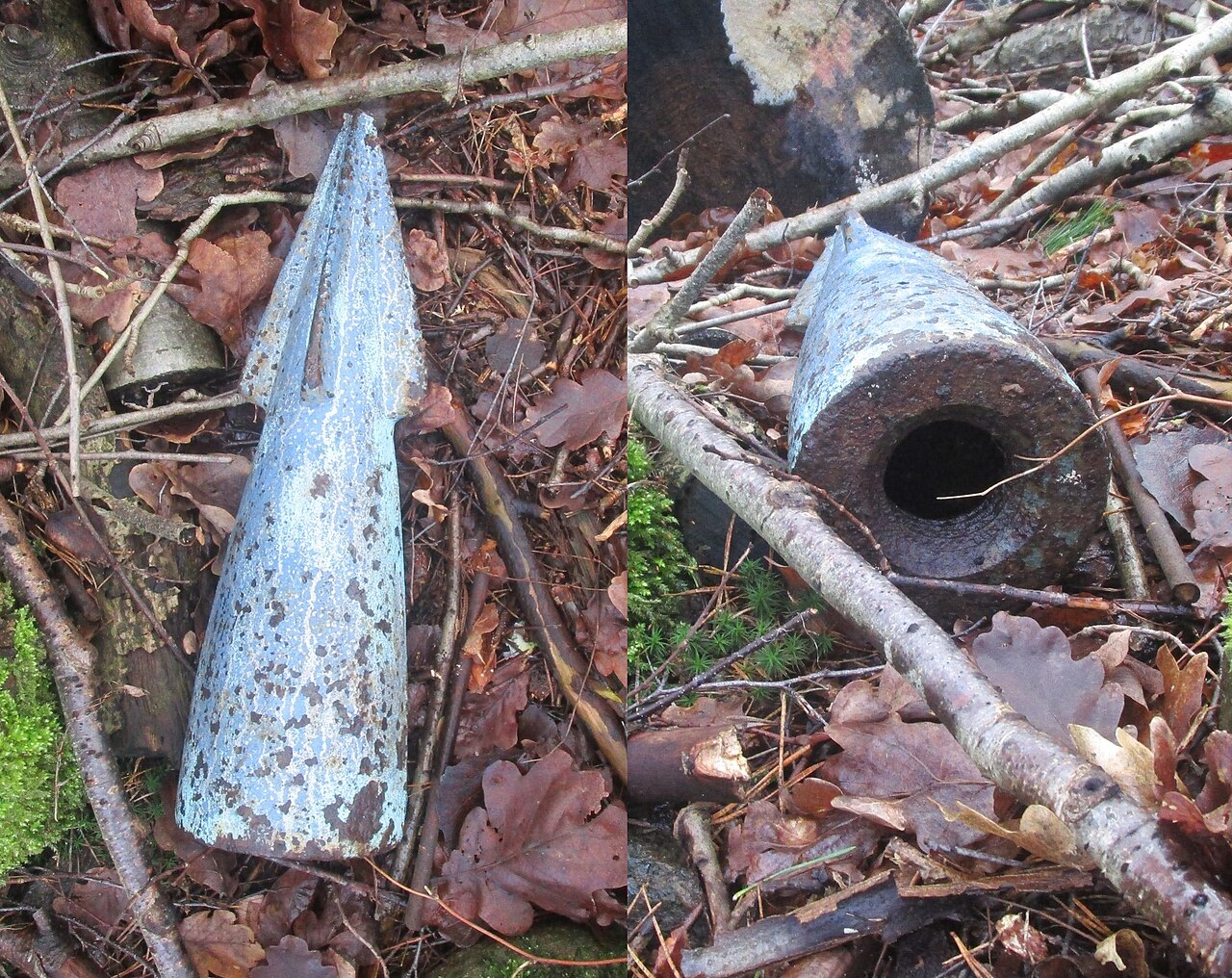
The projectile itself has been as critical to the harpoon cannon's effectiveness as the gun. Early rounds were solid steel, known as cold harpoons, but the addition of an exploding head changed the calculus. Foyn's original grenade held 500 grams of black powder; later designs shifted to smokeless powder and eventually to penthrite (PETN) for greater reliability. Today, every whaling nation listed—except Japan—uses Norwegian-designed PETN grenades, chosen specifically to improve the humaneness of the kill. Japan, by contrast, relies on domestically manufactured grenades that have proven less effective: its instant-death rate sits at roughly 40 percent, compared with Norway's 80 percent. This gap underscores how the chemistry of the warhead, not merely the caliber of the barrel, determines whether a whale dies in a single, clean moment or endures a prolonged struggle. The ongoing pursuit of a truly instantaneous kill remains a central technical priority in modern whaling.
Gallery
Frequently Asked Questions
Who is credited with inventing the harpoon cannon?
The Norwegian engineer Svend Foyn is widely recognized as the key innovator behind the cannon-fired harpoon system, which he developed in the late 1800s. His design transformed whaling from a hand-thrown spear operation into a much faster, more efficient process.
How does a harpoon cannon actually work?
Mounted on the bow of a whale catcher, the cannon fires a large steel harpoon that can be either a solid bolt or tipped with an explosive grenade. The gunner gets a wide forward view from the bow position, making it easier to line up a shot on a moving whale.
What changed between early and later harpoon cannon models?
Early versions relied on black powder as propellant and black-powder-filled grenades, both of which were later swapped for smokeless powder and penthrite (PETN) charges. This shift made the weapon cleaner, more powerful, and safer to handle on deck.
What calibers are typical for a harpoon cannon?
Historical and modern harpoon cannons most commonly come in 50 mm, 60 mm, 75 mm, and 90 mm bore sizes. Modern whaling fleets tend to favor the smaller end of that range compared to the heavy guns of the 20th century.
Is the harpoon cannon still in use today?
Yes—Norway, Iceland, Japan, and Greenland all maintain harpoon-cannon whaling fleets, though the weapons are generally smaller-caliber than their 20th-century predecessors. The basic principle Foyn pioneered over a century ago remains the core method of industrial whaling.
More in Norwegian inventions 1-24
Spotted an error? Know more?
Reader corrections go straight into our review queue. Suggest an edit · How this site is sourced