BP-5 Compact Food
Compressed emergency food bar used for refugee and disaster relief.

Julien Harneis · CC BY-SA 2.0
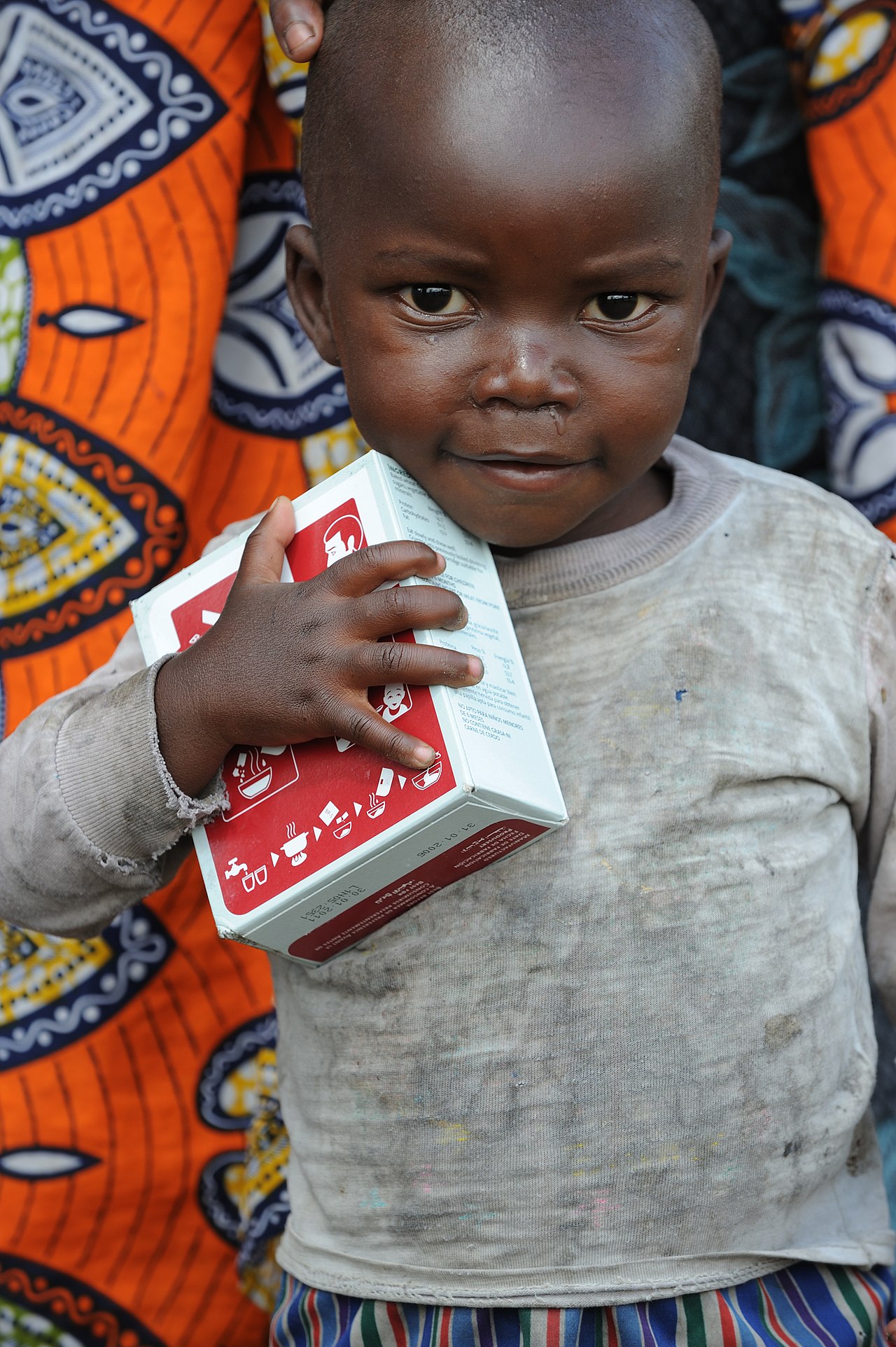
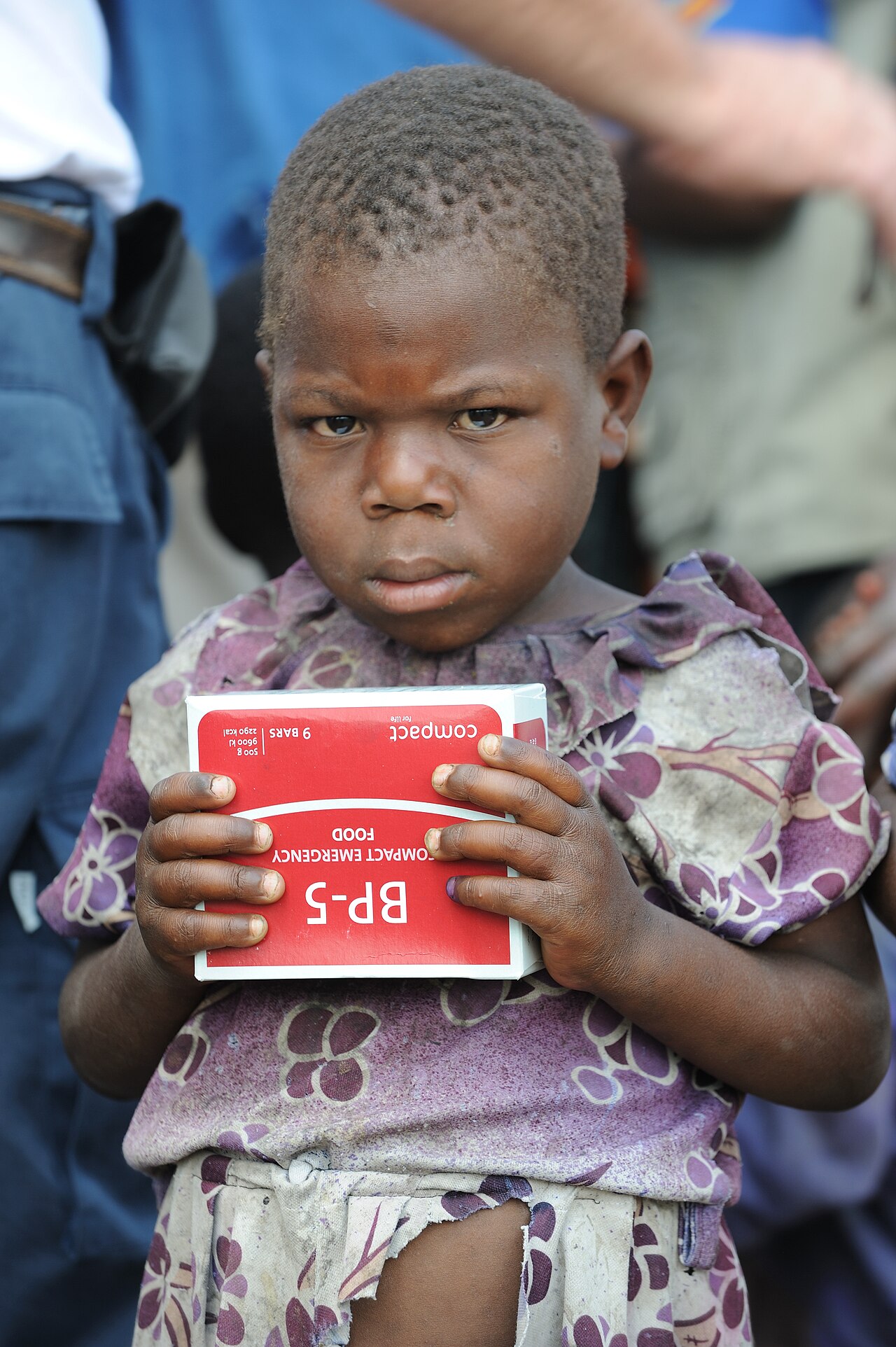
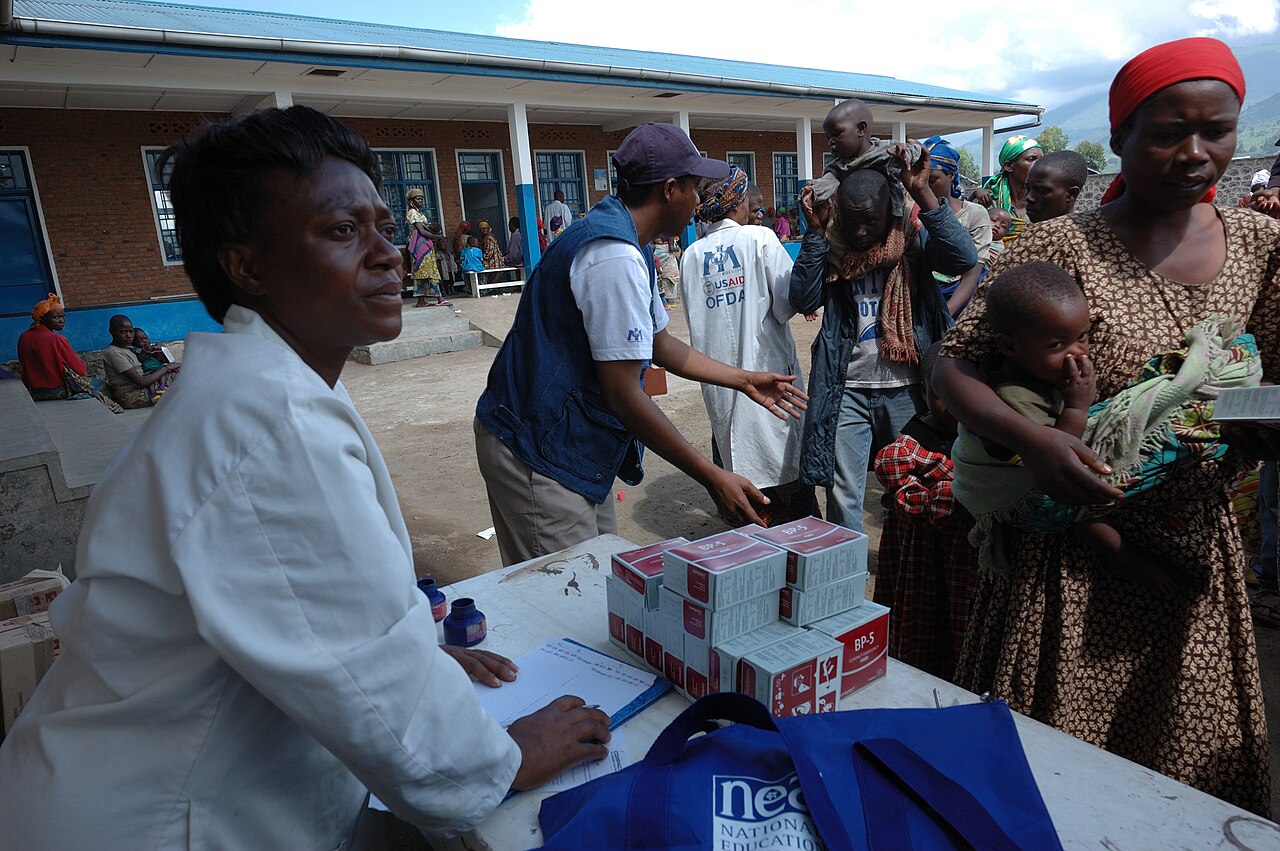
BP-5 Compact Food, also known as a BP-5 biscuit, is a high-calorie, vitamin-fortified, compressed, and dry emergency food ration bar. It is used by relief agencies for the emergency feeding of refugees and internally displaced persons, particularly for malnourished children.
- Type
- Emergency food ration bar
- Producer
- Compact AS, based in Norway
- Purchased through
- UNICEF
- Shelf life
- Five years
- Calories per box
- Approximately 2,300 calories per 500 g box
- Daily adult ration
- 250 g per day
- Key ingredients
- Baked wheat flour, partially hydrogenated soybean oil, sugar, soy protein concentrate, malt extract, minerals, amino acids, vitamins
Lore & Background
BP-5 is produced by Compact AS, based in Norway, and purchased by agencies through UNICEF. It is available in packs of two biscuit bars, with each box of nine packs containing 500 g of food and approximately 2,300 calories. Its shelf life is five years. The ingredients include baked wheat flour, partially hydrogenated soybean oil, sugar, soy protein concentrate, malt extract, minerals, amino acids, and vitamins.
Reader's Guide
BP-5 Compact Food is significant as a practical emergency ration for disaster relief and refugee camps, especially for malnourished children. It is eaten directly or mixed with water to make porridge. Although a daily adult ration of 250 g provides a calorie deficit, it supplies recommended protein and basic vitamins. Its easy digestibility, neutral taste, and lack of dairy or meat products allow use even for severely malnourished individuals. However, one study noted that its portability made it susceptible to cheating and black-market trade, recommending a switch to blended foods (porridge mixes) when practical. BP-5, along with Plumpy'Nut, was fed to visitors of a mobile refugee camp created by Médecins Sans Frontières to raise awareness in major world cities.
Did You Know?
- BP-5 has a shelf life of five years.
- Each box of nine packs contains 500 g of food with approximately 2,300 calories.
- It can be eaten directly or mixed with water to make a porridge.
Physical Design & Nutritional Composition
BP-5 Compact Food, commonly referred to as a BP-5 biscuit, is a compressed, dry, and vitamin-fortified emergency ration bar engineered for maximum caloric density in a small physical footprint. The product is manufactured by Compact AS, a Norwegian company, and distributed to relief agencies through UNICEF procurement channels. Each individual pack holds two biscuit bars, and a standard box contains nine such packs, yielding a total food weight of 500 grams and delivering roughly 2,300 calories. The formulation is built around baked wheat flour, partially hydrogenated soybean oil, sugar, soy protein concentrate, and malt extract, with added minerals, amino acids, and vitamins to round out the nutritional profile. A notable operational advantage is its five-year shelf life, which makes it practical for long-term stockpiling in disaster-preparedness warehouses. The absence of dairy and meat ingredients, combined with a neutral flavor profile, ensures the bar can be consumed by virtually any population group without triggering dietary restrictions or cultural objections.
Humanitarian Deployment & Daily Rationing
In the field, BP-5 serves as a cornerstone of emergency feeding operations for refugees and internally displaced persons, with a particular focus on malnourished children in refugee camp settings. The standard daily allocation for an adult is 250 grams, a quantity that, while falling short of full caloric needs, still meets the recommended protein intake and covers basic vitamin requirements. The bar's ease of digestion makes it suitable even for individuals suffering from severe malnourishment, where more complex foods might overwhelm a compromised digestive system. In practice, recipients can eat the biscuit directly or dissolve it in water to prepare a simple porridge, offering flexibility depending on the situation. The product's role spans both reactive disaster relief and proactive disaster preparedness, meaning it is not only deployed after a crisis strikes but also pre-positioned in anticipation of one. Its universal palatability and lack of animal-derived ingredients remove barriers to distribution across diverse cultural and religious communities.
Logistical Vulnerabilities & the Case for Alternatives
Despite its many operational strengths, BP-5's very portability has created a persistent problem in the hands of those who receive it. A study examining its use in the field found that the compact, easily transportable nature of the biscuit bars made them susceptible to cheating by recipients and to diversion into black-market trade, undermining the intended distribution to those in greatest need. In response, the study recommended that relief agencies transition to blended foods, essentially porridge mixes, as and when practical conditions allow, since a powdered or semi-liquid format is harder to hoard or resell. This critique sits alongside the broader nutritional limitation that the standard 250-gram adult daily portion, while meeting protein and vitamin benchmarks, still represents a caloric deficit. The tension between a food that must be light, stable, and universally acceptable and one that must deliver full sustenance is a defining challenge of emergency rationing, and BP-5 occupies a pragmatic middle ground rather than an ideal endpoint.
Public Awareness & Cross-Cultural Parallels
Beyond the confines of refugee camps, BP-5 has found a role in public education and awareness-building. Médecins Sans Frontières (Doctors Without Borders) created a small mobile refugee camp designed to travel to major world cities to raise awareness, and visitors to this installation were served BP-5 alongside Plumpy'Nut, a peanut-butter supplement, giving urban audiences a tangible, if brief, encounter with the reality of emergency rationing. The bar's design philosophy also finds an unexpected echo in a completely different cultural context: Kanemochi, known in Japanese as butter mochi, is a similarly high-caloric-density compressed food originally developed by matagi hunters in Japan who needed portable, energy-dense provisions for extended time in the mountains. Both products share the core principle of packing maximum nutrition into a small, shelf-stable form, though their intended audiences and contexts differ enormously. BP-5's place within the broader category of humanitarian daily rations underscores that feeding displaced populations at scale remains one of the defining logistical problems of modern humanitarian work.
Gallery
Frequently Asked Questions
What is BP-5 Compact Food?
It is a dry, compressed emergency ration bar that has been fortified with vitamins and engineered to pack a high caloric load into a small, portable form. The product is designed specifically to sustain malnourished children and displaced populations when normal food supplies are unavailable.
Who makes BP-5 Compact Food and how does it reach the field?
The bar is produced by Compact AS, a Norwegian manufacturer. UNICEF serves as the main procurement channel, purchasing the product in bulk so that relief agencies can distribute it during humanitarian crises.
How many calories does a standard BP-5 box deliver, and what is the daily adult portion?
A 500 g box supplies roughly 2,300 calories. For an adult, the recommended daily ration is about 250 g of the bar, meaning one box covers roughly two days of intake.
How long can BP-5 Compact Food be stored before it goes bad?
The ration bar carries a five-year shelf life, which is what makes it viable for long-term stockpiles held by international aid organizations. Its dry, compressed format is the key factor behind that extended stability.
In what situations is BP-5 Compact Food actually deployed?
Relief agencies turn to it in disaster zones, refugee camps, and conflict areas where regular food distribution has broken down. The primary target group is malnourished children, though it is also issued to internally displaced adults who need a quick, calorie-dense source of nutrition.
More in Norwegian inventions 1-24
Spotted an error? Know more?
Reader corrections go straight into our review queue. Suggest an edit · How this site is sourced