
Dynabeads
Uniform superparamagnetic beads for biological separation.

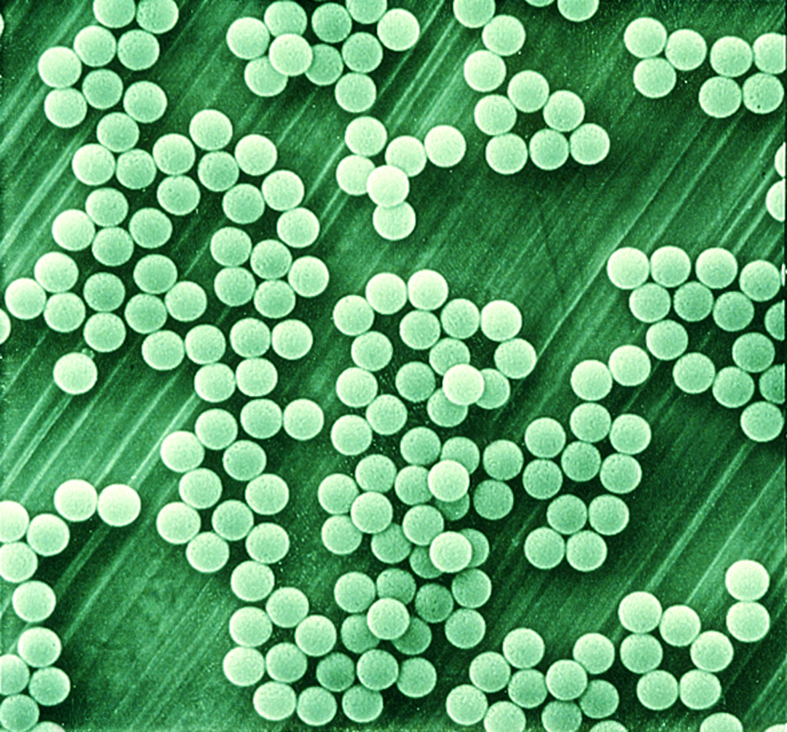
Dynabeads are superparamagnetic spherical polymer particles with a uniform size and a consistent, defined surface for the adsorption or coupling of various bioreactive molecules or cells. They were developed after John Ugelstad managed to create uniform polystyrene spherical beads of exactly the same size at the University of Trondheim, Norway in 1976, a feat previously achieved only by NASA in the weightless conditions of SkyLab. Typically 1 to 5 micrometers in diameter, Dynabeads contrast with Magnetic-activated cell sorting beads, which are approximately 50 nm.
- Developed by
- John Ugelstad
- Year developed
- 1976
- Location
- University of Trondheim, Norway
- Typical size
- 1 to 5 micrometers in diameter
- Current owner
- Invitrogen, part of Thermo Fisher Scientific
- Field
- Magnetic separation technology
Lore & Background
Dynabeads were developed after John Ugelstad managed to create uniform polystyrene spherical beads of exactly the same size at the University of Trondheim, Norway in 1976, something otherwise only achieved by NASA in the weightless conditions of SkyLab. The technology behind the beads was licensed to Dynal in 1980. Following a series of mergers and acquisitions, Dynal and Dynabeads are currently owned and produced by Invitrogen, part of Thermo Fisher Scientific.
Reader's Guide
The discovery of Dynabeads revolutionised the liquid-phase kinetic separation of many biological materials. Since being licensed to Dynal in 1980, this magnetic separation technology has been used for the isolation and manipulation of biological material, including cells, nucleic acids, proteins and pathogenic microorganisms. The uniformity in size, shape, and surface area allow for reproducibility and help to minimize chemical agglutination. Dynabeads are frequently used for cell isolation, targeting cell-types such as specific leukocytes (e.g., CD4+ T cells), stem cells, or circulating tumor cells. They may be covalently linked to an antibody that recognizes a specific surface protein, or attach indirectly via streptavidin on the Dynabead linking to a biotinylated primary antibody, or a secondary antibody on the Dynabead linking to the primary antibody. Streptavidin linkage allows capture of cells with lower expression of the surface protein.
Did You Know?
- The uniform polystyrene beads were first created in 1976 at the University of Trondheim, Norway.
- The technology was licensed to Dynal in 1980.
The Trondheim Breakthrough
In 1976, at the University of Trondheim in Norway, chemist John Ugelstad accomplished what had previously been reserved for the most exotic environments in human exploration: he produced polystyrene spherical beads, or microbeads, all of exactly the same size. Before his work, achieving such precise uniformity in a laboratory setting was essentially impossible. The only other context in which researchers had managed comparable consistency was aboard NASA's Skylab, where the weightless conditions of orbit naturally favored the formation of perfectly round, identically sized spheres. Ugelstad's ground-based method shattered that assumption and opened the door to a new class of engineered particles. This single feat of polymer chemistry became the foundation upon which the entire Dynabeads platform would later be built, transforming a niche academic curiosity into a tool that would reshape how scientists handle biological materials in liquid phase.
Engineering a Perfect Sphere
Dynabeads are superparamagnetic polymer particles shaped into spheres with a remarkably consistent diameter, typically falling between one and five micrometers. Their defining engineering feature is uniformity: every bead in a batch shares the same size, the same spherical geometry, and the same well-defined surface area. This consistency is not merely cosmetic. Because the surface is precisely controlled, it can be reliably functionalized—either by adsorbing or covalently coupling bioreactive molecules such as antibodies, or by attaching whole cells. The uniform shape and size also serve a practical purpose in the lab: they promote reproducibility across experiments and help minimize unwanted chemical agglutination, the clumping of particles that can ruin a separation. It is worth noting the scale difference from other magnetic bead technologies. Magnetic-activated cell sorting beads, for instance, sit at roughly fifty nanometers in diameter, making Dynabeads an order of magnitude larger and better suited to the kinds of surface chemistry and cell-capture workflows they were designed for.
Capturing Cells and Molecules
Since its licensing to Dynal in 1980, the Dynabeads platform has revolutionized the liquid-phase kinetic separation of biological materials, giving researchers a magnetic handle on cells, nucleic acids, proteins, and even pathogenic microorganisms. The technology is especially prominent in cell isolation. Researchers routinely target specific leukocyte populations—CD4+ T cells, for example—or rarer specimens such as stem cells and circulating tumor cells. The capture mechanism is flexible. In one approach, a Dynabead is covalently linked to an antibody that recognizes a particular protein displayed on the surface of the desired cell type. In another, the bead attaches indirectly: streptavidin coated on the bead binds a biotinylated primary antibody, or a secondary antibody on the bead bridges to the primary antibody already bound to the cell. The streptavidin-biotin route is particularly valuable when the target protein is expressed at low levels, because the strong affinity of that pairing can pull down cells that weaker linkages would miss.
From Dynal to Thermo Fisher
The path from a Norwegian university laboratory to a global biotechnology staple involved a long chain of corporate transactions. After Ugelstad's 1976 breakthrough, the underlying bead technology was formally licensed to Dynal in 1980, giving the invention a commercial home and a dedicated production pipeline. Over the following decades, Dynal and its Dynabeads product line passed through a series of mergers and acquisitions that reshaped the corporate landscape of molecular biology tools. Today, the beads are owned and manufactured by Invitrogen, which itself operates as a division of Thermo Fisher Scientific, one of the largest life-science suppliers in the world. Despite the changing corporate banners, the core mission has remained constant: providing researchers with a uniform, superparamagnetic, surface-engineered particle that makes the isolation and manipulation of biological material faster, more reproducible, and more accessible than any prior method had allowed.
Gallery
Frequently Asked Questions
Who invented Dynabeads and where?
John Ugelstad developed Dynabeads in 1976 while working at the University of Trondheim in Norway. His breakthrough was producing polystyrene spheres of perfectly identical size, a result that until then had only been achieved by NASA under the weightless conditions aboard the SkyLab space station.
What exactly are Dynabeads and what do they do?
Dynabeads are uniform, superparamagnetic polymer spheres whose smooth, well-defined surfaces allow researchers to attach or capture specific bioreactive molecules and cells. They serve as the core tool in magnetic-separation workflows, letting scientists pull out a target population from a complex mixture simply by applying a magnet.
How big are Dynabeads compared to other magnetic beads?
A typical Dynabead measures between one and five micrometers in diameter, making it roughly 20 to 500 times larger than the approximately 50-nanometer particles used in Magnetic-Activated Cell Sorting (MACS). That larger size gives Dynabeads a much greater surface area for coupling reagents.
Why is Dynabeads considered a Norwegian invention of note?
Before Ugelstad's 1976 work, producing perfectly uniform polymer spheres of a single size had been thought to require the zero-gravity environment of a space station. Achieving it in an ordinary Norwegian university lab made the technology accessible to laboratories worldwide and established a distinctly Norwegian contribution to biotechnology.
Who owns Dynabeads today and in what field are they used?
The Dynabeads brand is currently held by Invitrogen, a division of Thermo Fisher Scientific. The beads remain a staple in the field of magnetic-separation technology, underpinning applications from nucleic-acid purification to immunoprecipitation and cell sorting.
More in Norwegian inventions 1-24
Spotted an error? Know more?
Reader corrections go straight into our review queue. Suggest an edit · How this site is sourced