Bjering (car)
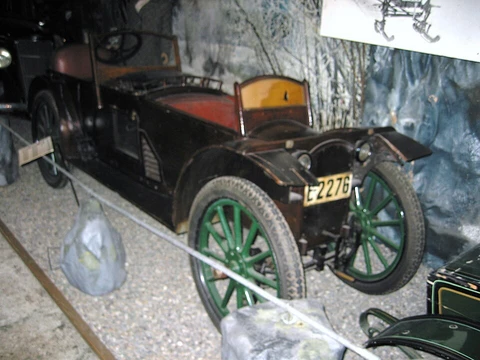
Narrow Norwegian car designed for winter roads.

Bjoertvedt · CC BY-SA 4.0
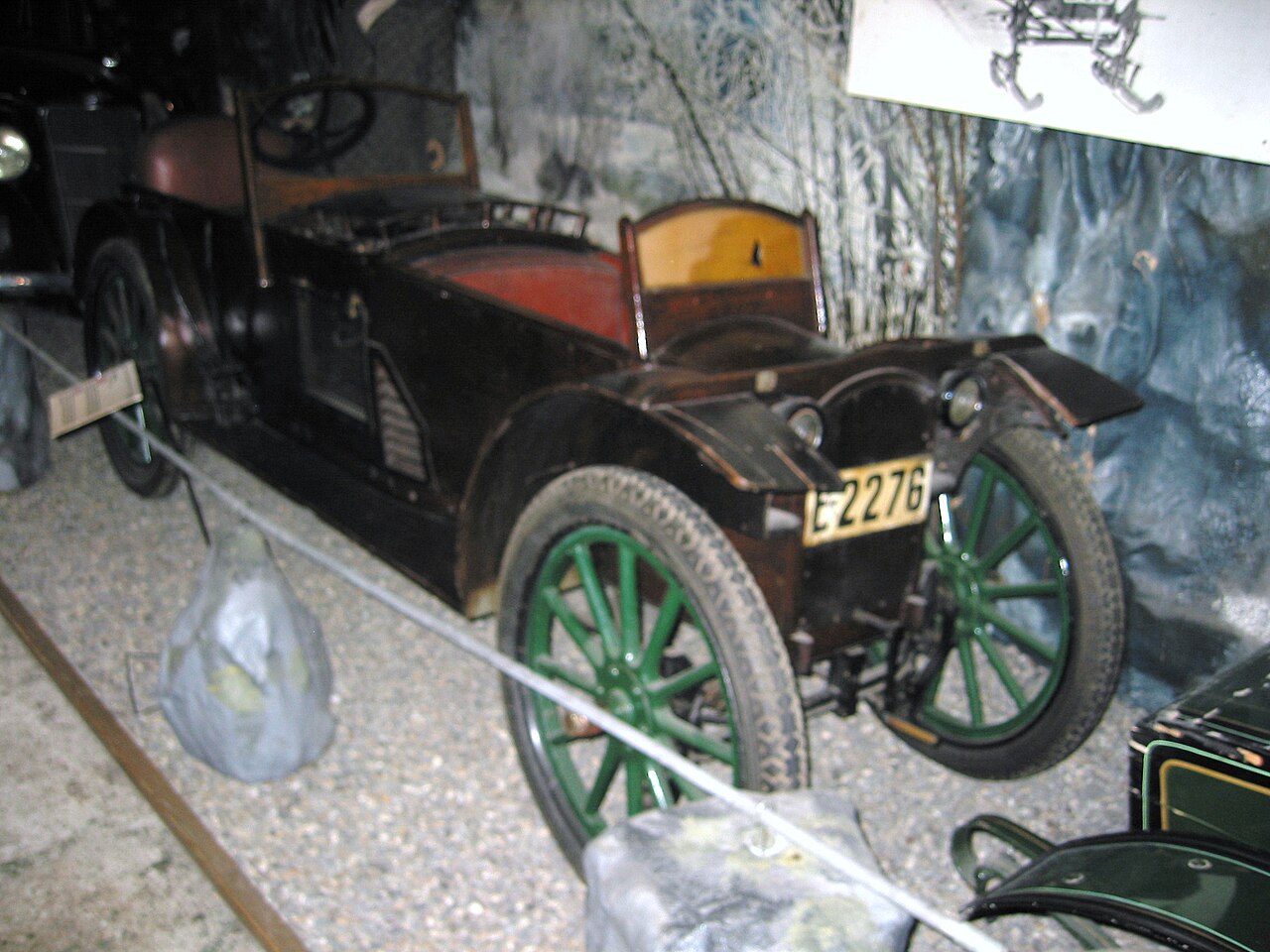
Hans Christian Bjering, born in 1870, built automobiles under his own name in Gjøvik, Norway. The cars were notable for their tandem seating—two seats arranged one behind the other—and an air-cooled V2 engine. Their slim design, just one metre wide, let them fit into the narrow tracks left by snow ploughs on winter roads. Only six examples are believed to have been made between 1920 and 1925.
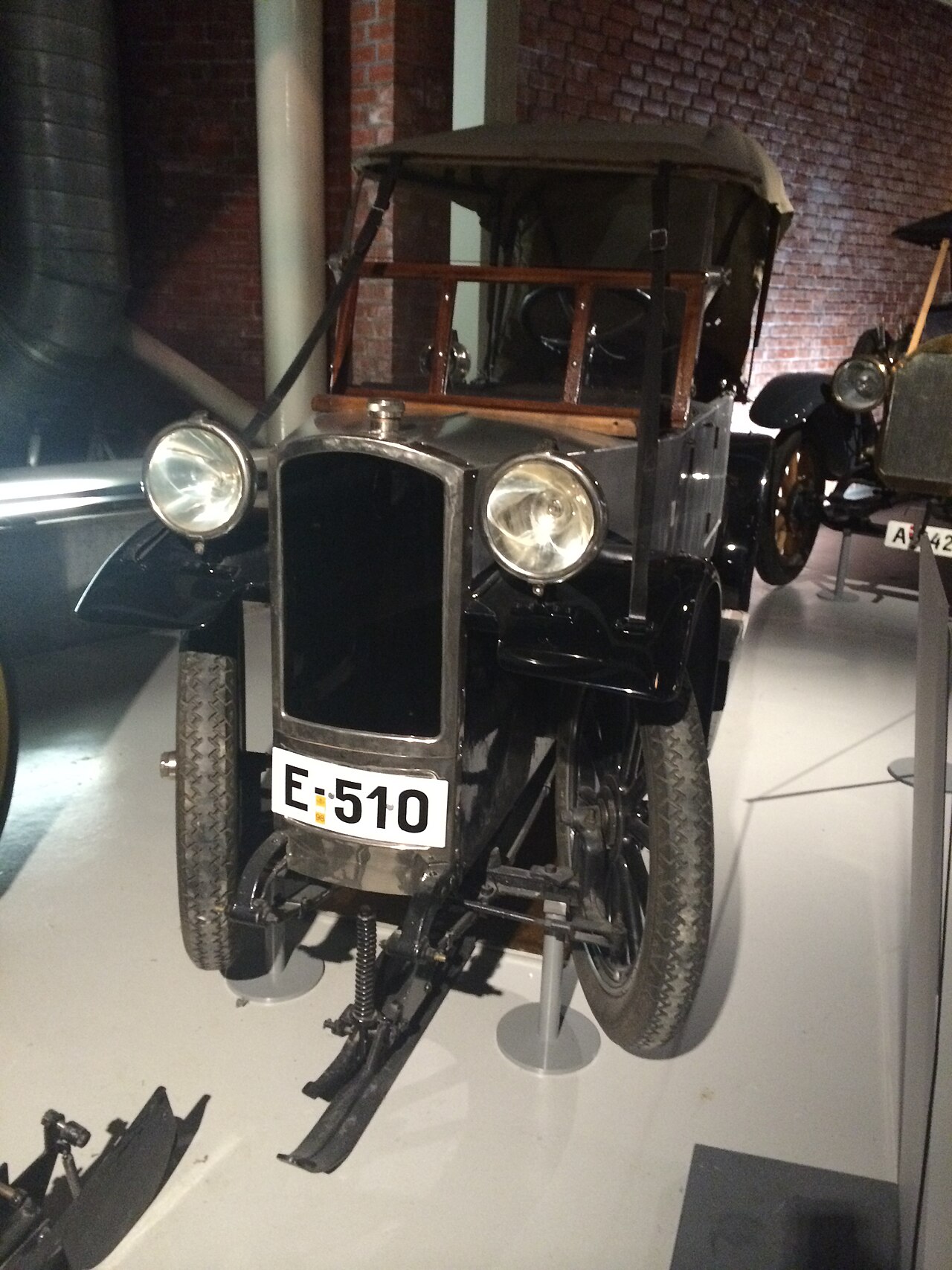
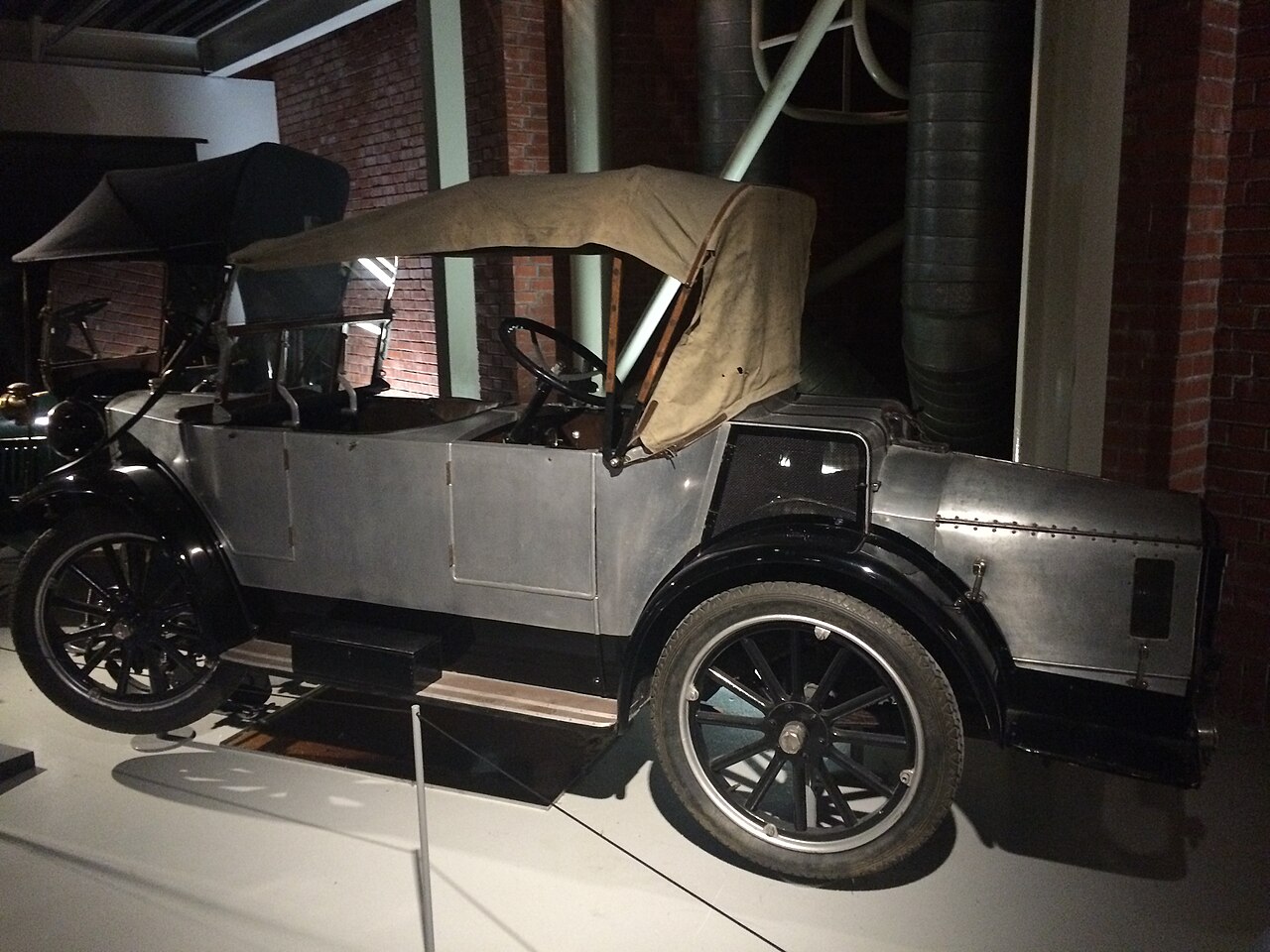
Bjering’s interest in engineering led him to work for Jøssingfjord Kraftverk as an engineer, starting in 1914. While there, he invented a twin-blade lawnmower, and in 1917 he founded his own firm, Bjering Slaamaskiner. He designed and built a prototype car in 1918. Based on that design, four vehicles were constructed by A/S Autoslæde between 1920 and 1921. Their body was wood, and the 1.2-liter V2 engine sat between the seats, with the driver positioned at the back over the drive wheels. The car also came with a snow plow, and its front wheels could be swapped for skis. The final two cars were built in 1923 and 1924 for the Norwegian military by A/S Autoslæde or Bjering himself, under a contract from the Ministry of Defense. These later models were essentially the same design adapted for rail use and were made of wood with metal fittings.
One of the Bjering cars (the 1923 military rail car) is displayed at the Norsk Kjøretøyhistorisk Museum in Lillehammer; the other is at the Norsk Teknisk Museum. On 7 October 2017, the Norway Postal Service issued four stamps featuring Norwegian cars, including a Bjering.
- Born
- 1870
- Field
- Automotive engineering
- Nationality
- Norwegian
- Known for
- Bjering car, twin blade lawnmower
Lore & Background
Hans Christian Bjering was born in 1870 and became interested in engineering. In 1914 he began working for the company Jøssingfjord Kraftverk as an engineer. While there, he invented a twin blade lawnmower, and in 1917 opened his own company, Bjering Slaamaskiner. In 1918 he designed and built a prototype car. Based on that design, four vehicles were constructed by A/S Autoslæde between 1920 and 1921. They were only 1 metre wide, with an air-cooled V2 engine of approximately 1.2 liters placed between the seats. The driver sat at the back over the drive wheels, the body was made of wood, and it was equipped with a snow plow. The front wheels could be replaced with skis. The remaining two cars were built in 1923 and 1924 for the Norwegian military by A/S Autoslæde or Bjering himself under contract with the Ministry of Defense. These were essentially the same design adapted for rail use and were built with wooden bodies and metal fittings.
Reader's Guide
The Bjering car is significant as a uniquely Norwegian solution to winter driving conditions, with its narrow width and ski-equipped front wheels enabling travel on snow-plowed roads. Only six examples were thought to have been built, making it a rare piece of automotive history. Its tandem seating and air-cooled V4 engine were unusual for the era. The car's development from a prototype by Hans Christian Bjering to production by A/S Autoslæde and later military variants by Raufoss Patronfabrik illustrates early Norwegian automotive innovation. Two of the cars are preserved at the Norsk Kjøretøyhistorisk Museum in Lillehammer, and the car was honored on a Norwegian postage stamp in 2017. The Bjering remains a curiosity for collectors and historians, representing a niche but practical response to local geography and climate.
Did You Know?
- The Bjering car had an unusual tandem-arrangement of its two seats.
- Only six Bjering cars are thought to have been built between 1920 and 1925.
- One Bjering car (the 1923 military rail car) is at the Norsk Kjøretøyhistorisk Museum; the other is at the Norsk Teknisk Museum.
- On 7 October 2017 the Norway Postal Service issued a stamp featuring a Bjering.
The Man Behind the Machine
Hans Christian Bjering was born in 1871 and developed a deep interest in engineering that would eventually lead him to create one of Norway's most distinctive automobiles. His professional journey began in 1914 when he joined Jøssingfjord, a company focused on power plant production. It was during his tenure there that his inventive mind produced a twin-blade lawnmower, a practical innovation that demonstrated his mechanical aptitude. Capitalizing on this success, Bjering launched his own enterprise, Bjering Slaamaskiner, in 1917, giving him the independence and resources to pursue more ambitious projects. By 1918, he had designed and constructed a prototype automobile, a bold leap from agricultural machinery to motorized transport. This prototype would become the foundation for a small but remarkable series of vehicles built over the following decade. His work in Gjøvik, Norway, placed him at the intersection of practical engineering and the unique demands of Scandinavian winter conditions, a context that would define every aspect of his automotive design.
A Design Built for Winter
The Bjering automobile was conceived with a singular purpose: to navigate the narrow tracks carved by snow ploughs on Norwegian winter roads. At just one metre in width, the vehicle was extraordinarily slim, a dimension that made it uniquely suited to those constrained paths. Its seating arrangement was equally unconventional, with two seats positioned in a tandem configuration rather than side by side. Between them sat an air-cooled V4 engine of 2010 cubic centimetres, a compact powerplant that fit the car's narrow profile. The driver occupied the rear position, seated directly above the drive wheels. The bodywork was crafted from wood, a material choice reflecting both the era and the practical constraints of small-scale production. Perhaps most remarkably, the front wheels could be swapped out for skis, transforming the vehicle into a hybrid of automobile and sleigh. A snow plough was also fitted to the car, reinforcing its role as a winter utility vehicle. This combination of features made the Bjering a truly purpose-built machine for Scandinavia's harsh seasonal conditions.
A Tiny Production Run
Only six Bjering automobiles are believed to have been built between 1920 and 1925, making it one of the rarest Norwegian cars ever produced. The first four vehicles were constructed by A/S Autoslæde during 1920 and 1921, based directly on Bjering's 1918 prototype design. These early examples embodied the civilian vision of the car: a narrow, wood-bodied machine designed for sledging and winter road travel. The remaining two vehicles took a different path. Built between 1923 and 1925 by Raufoss Patronfabrik under a contract with the Norwegian Ministry of Defense, these military variants featured a rear-mounted rail motor and were constructed from aluminum rather than wood. This shift in material and powertrain suggests the military version was adapted for different operational needs, possibly rail-based transport in remote or mountainous terrain. The split between civilian and military production, spread across five years and two different manufacturers, highlights how the Bjering project evolved from a single inventor's prototype into a small but diverse fleet serving both public and state purposes.
Surviving the Decades
Despite its minuscule production numbers, the Bjering has secured a lasting place in Norwegian cultural memory. Two of the six known examples survive today and are preserved on display at the Norsk Kjøretøyhistorisk Museum in Lillehammer, where visitors can examine the wooden bodywork, the tandem seating, and the compact V4 engine in person. The car's significance extends beyond the museum walls as well. On 7 October 2017, the Norwegian Postal Service released a set of four stamps celebrating notable Norwegian automobiles, and the Bjering was chosen as one of the featured vehicles. This philatelic recognition, arriving nearly a century after the last unit rolled off the production line, underscores the car's enduring symbolic value. The Bjering has also found its place in major automotive reference works, including David Burgess Wise's illustrated encyclopedia and the German-language great automobile encyclopedia by Linz and Schrader, ensuring that its story continues to be told to new generations of automotive historians and enthusiasts worldwide.
Gallery
Frequently Asked Questions
What is the Bjering car?
The Bjering car was a compact automobile hand-built in Gjøvik, Norway, by engineer Hans Christian Bjering between 1920 and 1925. It featured tandem seating, an air-cooled V2 engine, and a remarkably narrow body, making it one of the earliest cars produced under a Norwegian name.
Who invented the Bjering car and what was his background?
Hans Christian Bjering, born in 1871, was a Norwegian engineer who had worked for the Jøssingfjord power plant company since 1914. While employed there he also devised a twin-blade lawnmower before founding his own firm in 1917, where he went on to design and build the cars.
What made the Bjering car's design stand out?
The vehicle was only about one metre wide and seated its two occupants one directly behind the other rather than side by side. Combined with the air-cooled V2 powerplant, this gave the car a footprint far smaller than typical automobiles of the early 1920s.
Why was the Bjering car built so narrow?
The slim one-metre width was a deliberate solution to Norwegian winter driving: it let the car follow the narrow ruts that snow ploughs carved through deep snow on rural roads. A standard-width vehicle simply could not navigate those tracks, so the narrow body made the car genuinely practical in harsh winter conditions.
How many Bjering cars were made and do any survive?
Only six examples are believed to have been produced over the 1920-to-1925 build period. Given that tiny run and the passage of a century, very few—if any—remain today, leaving the Bjering as a rare and largely forgotten footnote in Norwegian automotive history.
More in Norwegian inventions 1-24
Spotted an error? Know more?
Reader corrections go straight into our review queue. Suggest an edit · How this site is sourced