Coilgun
Electromagnetic accelerator using coils, distinct from railguns and Gauss guns.

Karl Williams · CC BY 3.0
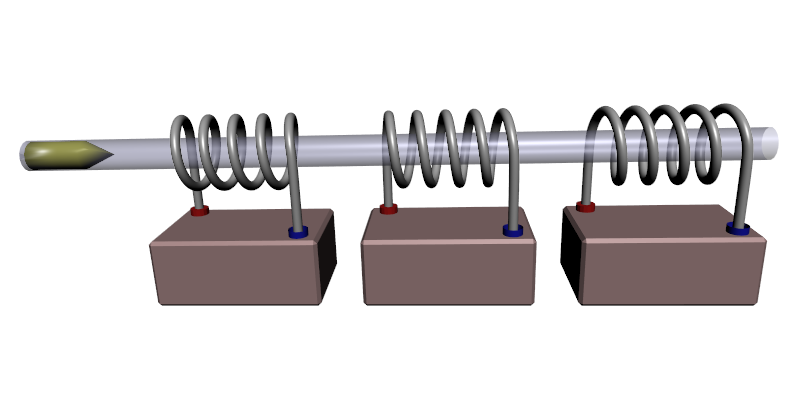
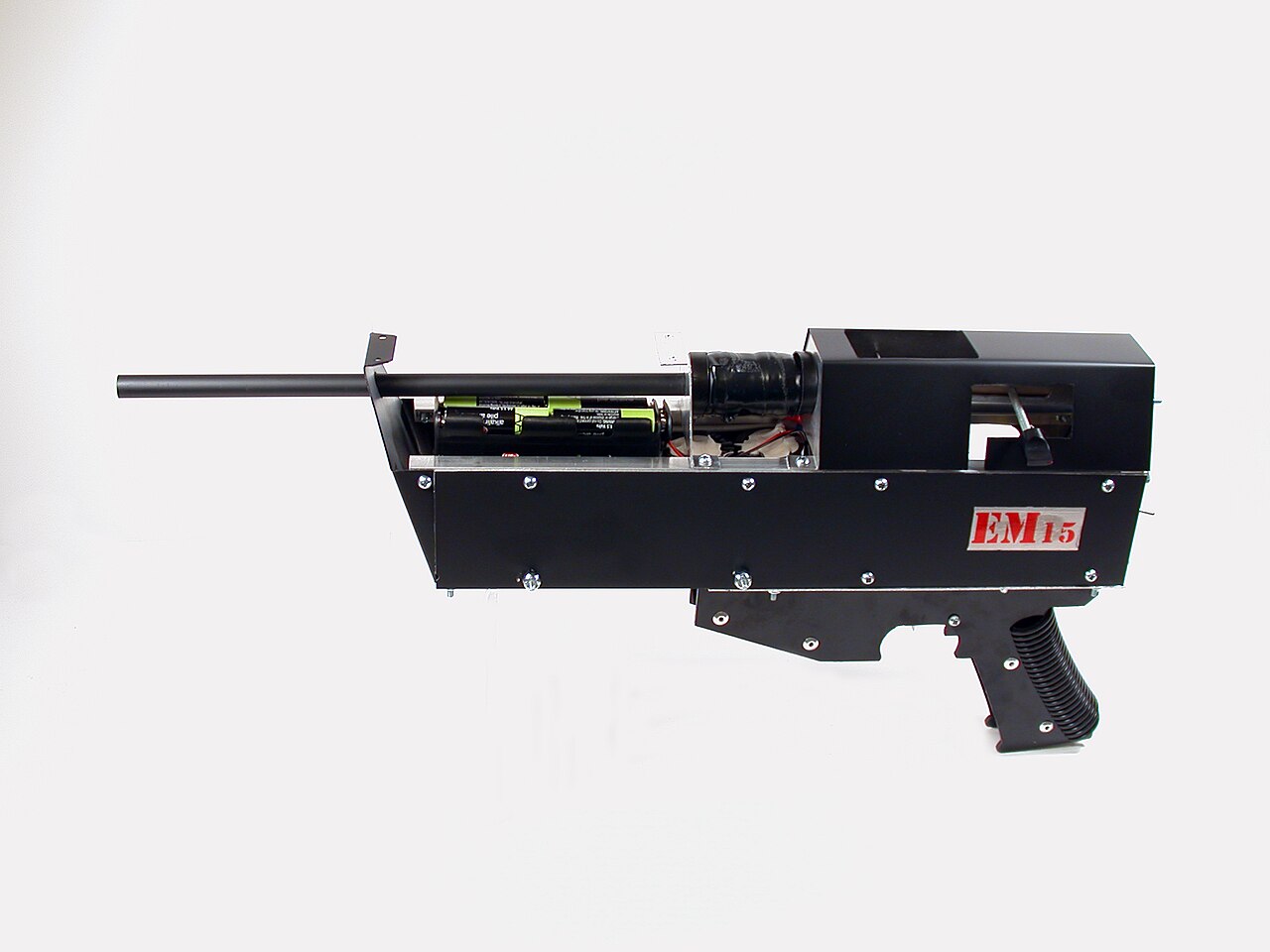
A coilgun is a type of mass driver that uses one or more electromagnetic coils arranged as a linear motor to accelerate a ferromagnetic or conducting projectile to high velocity. It is distinct from railguns and Gauss guns, and its barrel is smoothbore, not rifled. The first coilgun was invented by Norwegian scientist Kristian Birkeland, patented in 1904.
- Early development start
- 1904
Lore & Background
The oldest electromagnetic gun came in the form of the coilgun, first invented by Norwegian scientist Kristian Birkeland at the University of Kristiania (today Oslo). The invention was officially patented in 1904. According to his accounts, Birkeland accelerated a 500-gram projectile to approximately 50 metres per second (160 ft/s). In 1933, Texan inventor Virgil Rigsby developed a stationary coil gun designed to be used similarly to a machine gun, powered by a large electrical motor and generator; it appeared in many contemporary science publications but never piqued the interest of any armed forces.
Reader's Guide
Coilguns represent a significant branch of electromagnetic launcher technology, offering potential advantages over railguns by avoiding sliding contacts and intrinsic velocity limits from hypervelocity physical contact and erosion. Their design allows for projectile acceleration without friction if the bore is a vacuum, prolonging reusability. However, practical coilguns face challenges including switching efficiency, resistive heating, and magnetic flux coupling losses. The distinction between coilguns and Gauss guns is often confused in science fiction, but coilguns use electromagnetic acceleration while Gauss guns predate them and use a Newton's Cradle-like ferromagnet configuration. Coilgun concepts have been explored for applications ranging from hobbyist experiments using photoflash capacitors to theoretical superconducting quench guns, though no armed forces adopted early designs like Rigsby's.
Did You Know?
- A coilgun is not a rifle because its barrel is smoothbore (not rifled).
- Coilguns are distinct from Gauss guns, though science fiction often confuses them; Gauss guns predate coilguns and use a Newton's Cradle-like configuration.
- In 1933, Texan inventor Virgil Rigsby developed a stationary coilgun designed to be used like a machine gun, but it never interested any armed forces.
Origins & Early Development
The coilgun holds the distinction of being the earliest form of electromagnetic projectile weapon, a title it earned through the work of Norwegian physicist Kristian Birkeland at the University of Kristiania, now known as Oslo. While the formal patent was filed in 1904, Birkeland's own accounts suggest that his experimental efforts trace back to roughly 1845, giving the concept a remarkably long gestation period. In his demonstrations, Birkeland managed to drive a half-kilogram projectile to a speed of about fifty metres per second, a modest but foundational result that proved the underlying principle was viable. Decades later, in 1933, American inventor Virgil Rigsby took the idea in a more practical direction, building a stationary coilgun in Texas that was intended to fire in rapid succession much like a conventional machine gun. His apparatus relied on a large motor-generator set to supply the necessary electrical power. Although Rigsby's device attracted considerable attention in the scientific press of the era, it failed to capture the interest of any military establishment, and the technology remained firmly in the realm of academic curiosity for the time being.
Design Architecture & Projectile Types
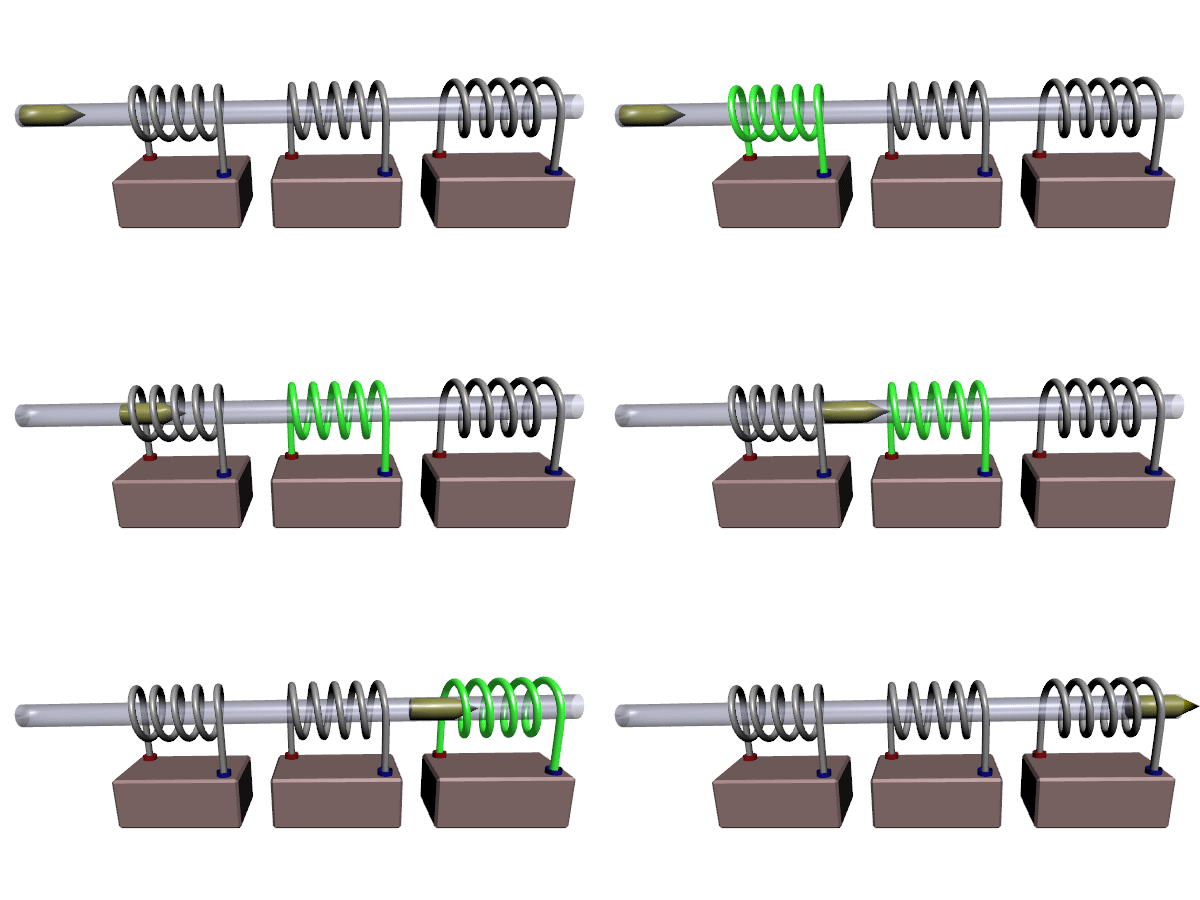
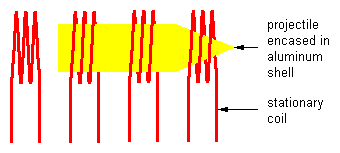
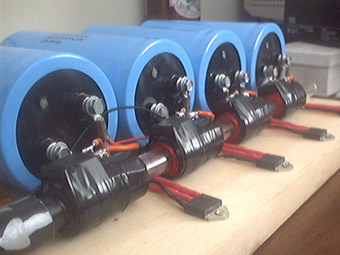
At its core, a coilgun arranges one or more electromagnetic coils along a shared central axis, with the projectile travelling through the bore in a straight line. The simplest configuration, a single-stage design, employs just one coil: a large current pulse generates a magnetic field that draws a ferromagnetic slug toward the coil's centre, and the circuit must be cut the instant the projectile approaches that midpoint to prevent it from being pulled back. Multistage systems chain multiple coils in sequence, each firing in a precisely timed order to add incremental velocity. Beyond ferromagnetic slugs, some designs use non-magnetic materials like aluminium or copper, where the projectile's own armature carries an induced current that interacts with the drive coils. An even more exotic proposal involves superconducting coils arranged coaxially; by quenching them one after another, a travelling wave of magnetic gradient is created that a superconducting projectile could ride like a surfer on a wave. Power for any of these arrangements typically comes from capacitors or batteries rated for rapid discharge, with protective diodes guarding sensitive components against reverse polarity spikes.
How Coilguns Differ from Railguns and Gauss Guns
A common source of confusion in popular science fiction is the tendency to lump coilguns, railguns, and Gauss guns into a single category, yet the three operate on fundamentally different physical principles. A coilgun accelerates its projectile along the same central axis as its drive coils, and the barrel is smoothbore rather than rifled, making it structurally unlike a conventional rifle. A railgun, by contrast, generates its propulsive force at right angles to the central axis of the current loop formed by two conducting rails, and it typically demands sliding electrical contacts to push a heavy current through the projectile or its sabot. Coilguns, on the other hand, do not inherently require any sliding contact. A Gauss gun is yet another matter entirely: it predates the coilgun concept and relies on a chain of permanent ferromagnets arranged in a Newton's-Cradle-like configuration to transfer momentum to a target. Because a coilgun draws on electromagnetic induction and timed coil switching rather than static magnet chains, it occupies a distinct niche in the family of electromagnetic launchers.
Switching, Efficiency & the Frictionless Advantage
The single most demanding engineering problem in coilgun design is the switching of electrical power through the drive coils at precisely the right moment. The most rudimentary solution is a spark gap, which simply allows stored energy to arc through the coil once a voltage threshold is reached; it is straightforward but relatively inefficient. More sophisticated builds employ solid-state devices such as IGBTs and power MOSFETs, which can be turned off mid-pulse for tighter control, or SCRs, which commit all stored energy before latching off. Hobbyists working with inexpensive parts sometimes repurpose a camera flash tube as a passive switch, wiring it in series with the coil so that ionised gas permits a large current pulse without mechanical wear. One of the coilgun's most compelling advantages over a railgun is the absence of an intrinsic velocity ceiling imposed by hypervelocity contact and bore erosion. Because the projectile is magnetically centred or even levitated within the coil bore, no physical friction against the walls occurs. In a fully evacuated tube, friction vanishes entirely, which extends the practical service life of the launcher.
Gallery

Frequently Asked Questions
Who invented the coilgun and when?
Norwegian physicist Kristian Birkeland is credited with creating the first coilgun, securing a patent for the design in 1904.
How does a coilgun differ from a railgun?
A coilgun accelerates a projectile using a series of electromagnetic coils acting as a linear motor, whereas a railgun relies on two parallel conducting rails to generate the launch force. The coilgun's barrel is also smoothbore rather than rifled.
What kind of projectile does a coilgun fire?
It is designed to launch either a ferromagnetic piece or a conducting slug, since the electromagnetic coils need a material that responds to their magnetic field to gain speed.
Why is the coilgun considered a distinctly Norwegian invention?
Birkeland's 1904 patent established the foundational concept of the coilgun, making Norway the birthplace of this particular class of electromagnetic mass driver.
Is a coilgun the same thing as a Gauss gun?
No; although both fall under the broader umbrella of electromagnetic launchers, a coilgun uses discrete coils arranged along the barrel, while a Gauss gun operates on a different coil-sequencing principle, making them separate categories.
More in Norwegian inventions 1-24
Spotted an error? Know more?
Reader corrections go straight into our review queue. Suggest an edit · How this site is sourced