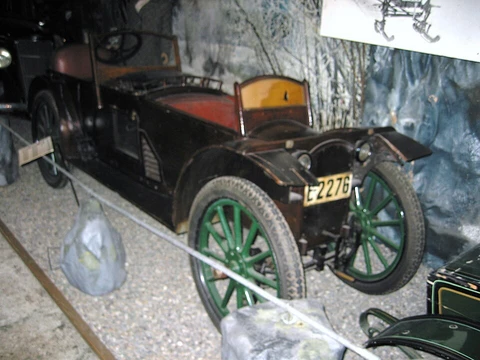
Birkeland–Eyde process
An early industrial nitrogen fixation process using electrical arcs.

Unknown author · Public domain
The Birkeland–Eyde process was one of the competing industrial processes in the beginning of nitrogen-based fertilizer production. It is a multi-step nitrogen fixation reaction that uses electrical arcs to react atmospheric nitrogen with oxygen, ultimately producing nitric acid with water.
- Developed
- 1903
- Inventors
- Kristian Birkeland and Sam Eyde
Lore & Background
The process was developed by Norwegian industrialist and scientist Kristian Birkeland along with his business partner Sam Eyde in 1903, based on a method used by Henry Cavendish in 1784.
Reader's Guide
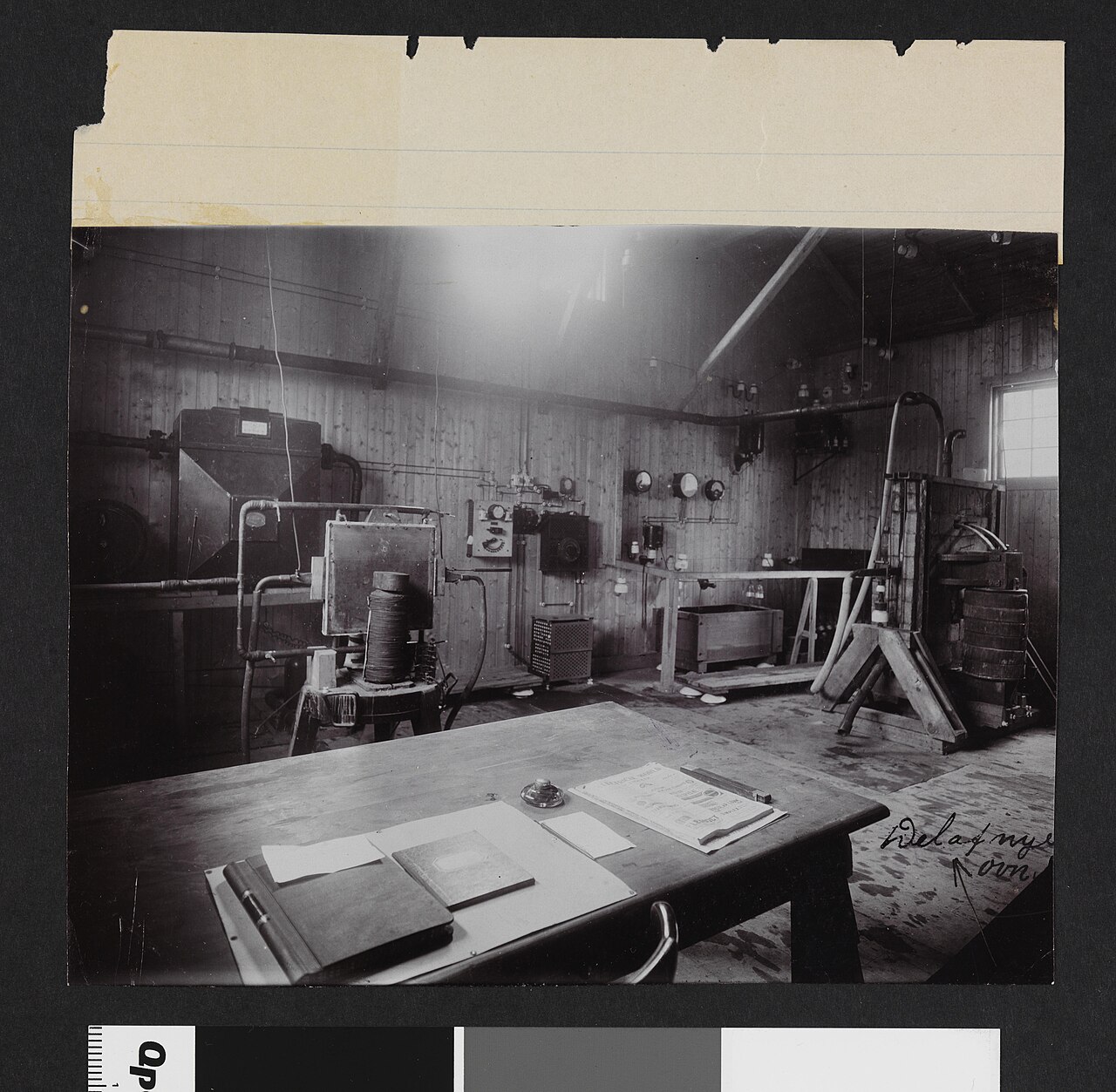
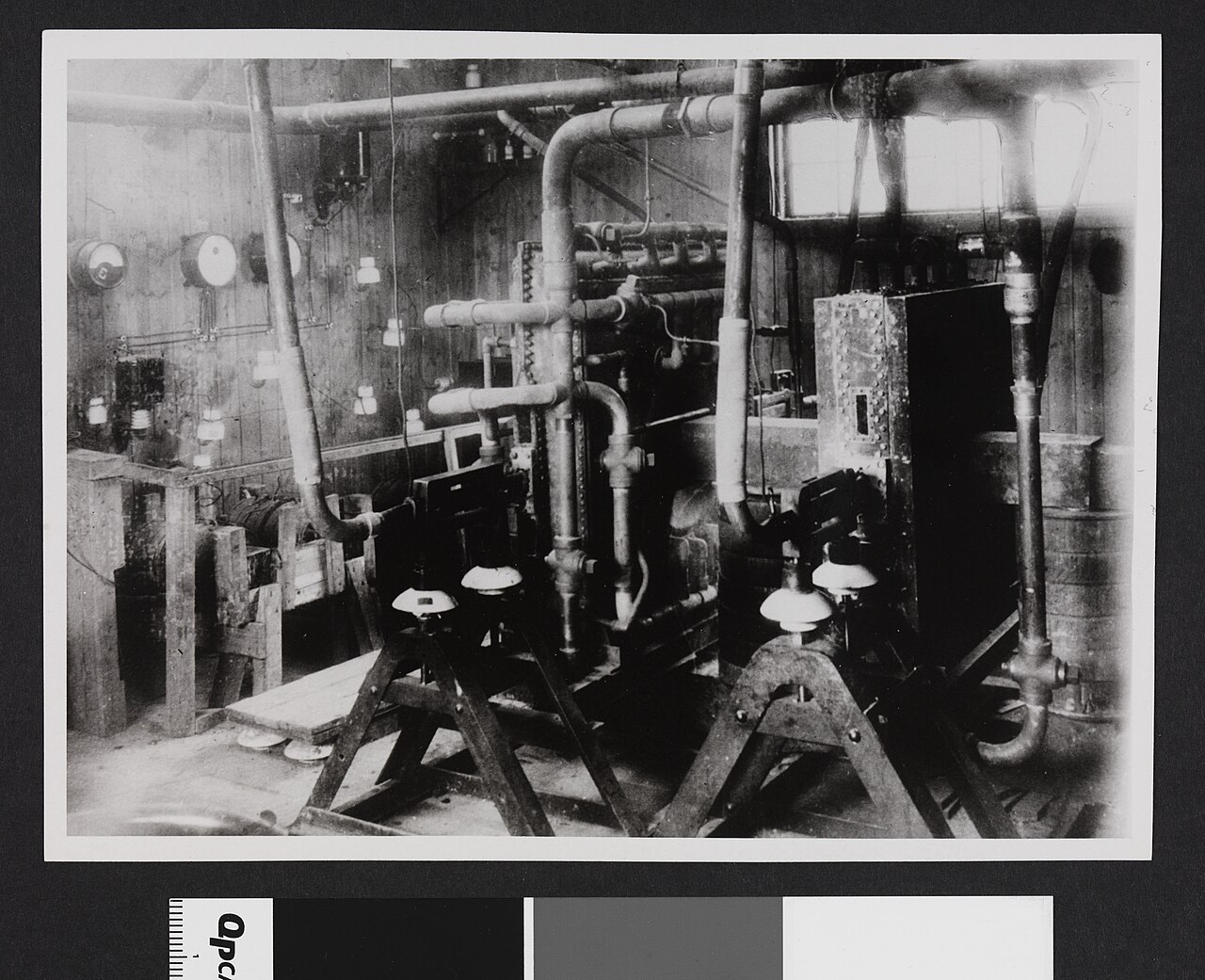
An electrical arc was formed between two coaxial water-cooled copper tube electrodes powered by a high voltage alternating current of 5 kV at 50 Hz. A strong static magnetic field generated by a nearby electromagnet spreads the arc into a thin disc by the Lorentz force. Air was blown through this arc, causing some of the nitrogen to react with oxygen forming nitric oxide. The hot nitric oxide is cooled and combines with atmospheric oxygen to produce nitrogen dioxide, which is then dissolved in water to give nitric acid, purified by fractional distillation.
Did You Know?
- The process demanded about 15 MWh per ton of nitric acid, yielding approximately 60 g per kWh.
- The same reaction is carried out by lightning, providing a natural source for converting atmospheric nitrogen to soluble nitrates.
- About 20% of the produced oxides of nitrogen remained unreacted; final towers used an alkaline solution of lime to convert the remaining oxides to calcium nitrate.
Origins and the Norwegian Industrial Gambit
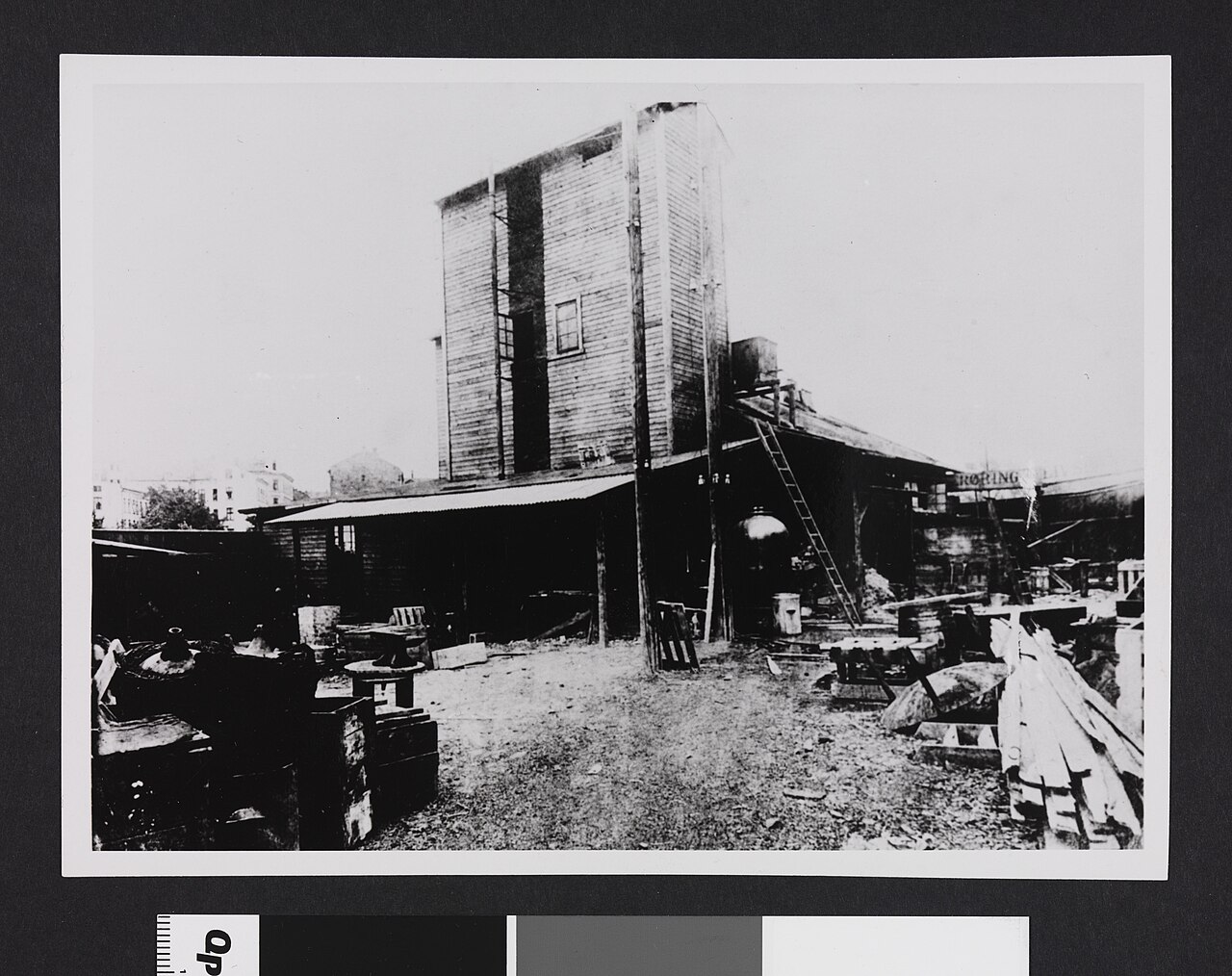
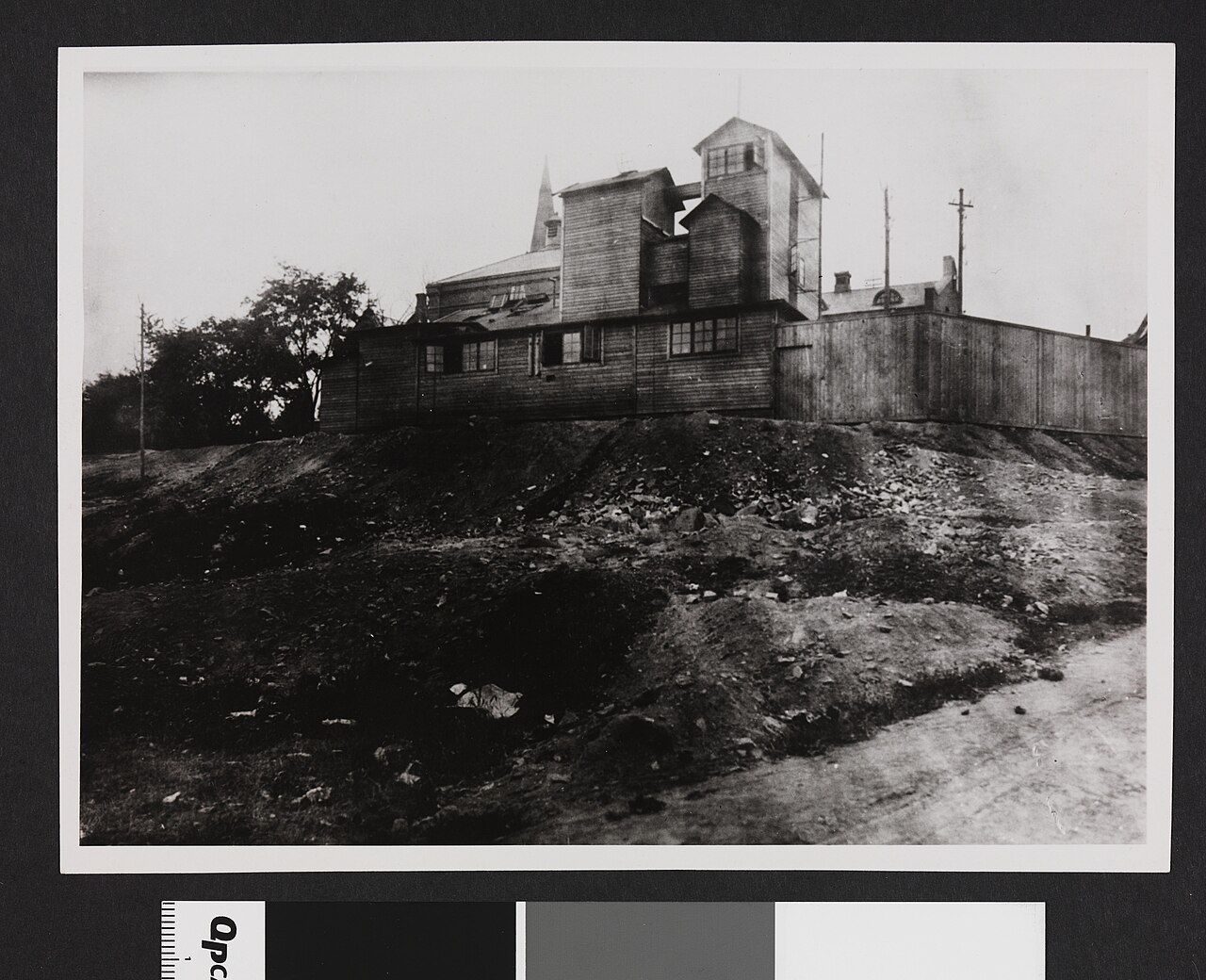
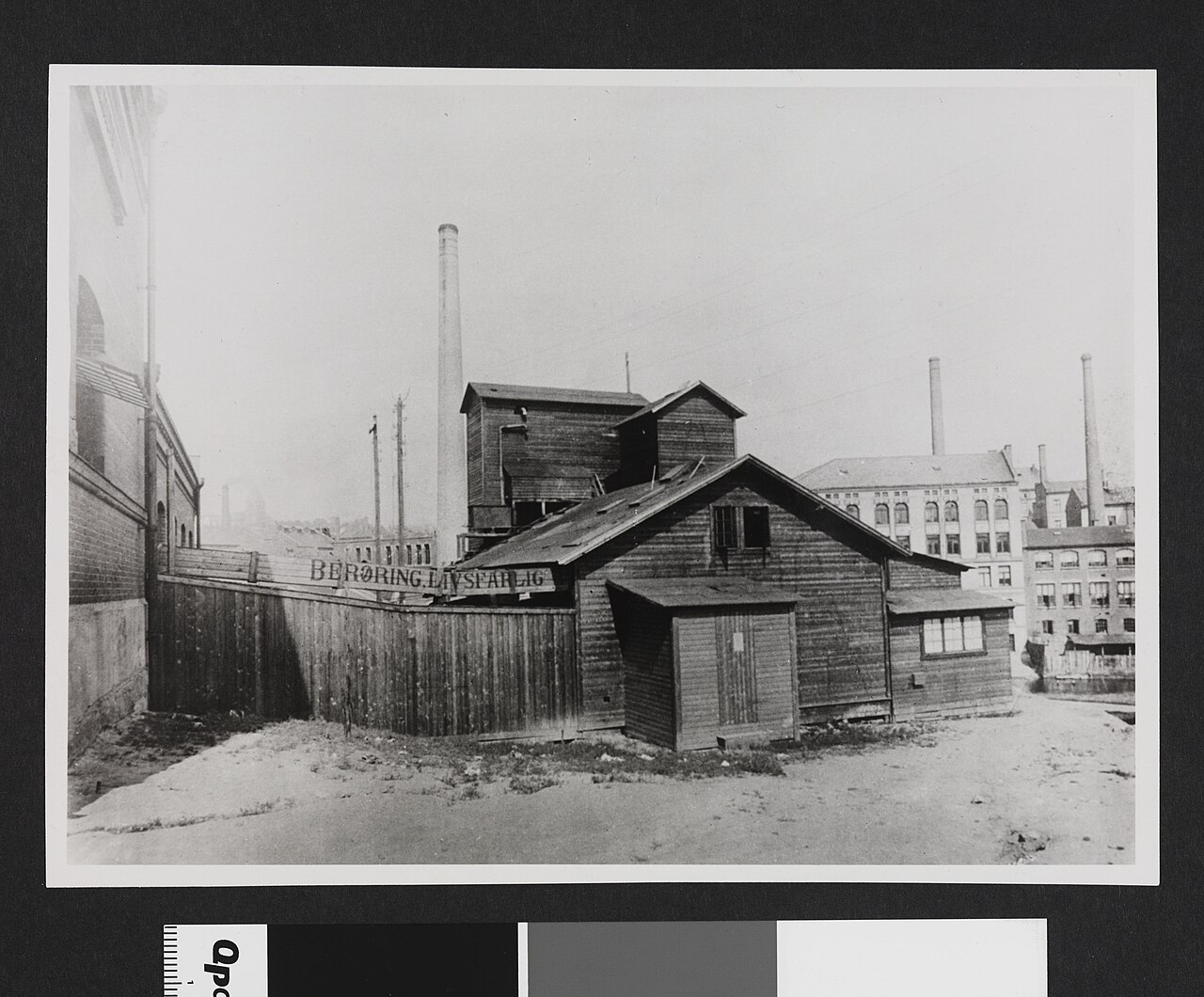
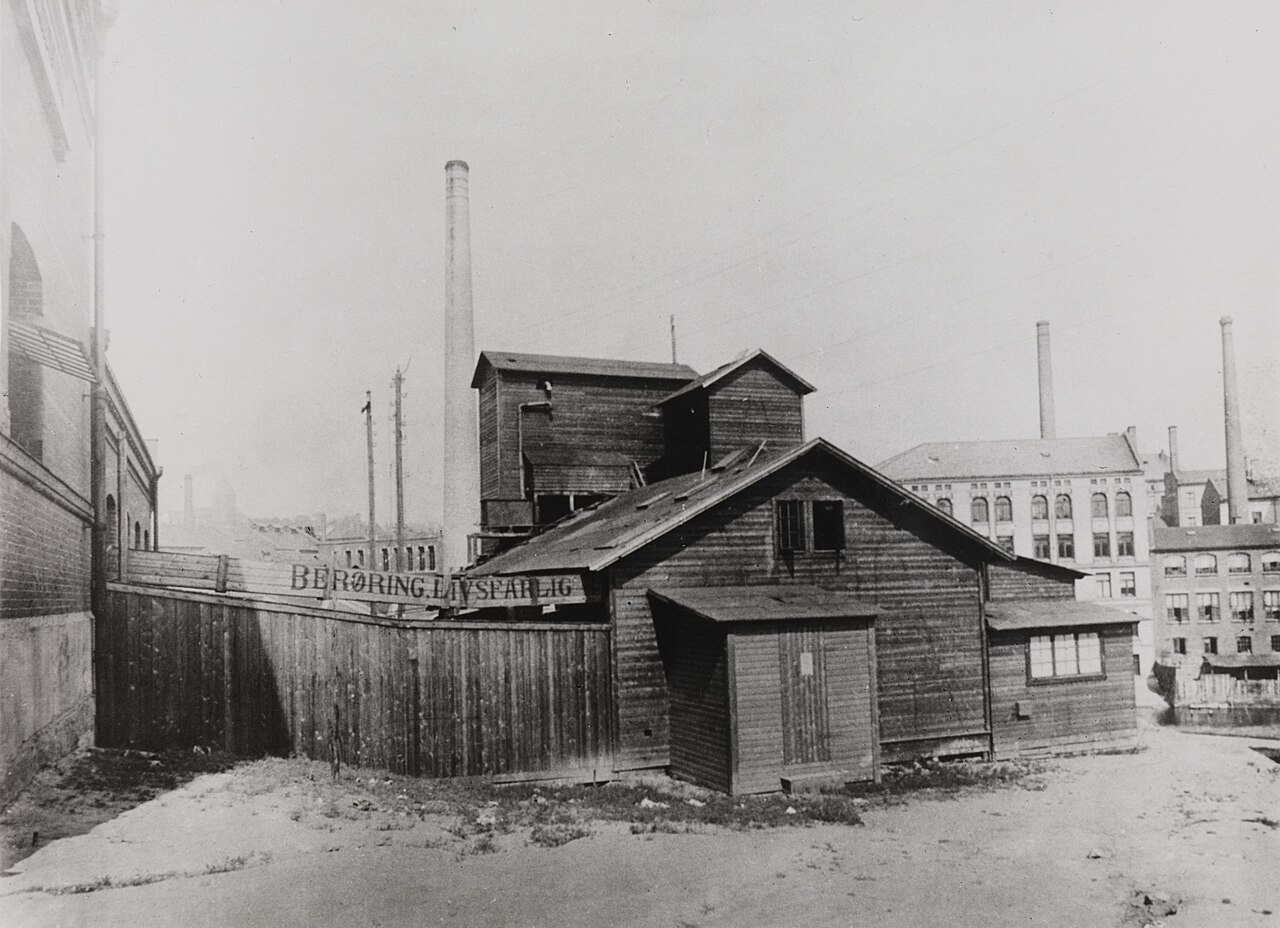
Norwegian industrialist and scientist Kristian Birkeland, working alongside his business partner Sam Eyde, brought the Birkeland–Eyde process to life in 1903. Their work drew on a nitrogen-fixation concept first demonstrated by Henry Cavendish back in 1784, transforming a centuries-old laboratory curiosity into a viable industrial route for producing nitric acid from the air itself. The pair did not merely publish a paper; they built a factory. In the Norwegian towns of Rjukan and Notodden, a plant was erected specifically around the arc-furnace technology, and its construction was inseparable from the simultaneous development of large hydroelectric power stations. This coupling of electricity generation and chemical production was essential, because the process devoured enormous quantities of power. At the time, the Birkeland–Eyde method stood as one of several competing industrial approaches to nitrogen-based fertilizer, a sector critical to feeding growing populations. The Norwegian setting, with its abundant waterfalls and rivers, gave Birkeland and Eyde a natural advantage in securing the cheap electrical energy their arc reactors required, making their venture both a scientific achievement and a bold industrial bet.
The Arc Reactor: Forging Nitrogen from Air
At the heart of the Birkeland–Eyde process sat an electrical arc reactor of striking design. Two coaxial copper tube electrodes, kept cool by circulating water, were driven by a high-voltage alternating current of five kilovolts at fifty hertz. A powerful static magnetic field, produced by a nearby electromagnet, acted on the arc through the Lorentz force, stretching it outward into a thin, luminous disc. This geometry was not invented from scratch; it echoed an 1861 experiment by Julius Plücker, who placed a U-shaped electromagnet around a spark gap and observed a disc of sparks. Walther Nernst and other researchers later replicated the effect. Within that disc, plasma temperatures soared past three thousand degrees Celsius. Air was forced through the superheated zone, and a fraction of the nitrogen molecules broke free to combine with oxygen, yielding nitric oxide. By carefully tuning the arc energy and the velocity of the air stream, operators could achieve yields of roughly four to five percent nitric oxide at peak temperature, with lower conversion at cooler conditions.
From Nitric Oxide to Nitric Acid: The Absorption Cascade
Once nitric oxide emerged from the arc, the chemistry continued in a carefully staged sequence. The hot NO gas was cooled and then allowed to react with additional atmospheric oxygen, converting it to nitrogen dioxide. The speed of this oxidation depended on the NO concentration: at one percent it required roughly 180 seconds to reach ninety percent conversion, while at six percent the same milestone was reached in about forty seconds. The nitrogen dioxide was then absorbed into water in a series of packed-column or plate-column towers, each standing about four stories tall, to produce nitric acid at a concentration of roughly forty to fifty percent. The first tower bubbled the gas through water alongside non-reactive quartz fragments. A counter-current arrangement moved the concentrated acid into a granite storage vessel while the next tower's liquid took its place, cascading all the way to the final tower, which received fresh water. Because about twenty percent of the nitrogen oxides remained unreacted, the last towers held an alkaline lime solution that captured the stragglers as calcium nitrate, commonly called Norwegian saltpeter, with only about two percent escaping into the atmosphere. The acid was subsequently purified and concentrated through fractional distillation.
Energy Hunger and the Rise of Rivals
The Birkeland–Eyde process carried a crippling energy burden that ultimately sealed its fate. Producing a single ton of nitric acid demanded approximately fifteen megawatt-hours of electricity, translating to a yield of only about sixty grams of acid per kilowatt-hour. This extreme intensity is why Birkeland anchored his factory to a nearby hydroelectric power station; without cheap, abundant electricity from Norwegian waterfalls, the operation would have been economically unviable. Nature, of course, performs the same nitrogen-to-nitrate conversion during lightning strikes, providing a small but free source of soluble nitrates in soil. By the 1910s and 1920s, however, a more energy-efficient alternative had matured. The Haber process, which synthesizes ammonia directly from molecular nitrogen and hydrogen (the latter typically obtained by steam-reforming methane), combined with the Ostwald process, which oxidizes that ammonia into nitric acid, offered a far lower energy cost per unit of product. In Norway, the Birkeland–Eyde plants were gradually phased out in favor of this Haber–Ostwald route, marking the end of the arc-furnace era in industrial nitrogen fixation.
Gallery
Frequently Asked Questions
What is the Birkeland–Eyde process?
It is an early industrial method for producing nitrogen-based fertilizer by fixing atmospheric nitrogen. The technique forces air through an electrical arc so nitrogen bonds with oxygen, and the resulting compounds are dissolved in water to yield nitric acid.
Who developed the Birkeland–Eyde process?
Norwegian scientist Kristian Birkeland and his business partner Sam Eyde created the process in 1903. Their work was independent of Henry Cavendish's 1784 experiments, which relied on a different spark-discharge approach.
How does the Birkeland–Eyde process actually work?
Atmospheric nitrogen is pushed through a high-voltage electrical arc where it chemically combines with oxygen. The nitrogen oxides produced are then absorbed in water, ultimately forming nitric acid that can be converted into usable fertilizer.
Where were Birkeland–Eyde factories built?
Industrial plants using the process were erected in Rjukan and Notodden in Norway. These sites became major hubs for large-scale nitrogen fertilizer production in the early twentieth century.
Why is the Birkeland–Eyde process historically important?
It represented one of the first commercially viable ways to fix atmospheric nitrogen on an industrial scale, marking a key milestone in agricultural chemistry. It proved that electrical energy could drive the large-scale reactions needed to produce fertilizer for growing populations.
More in Norwegian inventions 1-24
Spotted an error? Know more?
Reader corrections go straight into our review queue. Suggest an edit · How this site is sourced