
Malloy Hoverbike
VTOL hoverbike developed by Chris Malloy, with early prototypes from 2011–2012 and public unveiling in 2014.

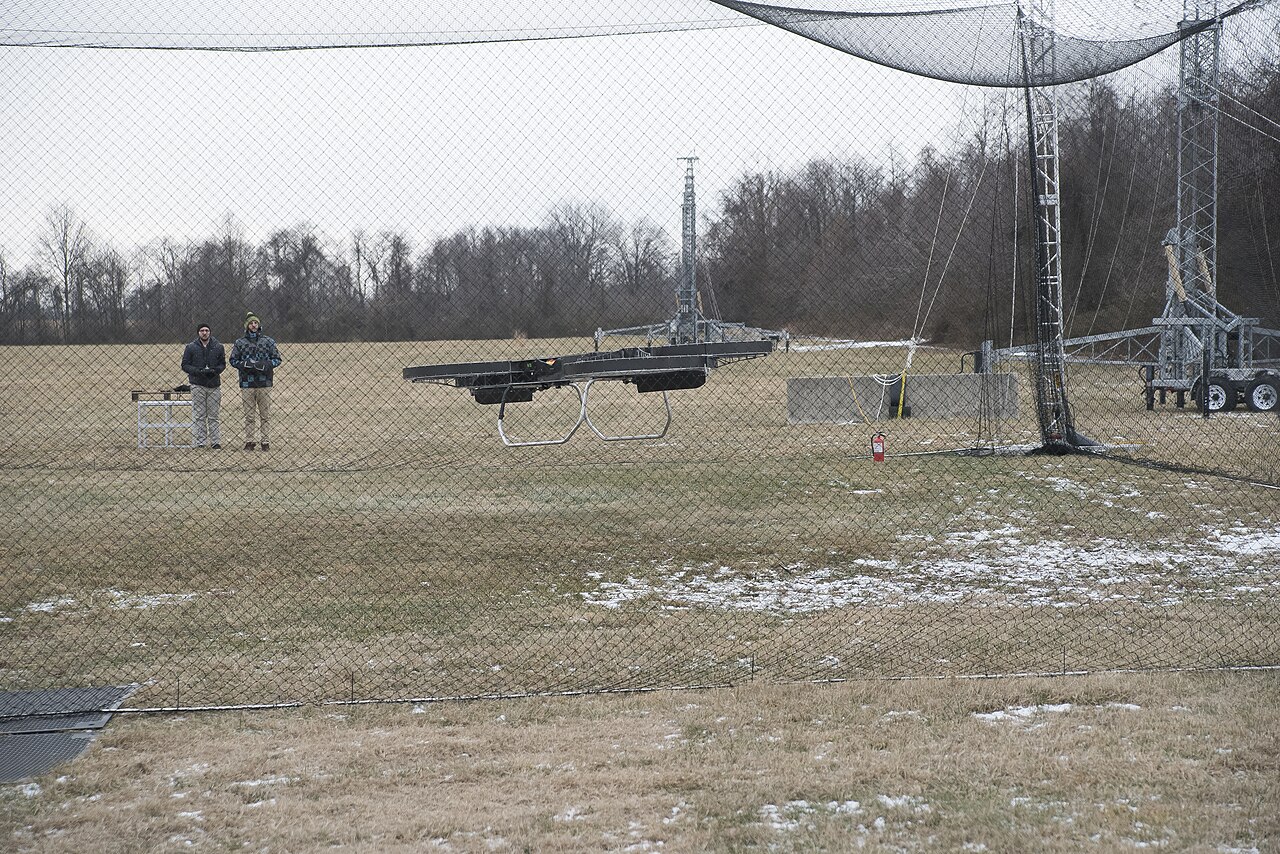
Jhi Scott, U.S. Army Research Laboratory · Public domain
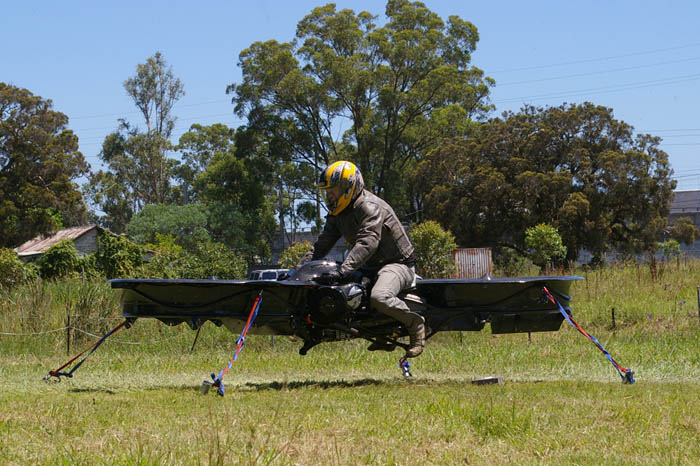
The Malloy Hoverbike is a single-person quadcopter that uses turbo-fan power for vertical take-off and landing (VTOL). Development began around 2011–2012 by Chris Malloy, an inventor from New Zealand, with early prototypes appearing before the hoverbike was publicly unveiled in 2014. The vehicle has two propellers at the front and two at the back, each enclosed in a hoop-shaped nacelle. Directional control comes from steerable blades located beneath these nacelles. The two propellers on each side partially overlap, and when not in use, they can be folded over one another to reduce the space needed for parking and transport.
To produce the hoverbike, Chris Malloy founded Malloy Aeronautics, an aeronautical firm originally based in New Zealand before later moving to the United Kingdom. This company handled the commercial development and manufacturing of the vehicle. The hoverbike was displayed at the 2015 Paris Airshow.
The craft is built from carbon fibre composite and aluminium, and is powered by a petrol engine. It requires minimal training to pilot and can also fly autonomously, featuring a "Home" button. It can carry a payload of up to 130 kilograms (290 lb) at a top speed of 96 kilometres per hour (60 mph), with a service ceiling of 3,044 metres (9,987 ft).
Malloy Aeronautics has worked with SURVICE Engineering Company in support of the U.S. Army Armament Research, Development and Engineering Center (ARDEC). Under a contract with the U.S. Army Research Laboratory, Survice and Malloy participated in the Army's Picatinny Pallet Sustainment Aerial Mobility Vehicle (SAMV) programme.
The Malloy Hoverbike has drawn comparisons to the speeder bikes from George Lucas's *Star Wars* saga, though the input controls on the fictional hoverbikes are notably different from those on the Malloy Hoverbike.
Malloy Aeronautics Ltd continues to develop VTOL technology and is currently building heavy-lift electric unmanned logistics drones. In January 2024, the company was acquired by BAE Systems.
- developed
- 2011–2012 (early prototypes); publicly unveiled 2014
Lore & Background
Chris Malloy, a New Zealand inventor, developed the Malloy Hoverbike with early prototypes appearing around 2011–2012, leading to a public unveiling in 2014. The vehicle features two forward and two aft-mounted vertical propellers enclosed in hoop nacelles, with steerable blades beneath for directional control. Each propeller pair has partial overlap and can be folded for compact storage and transport. To commercialize the hoverbike, Malloy established Malloy Aeronautics, originally based in New Zealand before later moving to the United Kingdom. The hoverbike participated in the 2015 Paris Airshow. It is constructed from carbon fibre composite and aluminium, powered by a petrol engine, and can be piloted with minimal training or flown autonomously via a 'Home' button. It carries a 130 kg payload at 96 km/h and reaches a ceiling of 3,044 meters.
Reader's Guide
The Malloy Hoverbike represents a notable step in personal VTOL technology, blending compact design with autonomous features. Its participation in the 2015 Paris Airshow and collaboration with the U.S. Army's Picatinny Pallet Sustainment Aerial Mobility Vehicle (SAMV) program highlight its military interest. The hoverbike has been compared to Star Wars speeder bikes, though input functions differ. Malloy Aeronautics continues VTOL work, building heavy lift electric unmanned logistics drones. In January 2024, the company was acquired by BAE Systems, underscoring the hoverbike's legacy as a stepping stone toward advanced aerial mobility solutions.
Did You Know?
- The Malloy Hoverbike has two forward and two aft-mounted vertical propellers enclosed in hoop nacelles.
- Each propeller pair can be folded over each other to reduce parking footprint.
- It can carry a 130 kg payload at 96 km/h and has a ceiling of 3,044 meters.
- Malloy Aeronautics was acquired by BAE Systems in January 2024.
Design & Engineering
The Malloy Hoverbike is a single-seater vertical take-off and landing quadcopter driven by a turbo-fan powerplant. Its airframe is built from carbon fibre composite and aluminium, and it is propelled by a petrol engine. The craft carries four vertical propellers arranged as two forward and two aft units, each sealed inside a hoop nacelle. Within those nacelles sit steerable blades that the pilot uses to steer the direction of flight. A particularly practical design choice is that each propeller pair partially overlaps; when the vehicle is grounded, the blades can be folded over one another to shrink the parking footprint and make packing or transport far simpler. In terms of performance, the hoverbike can lift a 130-kilogram payload while cruising at 96 kilometres per hour, and it reaches a ceiling of 3,044 metres. It can be flown by a pilot with minimal training, operated fully autonomously, or recalled with a dedicated Home button.
Origins & the Man Behind It
The hoverbike's story begins in 2006, when New Zealand inventor Chris Malloy set out to develop a personal VTOL craft. To move the project from prototype to commercial production, he founded Malloy Aeronautics, an aeronautical company based at White Waltham airfield, a small field situated south-west of London in the United Kingdom. The firm took full responsibility for the commercial development and manufacturing of the vehicle. One of the project's most high-profile public appearances came at the 2015 Paris Airshow, where the hoverbike was displayed to a global audience of aviation professionals, journalists, and enthusiasts. That showcase helped place the machine squarely in the international conversation about personal aerial mobility and established Malloy Aeronautics as a credible, if small, player in the emerging VTOL sector.
Military Collaboration & the SAMV Programme
The hoverbike's capabilities did not go unnoticed by the U.S. military. Malloy Aeronautics entered a collaborative arrangement with SURVICE Engineering Company to support the U.S. Army Armament Research, Development and Engineering Center, commonly known as ARDEC. Under a contract with the United States Army Research Laboratory, the two firms took part in the Army's Picatinny Pallet Sustainment Aerial Mobility Vehicle programme, an initiative aimed at improving how supplies and pallets are moved in operational environments. This partnership demonstrated that the hoverbike's compact VTOL design and relatively simple handling were viewed as potentially useful for military logistics and sustainment tasks. The involvement of a London-based firm and an American engineering partner in a U.S. Army programme also underscored the increasingly cross-border nature of modern aerial-mobility research and development.
Pop Culture Echoes & the Road Ahead
The Malloy Hoverbike has often been likened to the speeder bikes that zoom across the screens of George Lucas's Star Wars saga, a comparison that instantly captures the public imagination. In reality, though, the input functions of those fictional craft differ substantially from the control scheme of the Malloy design, which depends on steerable blades nested inside its nacelles rather than the more fantastical propulsion depicted in the films. Looking ahead, Malloy Aeronautics Ltd has kept pushing in the VTOL space, with its current focus on building heavy-lift electric unmanned logistics drones. In January 2024, the company was acquired by BAE Systems, one of the world's largest defence and aerospace conglomerates, a move that signals the hoverbike's underlying technology and the firm's accumulated VTOL expertise will continue to evolve under a far larger corporate umbrella.
Gallery
Frequently Asked Questions
Who invented the Malloy Hoverbike?
The Malloy Hoverbike was created by Chris Malloy, a New Zealand-based inventor who began building early prototypes around 2011–2012.
What exactly is the Malloy Hoverbike?
It is a single-person, four-propeller quadcopter designed for vertical take-off and landing, powered by turbo-fans rather than conventional engines.
When was the Malloy Hoverbike first shown to the public?
Although initial prototypes date back to 2011–2012, the vehicle was officially unveiled to the public in 2014.
How does the Malloy Hoverbike achieve directional control?
Each of its four propellers sits inside a hoop-shaped nacelle, and steerable blades positioned beneath those nacelles redirect airflow to steer the craft. The overlapping propellers on each side can also fold flat to shrink the bike's footprint when it is not flying.
Why is the Malloy Hoverbike considered a notable New Zealand invention?
It represents one of the earliest practical attempts at a personal, road-legal VTOL vehicle developed in New Zealand, showcasing the country's contribution to experimental personal-transport engineering.
More in New Zealand inventions 1-18
Spotted an error? Know more?
This is a living reference — every entry is fact-audited, and reader corrections feed straight into our audit queue. Suggest an edit · See this site's audit record