
Callender-Hamilton bridge
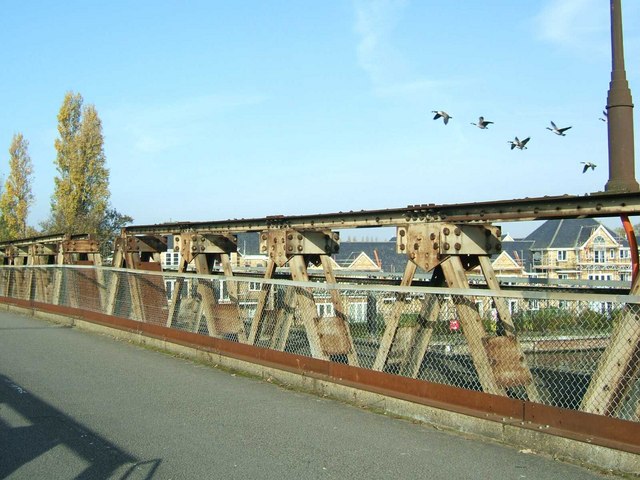
Modular prefabricated truss bridge for civil and military use.

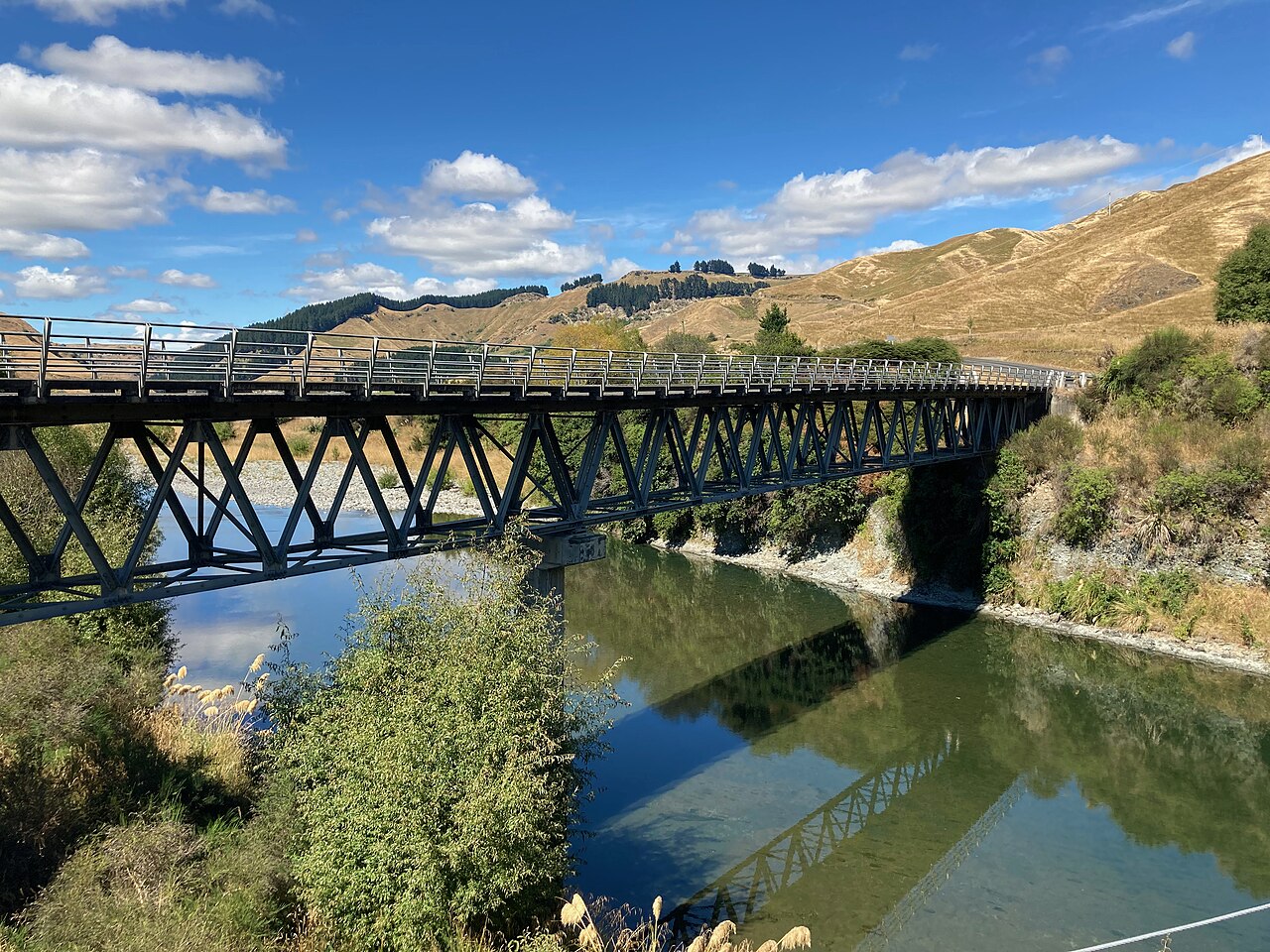
Gertrude206 · CC BY-SA 4.0
The Callender-Hamilton bridge is a modular portable pre-fabricated truss bridge, designed for use as permanent civil bridging, emergency bridge replacement, and military construction. It was designed by New Zealand civil engineer A. M. Hamilton and patented in 1935. The bridge is stronger and simpler in design concept than the more familiar Bailey bridge, though it takes much longer to assemble due to its bolted construction with torque settings.
- designer
- A. M. Hamilton
- nationality
- New Zealand
- field
- Civil engineering
- patent_year
- 1935
- known_for
- Modular portable prefabricated truss bridge
- patent_numbers
- British 423926, 423996; US 2,024,001
Lore & Background
A. M. Hamilton, a New Zealand civil engineer, designed the Callender-Hamilton bridge system and patented it in 1935. His inspiration came from his work between 1928 and 1932 as principal engineer on the 'Hamilton Road' through Iraqi Kurdistan, which he described in his 1937 book 'Road Through Kurdistan: Travels in Northern Iraq'. He recognized the need for strong, adaptable bridges made from simple components that could be easily transported and erected in remote locations or on difficult terrain.
The bridge system is fabricated by Painter Brothers, Hereford, operating within the Balfour Beatty Power Networks Division, formerly British Insulated Callender's Cables. Hamilton was awarded £4,000 in 1936 by the War Office for the use of his early bridges, and the Royal Commission on Awards to Inventors awarded him £10,000 in 1954 as compensation for the use of his patent in the design of the Bailey bridge.
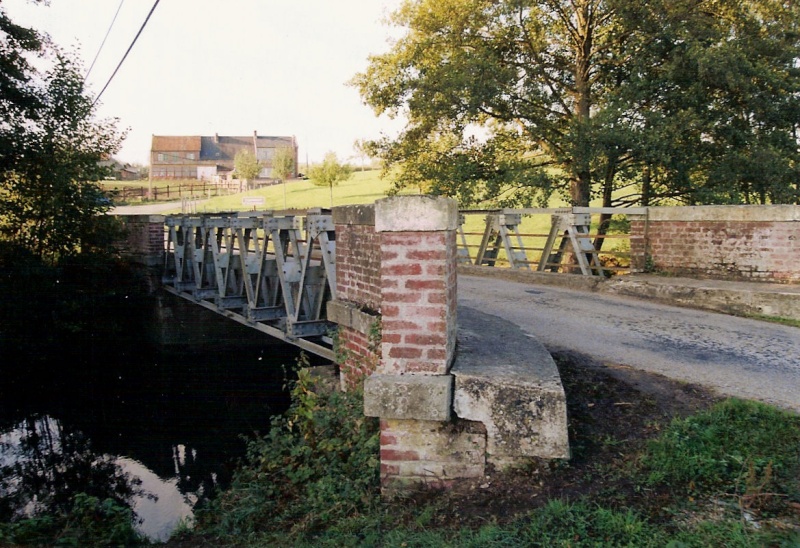
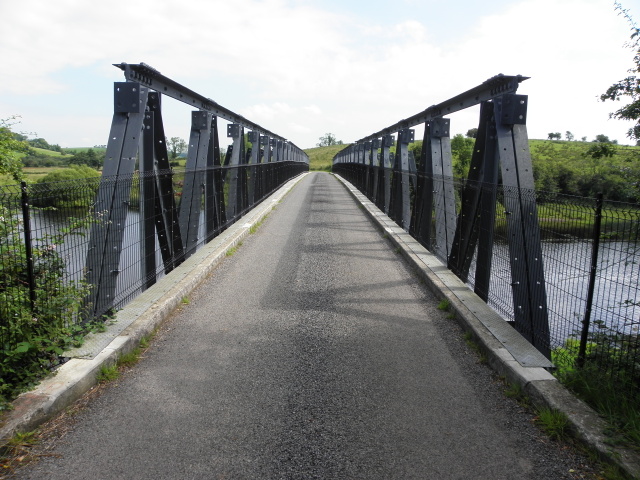
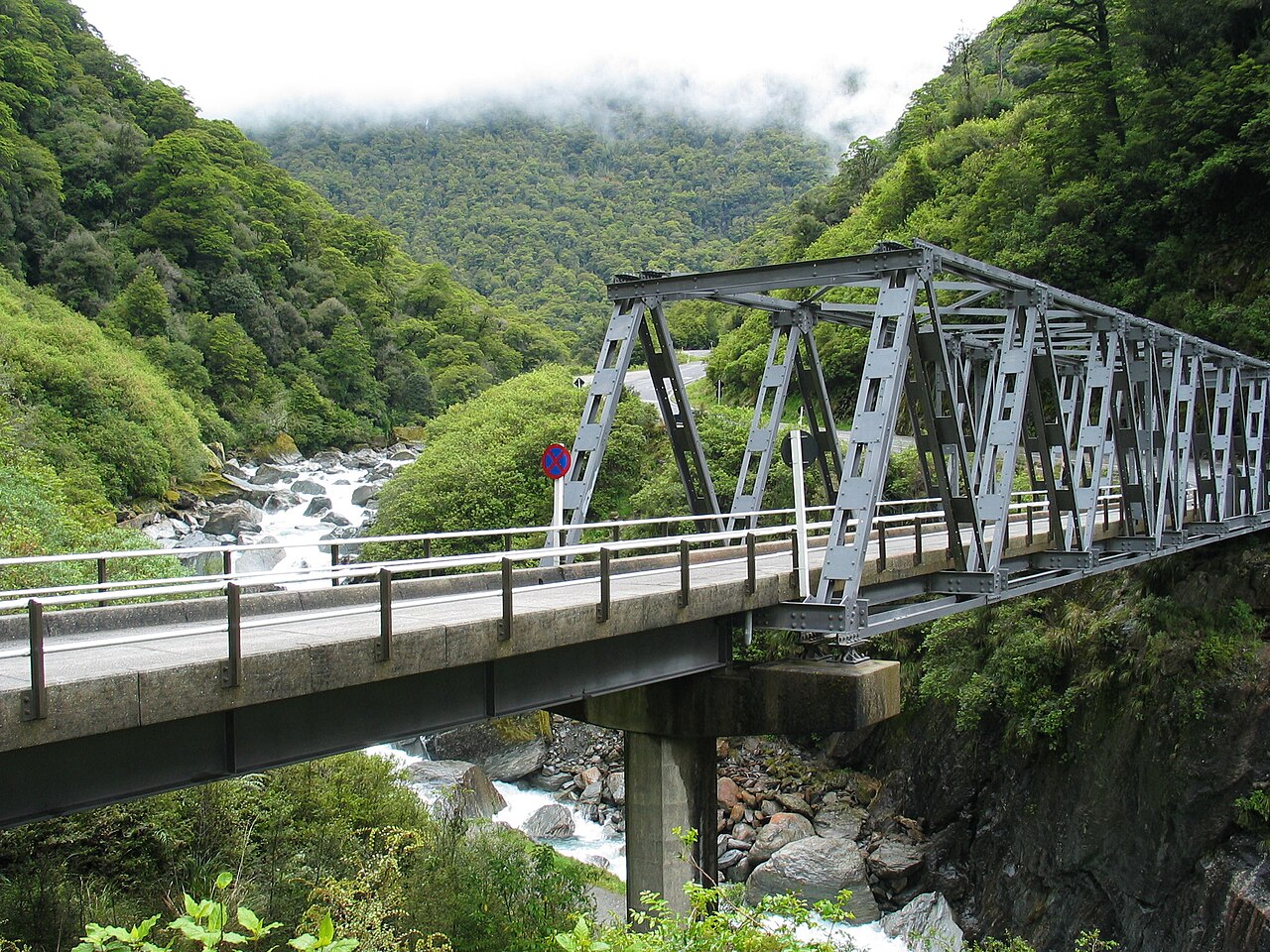
The design uses Warren trusses and a series of gusset plates for direct attachment of members. All connections are bolted, removing the need for onsite welding. The bridge can be assembled on one side of a gap and launched with a removable nose on rollers to the other side, similar to the Bailey bridge.
Reader's Guide
The Callender-Hamilton bridge system represents a significant development in modular bridging technology, designed to span lengths from 30 to 150 metres with road widths of one to three or more lanes. Its prefabricated Panel/Floor Beam/Deck system allows construction without skilled labour, special plant, or heavy equipment, and all elements are small enough for road transport. The bridge is usually built on falsework, with a reinforced concrete deck superimposed to act compositely with the steel truss deck, eliminating scaffolding. Alternative decks include steel orthotropic, steel open grate, or timber.
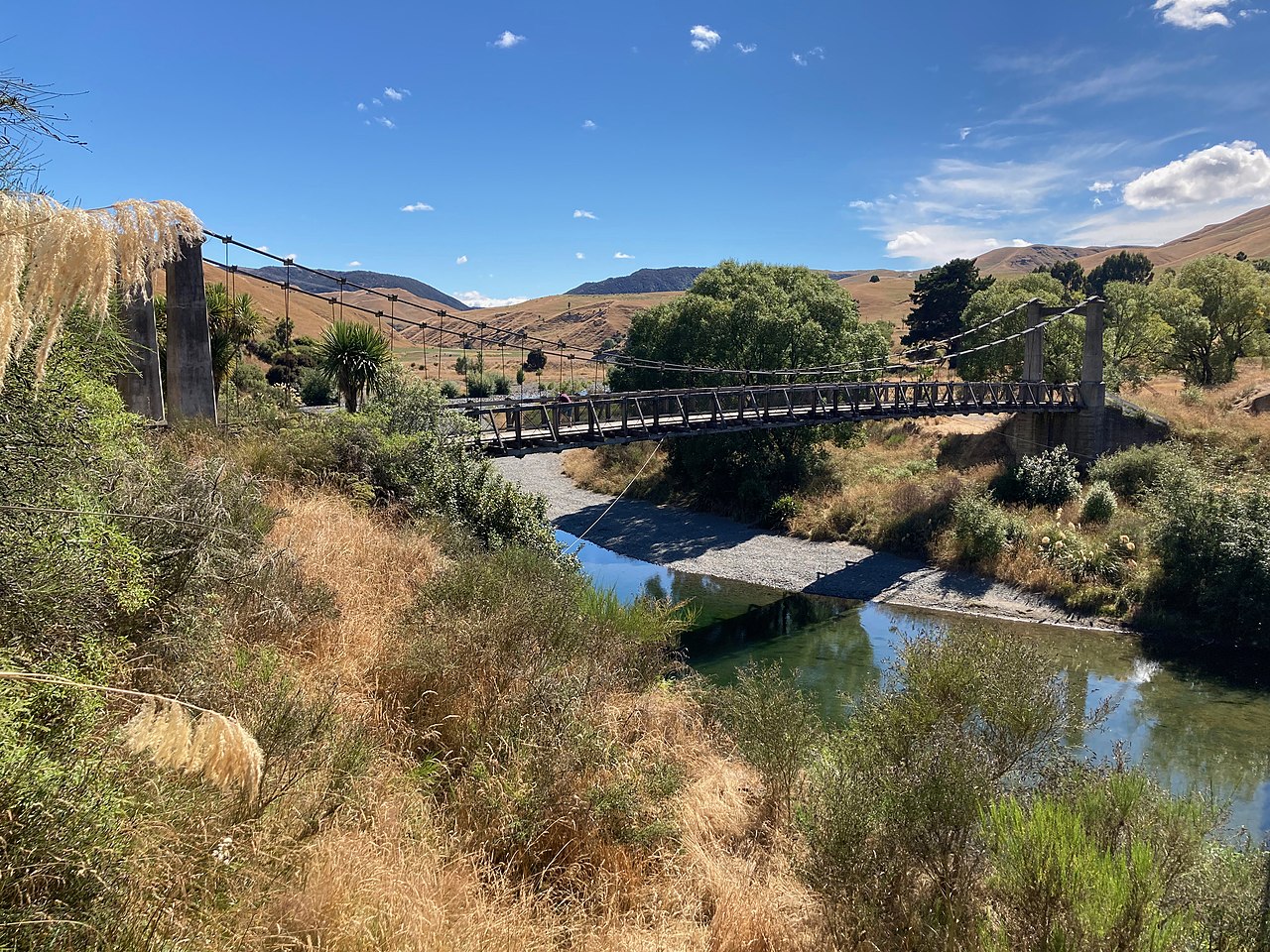
A key feature is the high salvability due to hot-dip galvanisation of each component, allowing dismantled bridges to be reduced to initial components for reuse. The system has been used in numerous locations worldwide, including India, Normandy, Northern Ireland, Newfoundland and Labrador, the Netherlands, Cumbria, Wales, Dorset, Madagascar, and New Zealand. Notable examples include the fourth Walton Bridge, a temporary bridge for the Hinkley C Nuclear Power Station grid connection, and two 30m span bridges on the Hauraki Rail Trail Cycleway in New Zealand. The Kearsley pipe bridge was washed away in floods in February 2020.
Did You Know?
- The Callender-Hamilton bridge was patented in 1935 with British patent numbers 423926 and 423996, and US Patent No. 2,024,001.
- A. M. Hamilton was awarded £4,000 in 1936 by the War Office for the use of his early bridges.
- The Royal Commission on Awards to Inventors awarded Hamilton £10,000 in 1954 as compensation for the use of his patent in the design of the Bailey bridge.
- The bridge can be assembled entirely on one side of a gap and projected on rollers to the other side using a removable launching nose.
Origins in the Mountains of Kurdistan
The Callender-Hamilton bridge system traces its intellectual roots to a stretch of road cutting through the rugged terrain of Iraqi Kurdistan. Between 1928 and 1932, New Zealand-born civil engineer A. M. Hamilton served as principal engineer on what became known as the Hamilton Road. Working in such remote and challenging country, he recognised a pressing need: strong, adaptable bridges built from simple components that could be transported and erected without heavy machinery in places where conventional construction was impractical. He later chronicled this experience in his 1937 book, Road Through Kurdistan: Travels in Northern Iraq. The insight he gained there matured into a patented bridge system in 1935, carrying British patent numbers 423926 and 423996, with a US patent (No. 2,024,001) following. The War Office recognised the military potential of his early designs, awarding him £4,000 in 1936. Decades later, in 1954, the Royal Commission on Awards to Inventors granted him a further £10,000, acknowledging that the later Bailey bridge design had partially breached his original patent.
Engineering Philosophy and Construction Method
At the heart of the Callender-Hamilton system lies a prefabricated panel, floor beam, and deck architecture built around Warren trusses. Rather than relying on welded joints, every connection—longitudinal, diagonal, vertical, and cross-framing—meets at centralised gusset plates, all fastened with galvanised high-strength steel bolts that must be set to specified torque values. This bolted approach eliminates the need for on-site welding entirely and means identical panels can be fabricated from identical members before being shipped to the construction site. The system is designed to span anywhere from 30 to 150 metres across one to three or more lanes of road. Typically, the steel truss is erected on falsework, after which a reinforced concrete deck is cast on top to act compositely with the steel, removing the need for permanent scaffolding. Alternative deck options include steel orthotropic, steel open-grate, or timber surfaces. A notable construction advantage, shared with the Bailey bridge, is that the entire structure can be assembled on one side of a gap and then projected across on rollers using a removable launching nose.
Relationship to the Bailey Bridge and Military Service
Although the Callender-Hamilton bridge and the more widely recognised Bailey bridge share a common family of modular, portable truss bridging, they differ in important respects. Hamilton's design is described as both stronger and conceptually simpler than the Bailey, yet assembling it takes considerably more time because every individual length of galvanised steel must be bolted together with high-strength bolts, each requiring a precise torque setting. The Callender-Hamilton system was primarily conceived for permanent civil bridging, emergency bridge replacement, and construction by military engineering units. Its military significance was formally acknowledged when the War Office paid Hamilton £4,000 in 1936 for the use of his early bridge designs. The relationship between the two systems was not without tension: in 1954, the Royal Commission on Awards to Inventors awarded Hamilton £10,000 on the grounds that the Bailey bridge design constituted a partial breach of his original patent. Today, the Callender-Hamilton bridge sits alongside the Bailey, the Mabey Logistic Support Bridge, and the Medium Girder Bridge in the broader family of portable and semi-permanent truss bridging solutions.
A Global Footprint from Normandy to New Zealand
The Callender-Hamilton bridge has left a tangible mark on infrastructure across numerous countries and territories. In India, Bridge No. 194 on the South Central Railway's KZJ-BPQ section carries rail traffic. In Normandy, France, examples at Caparmesnil near St-Pierre-sur-Dives and at Vernon in the Eure department served communities, the latter between 1945 and 1955. In the Netherlands, bridges span the Heusdensch Canal and the Twente canal at Almen. In Newfoundland and Labrador, Canada, the system appears at Grand Falls, over the St. Lewis and Alexis Rivers, and at Two Lane Bridge in St. Paul's Bay. In the UK, examples include the Langwathby Bridge in Cumbria, the Tal-y-Cafn B10 bridge over the River Conwy, and Two Fords Bridge at Lydlinch in Dorset. The Kearsley pipe bridge over the River Irwell in Bolton was washed away in the February 2020 floods. In Madagascar, the Pont du Mandrare at Anosy served from 1958 until 2012. More recently, a temporary Callender-Hamilton bridge was erected over the River Axe at Axminster, Somerset, adjacent to the M5, to support grid-connection works for the Hinkley C Nuclear Power Station, while two 30-metre timber-decked spans now carry the Hauraki Rail Trail Cycleway through the Karangahake Gorge in New Zealand.
Gallery
Frequently Asked Questions
Who invented the Callender-Hamilton bridge?
New Zealand civil engineer A. M. Hamilton designed the bridge and secured its patent in 1935.
What is the Callender-Hamilton bridge?
It is a modular, portable, pre-fabricated truss bridge intended for three main roles: permanent civil bridging, emergency bridge replacement, and military construction.
How does the Callender-Hamilton bridge compare to the Bailey bridge?
The Callender-Hamilton design is actually stronger and conceptually simpler than the Bailey bridge, but its bolted construction with specific torque settings makes assembly considerably slower.
What patents cover the Callender-Hamilton bridge?
The design was registered under British patent numbers 423926 and 423996, as well as U.S. patent 2,024,001.
Why is the Callender-Hamilton bridge less famous than the Bailey bridge?
Although it offers greater strength and a simpler structural concept, the time required for bolted assembly with precise torque limits made it less suited to the rapid-deployment scenarios that made the Bailey bridge a military staple.
More in New Zealand inventions 1-18
Spotted an error? Know more?
This is a living reference — every entry is fact-audited, and reader corrections feed straight into our audit queue. Suggest an edit · See this site's audit record