
Hampshire gate
A temporary wire gate for occasional farm access.

Daderot · CC0
A Hampshire gate, also called a New Zealand gate or wire gate, is a temporary section of wire fence used as an agricultural gate. It is employed where access is infrequent or where a traditional rigid gate is too expensive. It does not require the heavy posts needed for a rigid gate, can be adapted to different terrains, is cheap and simple to build, and can easily be made much wider than a standard gate.
This gate has many local names worldwide, often reflecting its makeshift nature and low cost. In Britain, including Hampshire, it is widely called a Hampshire gate, though other county names or "New Zealand gate" are sometimes used. In New Zealand it is known as a Taranaki gate, after the Taranaki region. In Ireland it is called a slap, and in Australia a cocky's gate (slang for farmer), bogan gate, running gate, machinery gate, or Queensland gate. In the United States it is called a wire gate, portagee gate (Coastal California), New Zealand gate, Texas gate, and other local terms. The origins are unclear, but the name Taranaki gate likely reflects its first widespread use there; it may have been invented independently in several places. Most probably, the common barbed wire version originated in the United States, where barbed wire was invented.
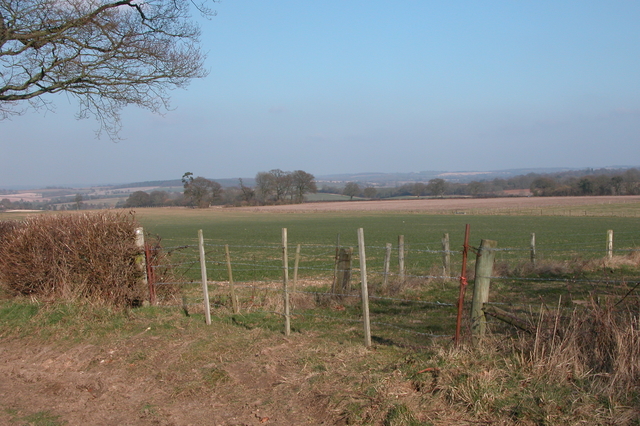
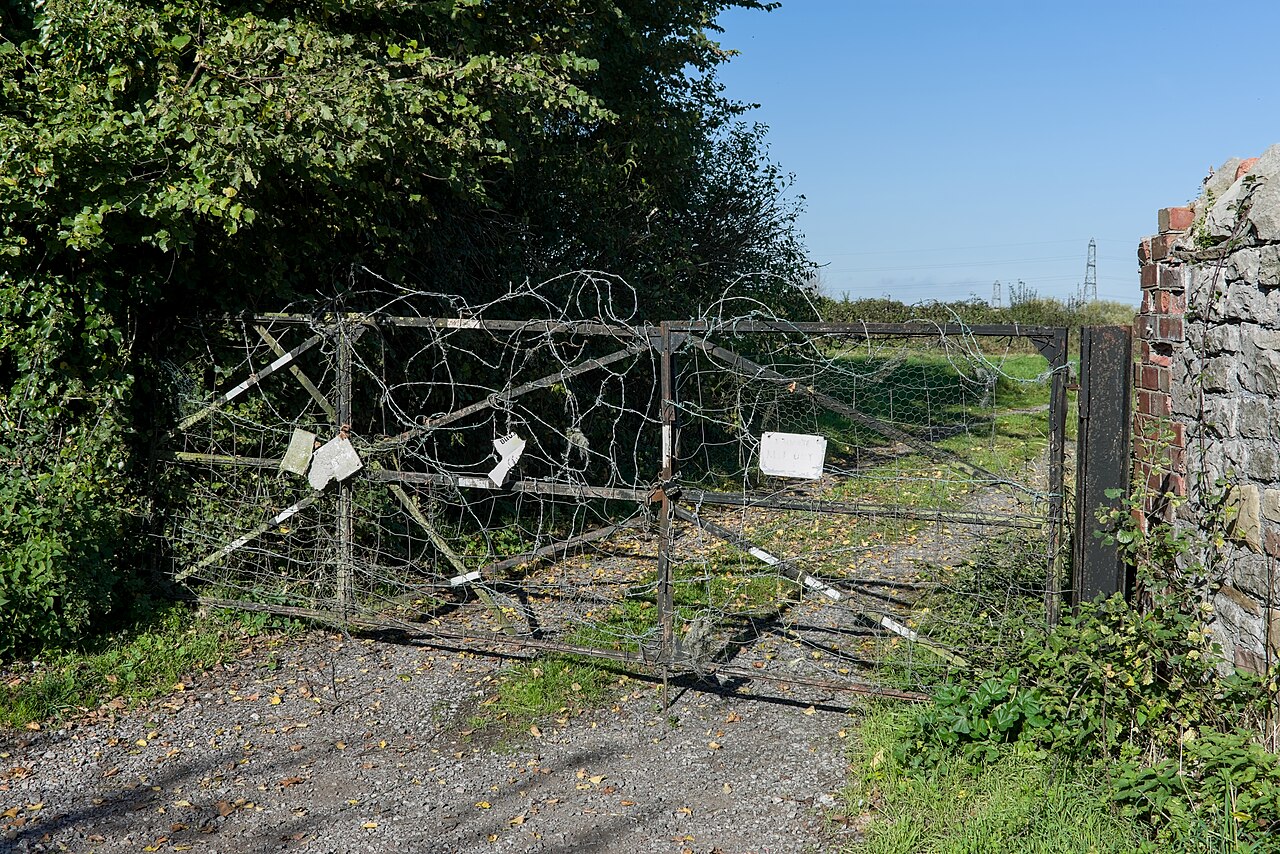
The gate occupies a gateway in a fence like a conventional gate, but instead uses a loose section of wire—often wire netting or barbed wire, matching the adjacent fence. One end is permanently attached to the main fence, and two or more short posts or battens keep it upright and flat, with one at the loose end. When closed, this end post fits into a wire loop at the base of the fixed fence, and the top is pulled tight. The top of the post may be held by another wire loop, or tensioned by a chain looped around the post and hooked onto a nail. A lever-lock gate replaces the upper wire loop with a wooden lever. Proprietary closures provide greater tension, usually via an over-centre mechanism. If use is very rare, the gate may be wired shut for security; opening then requires cutting the securing wire, not the fence itself. When open, the gate is folded back against the adjacent fence to avoid tangling with animals, people, or machinery.
Typical uses include occasional access between neighboring landowners, access to small woods for forestry, rotational grazing, or allowing unusually large traffic to bypass a norma
- type
- agricultural gate
- also_known_as
- New Zealand gate, Taranaki gate, slap, cocky's gate, bogan gate, running gate, machinery gate, Queensland gate, wire gate, portagee gate, Texas gate
- material
- wire netting or barbed wire, with short posts or battens
- primary_use
- occasional access between pastures, landowners, or public and private land
- region
- worldwide, including Britain, New Zealand, Ireland, Australia, United States
Lore & Background
A Hampshire gate occupies a gateway in a fence similar to that used for a conventional gate. Instead of a rigid gate, a short section of loose wire fence fits into the gap, which may consist of wire netting or barbed wire and usually matches the adjacent fence. One end of the wire is attached permanently to the main fence, and two or more short posts or battens keep it upright and flat. When closed, the end post fits into a loop of wire at the base of the fixed fence, and the top is pulled tight to tension it. The top of the post may be held by another loop of wire, or additional tension may be provided by a length of chain looped around the post and hooked onto a nail. A lever-lock gate replaces the upper wire loop with a wooden lever. Proprietary closures are also available that give still greater tension, usually by means of an over-centre mechanism.
Reader's Guide
The Hampshire gate is significant as a cheap, simple, and adaptable alternative to rigid gates, particularly in rural and ranching areas. It does not require heavy gateposts, can be adapted to various terrains, and can easily be made much wider than a conventional gate. Typical uses include giving occasional access between adjacent landowners, access to small woods for forestry operations, rotational grazing, or allowing unusually large traffic to bypass a normal route. In the American West, it is extremely common on ranches, used between pastures and in fencelines separating rangeland of different owners or separating public and private land. Its many local names—such as Taranaki gate in New Zealand, slap in Ireland, and cocky's gate in Australia—reflect its widespread adoption and rough-and-ready nature. Though origins are obscure, the name Taranaki gate is believed to reflect the location of its first widespread use; it may have been invented independently in several places. Most likely, the common barbed wire version was originally used in the United States, where barbed wire was invented.
Did You Know?
- The gate does not require the heavy gateposts needed to support the weight of a rigid gate.
- In New Zealand it is called a Taranaki gate, named after the Taranaki region.
- In Australia it is known as a cocky's gate, from the vernacular for 'farmer'.
- If use is likely to be very rare, the gate may be wired shut for security, requiring cutting of the securing wire in an emergency.
Mechanics of a Flexible Barrier
The Hampshire gate occupies the same gateway opening as a traditional rigid gate, but replaces the solid panel with a short length of loose wire fencing—either netting or barbed wire—that usually matches the adjacent fence line. One end of this wire section is permanently fastened to the main fence, while two or more short posts or battens hold the span upright and taut, with one positioned at the free end. Closing the gate is a matter of fitting that loose-end post into a wire loop anchored at the base of the fixed fence, then pulling the top taut. The upper attachment might be a second wire loop, a length of chain wrapped around the post and hooked to a nail, a wooden lever in a lever-lock variant, or a proprietary over-centre closure device that delivers even greater tension. For gateways used only in emergencies, the wire can be secured shut so that a crisis simply requires snipping the holding wire rather than cutting through the fence itself. When the gate is opened, the loose section is folded flat against the neighbouring fence so it cannot tangle with livestock, people, or machinery.
A Name in Every County
The humble wire gate has accumulated a remarkable catalogue of local names across the English-speaking world, many of which carry a distinctly irreverent tone. In Britain the term "Hampshire gate" is the most widespread, though other county names occasionally appear in its place, and "New Zealand gate" is equally common. In New Zealand itself the device is called a Taranaki gate, a name believed to mark the region where it first saw broad adoption. Ireland knows it simply as a slap, while Australians have been more creative, dubbing it a cocky's gate, a bogan gate, a running gate, a machinery gate, or a Queensland gate. Across the United States the labels include wire gate, portagee gate in Coastal California, Texas gate, and New Zealand gate, among others. The true origin of the design remains unclear; it may have been invented independently in multiple locations. The most probable scenario is that the barbed-wire variant first appeared in the United States, the birthplace of barbed wire itself, before spreading to other regions.
Where It Earns Its Keep
The Hampshire gate finds its natural habitat in situations where a permanent, heavy-duty gate would be overkill. It is the go-to solution for providing occasional passage between neighbouring landowners, for opening a small woodland to forestry crews, for rotating livestock between paddocks, or for letting an unusually wide vehicle skirt a standard route. In the American West the design has become so entrenched that it is the most frequently used gate type on ranches, appearing in pasture boundaries, along fence lines that divide rangeland held by different owners, and at the junctions where public land meets private property. Its prevalence in these rural settings is so complete that a rancher reaching for a gate between two pastures is almost certainly reaching for a Hampshire gate rather than a rigid timber or steel panel. The gate's flexibility makes it equally at home in a quiet British hedgerow gap or a vast Texas rangeland boundary, serving wherever the need for access is intermittent rather than constant.
The Case for Simplicity
The Hampshire gate exists because, in many rural settings, a conventional rigid gate is simply not worth the expense or the effort. It is the gate of choice when access is required only now and then, or when the budget cannot stretch to a heavy timber or steel panel and its supporting infrastructure. Because the gate is nothing more than a section of wire fence, it eliminates the need for the substantial gateposts that a solid panel demands, and it can be adapted to uneven or sloping terrain that would complicate a rigid installation. Construction is straightforward and inexpensive, and if a wider opening is ever needed—say, to let a large implement through—the wire section can be extended far beyond what a standard gate would allow. The result is a barrier that is cheap to build, easy to maintain, and perfectly suited to the low-frequency, high-utility access points that dot the rural landscape of Britain, New Zealand, Australia, Ireland, and the American West.
Gallery
Frequently Asked Questions
What is a Hampshire gate?
It is a temporary section of wire fencing that serves as an agricultural gate for spots where you only need to get through now and then. It is the practical, low-cost alternative to a full rigid gate when access is infrequent.
Why is a New Zealand invention called a 'Hampshire gate'?
The name comes from its popularity in Britain, where it became associated with the county of Hampshire and other English shires. Despite its New Zealand origins, that British regional label is now one of its most widely recognised names worldwide.
What materials go into building a Hampshire gate?
It is put together from wire netting or barbed wire strung between short posts or battens. Those simple, lightweight materials are exactly what keep it cheap and easy to assemble right out in the field.
What advantage does a Hampshire gate have over a standard rigid gate?
It skips the heavy, expensive posts a traditional gate demands, so it can be fitted into much wider openings or uneven ground without major groundwork. Its adaptable, temporary design makes it perfect for occasional access between paddocks or land boundaries.
What other nicknames does the Hampshire gate go by?
It has a long list of local aliases, including New Zealand gate, Taranaki gate, slap, cocky's gate, bogan gate, running gate, and wire gate, among others. These varied names mostly reflect its DIY, low-cost, makeshift character across different regions.
More in New Zealand inventions 1-18
Spotted an error? Know more?
This is a living reference — every entry is fact-audited, and reader corrections feed straight into our audit queue. Suggest an edit · See this site's audit record