
Dart gun
Remote drug-delivery device for sedation and medication.

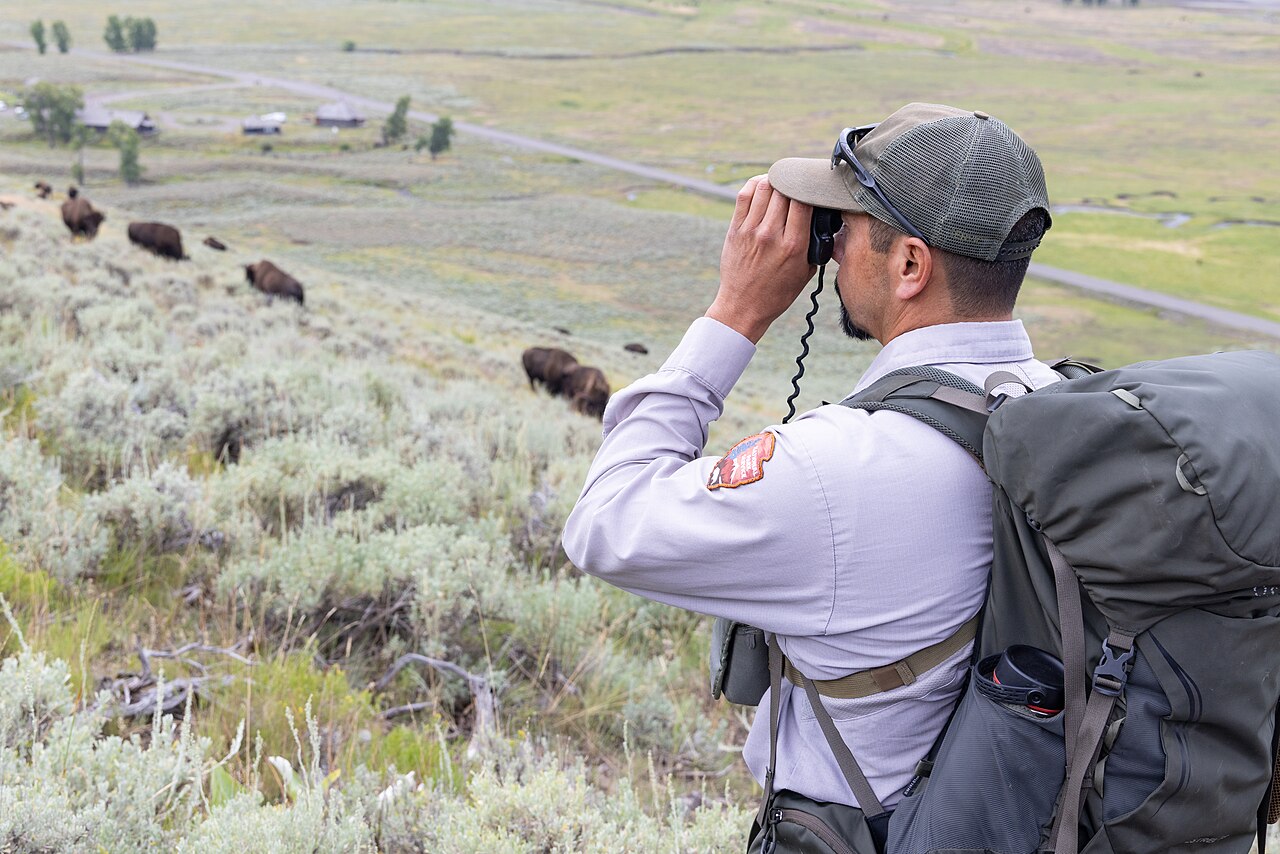
YellowstoneNPS · Public domain
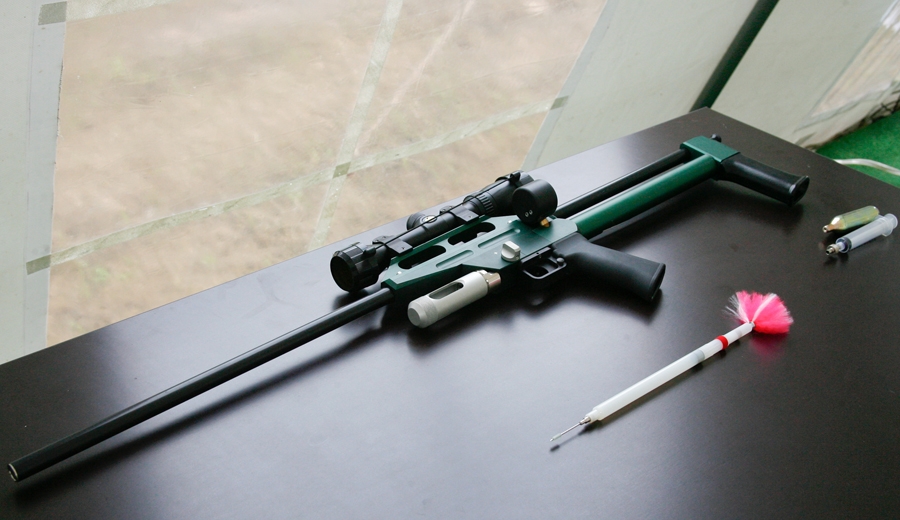
A dart gun is an air rifle that fires a dart tipped with a hypodermic needle and filled with a sedative, vaccine, or antibiotic. When used to deliver a sedative, it is called a tranquillizer gun. Developed in the 1950s, it allowed remote drug delivery to animals and later humans, offering an alternative to physical capture or lethal force.
- Invented
- 1950s
- Inventor
- Colin Murdoch
- Nationality
- New Zealander
- Field
- Veterinary medicine, wildlife management, law enforcement
- Known for
- Remote drug-delivery system for sedation and medication
Lore & Background
The modern dart gun was invented in the 1950s by New Zealander Colin Murdoch. During his involvement in a research project on Himalayan tahr in the Southern Alps, he considered that administering a dose of sedative from afar was safer for humans and more humane for animals than current methods of capture. To that end, Murdoch developed a range of rifles, darts, and pistols. The Cap-Chur equipment, developed by the Palmer Chemical and Equipment Company, became the widely used remote drug-delivery system for decades.
Reader's Guide
The dart gun's significance lies in its ability to deliver sedatives, vaccines, antibiotics, and contraceptives to animals without capture, reducing stress and danger. Its first known use on a human occurred in 1961 in Athens, Georgia, when a violent prisoner was subdued with sodium amytal. Despite early promise, law enforcement agencies like the New York City Police Department rejected it as too dangerous or slow-acting. In Vietnam, attempts to use tranquilizer darts for prisoner snatch missions failed due to dosing issues. Over time, the technology evolved for veterinary and agricultural use, including delivering antibiotics to cattle and contraceptives to wildlife. However, risks remain: overdose, allergic reactions, drowning, predation, and injury from improper velocity or shot placement. The dart gun remains a specialized tool rather than a general-purpose weapon.
Did You Know?
- The first known use of a tranquilizer gun on a human was in June 1961 in Clarke County Jail, Athens, Georgia, to subdue a violent prisoner.
- In the late 1950s, a team in Kenya headed by Toni Harthoorn discovered that different species of similar size required very different drug doses for safe anesthesia.
- In 1979, Colin Murdoch advised a police marksman on dosing and dart placement during a hostage situation.
- Starting in Kansas in the late 1990s, farmers began using darts to deliver antibiotics to sick cattle without capturing them.
Origins & the Race to Humanize Wildlife Capture
The dart gun's story begins in the 1950s, when New Zealander Colin Murdoch, working on a research project involving Himalayan tahr in the Southern Alps, realized that capturing wild animals with existing methods posed unnecessary danger to handlers and needless suffering to the creatures. His solution was elegant in concept: deliver a sedative from a safe distance. Murdoch went on to design a family of rifles, pistols, and darts that would become the foundation of modern remote drug delivery. Around the same period, scientists at the University of Georgia independently developed what is regarded as the first modern remote drug-delivery system, a direct ancestor of the Cap-Chur equipment that would see worldwide use for decades. Early trials were far from smooth. A 1953 antler-growth study in which seven free-ranging bucks were tranquilized ended with three animals dying from overdose, three successfully anesthetized, and one only minimally sedated. By the late 1950s, a Kenyan team led by Toni Harthoorn had demonstrated that species of similar size—such as rhinoceros and buffalo—required strikingly different drug doses and spectra to be safely anesthetized, a finding that shaped dosing protocols to this day.
The Athens Jail: First Dart on a Human
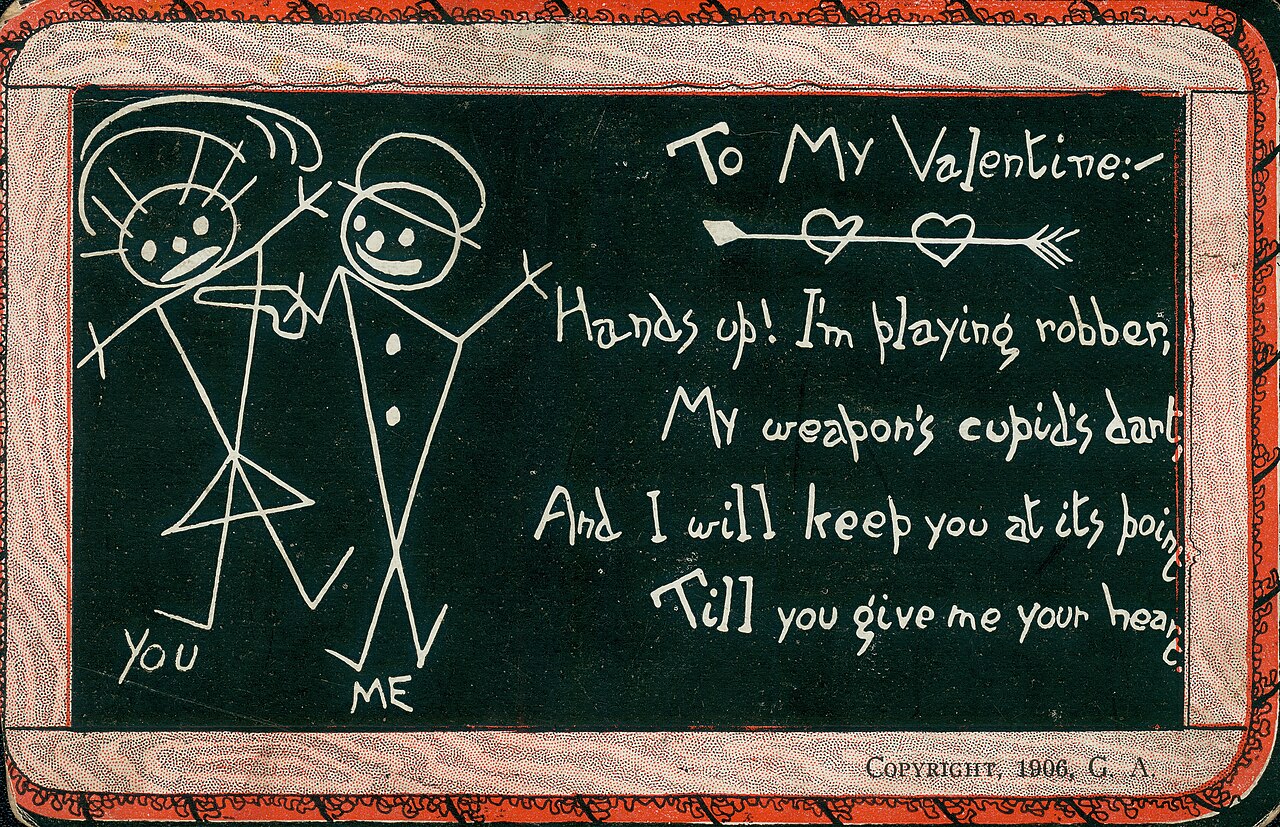
In June 1961, a 220-pound inmate in the maximum-security wing of the Clarke County Jail in Athens, Georgia, tore window bars from their frames and began smashing through masonry while awaiting transfer to a state mental hospital. After conventional restraint attempts failed, Sheriff H. T. Huff and county physician Dr. C. D. Warren called on the University of Georgia's School of Veterinary Medicine. Dr. T. R. Ridgeway'O sterilized the equipment, prepared the drug, and fired a dart carrying 7½ grains of sodium amytal from roughly ten feet. It struck the man's left mid-flank. He lunged through a hole in the wall, sustaining a scalp laceration in a scuffle with officers, but lost consciousness about six minutes later and was handcuffed. This is recorded as the tranquilizer dart's first known use on a human. The New York City Police Department took notice. Deputy Commissioner Walter Arm floated the idea of replacing tear gas, though he stressed it would never be deployed for crowd control. Range testing produced a 90 percent hit rate at 45 yards, yet the department ultimately passed, citing the weapon's slower onset and the ever-present risk of a fatal overdose.
Vietnam, the USSR, and the Dilemma of Dose
In 1968, after a string of failed prisoner-snatch operations in Vietnam, Chief SOG Colonel Jack Singlaub demanded that his teams carry tranquilizer darts. On the next mission, several SOG units deployed the guns with varying sedative doses. The results were catastrophic: North Vietnamese soldiers hit with lower doses recovered enough to fight back and had to be shot, while those struck with higher doses succumbed to overdose. Not a single prisoner was successfully captured alive. Across the Iron Curtain, the Soviet Union had been quietly developing its own remote-anesthesia capability since 1967, when hollow bullets loaded with sedatives first entered service for wild-animal capture. Through the early 1970s, experimental 9×53mmR cartridges were produced and tested for a 9mm 'Los' bolt-action carbine, and a 'flying dart' system was adapted for 16-gauge shotguns. By the mid-1970s the program had expanded to 12-gauge flying darts and experimental cartridges for the SPSh-44 pistol. By the latter half of the 1980s, the standard Soviet tranquillizer weapon had settled on the IZh-18M, a single-shot shotgun in which a sedative-loaded dart was propelled by a blank cartridge.
Inside the Dart & Its Expanding Role
A standard dart gun fires a .50-caliber (12.7 mm) projectile that is essentially a ballistic syringe: a tube loaded with a liquid payload and tipped with a hypodermic needle. The dart is launched by compressed gas and kept stable in flight by a tailpiece of fibrous material. The needle can be plain or collared, the latter featuring a small barb-like ring that helps the syringe stay lodged in tissue so the full dose is delivered. Once the dart strikes, the injection is driven home by one of several mechanisms—gas compression, spring compression, an explosive charge, or a gas-evolution reaction. In a common design, compressed air or butane sits behind the solution while a cap seals the needle; on impact the needle pierces the cap, pressure is released, and the gas shoves the liquid into the target. Beyond sedation, the platform proved remarkably versatile. In 1993 the first wildlife contraceptive was invented, and darts have since been used to deliver it to does as a humane alternative to hunting. From the late 1990s onward, Kansas farmers began routinely darting sick cattle with antibiotics—something that had been impossible without physically capturing the animal.
Gallery

Frequently Asked Questions
Who invented the dart gun?
Colin Murdoch, a New Zealander, is credited with developing the dart gun in the 1950s.
What exactly is a dart gun and how does it work?
It is an air-powered rifle that propels a dart fitted with a hypodermic needle tip, which injects a pre-loaded dose of sedative, vaccine, or antibiotic into the target upon impact.
What fields was the dart gun designed for?
It saw primary use in veterinary medicine and wildlife management, and later expanded into law enforcement as a tool for remote, non-lethal drug delivery to both animals and humans.
When was the dart gun developed?
The device was created during the 1950s, making it a mid-twentieth-century innovation in New Zealand.
Why is the dart gun considered an important invention?
It provided a practical way to sedate or medicate a target at a distance, eliminating the need for physical capture or lethal force and opening new possibilities in animal care and public safety.
More in New Zealand inventions 1-18
Spotted an error? Know more?
This is a living reference — every entry is fact-audited, and reader corrections feed straight into our audit queue. Suggest an edit · See this site's audit record