Białowieża Forest
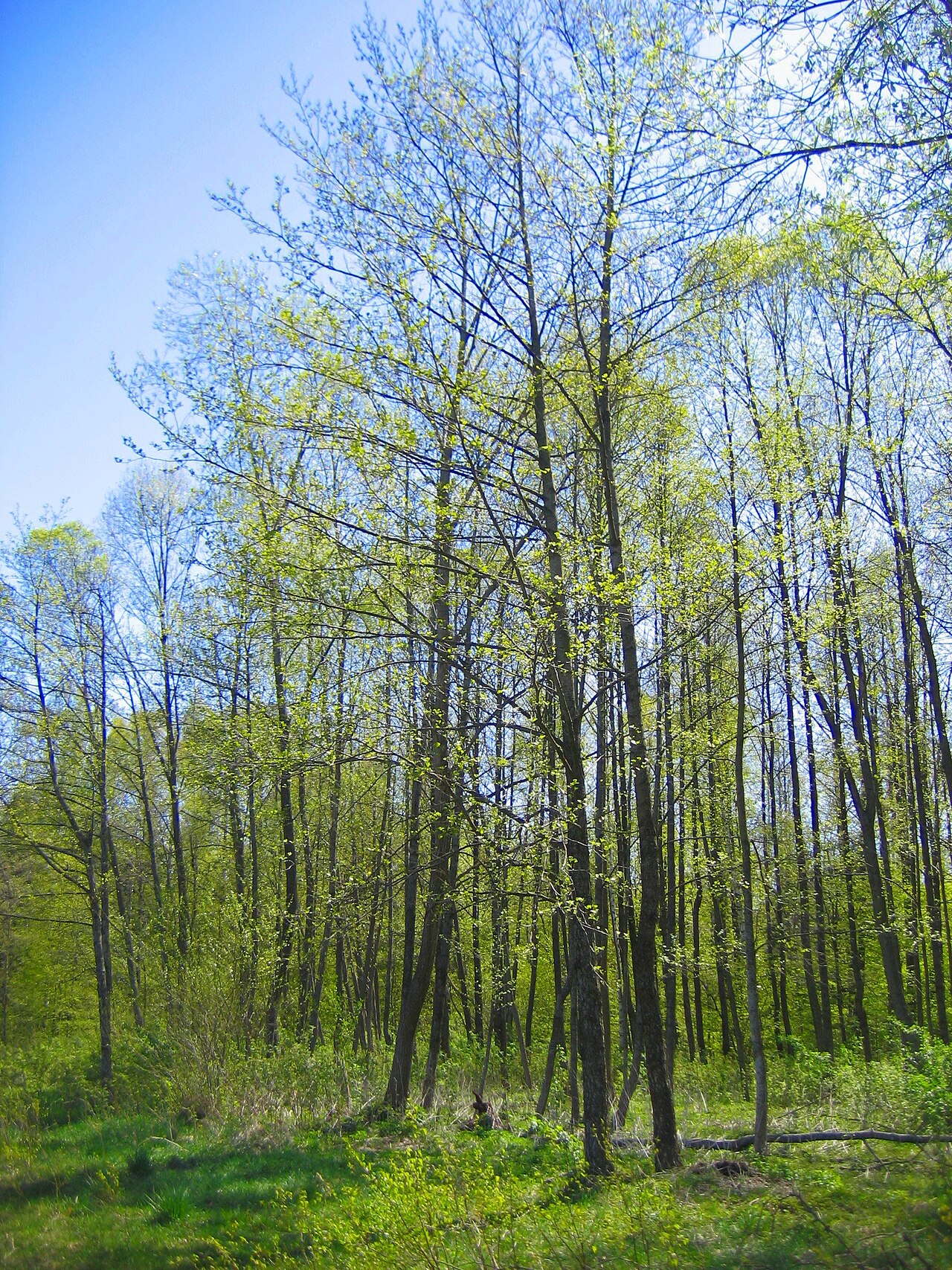
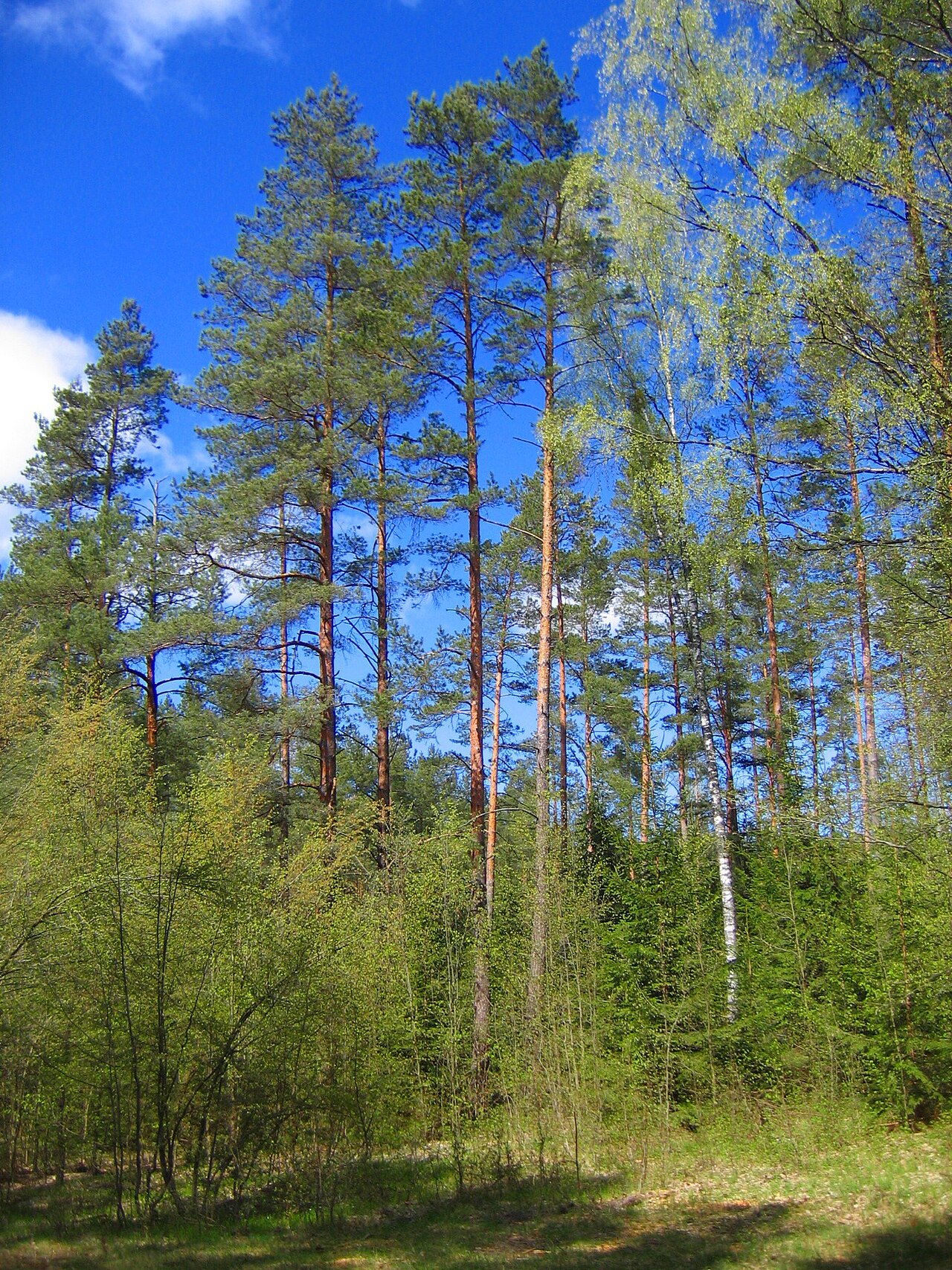
One of the last primeval forests of the European Plain.

Agnieszka Kwiecień ( Nova ) · CC BY 2.5
Stretching across the border between Poland and Belarus, the Białowieża Forest is a vast woodland and UNESCO World Heritage site. It represents one of the last and largest fragments of the primeval forest that once covered the entire European Plain. More than 800 European bison—the continent’s heaviest land animal—live here, and the area is also protected as an EU Natura 2000 Special Area of Conservation.
The forest’s name comes from the Polish village of Białowieża, meaning “White Tower,” which lies at its heart. That name likely refers to an earlier tower or structure, predating the white wooden hunting lodge built there by Grand Duke Władysław II Jagiełło, who used the forest for hunting when it belonged to the Grand Duchy of Lithuania. In Belarusian, the forest is called Biełaviežskaja pušča, though official sources often use the Russian name Belovezhskaya pushcha from the Soviet era.
On the Polish side, part of the forest is protected as Białowieża National Park, covering about 105 square kilometers. Within it lies the Białowieża Glade, a complex of buildings once owned by the Russian tsars during the Partitions of Poland, now housing a hotel and restaurant. Guided tours of the park’s strictly protected areas are available on foot, by bike, or by horse-drawn carriage. Each year, roughly 120,000 to 150,000 visitors come to the Polish section, including about 10,000 from abroad. Attractions include birdwatching with local ornithologists, observing rare birds like the pygmy owl, watching bison in the wild, and enjoying sledge or carriage rides with a bonfire. Tours run year-round, and expert nature guides are available in nearby towns. The village of Białowieża itself sits within the forest.
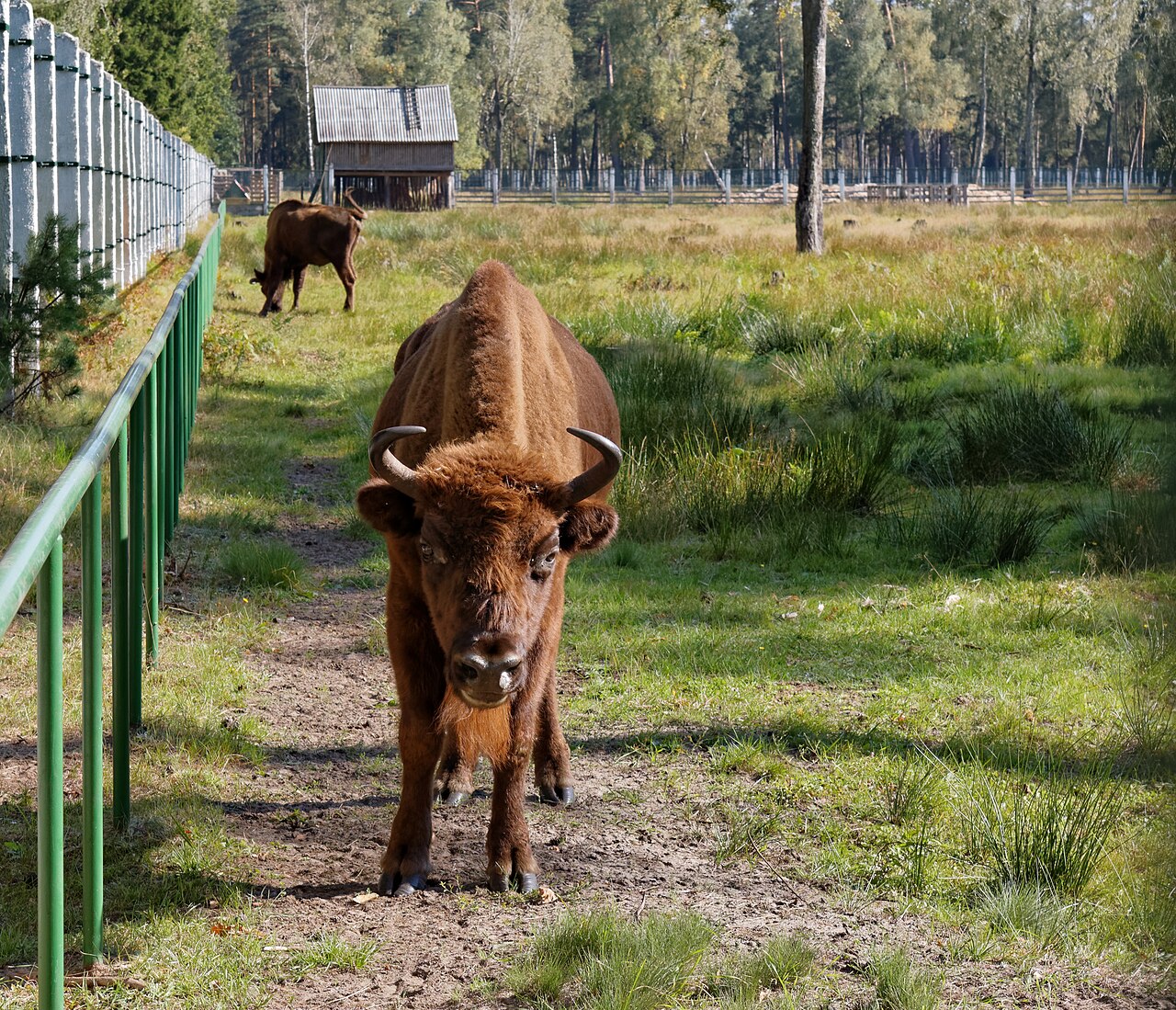
The Belarusian portion of the World Heritage site covers 823 square kilometers, with an additional 1,309 square kilometers as a buffer zone. Most of this lies within Belavezhskaya Pushcha National Park, which spans 1,501 square kilometers. The park’s core strictly protected area makes up 39% of its territory, with a regulated-use zone at 25%, and combined tourist and economic zones at 36%. At the park headquarters in Kamieniuki, there are laboratory facilities and a zoo where European bison (reintroduced in 1929), konik horses, wild boar, Eurasian elk, and other native animals can be seen in natural enclosures.
Quick Facts
- Location
- Podlaskie Voivodeship, Poland / Grodno and Brest oblasts, Belarus
- Nearest City
- Hajnówka, Poland
- Established
- 11 August 1932
- Governing Body
- Ministries of Environment of Poland and Belarus
Facts from the source article.
Lore & Background
The Białowieża Forest takes its name from the Polish village of Białowieża, meaning 'White Tower,' which likely refers to an earlier tower or structure, predating the white wooden hunting manor built there by Grand Duke Władysław II Jagiełło. The forest was historically part of the Grand Duchy of Lithuania and later came under Polish and Russian control. Protection of bison dates to at least 1518, and by 1553 King Sigismund II Augustus instituted the death penalty for poaching a bison. In 1639, King Vladislaus IV issued a decree freeing serfs in exchange for service as royal foresters.
During the Russian Empire after 1795, forest protection collapsed, reducing bison to fewer than 200. Protection was restored in 1802 under Alexander I.
Reader's Guide
Białowieża Forest is significant as one of the last and largest remnants of the primeval forest that once covered the European Plain. Its designation as a UNESCO World Heritage Site and inclusion in the EU Natura 2000 network underscore its global ecological importance. The forest serves as a critical refuge for the European bison, the continent's heaviest land animal, with a population exceeding 800. The Polish side includes Białowieża National Park, attracting 120,000–150,000 tourists annually, while the Belarusian portion features Belavezhskaya Pushcha National Park with a zoo and a New Year's museum. The forest's history reflects centuries of shifting governance—from the Grand Duchy of Lithuania to Poland and the Russian Empire—and evolving conservation efforts, including early bison protection laws and the establishment of forest charters. The border crossing for hikers and cyclists between Poland and Belarus highlights its role as a transboundary conservation area. The forest's legacy includes both ecological preservation and cultural heritage, as seen in the village of Białowieża and the historical hunting manors.
Did You Know?
- The forest is home to more than 800 European bison, Europe's heaviest land animal.
- The name Białowieża means 'White Tower' in Polish, from a white wooden hunting manor built by Władysław II Jagiełło.
- In 1553, King Sigismund I instituted the death penalty for poaching a bison.
- The forest straddles the border between Poland and Belarus, with a border crossing available for hikers and cyclists.
Europe's Last Primaeval Wilderness
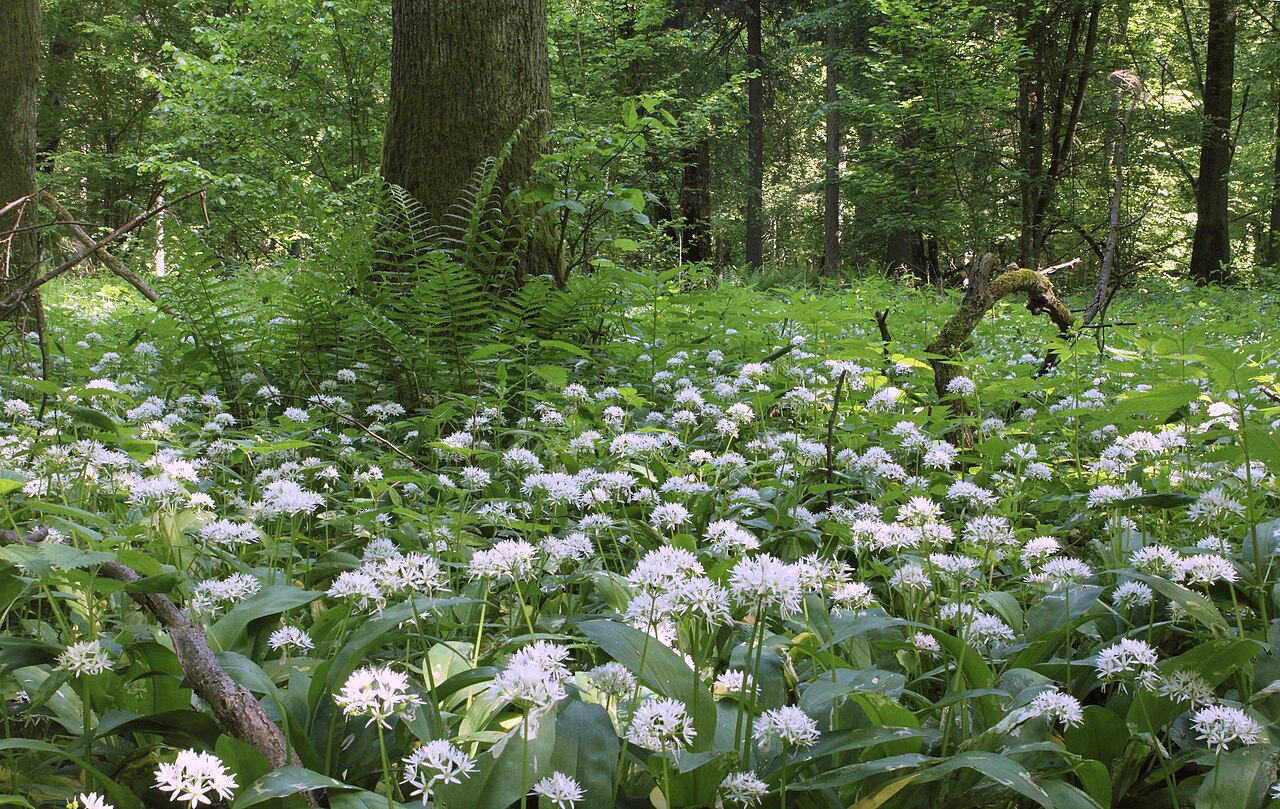
Białowieża National Park guards what is widely regarded as the final surviving fragment of temperate primaeval forest in Europe — a woodland that, according to historical accounts, once blanketed the vast European Plain. The inner core of this reserve has endured with remarkably little human interference for nearly eight centuries, making it singular among Poland's twenty-three national parks. Its biological richness is extraordinary: it shelters the world's largest wild population of the European bison, the heaviest land mammal on the continent, alongside wild boar, Eurasian elk, wolves, and lynx. The park also holds the distinction of being the only natural site in Poland to receive UNESCO World Heritage designation, and it forms the central, most critical zone of the broader Białowieża Forest Biosphere Reserve. Recognized as an endangered Important Bird Area, the park's old-growth canopy supports a web of species interactions found nowhere else at this scale. Access is tightly regulated — only researchers may roam the strictly protected interior at will, and visitor groups are capped at twenty people under a mandatory guide — ensuring that the forest's ancient rhythms remain undisturbed.
A Century of Political Turmoil
The formal protection of Białowieża traces back to 1921, when a Forest Reserve inspectorate was first established. A decade later, on 11 August 1932, the Second Polish Republic elevated that inspectorate into a full national park. World War II shattered that continuity: after the conflict, the forest was split between the newly formed People's Republic of Poland and the Belarusian Soviet Socialist Republic, with the international border cutting directly through the woodland. Poland reopened its portion of the park in 1947, and today the Belovezhskaya Pushcha National Park sits on the Belarusian side of that same dividing line. A designated border crossing for hikers and cyclists still allows visitors to walk or ride from one sovereign territory into the other without leaving the forest. What is remarkable is the longevity of the conservation impulse itself — the very idea of a national park in this locale is roughly two centuries old, yet the genuine protective practices that continue to this day stretch back even further into the past.
Three Zones, Three Missions
Spanning 105.2 square kilometres in Podlaskie Voivodeship, the park is divided into three distinct administrative units, each with its own conservation mandate. The Orłówka Protective Precinct covers 5,073 hectares, of which nearly 4,800 hectares fall under the strictest protection tier; it is further split into the Sierchanowo and Dziedzinka districts. The Hwoźna Conservation District, at 5,169 hectares, allocates the bulk of its land to active protection and is subdivided into four smaller districts — Cupryki, Gruszki, Masiewo, and Zamosze. The third unit, the European Bison Breeding Centre, occupies 274 hectares of landscape-protected land and houses three dedicated breeding reserves alongside a public-access reserve. Staff at this centre are responsible for bison habitat management across the entire Polish section of the Białowieża Forest. A classic road tour threading through the southern reserve area covers 4,747 hectares, giving visitors a glimpse of the landscape while keeping them on designated routes.
Human Stories at the Forest's Edge
The park's headquarters sits in the village of Białowieża, where a 1960s museum complex now occupies the grounds of a royal palace once belonging to King Augustus III — a structure the Soviet Army destroyed in July 1944. An observation tower rises above the museum roof, and inside, multimedia displays with lighting and sound let visitors hear nearly every living species in the region. Nearby, a historic 1845 manor house, originally part of a Palace Park founded during the Russian Partition, has been refurbished into a Centre for Nature Education. The park generates roughly 72 million zloty in annual tourist revenue, a figure that underscores its economic importance to the region. Yet the forest has also become a site of moral and legal conflict. Since the European migrant crisis, groups of people have sheltered in the woodland after crossing from Belarus. In 2025, five individuals — including park employee Ewa Moroz-Keczynska — faced trial on charges of aiding those migrants, a case that drew the name "Hajnówka Five" and illuminated the tension between conservation, sovereignty, and humanitarian concern.
Gallery
Frequently Asked Questions
What is Białowieża Forest?
Białowieża Forest is a vast primeval woodland that straddles the border between Poland and Belarus. It is recognized as a UNESCO World Heritage Site and one of the last remaining fragments of the ancient forest that once blanketed the entire European Plain.
Where exactly is Białowieża Forest located?
The forest stretches across the international border, with roughly 105 km² falling within Poland's national park boundaries and the rest extending into Belarus. Together the two portions make up the full 141,885-hectare World Heritage area.
Why is Białowieża Forest considered so important?
It preserves one of the final large tracts of unbroken primeval woodland left on the European Plain, making it an irreplaceable living archive of the continent's original forest ecosystem. It also shelters more than 800 European bison, the heaviest land animals on the continent, and is protected under the EU Natura 2000 network.
Where does the name 'Białowieża' come from?
The name derives from the Polish village of Białowieża, which translates to 'White Tower' and sits at the heart of the forest. The reference most likely points to an earlier tower or structure that predated the current white wooden church in the village.
What designations and protections does Białowieża Forest hold?
The site was first inscribed as a UNESCO World Heritage Site and later extended in June 2014 to include the Belarusian portion. The Polish section has been a Biosphere Reserve since 1976, the Belarusian side since 1993, and the whole area is additionally safeguarded as a Natura 2000 Special Area of Conservation.
More in National parks of Poland 1-24
Spotted an error? Know more?
Reader corrections go straight into our review queue. Suggest an edit · How this site is sourced