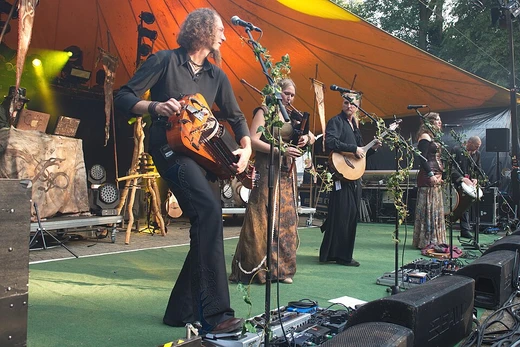
The Moon and the Nightspirit
Hungarian folk duo blending pagan tales with shamanism.

Grywnn · CC BY-SA 4.0
Ágnes Tóth and Mihály Szabó formed the Hungarian folk duo The Moon and the Nightspirit in 2003. Their music is rooted in pagan fairy tales and shamanism. The pair released their first album, *Of Dreams Forgotten and Fables Untold*, in 2005, with lyrics mostly in English except for two Hungarian titles. Critics compared its soft, melancholic sound to the work of Ataraxia and Chandeen. The duo performed songs from that album on Hungarian National Television.
Their second album, *Regő Rejtem* (meaning "I conjure Magic"), came out in 2007 and was sung entirely in Hungarian. Touring across much of Europe, they appeared at festivals like Germany’s Wave-Gotik-Treffen and Poland’s Castle Party. The 2009 album *Ősforrás* was more varied, focusing on the "wise elder" and natural mysticism. Reviewers likened it to Omnia’s pagan folk but found it more accessible, and *Side-Line* magazine called it the duo’s most diverse and accomplished work to date.
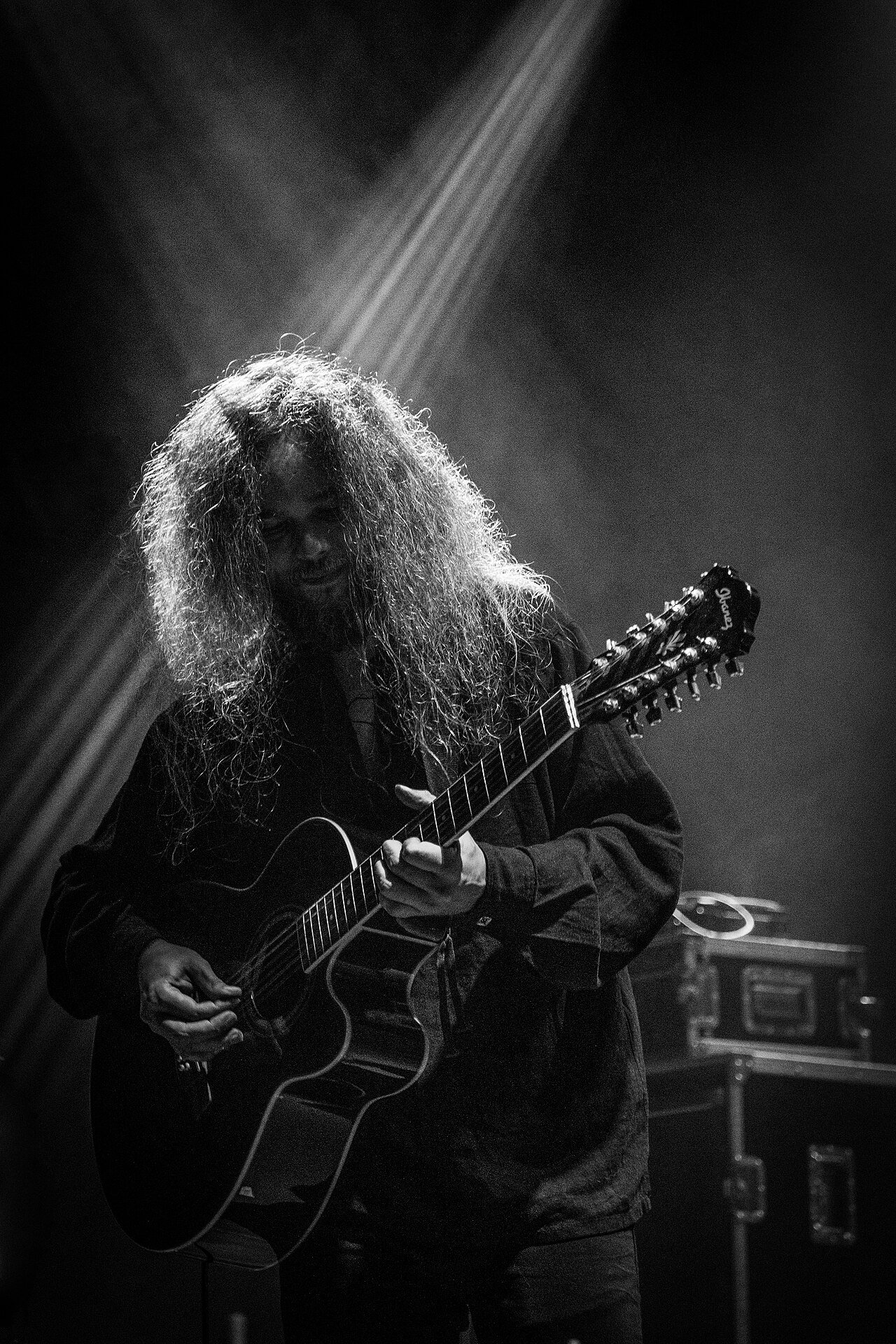
Later albums, such as *Metanoia* (2017), drew notice for incorporating world music. *Aether* (2020) was noted for the expanded range of instruments Tóth and Szabó played, including violin, dulcimer, harp, kalimba, and acoustic guitar.
Critics have given the duo favorable reviews, describing their style as slightly oriental and a blend of medieval music with Hungarian folk songs. Ágnes Tóth’s vocals have been compared to Elisabeth Toriser of Dargaard. The pair are also praised as multi-instrumentalists.
Quick Facts
- Origin
- Hungary
- Genre
- Medieval folk rock · neofolk
- Years Active
- 2003 – present
- Label
- Equilibrium Music
- Current Members
- Ágnes Tóth · Mihály Szabó
Facts from the source article.
Lore & Background
The Moon and the Nightspirit was founded in 2003 by Ágnes Tóth and Mihály Szabó. Their debut album Of Dreams Forgotten and Fables Untold (2005) featured mostly English lyrics with two Hungarian titles and was compared to Ataraxia and Chandeen. Live performances from that album included an appearance on Hungarian National Television.
The second album Regő Rejtem (2007) was entirely sung in Hungarian. During a tour through much of Europe, the duo played at festivals such as Wave-Gotik-Treffen (Germany) and Castle Party (Poland). Their third album Ősforrás (2009) focused on the 'wise elder' and natural mysticism, was compared to Omnia, and was called the band's most diversified and accomplished album by Side-Line magazine.
Later albums such as Metanoia (2017) were noted for exploring world music. Aether (2020) received notice for the expanding range of instruments played by Tóth and Szabó, including violin, dulcimer, harp, kalimba, and acoustic guitar.
Reader's Guide
The Moon and the Nightspirit have received favourable ratings by reviewers. Their style has been called slightly oriental as well as a mix of medieval music and Hungarian folk songs, while Ágnes Tóth's singing has been compared to Elisabeth Toriser of Dargaard. They are acclaimed for being multi-instrumentalists using traditional instruments such as the Mongolian morin khuur and the Slovak shepherds pipe fujara. The duo's discography spans from 2005 to 2026, showing a progression from English-language melancholic folk to Hungarian lyrics, world music exploration, and eventually goth and doom metal influences. Their significance lies in their consistent thematic focus on pagan fairy tales and shamanism, combined with a willingness to expand their instrumental palette and genre boundaries over two decades.
Did You Know?
- The duo's debut album Of Dreams Forgotten and Fables Untold was mostly in English but had two titles in Hungarian.
- Their second album Regő Rejtem translates to 'I conjure Magic'.
- Side-Line magazine called Ősforrás the band's most diversified and accomplished album.
Origins & Thematic Foundation
The Moon and the Nightspirit emerged in 2003 as a Hungarian folk music duo when Ágnes Tóth and Mihály Szabó joined forces to craft songs rooted in pagan fairy tales and shamanic traditions. Their debut record, Of Dreams Forgotten and Fables Untold, arrived in 2005 and established the pair's signature softly melancholic atmosphere. The lyrics on that first album were written predominantly in English, with only two track titles left in Hungarian, a choice that gave the work an international accessibility while still anchoring it in the duo's native linguistic heritage. Critics drew parallels between the album's sound and the neofolk projects Ataraxia and Chandeen, placing the duo within a broader European tradition of atmospheric, folk-inflected music. The record's reception was strong enough to earn the pair a live performance on Hungarian National Television, marking an early milestone that brought their shamanic storytelling to a mainstream domestic audience.
Evolution Across the Discography
From their 2005 debut through the planned 2026 release Seed of the Formless, The Moon and the Nightspirit have charted a clear trajectory of sonic expansion across eight studio albums. The 2007 record Regő Rejtem marked a decisive linguistic shift, being performed entirely in Hungarian, and the supporting European tour that followed carried the duo to festivals in Germany and Poland. By 2009's Ősforrás, the pair had turned their attention to the figure of the wise elder and natural mysticism, producing what Side-Line magazine described as their most diversified and accomplished work to date, with comparisons to Omnia's pagan folk yet noted as more transparent to the listener. Metanoia (2017) drew reviewer attention for venturing into world music territory, while Aether (2020) showcased a broadened instrumental palette that included violin, dulcimer, harp, kalimba, and acoustic guitar. The latest entry, Seed of the Formless, pushes the duo further still by weaving goth and doom metal textures into their established folk framework.
Live Performance & European Circuit
The Moon and the Nightspirit have consistently paired their studio work with live presentations that extend well beyond Hungary's borders. As early as the debut album era, the duo performed songs from Of Dreams Forgotten and Fables Untold on Hungarian National Television, giving their shamanic and fairy-tale material a broadcast audience at home. The 2007 release of Regő Rejtem launched a supporting tour that traversed much of Europe, with the pair appearing at major genre festivals including Wave-Gotik-Treffen in Germany and Castle Party in Poland. These appearances placed them alongside a wider community of European alternative and folk artists, reinforcing the duo's position within a pan-European scene that values traditional instrumentation and atmospheric performance. The fact that a two-person Hungarian folk project could secure slots at such well-known continental festivals speaks to the broad appeal of their pagan-fairy-tale aesthetic and the cross-border resonance of their shamanic lyrical themes.
Critical Reception & Instrumental Craft
Reviewers have consistently praised The Moon and the Nightspirit for both their sonic palette and their vocal delivery. Their overall style has been characterized as slightly oriental, blending medieval musical sensibilities with the melodic contours of Hungarian folk song. Ágnes Tóth's singing has drawn a specific comparison to Elisabeth Toriser of Dargaard, underscoring the duo's place within a lineage of atmospheric, folk-rooted vocal performance. Perhaps most distinctive is the pair's commitment to multi-instrumentalism: beyond standard folk instruments, they incorporate the Mongolian morin khuur and the Slovak shepherds' pipe known as the fujara, alongside violin, dulcimer, harp, kalimba, and acoustic guitar. This breadth of traditional and world-music instrumentation has been singled out by critics as a defining feature of their sound, setting them apart from more narrowly focused folk acts and lending their pagan and shamanic themes an authentic, cross-cultural texture that reviewers have repeatedly noted as a hallmark of their work.
Gallery
Frequently Asked Questions
Who is The Moon and the Nightspirit?
They are a Hungarian folk duo made up of Ágnes Tóth and Mihály Szabó, who joined forces in 2003. Their sound is built around pagan folklore and shamanic imagery, giving their music a distinctly mythic character.
What themes does The Moon and the Nightspirit explore in their music?
The pair crafts songs rooted in pagan fairy tales and shamanism, producing a soft, melancholic atmosphere. Critics have drawn comparisons between their tone and the neofolk work of Ataraxia and Chandeen.
What albums has The Moon and the Nightspirit released?
Their debut, *Of Dreams Forgotten and Fables Untold* (2005), featured mostly English lyrics with two Hungarian titles, while their second record, *Regő Rejtem* (2007), was sung entirely in Hungarian. The title of the latter translates roughly as "I Conjure Magic."
Has The Moon and the Nightspirit performed on television?
Yes — the duo appeared on Hungarian National Television to perform songs from their 2005 debut album. They also toured across much of their home country to promote their material live.
Why is The Moon and the Nightspirit notable in the folk music scene?
They carve out a niche as a Hungarian folk act that deliberately blends shamanic and fairy-tale storytelling with an atmospheric, melancholic sound. Their bilingual approach and national TV exposure helped bring a distinctly pagan flavor to Hungary's folk music landscape.
More in Modern pagan musical groups 1-24
Spotted an error? Know more?
Reader corrections go straight into our review queue. Suggest an edit · How this site is sourced