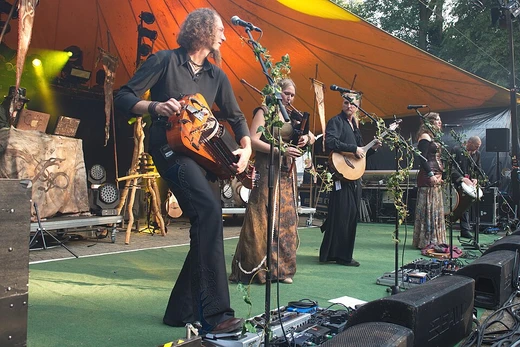
SONA (band)
Neopagan folk trio blending acoustic and psychedelic sounds.

Rocky Masum This work was made by Masum-al-Hasan Rocky and released under the li · CC BY-SA 4.0
SONA was a neopagan music band active in the early 2000s, performing at gatherings and events throughout the Midwestern United States. The trio—Beltana Spellsinger, "Papa" Joe Credit, and his son Joe Credit III—were sometimes called "the Peter, Paul and Mary of Pagan music." Their self-described "Folkadelic" style blended modern folk acoustic music with psychedelic vocals, and they released three CDs between 2001 and 2002.
Quick Facts
- Origin
- Missouri and Kansas
- Genre
- Neopagan folkadelic, folk rock
- Years Active
- 2000–2009
- Label
- Wiccabilly Studios, Magyar Magick
- Past Members
- Joe Credit III, Beltana Spellsinger, Joe Credit, Jr.
Facts from the source article.
Lore & Background
The members of SONA met in 2000 at Brushwood Folklore Center in New York City while attending the Sirius Rising and Starwood music festivals. Beltana reported having a dream about a mandolin player the night before meeting Joe Credit III and his father; the next day she saw Joe Credit III carrying his mandolin and introduced herself. They held their first performance to a crowd of 500 the day after. The band's name came from a Buddhist parable about a lute player named Sona, which Joe Credit III recounted on the way to the Festival at Tara. Papa Joe later found a book confirming the name, and the trio adopted SONA (in all capitals to distinguish themselves from the Buddhist figure and other groups).
SONA's musical style was self-described as Folkadelic. Beltana wrote songs with a psychedelic bent or soft/hard rock sound; Joe Credit III favored grungy world music, jazz chord progressions, and Paganized Gospel; Papa Joe contributed folk rock, Caribbean music, Texas swing, and polka. Trickster (from Loke E. Coyote) recorded and produced their Spoonwalk CD in 2001 at Wiccabilly studios. The band toured widely at Pagan gatherings including Pagan Spirit Gathering, Summerset, Heartland, and DragonDance festival. After a break from 2003 to 2006, they reunited in 2007 but split in 2009 following a debate over campground rules at Wolvenwold.
Reader's Guide
SONA holds significance as a representative of the early-2000s neopagan music scene in the Midwestern United States, blending spiritual themes with eclectic musical styles. Their self-coined term "Folkadelic" captured a fusion of acoustic folk and psychedelic influences that resonated within Pagan festival circuits. The band's three albums—MeGaPaGaTeXaPaLooZa (live, 2001), Spoonwalk (2001), and Acousticnakedladyland (2002)—document their range from humorous polkas to meditative pieces. Though short-lived, SONA's legacy persists through the solo projects of its members: Beltana (later Bernadette) formed the women's group Bellawyck and the Pagan rock band Spellsinger; Joe Credit III played mandolin with numerous groups and released a solo CD; Papa Joe continued performing and teaching. The band's song "Little Song" includes lyrics hinting at reunion: "Before we make our exodus... we will return again." Their story illustrates the communal and DIY ethos of neopagan music, where festivals and campgrounds served as both venues and creative incubators.
Did You Know?
- The band's name SONA comes from a Buddhist parable about a lute player, discovered by Papa Joe in a book of Buddhist teachings.
- Beltana reported dreaming of a mandolin player the night before meeting Joe Credit III, who carried a mandolin.
- SONA's Spoonwalk CD was recorded and produced by Trickster at Wiccabilly studios in 2001.
- After the band split in 2009, Joe Credit III played mandolin with groups including Pikin Likin’ and Skinny White Chick.
Formation: A Dream, a Mandolin, and Five Hundred Witnesses
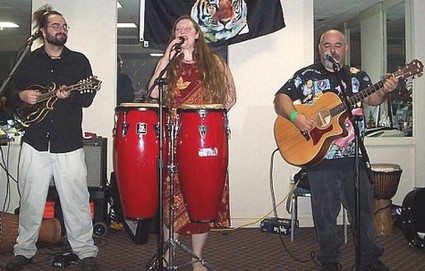
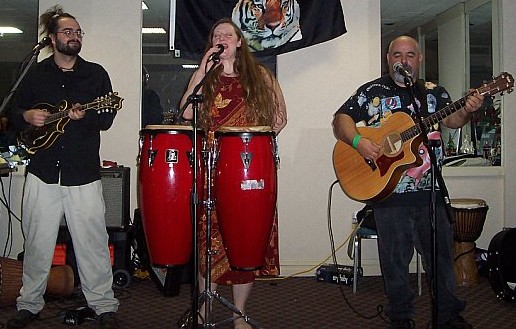
In the summer of 2000, three musicians converged on the Brushwood Folklore Center in New York City, each attending the Sirius Rising and Starwood music festivals. The encounter that would define a small corner of the Pagan music world began, by one account, with a dream. Beltana Spellsinger recalled dreaming of a mandolin player the night before the festival. The following day, she spotted a young man carrying exactly that instrument and walked over to introduce herself to him and his father, Joe Credit. The chemistry was immediate. By the very next day, the trio—Beltana on conga drums, "Papa" Joe on guitar, and Joe Credit III on mandolin—had taken a stage in front of roughly five hundred people. Each member would go on to contribute to the group's songwriting, and the combination of their instruments and voices earned them a playful nickname in the community: the Peter, Paul and Mary of Pagan music. What started as a chance meeting at a folk festival quickly became a tight-knit creative unit touring the Midwest.
Folkadelic: A Sound Built from Three Worlds
SONA described their own sound as Folkadelic, a portmanteau capturing the blend of modern acoustic folk with psychedelic vocal textures. In practice, the label reflected three distinct creative temperaments. Beltana leaned toward psychedelic and soft-to-hard rock sensibilities. Joe Credit III brought grungy world-music rhythms, jazz chord progressions, and what he called Paganized Gospel. Papa Joe rounded out the palette with folk rock, Caribbean inflections, Texas swing, and even polka, injecting humor and lightness into the group's output. Behind the scenes, the production work of Trickster, a member of Loke E. Coyote, shaped the recorded sound; he recorded and produced the 2002 Spoonwalk CD. The band drew openly from a wide circle of Pagan musicians—Green Crown, Emerald Rose, S.J. Tucker, Gaia Consort, Sede, Dreamtrybe, The Druids, The Raft, Spoonfed Tribe, Gretchen McMahon, Dana Davis, Michelle Mays, and Burning Sage—while also reaching beyond the Pagan scene. The result was a sound that felt simultaneously rooted in tradition and restless with experimentation, a quality that set them apart at every gathering they played.
The Road: Pagan Festivals and a Rock Opera
SONA's touring life was anchored in the Pagan gathering circuit across the Midwest and beyond. After their early 2001 dates at Pagan Pride Day events in Austin and Houston, Texas, they crossed paths with Trickster of Wiccabilly Studios, who invited them to join the full-stage Pagan rock opera Druid Four Winds. From there, the group built a steady calendar of festival appearances: Pagan Spirit Gathering, Summerset, Heartland, Fire Festival, CMA Beltane, Magickal Weekend in St. Louis, Spring Fire II in Indianapolis, Pagan Pride in Dallas, Magickal Hibernation at Ozark Avalon, and the DragonDance festival. They also performed repeatedly at Wolvenwold, Beltana's home campground, where the group felt a particular sense of belonging. In 2003 the band paused for personal reasons, and a three-year silence followed. When they announced their return in 2006 and resumed live shows in 2007, the Pagan community greeted them with visible enthusiasm, though a long-anticipated second album never materialized. Their stage presence at these gatherings—part folk ensemble, part spiritual gathering—made them a fixture of the early-2000s Pagan music scene.
After the Music: Split, Solo Paths, and a Song About Returning
The final chapter of SONA was less a dramatic farewell than a slow drift. In 2009, a dispute over campground rules at Wolvenwold divided the three members, and each turned to separate projects. Joe Credit III relocated to St. Louis, where he played mandolin with Pikin Likin', Skinny White Chick, The Voodoo Lounge Gypsies, the Vine Brothers, Opal Fly and the Swatters, and the Kansas City swing band Western Automatic. Singer-songwriter S.J. Tucker even wrote a song about him, "Mandolin Holy Man." Beltana channeled her energy into Bellawyck, an all-women's group with her sister Kittin, Holly, and Jennie, touring for three years and incorporating Hindu chants into her set. On occasion the two Joes still backed up Beltana's bands. Yet the thread of SONA never fully snapped. As the closing lines of their song "Little Song" promise—remembrance, unity, and the quiet assurance that "we will return again"—the possibility of a reunion has lingered in the community ever since.
Gallery
Frequently Asked Questions
Who is SONA (band)?
SONA was a neopagan folk trio that performed across the Midwestern United States during the early 2000s. The group consisted of Beltana Spellsinger, "Papa" Joe Credit, and his son Joe Credit III.
What musical style does SONA (band) play?
The band coined the term "Folkadelic" to describe their sound, which married modern acoustic folk instrumentation with psychedelic vocal textures. This blend set them apart from both straight-ahead folk acts and purely psychedelic projects.
Who are the members of SONA (band)?
The trio was made up of Beltana Spellsinger alongside father-and-son duo "Papa" Joe Credit and Joe Credit III. Fans often nicknamed them "the Peter, Paul and Mary of Pagan music" because of their harmonious group dynamic.
What albums did SONA (band) release?
During their brief active period from 2000 to 2002, the group put out three studio CDs. All three records came out within a tight window between 2001 and 2002.
Why is SONA (band) considered important in neopagan music?
They helped define a recognizable "Folkadelic" niche within the neopagan scene by fusing acoustic folk with psychedelic vocal layering. Their Midwest concert-circuit presence in the early 2000s gave the community a go-to live act during that era.
More in Modern pagan musical groups 1-24
Spotted an error? Know more?
Reader corrections go straight into our review queue. Suggest an edit · How this site is sourced