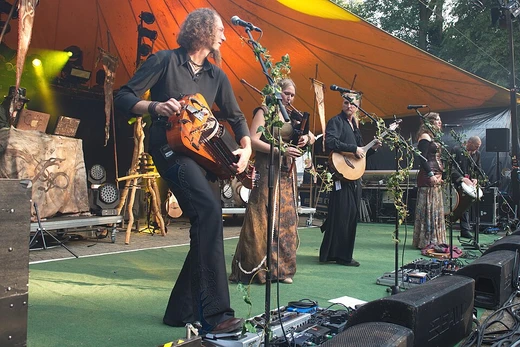
Sonne Hagal
German experimental neofolk group with runic and nature themes.

Sonne Hagal is a German experimental and neofolk group that originated in Rathenow, Brandenburg, in 1992. The band is known for its thematic focus on runes, Northern European mysticism, and nature lyricism, and its members have chosen to remain anonymous.
- Origin
- Rathenow, Brandenburg, Germany
- Formed
- 1992
- Field
- Experimental and neofolk music
- Nationality
- German
- Known for
- Runic and Northern European mysticism themes, anonymous members, collaborations with Andreas Ritter and Kim Larsen
Lore & Background
The band's core line-up formed in 1992 in Rathenow, Brandenburg, drawing from the local punk rock and experimental pop music scene. Their early records in the 1990s were electronic music. A breakthrough came with the 2000 10" album Sinnreger, where the band adopted conventions from dark wave and neofolk genres. That album includes the German folk song 'Herbstlied', a poem by expressionist poet Else Lasker-Schüler, and a track based on an agitation song by Rosa Luxemburg.
Subsequent releases deepened the band's interest in runes, Eddic poetry, and nature lyricism, and featured collaborations with Andreas Ritter of Forseti and Kim Larsen of Of the Wand & the Moon. On the split release 'Sonne Hagal / Polarzirkel' (2003), the band collaborated with electronic sound artists Polarzirkel and Nerthus to create atonal music with ritualistic elements. The 2005 single 'Dygel' saw collaborations with Ian Read and Matt Howden.
The band's name reflects its thematic interest in runes and Northern European mysticism: 'Sonne' is German for sun, and 'hagal' is a variant spelling of the rune 'hagall' (or 'hagalaz'). According to the singer, modern people can learn from ancient religion and philosophy, stressing the advantages of polytheism, harmony with nature, finding holiness in many places, and viewing humans as part of nature.
Reader's Guide
Sonne Hagal occupies a distinctive niche in the neofolk and experimental music landscape, blending electronic origins with dark wave and neofolk conventions. Their significance lies in their consistent thematic exploration of runes, Eddic poetry, and nature lyricism, which aligns with broader currents in neofolk that draw on pre-Christian Northern European spirituality. The band's anonymity and their collaborations with key figures like Andreas Ritter and Kim Larsen underscore their integration into the neofolk network. Their work with electronic artists Polarzirkel and Nerthus on atonal, ritualistic music shows a willingness to push beyond genre boundaries. The inclusion of a poem by Else Lasker-Schüler and a track based on Rosa Luxemburg's agitation song on Sinnreger indicates a literary and political dimension. The singer's public statements on polytheism and nondualism provide a philosophical framework that has resonated with audiences interested in alternative spiritualities. Overall, Sonne Hagal's legacy is as a thoughtful, esoteric act that has contributed to the depth and diversity of neofolk.
Did You Know?
- The band's name combines the German word for sun with the rune 'hagall' (also known as 'hagalaz').
- Their breakthrough album Sinnreger (2000) includes a poem by expressionist poet Else Lasker-Schüler.
- Members of the band have chosen to remain anonymous.
- The band's 2003 split release with Polarzirkel is titled 'Sonne Hagal / Polarzirkel', not 'Sonne Hagal vs. Polarzirkel'.
Frequently Asked Questions
Who is Sonne Hagal?
Sonne Hagal is a German experimental and neofolk band that has been active since the early 1990s. They are recognized for weaving runic symbolism and Northern European spiritual imagery into their songwriting.
Where and when was Sonne Hagal formed?
The group originated in Rathenow, a small town in Brandenburg, Germany, in 1992. They have maintained their base in that region throughout their career.
Why do Sonne Hagal's members stay anonymous?
The band has deliberately chosen to keep the identities of its performers private, never publicly revealing who plays under the name. This decision reinforces their mystical, nature-centered aesthetic and keeps the focus on the music and its themes rather than on individual personalities.
What musical themes does Sonne Hagal focus on?
Their lyrics and compositions draw heavily on runic lore, Northern European mysticism, and the natural world. The sound blends experimental textures with neofolk structures to evoke a sense of ancient, elemental spirituality.
Has Sonne Hagal worked with other artists?
Yes, the group has collaborated with figures such as Andreas Ritter and Kim Larsen over the years. These partnerships have allowed them to reach audiences beyond the core neofolk scene.
More in Modern pagan musical groups 1-24
Spotted an error? Know more?
Reader corrections go straight into our review queue. Suggest an edit · How this site is sourced