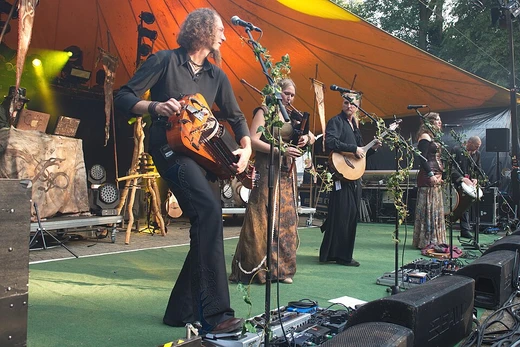
Darkestrah
Kyrgyz pagan metal band blending folklore with metal.

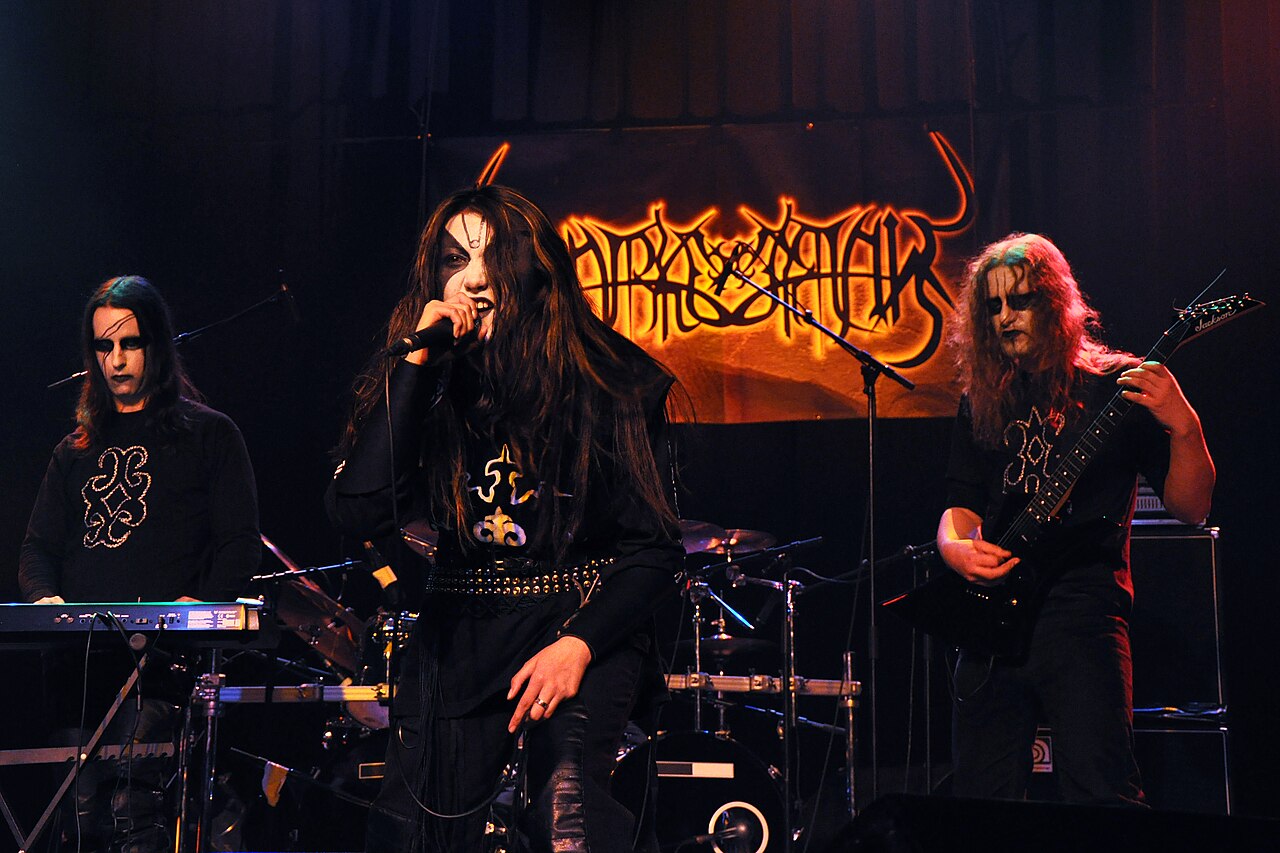
Vassil · CC BY 3.0
Darkestrah is a Kyrgyz pagan metal band formed in 1999 in Bishkek, Kyrgyzstan. The band blends folklore music with metal elements, using national folk instruments such as the komuz and kyl-kyak, and referencing shamanism and Tengrism in its lyrics and compositions. Their music also draws from progressive rock and post-rock, often featuring lengthy, rhythmically complex songs with multiple discrete movements.
Quick Facts
- Origin
- Bishkek, Kyrgyzstan
- Genre
- Folk metal, black metal
- Years Active
- 1999–present
- Label
- Beverina / Casus Belli / Curse of KvN Sadistic / Narcoleptica / No Colours / Osmose / Paragon / Shaytan
- Current Members
- Asbath / Charuk / Resurgemus / Cerritus / Magus · Cornelius
- Past Members
- Kriegtalith / Oldhan / Tartar / Anastasia / Sharthar / Shagan / Anti / Merkith / Warneus
Facts from the source article.
Lore & Background
Darkestrah was established in Bishkek and released their first demo, The Black Pagan Act, in December 1999. Their second demo, Through the Ashes of Shamanic Flames, was released in December 2001 by the German label Curse of KvN Sadistic. In February 2003, the band recorded their first full-length album, Sary Oy, which appeared on the same label in January 2004; it is a concept album about a Kyrgyz legend, combining traditional folk songs with Kyrgyz instruments and metal. The EP The Way to Paganism was recorded in March 2004, and the German label No Colours Records released it on 14 April 2005, along with the full-length album Embrace of Memory on 24 October.
Reader's Guide
Darkestrah's significance lies in their unique fusion of Kyrgyz folk music with pagan metal, incorporating traditional instruments like the komuz and kyl-kyak and themes of shamanism and Tengrism. Their early work, including the single-track album Epos (2007) dedicated to Issyk-kul Lake, and the album The Great Silk Road (2008), brought them international attention. The band was notable for featuring female vocalist Kriegtalith from 1999 to 2014, who used occasional clean vocals and Tuvan throat singing alongside black metal shrieks. Their later albums, such as Manas (2013) based on the Kyrgyz Epic of Manas, and Turan (2016), continued this style. The band's legacy includes a 5-CD boxed set, 20th Anniversary Chronicles of Nomadic Conquest (2019), reissuing their first four albums and an EP.
Did You Know?
- The band's name 'Darkestrah' is a portmanteau of 'dark' and 'orchestra', but drummer Asbath stated there is still mystic and hidden meaning in the name.
- Their 2007 album Epos consists of a single track running more than thirty-three minutes.
- Kriegtalith, the band's female vocalist from 1999 to 2013, used an unconventional style reminiscent of Tuvan throat singing.
- The band released a split with Saudi band Al-Namrood in 2017, with Darkestrah's side being a re-recording of the track 'Akyr Zaman'.
Musical Identity & Folklore Fusion
Darkestrah's sound rests on a foundation few metal acts can claim: the deep integration of traditional Kyrgyz instruments such as the komuz and kyl-kyak into a heavy, progressive framework. Formed in Bishkek in 1999, the group has consistently woven shamanic and Tengrist imagery into both its lyrics and its compositional architecture. Their songs tend to be lengthy and rhythmically intricate, often structured as multiple discrete movements rather than a single verse-chorus cycle. Beyond the pagan metal core, the band draws from progressive rock and post-rock, producing a soundscape that feels simultaneously ancient and expansive. The name itself—a portmanteau of "dark" and "orchestra"—hints at this ambition, though drummer Asbath has noted in an interview that the title carries additional mystic and hidden significance beyond its literal construction. This layered approach to identity and sound has made Darkestrah a singular voice in the global metal landscape.
Career Trajectory & Label History
From their first demo, The Black Pagan Act, recorded in December 1999, Darkestrah has steadily expanded its discographic footprint across seven studio albums, three EPs, a split release, and a live record. Early material appeared on the German label Curse of KvN Sadistic, which issued both the 2000 demo Through the Ashes of Shamanic Flames and the 2004 debut Sary Oy. The band then moved to No Colours Records for the 2005 EP The Way to Paganism and the full-length Embrace of Memory, before recording Epos at Kick the Flame Studio in 2007. That same year they parted ways with No Colours and signed with American Paragon Records, releasing The Great Silk Road in March 2008. French label Osmose Productions subsequently picked up the group, issuing the Khagan EP in 2011 and the Manas album in 2013. In 2016, Canadian imprint Shaythan Productions handled a split with Saudi band Al-Namrood and vinyl reissues of earlier titles. A 2019 five-CD box set, 20th Anniversary Chronicles of Nomadic Conquest, compiled the first four albums plus Khagan, marking two decades of output.
Vocal Lineup & Kriegtalith's Legacy
One of Darkestrah's most distinctive features was the presence of female vocalist Kriegtalith, who fronted the band from 1999 until her departure in 2014. In a genre where female vocalists remain rare, her approach was particularly striking: she layered the conventional shrieks of black metal with occasional clean passages and an unconventional delivery reminiscent of Tuvan throat singing. This gave the band a vocal palette that no purely male-fronted pagan metal act could replicate. After Kriegtalith left, the group cycled through several vocalists, including Merkith (2016–2020) and, more recently, Charuk, who joined in 2020 alongside traditional-instrumentalist Magus. The shift in fronting personnel marked a noticeable evolution in the band's sonic character, though the underlying commitment to Kyrgyz folk instrumentation and epic song structures remained constant. The 2024 release of Nomad on Osmose Productions signals the band's continued activity well into its third decade.
Concept Albums & Thematic Depth
Darkestrah has a pronounced tendency toward concept-driven, epic-length compositions that treat Kyrgyz cultural heritage as their primary subject matter. Sary Oy, their 2004 debut, is structured as a concept album built around a Kyrgyz legend, pairing traditional folk songs and instruments with metal. Epos, recorded in 2007, is almost entirely dedicated to the Issyk-kul Lake and takes the form of a single continuous track exceeding thirty-three minutes, saturated with pagan motifs. Manas (2013) draws directly from the Kyrgyz Epic of Manas, one of the world's longest heroic poems. Even the 2016 split with Al-Namrood featured a re-recording of "Akyr Zaman," a track that had previously appeared on Embrace of Memory and the multi-artist compilation Stimme aus der Tiefe #1. This pattern of embedding national mythology into extended, multi-movement compositions sets Darkestrah apart from peers who treat folk elements as mere ornamentation.
Gallery
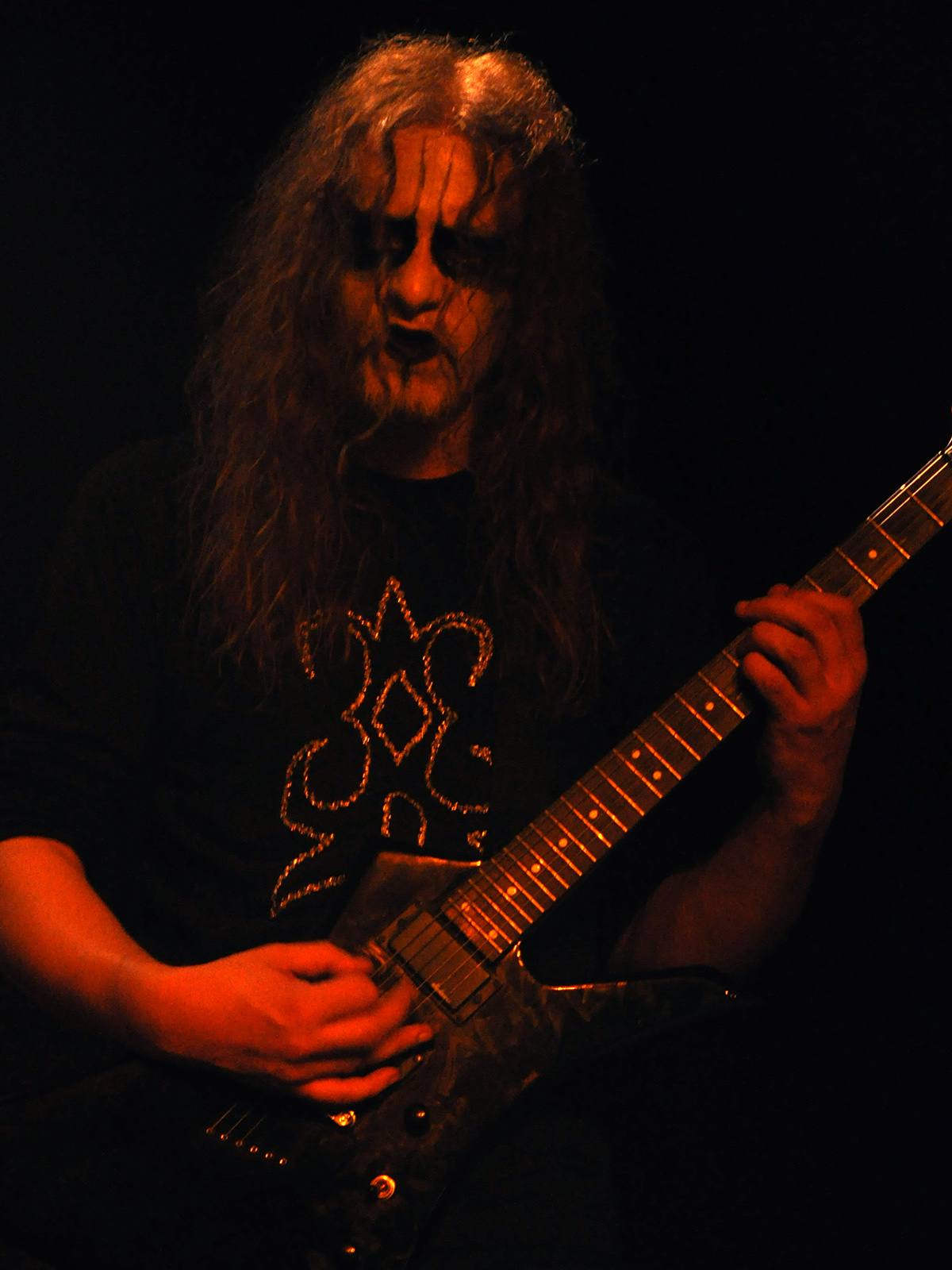
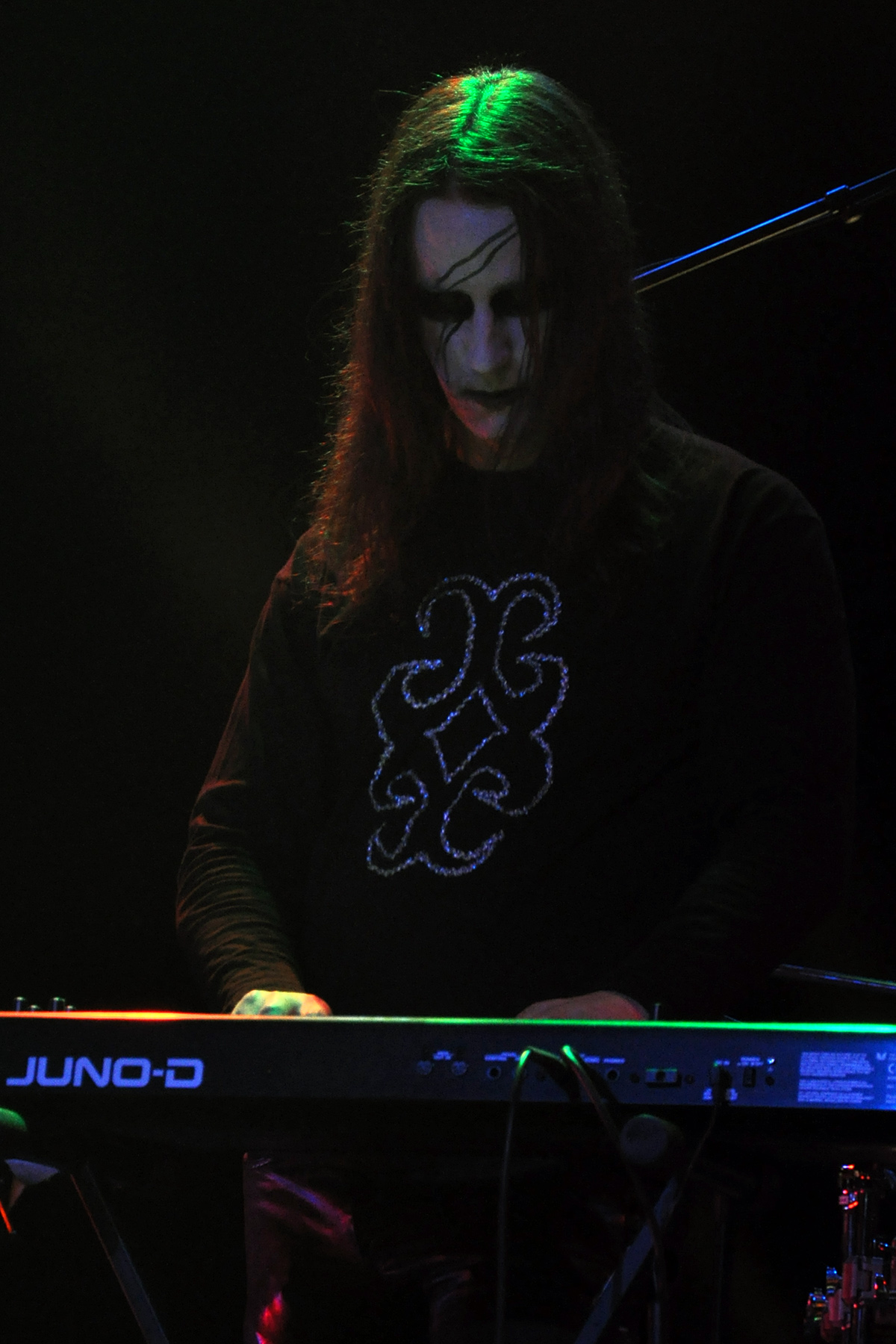
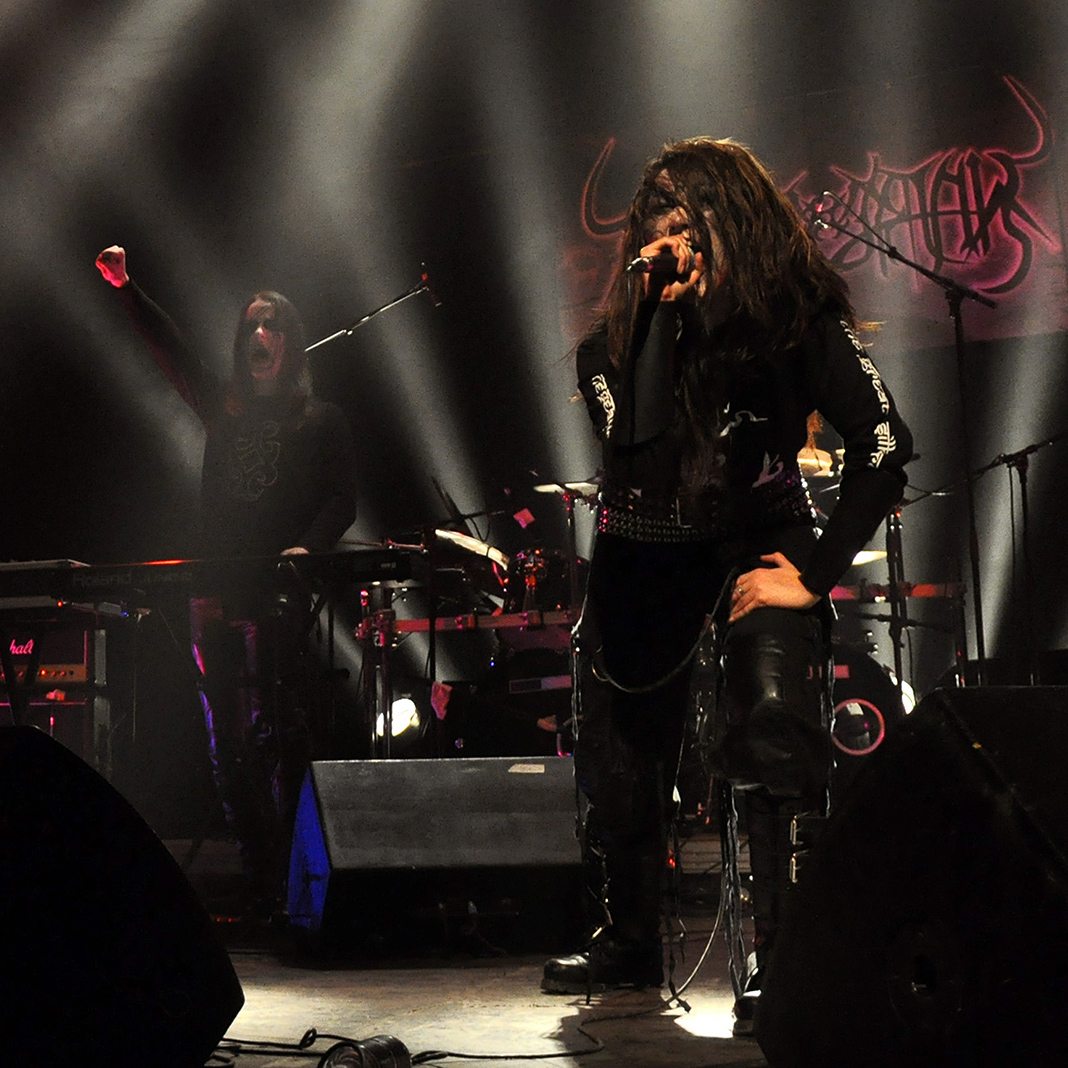
Frequently Asked Questions
Who is Darkestrah?
Darkestrah is a pagan metal band that was formed in Bishkek, Kyrgyzstan, in 1999. They are best known for weaving traditional Kyrgyz folk music into a heavy metal framework.
What traditional instruments does Darkestrah use?
In addition to standard metal instrumentation, the band features the komuz, a Kyrgyz three-stringed lute, and the kyl-kyak, a frame drum. These folk instruments give their recordings a distinctly Central Asian texture.
What themes do Darkestrah's lyrics explore?
Their songwriting centers on shamanic imagery and Tengrism, the ancient sky-god faith of Turkic and Mongolic peoples. They also draw on broader Kyrgyz folklore and mythology throughout their compositions.
How does Darkestrah's song structure differ from typical metal?
Many of their tracks are lengthy and broken into several distinct movements, borrowing structural ideas from progressive rock and post-rock. This creates a more cinematic, evolving listening experience rather than a straightforward verse-chorus format.
Who is Darkestrah's vocalist?
The band's frontwoman is Kriegtalith, a female singer whose voice is a defining element of their sound. Her presence is a notable feature in a pagan metal scene where female lead vocalists remain relatively uncommon.
More in Modern pagan musical groups 1-24
Spotted an error? Know more?
Reader corrections go straight into our review queue. Suggest an edit · How this site is sourced