Hotié de Viviane
Last updated
Where it is
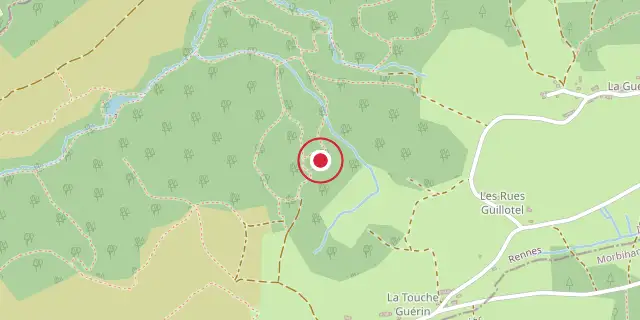
Coordinates: 48°00′00″N 2°16′05″W (48.0000, -2.2680) · Open in OpenStreetMap
Coordinates and connected clubs: the infobox of Wikipedia: Hotié de Viviane (CC BY-SA 4.0). Map: drawn by Codexery from OpenStreetMap tiles.
The Hotié de Viviane, also known as the Druids' Tomb, is a megalithic tomb in Paimpont, Ille-et-Vilaine, in Brittany. It is notable for its legendary association with the fairy Viviane, who is said to have held the enchanter Merlin imprisoned there. The site has also been linked to the esplumoir Merlin and is sometimes called the Tomb of Viviane.
Megalithic architecture
This rare burial chamber, a coffer beneath a stone tumulus, stands out in a region where other tombs from the same period typically feature covered passages. The mound itself was built from small stones, held in place by slabs measuring 80 cm to 1.6 m long, which were driven into the ground at a 45-degree angle. The coffer is defined by twelve red schist slabs, creating a chamber 2.9 meters long, 1.5 to 1.6 meters wide, and no taller than 1.4 meters.
Its original covering slabs were destroyed by treasure hunters. The dead were probably placed inside from the south side through a lower slab. Excavated grave goods include polished dolerite axes, flints, jewelry pendants, coarse late Neolithic pottery, millstones, hammerstones, and grinding wheels.
Legend
The site's original name, Tombeau des druides, was gradually replaced by Hotié de Viviane due to the legend that it was the fairy Viviane's refuge. The association with Arthurian legend was first made by François-Gabriel-Ursin Blanchard de La Musse, a Celtomane and Romantic. Félix Bellamy affirmed the connection in 1896, stating that it was in this stone castle that Viviane held Merlin bewitched, on a hill above the Val sans Retour.
Did You Know?
- The site is located south-west of the Paimpont forest, accessible via the village of Beauvais towards the Rauco moor.
- It appears after the last houses of La Guette, overlooking the Val sans retour.
- The monument was rediscovered and excavated by local groups after forest fires.
More in Locations Associated with Arthurian Legend
Sources
Compiled from Wikipedia and the sources listed below. Text from Wikipedia is available under CC BY-SA 4.0; this entry is adapted from it.
- Wikipedia: Hotié de Viviane (CC BY-SA 4.0).
Spotted an error? Know more?
Reader corrections go straight into our review queue. Suggest an edit · How this site is sourced