
Ånderdalen National Park
Coastal national park on Senja with ancient pine forests.

no:Bruker:Finn Bjørklid ; uploaded by User:Orland · CC BY-SA 3.0
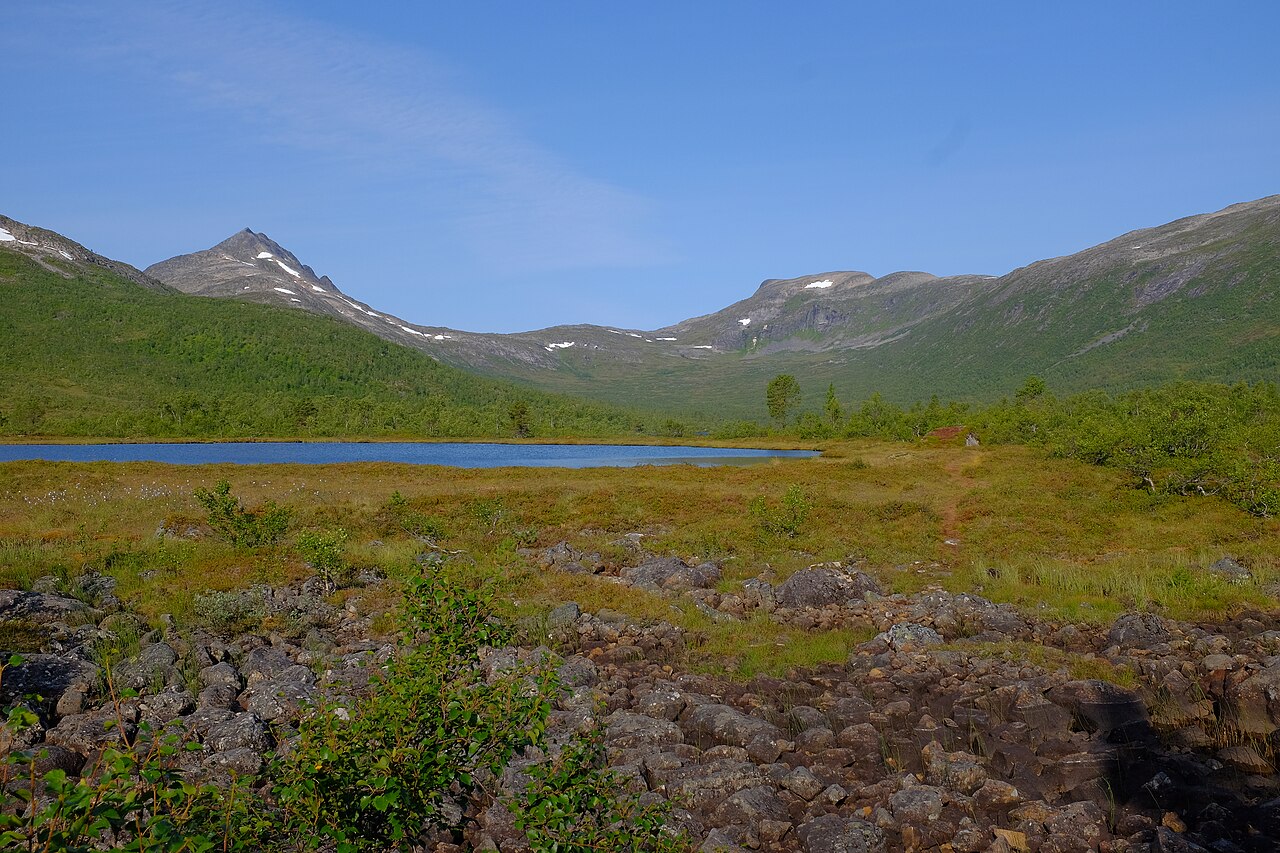
Ånderdalen National Park covers 134 square kilometers on the large island of Senja in Troms county, within Senja Municipality. It was created by royal decree on 6 February 1970 and expanded in 2004. The park protects a coastal landscape typical of Northern Norway, with hard granite bedrock that clearly shows the marks of glacial activity. In some parts of the Ånderdalen valley, the coastal pine forest includes primeval stands with trees over 600 years old, along with many marble pines and lower vegetation. Lush hawked birch forests and floodplain forests grow along the river.
No moose lived in the park before 1940, but a permanent population now exists. The area is also important for calving and grazing by semi-domesticated reindeer. Common smaller mammals include red foxes, stoats, hares, small rodents, and two shrew species. Seals appear at the heads of the fjords, and otters are frequently seen along rivers. Trout and char are widespread, and salmon swim up the river all the way to Lake Åndervatn.
The name’s last part is the definite form of *dal*, meaning “dale” or “valley.” The meaning of the first part is unknown. Similar names in the valley and park include the river Ånderelva and the lake Åndervatnet.
Quick Facts
- Iucn Category
- II
- Location
- Senja, Troms, Norway
- Nearest City
- Finnsnes (closer), Harstad
- Area
- 134 km2
- Established
- 1970, enlarged 2004
- Governing Body
- Norwegian Environment Agency
Facts from the source article.
Lore & Background
The name's last element is the finite form of 'dal', meaning 'dale' or 'valley'. The meaning of the first element is unknown. Similar names in the area include the river Ånderelva and the lake Åndervatnet.
Reader's Guide
Ånderdalen National Park is significant as a preserved example of Northern Norway's coastal landscape, with its hard granite bedrock and glacial-carved terrain. The park's ancient coastal pine forest, containing trees over 600 years old, represents a rare primeval ecosystem. Its wildlife history is notable: moose were absent before 1940 but now form a permanent population, while semi-domesticated reindeer use the park for calving and grazing. The presence of seals, otters, and salmon runs highlights the park's ecological diversity. The park's enlargement in 2004 expanded its protected area. The uncertain etymology of 'Ånderdalen' adds a layer of historical curiosity. As a national park established by royal decree, it serves as a key conservation area for both flora and fauna in the region.
Did You Know?
- The park had no moose before 1940 but now has a permanent population.
- The coastal pine forest includes primeval trees over 600 years old.
- The meaning of the first element of the name 'Ånderdalen' is unknown.
- Salmon run up the river to the lake Åndervatn.
Geography & Establishment
Ånderdalen National Park occupies a stretch of the vast island of Senja, situated in Norway's northern Troms county. Spanning 134 square kilometres (roughly 52 square miles), the protected area falls entirely within the boundaries of Senja Municipality. Its creation came through a royal decree issued on 6 February 1970, marking a formal commitment to safeguarding this particular slice of Northern Norwegian coastline. Nearly three and a half decades later, in 2004, the park's boundaries were expanded, reflecting a growing recognition of the ecological value of the surrounding terrain. The designation preserves a distinctive coastal landscape where the sea meets rugged inland terrain, a setting that has remained largely untouched by intensive development. The park's position on Senja—one of Norway's largest islands—places it in a region where maritime influences shape both the physical environment and the character of the land.
Geology & Forest Ecosystems
The bedrock beneath Ånderdalen is composed of hard granite, and the visible landscape bears the unmistakable imprint of glacial forces that sculpted Senja over millennia. These ancient ice movements left behind dramatic topography that still commands attention from visitors today. The park's most celebrated botanical feature is its coastal pine forest, which in certain stretches retains the character of primeval woodland. Here, individual trees exceed six hundred years of age, standing as silent witnesses to centuries of change. Countless marble pines and lower vegetation layers add texture to the forest floor. Along the river corridor, the character shifts: lush hawked birch forests and floodplain woodlands create a contrasting mosaic of green. These riparian zones, shaped by seasonal water movements, support a different suite of plant communities from the upland pine stands, giving the park a rich internal diversity despite its relatively modest area.
Wildlife & Aquatic Life
The animal community of Ånderdalen tells a story of both long-standing presence and more recent arrival. Moose were entirely absent from the park before 1940, yet today a permanent population thrives within its borders—a remarkable shift in just over eight decades. Semi-domesticated reindeer also rely on the park as a critical calving and grazing ground, linking human pastoral traditions to the wild landscape. Among smaller mammals, red foxes, stoats, hares, and various small rodents are the most frequently encountered, alongside two distinct species of shrew. The aquatic and semi-aquatic realms are equally vibrant: seals gather at the heads of the fjords, while otters are regularly spotted along the riverbanks. In the water itself, trout and char are common residents, and salmon undertake a notable upstream journey all the way to the lake known as Åndervatn, completing a migration that threads through the park's entire river system.
Naming & Place Identity
The name Ånderdalen carries a layered linguistic history. Its final element, "dal," is the finite form of a word meaning "dale" or "valley," anchoring the park's identity to its topographic reality. The first element, however, resists easy translation—its original meaning remains unknown, a small mystery embedded in the very name of the place. This ambiguity is echoed in the surrounding toponyms: the river that threads through the valley is called Ånderelva, and the lake at the river's upper reach is known as Åndervatnet. These parallel names create a cohesive linguistic landscape, binding the waterways and the land they carve through into a single named identity. The persistence of these names across river, lake, and valley suggests a deep-rooted local tradition of place-naming that predates the park's formal establishment by more than two centuries.
Gallery
Frequently Asked Questions
What is Ånderdalen National Park?
It is a strictly protected coastal national park on Senja island in Troms county, Norway, classified under IUCN Category II. The park guards a glacially sculpted Northern Norwegian landscape that includes remarkably old coastal pine woodland.
How big is Ånderdalen National Park and where is it located?
The park spans 134 square kilometres (52 sq mi) on Senja, one of Norway's largest islands, within Troms county. Its underlying geology is dominated by hard granite bedrock carved by ancient ice.
When was Ånderdalen National Park established and has its size changed?
It was formally created by royal decree on 6 February 1970. The protected boundaries were later expanded in 2004 to bring additional habitat under the same strict conservation regime.
What is the most notable natural feature inside Ånderdalen National Park?
The park shelters a coastal pine forest that contains primeval trees well over 600 years of age. These old-growth specimens are a rare surviving remnant of Norway's historic coastal woodland.
Why does Ånderdalen National Park matter for conservation?
As an IUCN Category II site, it enforces the highest level of in-situ protection over a unique pairing of glacial geology and ancient coastal forest. The 2004 enlargement further secured habitat for the ecological communities that depend on Senja's rugged shoreline.
More in IUCN Category II 1-24
Spotted an error? Know more?
Reader corrections go straight into our review queue. Suggest an edit · How this site is sourced