
Abruzzo, Lazio and Molise National Park
Oldest Apennine park, second oldest in Italy.

Bouke ten Cate · CC BY 4.0
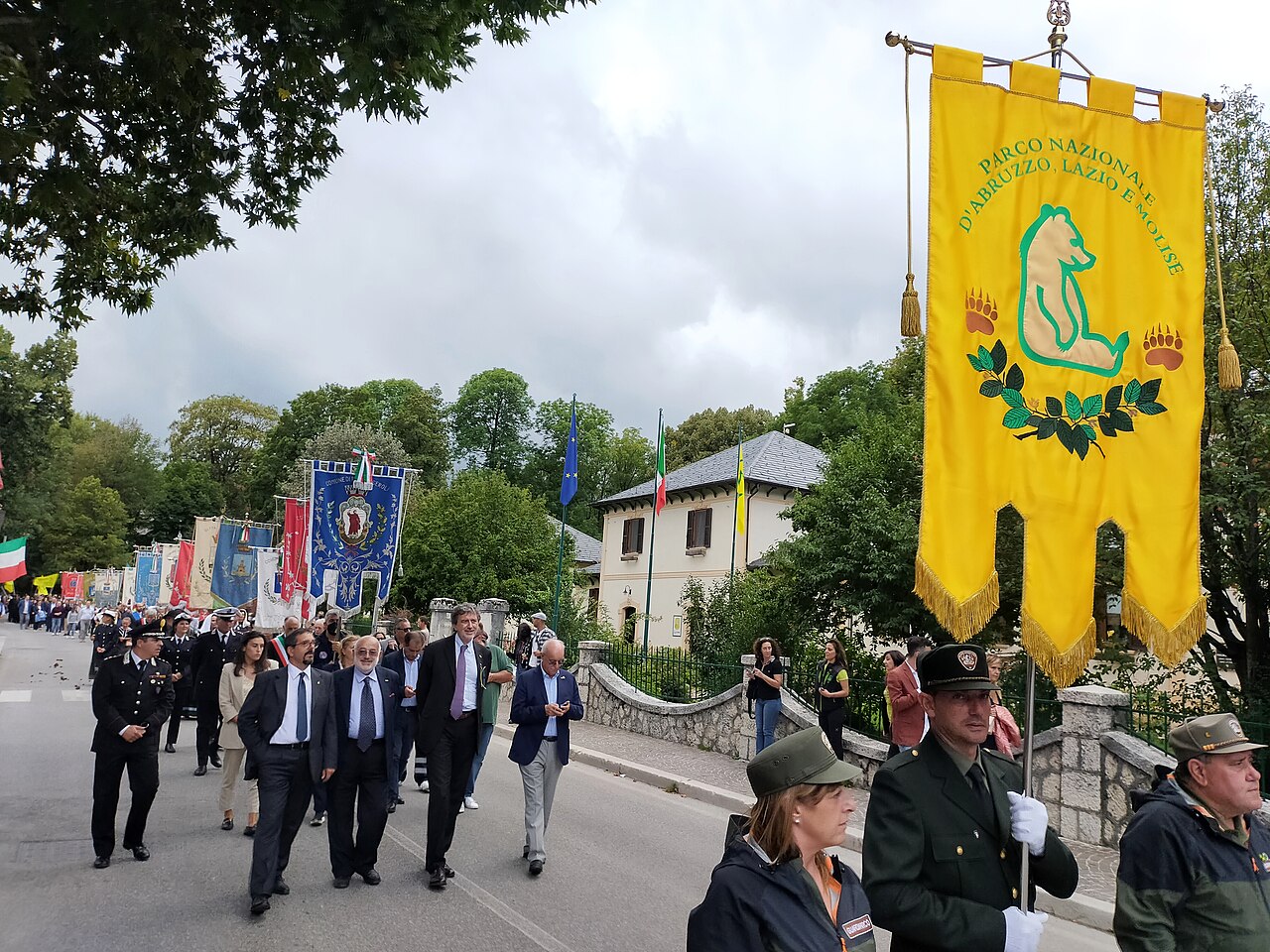
Abruzzo, Lazio and Molise National Park (Parco Nazionale d'Abruzzo, Lazio e Molise) was established in 1923. Most of its territory lies in Abruzzo, with smaller portions in Lazio and Molise. Often referred to by its older name, Abruzzo National Park, its headquarters are in Pescasseroli, in the Province of L'Aquila. Covering 496.80 km² (191.82 sq mi), it is the oldest protected area in the Apennine Mountains and the second oldest in Italy, playing a key role in conserving species like the Italian wolf, Abruzzo chamois, and Marsican brown bear.
The park’s origins trace back to the years after World War I, driven by environmentalist and parliamentarian Erminio Sipari, a cousin of Benedetto Croce. In late 1921, the municipality of Opi leased 5 km² of land to a private federation to protect flora and fauna, and Sipari founded an administrative organization in Rome. The park was formally founded in September 1922, and by 1923, when legal protection was enacted, it had expanded to about 120 km². After a period of growth to roughly 300 km², the Fascist government abolished it in 1933. Re-established in 1950, the park faced financial struggles and a building boom that felled over 12,000 trees for houses, roads, and ski tracks. A management reorganization in the late 1960s improved conditions, and by 1976, at the request of villages in neighboring Molise drawn by economic benefits, the park expanded to 400 km². Today, at about 500 km², it is 100 times larger than the original reserve. However, its role in Marsican bear conservation is now hotly debated; while annual monitoring tracks the bear population, recent issues include road construction within park boundaries and building projects to connect the park’s only ski track to the opposite valley—a sensitive area for bear movement.
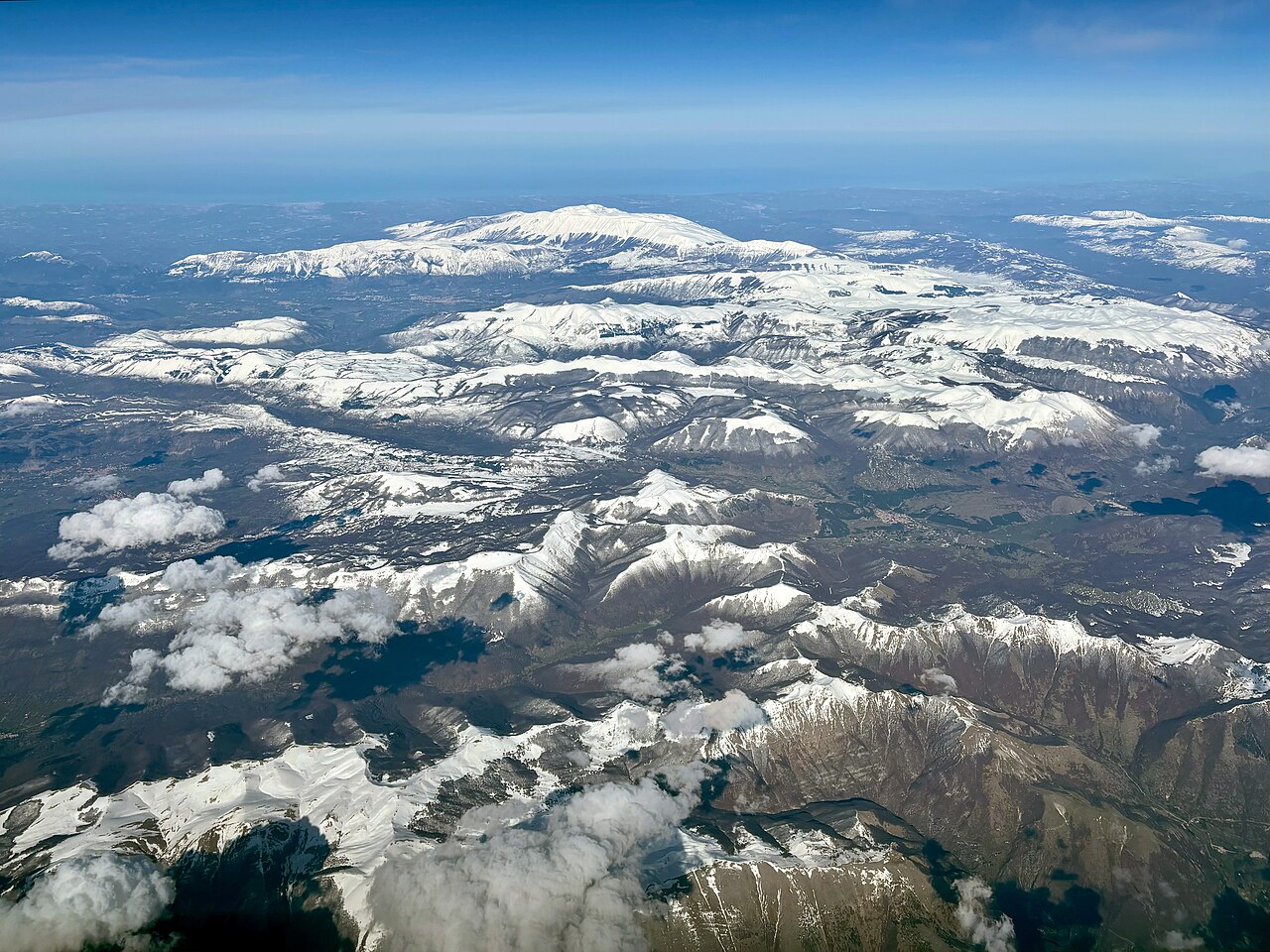
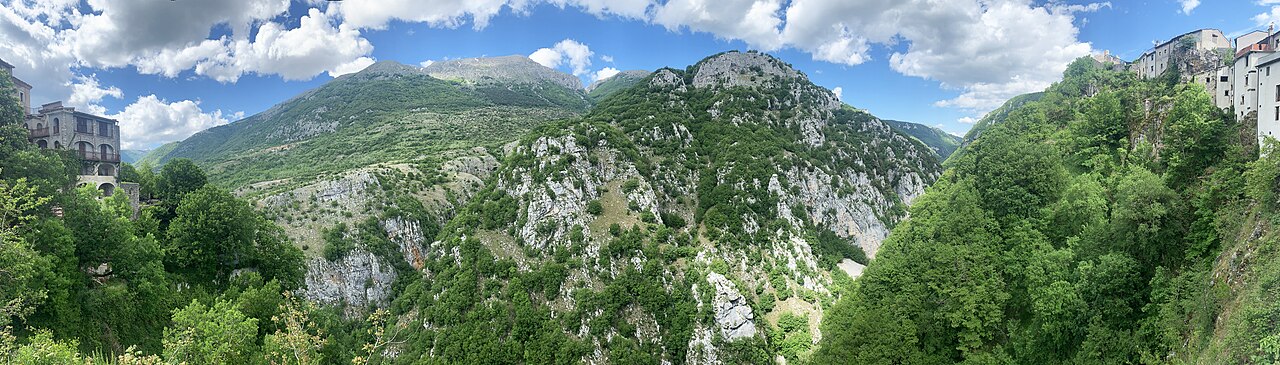
The park’s mountains include Petroso (2,249 m), Marsicano (2,245 m), Meta (2,242 m), Tartaro (2,191 m), Jamiccio (2,074 m), Cavallo (2,039 m), and Palombo (2,013 m), all part of the Monti della Meta. The Sangro River rises near Pescasseroli, flows southeast through the artificial Lago di Barrea, then leaves the park heading northeast. Other rivers are the Giovenco, Malfa, and Volturno. Additional lakes include Vivo, Pantaniello, Scanno, Montagna Spaccata, Castel San Vincenzo, Grottacampanaro, and Selva di Cardito.
Wildlife highlights are the Marsican brown bear and Italian wolf.
Quick Facts
- Iucn Category
- II
- Location
- Abruzzo, Lazio, Molise
- Nearest City
- Rome
- Established
- 1923
- Governing Body
- Ministero dell'Ambiente
Facts from the source article.
Lore & Background
The idea for the Abruzzo National Park arose in the years following World War I thanks to the work of Erminio Sipari, environmentalist, member of Italian Parliament and cousin of Benedetto Croce. Between October and November 1921, the municipality of Opi leased 5 square kilometres of land to a private federation with the aim of protecting flora and fauna, and Sipari founded an organization in Rome to administer the reserve. The park was founded in September 1922. Over the next few years the territory expanded into neighbouring municipalities until it covered around 120 km² by 1923, when protection was enshrined in law. The park had further expanded to around 300 km² when it was abolished by the Fascist government in 1933.
Re-establishment of the park in 1950 coincided with a period of financial difficulty, followed by a building boom which saw more than 12,000 trees felled for the construction of houses, roads and ski tracks. A reorganization at the end of the 1960s heralded better times, and by 1976 further expansion to 400 km² followed at the request of villages in neighbouring Molise. Today, at 500 km², the area of the park is 100 times larger than the original reserve. However, the park's role in the Marsican bear conservation program is now strongly debated; while every year there are monitoring actions, there have been problems related to pave actions and building projects to connect the only ski track to the opposite valley, a delicate spot for bear movements.
Reader's Guide
Abruzzo, Lazio and Molise National Park is significant as the oldest protected area in the Apennine Mountains and the second oldest in Italy, established in 1923. Its founding by Erminio Sipari marked an early effort in Italian conservation, though the park was abolished by the Fascist government in 1933 and later re-established in 1950. The park plays a crucial role in preserving several iconic species, including the Italian wolf, Abruzzo chamois, and the critically endangered Marsican brown bear. The bear population, estimated at 50-70 officially but closer to 30 in 2006, faces threats from development and poaching. Wolves, once as low as 40, rebounded by 2007, though in April 2026 a number were found dead, apparently poisoned. The park's beech forests cover about 60% of its area, and its flora includes over 2,000 species. The park's legacy is mixed: while it has expanded dramatically from its original 5 km² reserve to 500 km², ongoing debates about development projects and conservation effectiveness highlight tensions between human activity and wildlife protection. The park remains a key site for biodiversity in central Italy.
Did You Know?
- The park was originally founded in September 1922 and legally protected in 1923, but was abolished by the Fascist government in 1933.
- The park's area today (500 km²) is 100 times larger than the original 5 km² reserve leased by the municipality of Opi.
- The Marsican brown bear population was estimated at closer to 30 in 2006, despite official figures of 50-70.
- In April 2026, a number of wolves were found dead, apparently poisoned.
A Century of Struggle and Survival
In the aftermath of the First World War, Erminio Sipari—an environmentalist, a member of the Italian Parliament, and a cousin of Benedetto Croce—championed the vision of a reserve in the central Apennines. In late 1921 the municipality of Opi leased five square kilometres of land to a private federation dedicated to safeguarding local flora and fauna, and Sipari established an administrative body in Rome. The park was founded in September 1922, and within a year the protected territory had grown to roughly 120 square kilometres. In 1923 its legal status was cemented. Yet the gains proved fragile: by 1933 the Fascist regime had abolished the park, which by then spanned around 300 square kilometres. Re-establishment came only in 1950, and the following decades brought new pressures, including a construction boom that felled more than twelve thousand trees for housing, roads, and a ski track. A management overhaul in the late 1960s turned the tide, and by 1976 the park had reached 400 square kilometres after neighbouring Molise villages lobbied for inclusion, citing economic benefits. Today the area stands at 500 square kilometres—one hundred times the original reserve—with headquarters in Pescasseroli, and is the oldest park in the Apennine range and the second oldest in Italy.
Guardians of a Fragile Wild
The park's most iconic residents are the Marsican brown bear and the Italian wolf, both of which exist here in small, genetically isolated populations. Official figures place the bear count between fifty and seventy individuals, though a 2006 assessment suggested the true number may be closer to thirty. This fragile population faces threats from the region's shift away from traditional agriculture toward development, a controversial proposed ski resort, and persistent poaching. The wolf, which at one point numbered as few as forty, had reportedly rebounded by 2007, yet in April 2026 a number of wolves were found dead, apparently poisoned. Above the treeline, the Abruzzo chamois roams alone or in small groups, while the denser beech forests shelter red deer, roe deer—reintroduced in the 1970s—wild boar, European polecats, Eurasian badgers, otters, and two species of marten. More easily spotted are red foxes, European hares, least weasels, moles, hedgehogs, dormice, and red squirrels. The presence of the Eurasian lynx remains unconfirmed, with no scientific studies to support the occasional sighting reports.
A Living Tapestry of Forest and Stone
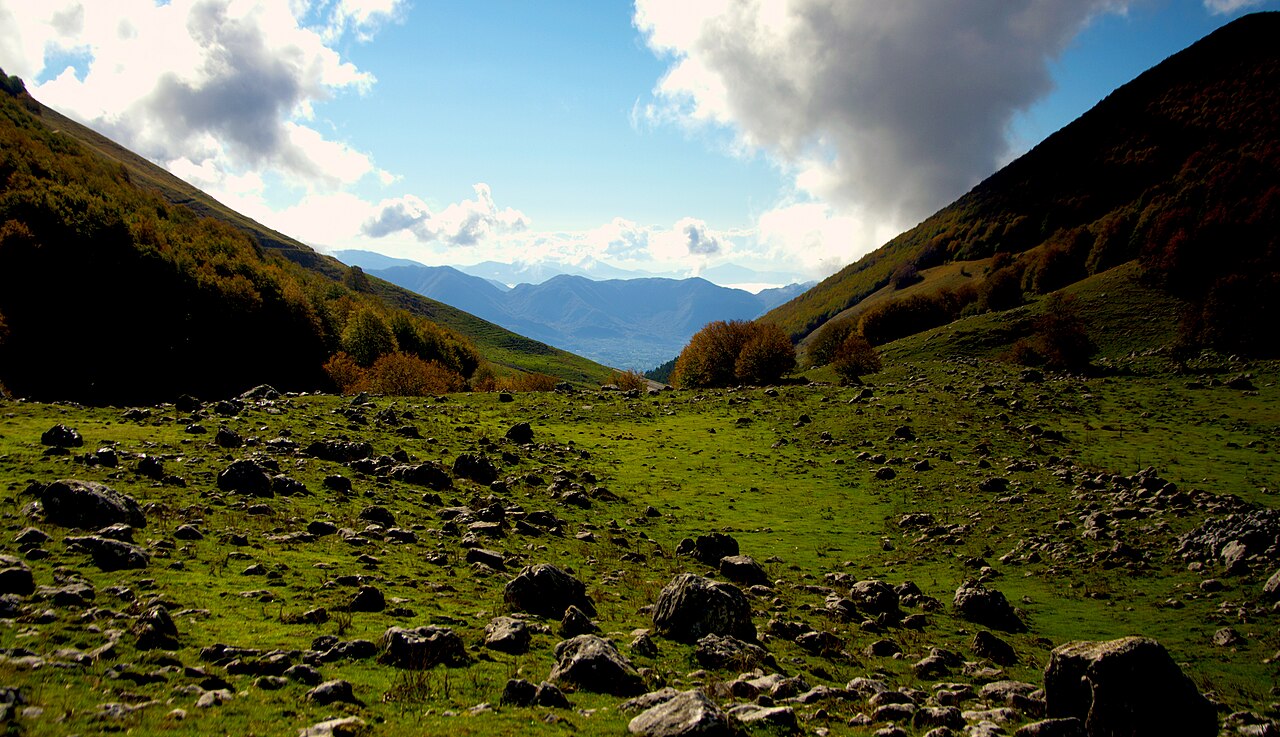
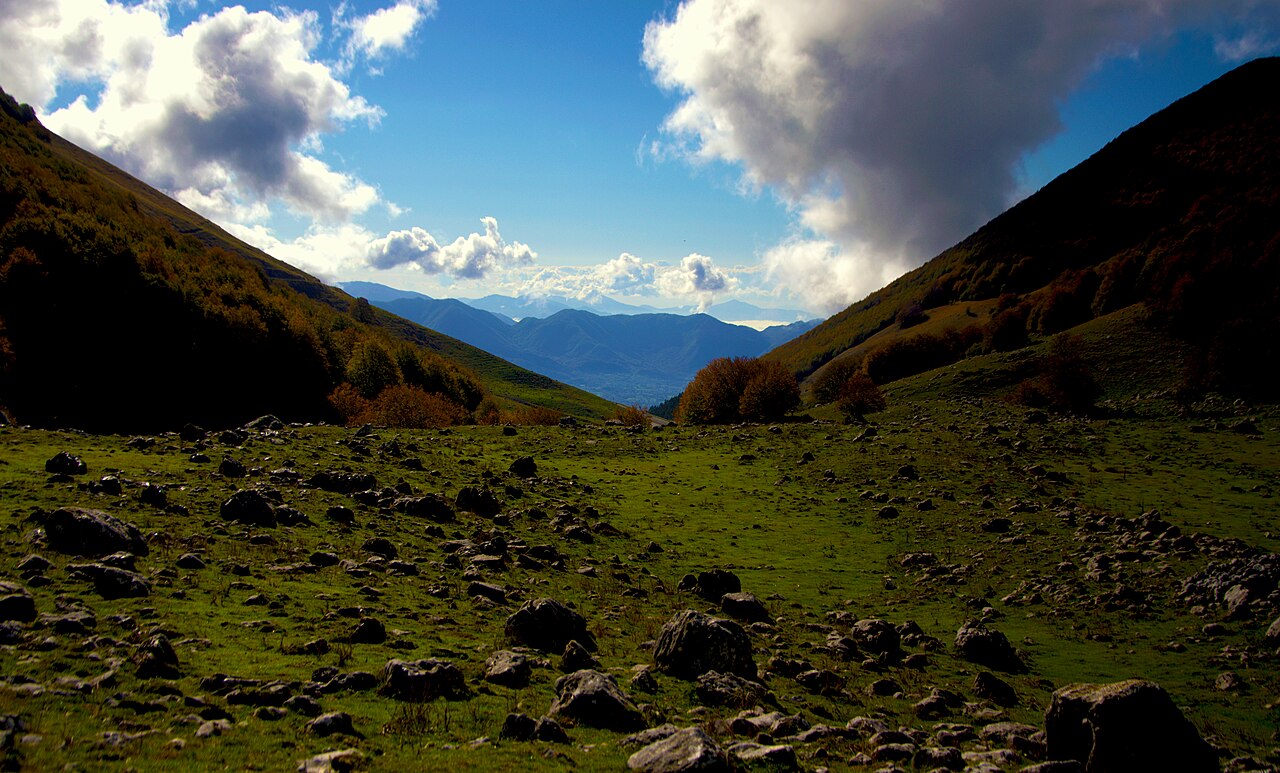
The botanical wealth of the park is staggering: a comprehensive inventory would list more than two thousand plant species, not counting lichens, algae, or fungi. The dominant tree is the beech, which blankets roughly sixty percent of the area and thrives between 900 and 1,800 metres altitude, offering a striking display of colour throughout the year. In the northern reaches, old-growth beech stands add a further layer of ecological significance. Black pine, mountain pine, and silver birch fill out the woodland mosaic. Among the flowering plants, the Marsican Iris, gentian, primrose, cyclamen, violets, and lily are all present, but the most celebrated is the rare lady's slipper, a yellow-and-black orchid known scientifically as Cypripedium calceolus. The park's geography is defined by the Monti della Meta, whose peaks include Petroso at 2,249 metres, Marsicano at 2,245, and Meta at 2,242. The Sangro River rises near Pescasseroli and flows south-east past the artificial Lago di Barrea before leaving the park, while the Giovenco, Malfa, and Volturno rivers and a string of lakes—Vivo, Scanno, Montagna Spaccata, and others—dot the landscape.
Wings Over the Apennines
The skies above the park belong to a remarkable assemblage of raptors and woodland birds. The golden eagle is the most notable, with six breeding couples occupying the most inaccessible terrain; despite this, the birds can often be seen soaring over the park's central areas in search of small mammals or even sick, young chamois. Goshawks, peregrine falcons, Eurasian buzzards, kestrels, and sparrowhawks round out the raptor community. For the nighttime visitor, several owl species—the little owl, barn owl, and tawny owl—offer a less visible but more audible presence. In the woodland, the European green woodpecker is common, while the rarer white-backed woodpecker adds a distinctive note. Cliffs harbour the red-billed chough and alpine chough, and the bare, exposed mountain slopes support the rock partridge and white-winged snowfinch. Along the streams, the grey wagtail and white-throated dipper make their home, completing a picture of avian diversity that spans every habitat from forest floor to alpine ridge.
Gallery
Frequently Asked Questions
Who is Abruzzo, Lazio and Molise National Park?
It is Italy's second-oldest national park and the oldest in the Apennine range, founded in 1923 with its headquarters in Pescasseroli, Province of L'Aquila. The bulk of its 496.80 km² territory sits in the Abruzzo region, with smaller stretches extending into Lazio and Molise.
What are Abruzzo, Lazio and Molise National Park's powers/role?
As an IUCN Category II protected area, the park manages its landscape to preserve biodiversity and restrict development across its entire territory. It serves as a critical sanctuary for three flagship species: the Italian wolf, the Abruzzo chamois, and the Marsican brown bear.
Why is Abruzzo, Lazio and Molise National Park important?
It holds the distinction of being the first national park established in the Apennine Mountains and the second-oldest in all of Italy, making it a cornerstone of European conservation history. Its protection of the Marsican brown bear, a critically endangered subspecies, gives it particular international significance.
Where is Abruzzo, Lazio and Molise National Park located?
The park spans three central Italian regions — Abruzzo, Lazio, and Molise — with the majority of its land in Abruzzo. Its administrative headquarters are based in the town of Pescasseroli, in the Province of L'Aquila.
More in IUCN Category II 1-24
Spotted an error? Know more?
Reader corrections go straight into our review queue. Suggest an edit · How this site is sourced