Intel Atom
Ultra-low-voltage x86 processors for netbooks, embedded, and IoT.

Rico Shen · CC BY-SA 4.0
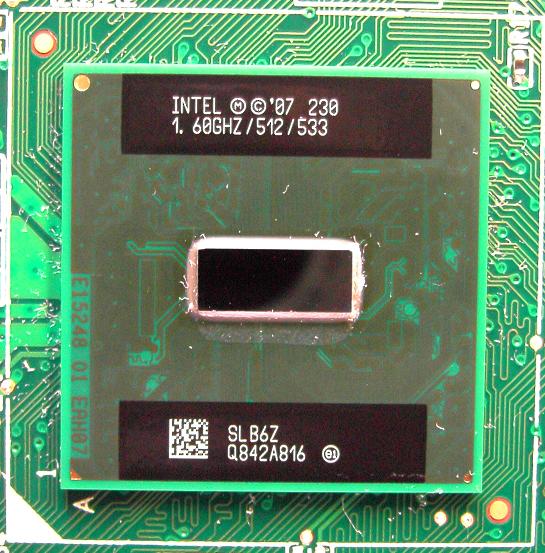
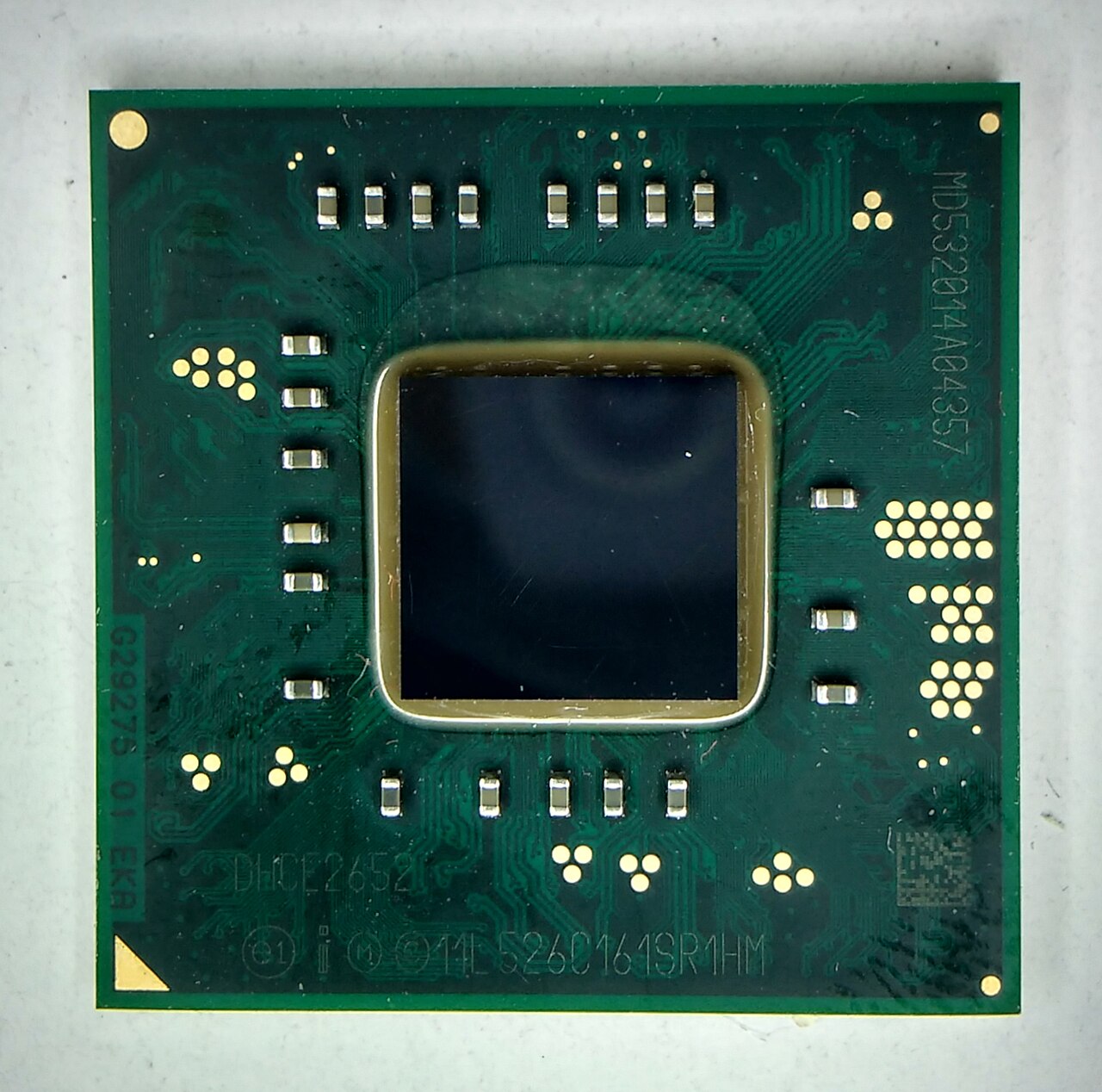
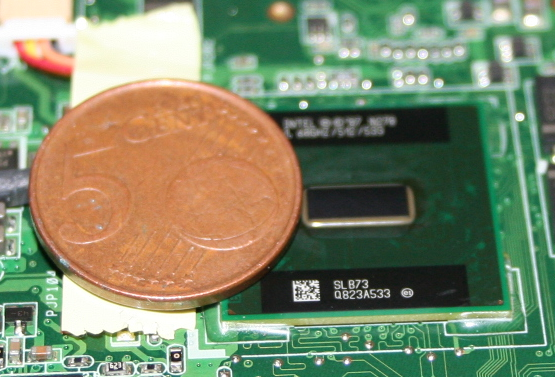
Intel Atom is a family of ultra-low-voltage processors from Intel that use the IA-32 and x86-64 instruction sets. They were built to consume less electricity and generate less heat than typical Intel Core processors. You’ll find Atoms in netbooks, nettops, embedded systems (from health-care gear to advanced robots), mobile internet devices (MIDs), and phones. The first Atoms were made with a 45 nm CMOS process, and later models (codenamed Cedar) shrank to 32 nm.
The initial Atom chips used the Bonnell microarchitecture. In late 2009, Intel introduced the Pine Trail platform, which included the Pineview Atom N450 and cut total kit power consumption by 20%. In late 2011, the Cedar processors updated the line. In December 2012, Intel launched the 64-bit Centerton family, designed for servers; these added features like Intel VT virtualization and ECC memory support. A 22 nm successor, Avoton, arrived in September 2013.
After 2020, Intel shifted Atom’s direction. Instead of targeting mainstream devices as originally planned, Atom was repurposed as a low-power chip for low-cost laptops, embedded systems, edge computing, networking, and IoT applications. To fill the gap left by Atom’s exit from the mainstream, Intel introduced low-power Pentium and Celeron chips for desktops and PCs, which inherited Atom’s low-power heritage.
Atom succeeded Intel’s earlier A100 and A110 low-power processors (codenamed Stealey), which were built on a 90 nm process, had 512 kB L2 cache, ran at 600 or 800 MHz, and had a 3 W TDP. Before Silverthorne was announced, some speculated Atom would compete with AMD’s Geode system-on-a-chip, used by the One Laptop per Child project. But in October 2007, Intel revealed it was developing another mobile processor, codenamed Diamondville, for OLPC-type devices. The name “Atom” was used for Silverthorne, while the supporting chipset (formerly Menlow) was called Centrino Atom.
At the Spring Intel Developer Forum in Shanghai in 2008, Intel confirmed that Silverthorne and Diamondville shared the same microarchitecture. Silverthorne became the Atom Z5xx series, and Diamondville became the Atom N2xx series. The pricier, lower-power Silverthorne parts targeted MIDs, while Diamondville went into low-cost desktops and notebooks. Intel and Lenovo jointly announced an Atom-powered MID called the IdeaPad U8.
Quick Facts
- Produced-Start
- 2008–2009 (as Centrino Atom) / 2008–present (as Atom)
- Slowest
- 600
- Slow-Unit
- MHz
- Fastest
- 4.0
- Fast-Unit
- GHz
- Fsb-Slowest
- 400
- Fsb-Slow-Unit
- MT/s
- Fsb-Fastest
- 667
- Soldby
- Intel
- Predecessor
- Stealey
Facts from the source article.
Lore & Background
Intel Atom is a direct successor of the Intel A100 and A110 low-power processors (code-named Stealey), which were built on a 90 nm process, had 512 kB L2 cache and ran at 600 MHz/800 MHz with 3 W TDP. Prior to the Silverthorne announcement, outside sources had speculated that Atom would compete with AMD's Geode system-on-a-chip processors, used by the One Laptop per Child (OLPC) project, and other cost and power sensitive applications for x86 processors. However, Intel revealed on October 15, 2007, that it was developing another new mobile processor, codenamed Diamondville, for OLPC-type devices. "Atom" was the name under which Silverthorne would be sold, while the supporting chipset formerly code-named Menlow was called Centrino Atom.
The first generation of Atom processors are based on the Bonnell microarchitecture. On December 21, 2009, Intel announced the Pine Trail platform, including new Atom processor code-named Pineview (Atom N450), with total kit power consumption down 20%. On December 28, 2011, Intel updated the Atom line with the Cedar processors. In December 2012, Intel launched the 64-bit Centerton family of Atom CPUs, designed specifically for use in servers. Centerton adds features previously unavailable in Atom processors, such as Intel VT virtualization technology and support for ECC memory. On September 4, 2013, Intel launched a 22 nm successor to Centerton, codenamed Avoton.
In regard to Atom, Intel changed its direction after 2020. Instead of aiming Atom as a processor for mainstream devices as originally planned, it was repurposed/reoriented as a low power processor for low-cost laptops, embedded, edge, networking, and IoT applications. However, to compensate for the void created by Atom's exit as the leading processor for mainstream devices, Intel introduced the Pentium and Celeron low-power chips for desktops/PCs that duly inherited Atom's noted low-power heritage.
Reader's Guide
Intel Atom's significance lies in its pioneering role as an ultra-low-voltage x86 processor family that enabled a generation of netbooks, nettops, and embedded devices. By dramatically reducing power consumption compared to Intel's Core series, Atom opened new markets for mobile Internet devices, low-cost laptops, and specialized applications from health care to advanced robotics. The line evolved through multiple process shrinks—from 45 nm to 32 nm and later 22 nm—and microarchitectures including Bonnell, Pineview, Cedar, and Centerton. Atom's introduction of server-class features such as Intel VT virtualization and ECC memory support in the Centerton family marked its expansion into mission-critical environments. After 2020, Intel repositioned Atom away from mainstream devices toward low-cost laptops, embedded, edge, networking, and IoT applications, while Pentium and Celeron low-power chips inherited Atom's low-power heritage for desktops and PCs. In 2024, Intel's Atom-derived Crestmont architecture became the basis of Sierra Forest, the first Xeon server line built entirely from Efficiency-cores rather than traditional Core-based cores, demonstrating Atom's lasting architectural influence.
Did You Know?
- The first Atom processors were based on the Bonnell microarchitecture and could execute up to two instructions per cycle.
- Atom processors became available to system manufacturers in 2008 and are typically soldered onto mainboards, not sold separately to home users.
- The Centerton family, launched in December 2012, was the first Atom line designed specifically for servers and added ECC memory support.
Engineering for Efficiency: The Ultra-Low-Voltage Philosophy
Intel Atom was conceived with a singular engineering mandate: to dramatically cut the electricity draw and heat output that characterized the company's mainstream Core-series chips. Rather than chasing peak clock speeds, the architecture prioritized minimal power dissipation, making it suitable for devices where battery life and thermal headroom were paramount. The original silicon was fabricated on a 45-nanometer CMOS process, with later iterations such as the Cedar stepping down to 32 nanometers for further efficiency gains. This design philosophy did not emerge in a vacuum; it grew directly out of the earlier Stealey low-power parts (the A100 and A110), which ran at modest 600 or 800 MHz on a 90-nanometer node with just 512 kilobytes of L2 cache and a 3-watt thermal design power. When Intel introduced the Pineview chip in late 2009, the entire platform kit consumed roughly 20 percent less power than its predecessor, cementing the line's identity as a power-frugal alternative rather than a performance competitor.
A Long Lineage of Microarchitectures
The Atom family cycled through several distinct microarchitectural generations, each adding capabilities the previous one lacked. The first-generation Bonnell design, sold as the Silverthorne (Z5xx) and Diamondville (N2xx) series, was unveiled at the 2008 Shanghai developer forum and targeted mobile Internet devices and budget desktops respectively. Neither of those early parts could execute 64-bit code. In December 2009, the Pineview (N450) brought x86-64 support to the mobile line, and by December 2011 the Cedar generation moved to a 32-nanometer process. A major leap came in December 2012 with the Centerton family, the first Atom built specifically for servers; it introduced Intel VT virtualization and ECC memory support, features that had been entirely absent from the line. Its 22-nanometer successor, Avoton, followed in September 2013. Perhaps the most consequential evolution arrived in 2024, when the Crestmont microarchitecture—descended from the Atom lineage—became the foundation of Sierra Forest, the first Xeon server product built exclusively from Efficiency-cores rather than traditional Core-based designs.
From Netbooks to 5G Towers: An Unusually Broad Canvas
Atom's application footprint stretched far beyond the netbook laptops that made the name familiar to consumers. Intel marketed the brand across an impressive range of segments: mobile Internet devices and smartphones, nettops and tablets, embedded systems in healthcare and advanced robotics, wireless base stations for 5G infrastructure, micro-servers, and consumer electronics. In the netbook space, the chip appeared in machines from HP, Asus, Lenovo, Acer, Dell, Sony, Toshiba, MSI, Samsung, and many others. It also found a deeply human role in AAC (augmentative and alternative communication) devices that help non-speaking individuals communicate through dedicated speech software. On the server side, the S1200 series released in 2012 added ECC memory support, opening the door to mission-critical environments where memory redundancy and failure protection are non-negotiable. Because Atom processors are soldered directly onto the motherboard rather than socketed, they were never sold as standalone retail parts to home builders, limiting access to preinstalled systems or specialized ITX boards.
The 2020 Pivot and the Inheritance of a Legacy
After 2020, Intel fundamentally reoriented the Atom brand. The processor line, which had originally been positioned to compete in mainstream consumer devices, was repurposed as a low-power solution for budget laptops, embedded systems, edge computing, networking gear, and Internet-of-Things applications. To fill the gap left by Atom's withdrawal from the mainstream desktop and laptop market, Intel introduced low-power Pentium and Celeron chips that inherited the ultra-low-voltage design heritage Atom had established over more than a decade. Meanwhile, the architectural DNA of Atom continued to evolve in the server world. The Crestmont microarchitecture, a direct descendant of the Atom design lineage, was repurposed in 2024 as the basis for Sierra Forest, marking the first time Intel built an entire Xeon server product line from Efficiency-cores rather than the traditional high-performance Core architecture. This trajectory—moving from consumer netbooks to server efficiency cores—illustrates how a chip originally designed for a 3-watt budget laptop ultimately shaped the future of data-center silicon.
Gallery

Frequently Asked Questions
What exactly is Intel Atom?
Intel Atom is a line of ultra-low-voltage x86 processors built to draw minimal power and shed very little heat, filling the gap between full-featured Core chips and simple embedded controllers.
How does Atom differ from a typical Intel Core CPU?
Where Core parts chase peak clock speeds, Atom parts are engineered around a tight power and thermal envelope, which is why they ended up in thin netbooks, MIDs, and embedded gear rather than desktops.
What process nodes did Atom go through over its life?
The first-generation Bonnell parts were etched at 45 nm, the Cedar generation moved to 32 nm, and the later Avoton family reached 22 nm.
What devices actually ship with an Atom inside?
You'll find Atom silicon in netbooks, nettops, mobile internet devices, phones, and a broad swath of embedded systems ranging from health-care monitors to advanced robotics.
Did Atom ever enter the server market?
It did—the Centerton family, introduced in December 2012, was the first Atom line aimed at servers, adding Intel VT virtualization and ECC memory support to the mix.
More in Intel and AMD Microprocessors 1-24
Spotted an error? Know more?
Reader corrections go straight into our review queue. Suggest an edit · How this site is sourced