
Xeon
Intel's x86 processor brand for servers, workstations, and embedded systems.

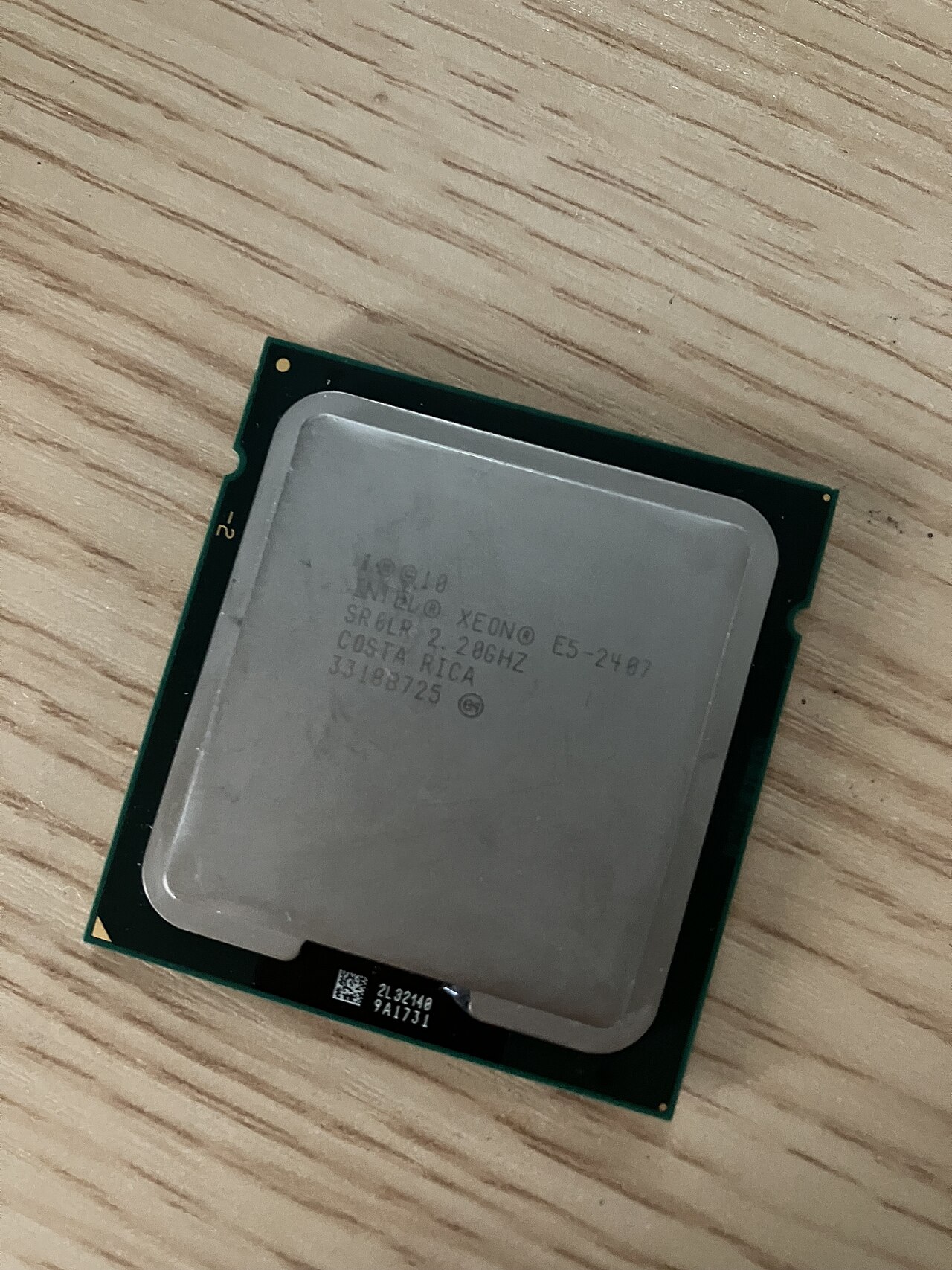
Oofphhps · CC BY-SA 4.0
Intel’s Xeon line is a family of x86 microprocessors built for workstations, servers, and embedded systems, not for typical consumer PCs. The brand debuted on June 29, 1998. While Xeon chips share the same underlying architecture as Intel’s desktop processors, they pack extra features: support for error-correcting code (ECC) memory, more cores, additional PCI Express lanes, capacity for larger amounts of RAM, bigger caches, and enterprise-grade reliability, availability, and serviceability (RAS) features. These RAS capabilities, which handle hardware glitches through the Machine Check Architecture (MCA), often let a Xeon keep running safely when a standard processor would crash—depending on the type and severity of the machine-check exception (MCE). Some Xeon models also work in multi-socket setups with two, four, or eight CPUs, linked via the Ultra Path Interconnect (UPI) bus, which replaced the older QuickPath Interconnect (QPI).
Quick Facts
- Produced-Start
- June 29, 1998
- Soldby
- Intel
- Slowest
- 400
- Slow-Unit
- MHz
- Fastest
- 5.3
- Fast-Unit
- GHz
- Fsb-Slowest
- 100
- Fsb-Fastest
- 1.6
- Fsb-Slow-Unit
- MT/s
- Fsb-Fast-Unit
- GT/s
- Qpi-Slowest
- 4.8
- Qpi-Fastest
- 24
Facts from the source article.
Lore & Background
The Xeon brand has been maintained over several generations of IA-32 and x86-64 processors. The P6-based models added the Xeon moniker to the end of the name of their corresponding desktop processor, but all models since 2001 used the name Xeon on its own. The Xeon CPUs generally have more cache and cores than their desktop counterparts in addition to multiprocessing capabilities. The first Xeon-branded processor was the Pentium II Xeon (code-named 'Drake'), released in 1998, replacing the Pentium Pro in Intel's high-end server lineup. It used a larger slot, Slot 2, and was supported by the i440GX dual-processor workstation chipset and the i450NX quad- or octo-processor server chipset. In 1999, the Pentium II Xeon was replaced by the Pentium III Xeon, with the first version named 'Tanner' adding Streaming SIMD Extensions (SSE), and a second version named 'Cascades' based on the Pentium III 'Coppermine' core. In mid-2001, the Xeon brand was introduced ('Pentium' was dropped from the name) with the NetBurst microarchitecture variant 'Foster'. In 2002, Intel released a 130 nm version codenamed 'Prestonia', which supported Hyper-Threading technology and had a 512 kB L2 cache.
Reader's Guide
The Xeon brand has been a cornerstone of Intel's server and workstation strategy for decades, evolving from the Pentium II Xeon in 1998 through multiple microarchitectures including P6, NetBurst, and later generations. The Xeon Scalable brand, introduced in May 2017 with the Skylake-based Xeon Platinum 8100 series, established a hierarchy of Bronze, Silver, Gold, and Platinum tiers for high-performance servers, supporting dual socket to eight socket configurations. In April 2024, Intel announced the retirement of the Xeon Scalable brand, beginning with 6th generation Xeon processors codenamed Sierra Forest and Granite Rapids, now referred to as 'Xeon 6' processors, bringing greater emphasis on processor generation numbers. Xeon 6 is split into two product lines: the E series (all E core) and P series (all P core). The Xeon D line, announced in 2014 and released in March 2015, targets microserver and edge computing markets with lower power consumption and integrated I/O blocks, functioning as SoCs in a soldered BGA package. Xeon W branding, introduced in August 2017 for workstation processors, later adopted tiers w3, w5, w7, and w9 with Sapphire Rapids-WS in March 2023. Some shortcomings that make Xeon processors unsuitable for most consumer-grade desktop PCs include lower clock rates at the same price point and, usually, the lack of an integrated GPU. Despite such disadvantages, Xeon processors have had popularity among some desktop users, mainly due to higher core count potential and higher performance to price ratio vs. the Core i7 in terms of total computing power of all cores.
Did You Know?
- Xeon processors often lack an integrated GPU, requiring a discrete graphics card for display output.
- The Xeon Scalable brand was retired in April 2024, replaced by the 'Xeon 6' naming convention.
- Xeon D processors come in a soldered BGA package rather than a socketable form factor.
Enterprise Architecture & Reliability Engineering
Xeon processors share the same fundamental x86 architecture as Intel's desktop chips, yet they are engineered with a suite of enterprise-grade capabilities that set them apart in server and workstation environments. These include support for error correction code memory, substantially larger cache hierarchies, expanded PCI Express lane counts, and the ability to address far greater amounts of system RAM. Perhaps most critically, Xeon chips incorporate dedicated reliability, availability, and serviceability circuitry built around Intel's Machine Check Architecture. This RAS infrastructure allows a Xeon processor to detect hardware exceptions and, depending on their severity, safely continue execution in scenarios where a standard desktop CPU would simply halt. For multi-socket configurations ranging from two to eight processors, Intel employs the Ultra Path Interconnect bus, a successor to the earlier QuickPath Interconnect, to maintain coherent communication across the system. Together, these features make Xeon the backbone of mission-critical computing where downtime is unacceptable.
Brand Evolution & the Shift to Generation-Based Naming
The Xeon name has traveled through multiple architectural generations since its 1998 debut. Early P6-era models simply appended the Xeon moniker to the desktop processor name—Pentium II Xeon, Pentium III Xeon—but from 2001 onward the brand stood entirely on its own. In May 2017, Intel launched the Xeon Scalable line with the Skylake-based Platinum 8100 series, introducing a four-tier hierarchy of Bronze, Silver, Gold, and Platinum that spanned dual-socket through eight-socket platforms. Then in April 2024, at its Vision event, Intel announced the retirement of the Scalable brand. Starting with sixth-generation silicon codenamed Sierra Forest and Granite Rapids, the line would simply be called "Xeon 6," shifting emphasis toward generation numbers. Xeon 6 splits into two product families: the E series, built entirely from energy-efficient E cores, and the P series, composed of performance-oriented P cores. A concrete example is the Xeon 6 6700E line, an all-E-core Sierra Forest product.
Market Positioning & the Desktop Paradox
Although Xeon is purpose-built for workstations, servers, and embedded systems, it has always attracted a niche following among power-user desktop builders. The trade-offs are clear: at a given price point, Xeon chips typically run at lower clock speeds than their Core counterparts, most models lack an integrated graphics processor, and overclocking support was absent until the Sapphire Rapids-WS generation, with the lone exception of the Xeon W-3175X. Yet video editors and other power users found that the higher core counts and superior aggregate performance-per-dollar compared to a Core i7 made the compromise worthwhile, provided they added a discrete GPU for display output. It is also worth noting that Xeon is entirely distinct from Intel Xeon Phi, a separate product line. The first-generation Phi was a PCI Express coprocessor more akin to a graphics card, while the second generation evolved into a socketable x86 main processor emphasizing extreme core counts and memory bandwidth rather than the balanced design of standard Xeon.
Specialized Lines: Xeon D and Xeon W
Two sub-brands extend Xeon into specialized niches. Xeon D, announced in 2014 with first silicon shipping in March 2015, targets microserver and edge-computing deployments. It integrates I/O blocks such as network interface controllers directly on the die, allowing the chip to function as a system-on-chip without a separate southbridge chipset. The processors ship in a soldered BGA package rather than a socketable form, and Intel designed them to counter emerging ARM-based hyperscale solutions that offered stronger multi-threaded throughput at lower power draw. In early 2025, Intel positioned the Xeon 6 SoC line as the successor to at least part of the Xeon D portfolio. On the other end, Xeon W serves the professional workstation segment. Introduced in August 2017 with the Skylake-based W-2100 series, it gained a tiered structure with the Sapphire Rapids-WS launch in March 2023: w3, w5, w7, and w9, deliberately mirroring the Core i3, i5, i7, and i9 naming that Intel had long used for consumer desktops.
Gallery
Frequently Asked Questions
Who is Xeon?
Xeon is Intel's brand of x86 microprocessors built for servers, workstations, and embedded systems rather than everyday consumer PCs. The line debuted on June 29, 1998, with the Pentium II Xeon (code-named Drake) on Slot 2.
What are Xeon's powers and role?
Xeon chips share the same core architecture as Intel's desktop parts but layer on enterprise extras: ECC memory support, additional cores, more PCI Express lanes, larger caches, and higher RAM ceilings. They also carry RAS (reliability, availability, serviceability) features like the Machine Check Architecture to detect and contain hardware faults without crashing the whole system.
What is Xeon's hierarchy?
The Xeon Scalable lineup is graded into Bronze, Silver, Gold, and Platinum tiers. The newer Xeon 6 generation splits into an E-series (all E-cores) and a P-series (all P-cores), while the workstation-focused Xeon W line uses w3, w5, w7, and w9 designations.
How does Xeon differ from a regular Intel desktop chip?
Although the underlying microarchitecture is the same, Xeon adds server-grade capabilities—ECC memory, extra PCIe lanes, more cores, and enterprise RAS features—that consumer parts simply do not include. This makes Xeon suited for around-the-clock datacenter and workstation workloads where a single fault must not take down the entire machine.
Why is Xeon important?
Since 1998, Xeon has anchored Intel's datacenter and workstation strategy, powering everything from single-node workstations to multi-socket server farms. Its tiered branding and long product lineage give enterprises a straightforward path to scale performance, memory, and reliability without changing their underlying x86 architecture.
More in Intel and AMD Microprocessors, Part 3 1-24
Spotted an error? Know more?
Reader corrections go straight into our review queue. Suggest an edit · How this site is sourced