
Am5x86
A 486-class CPU that rivaled the Pentium 75 in integer performance.

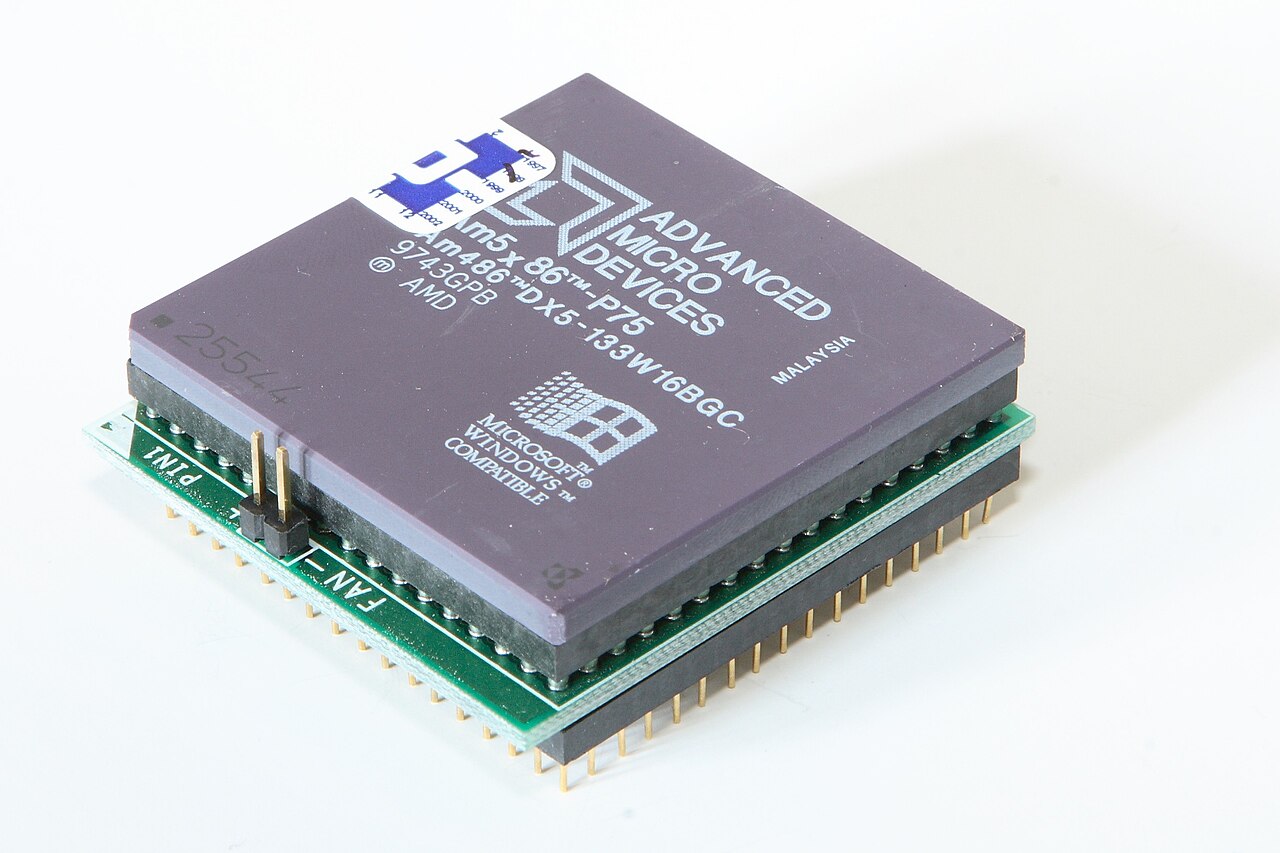
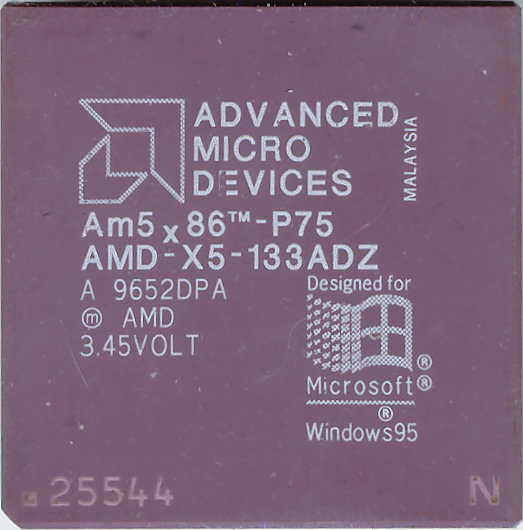
Pauli Rautakorpi · CC BY 3.0
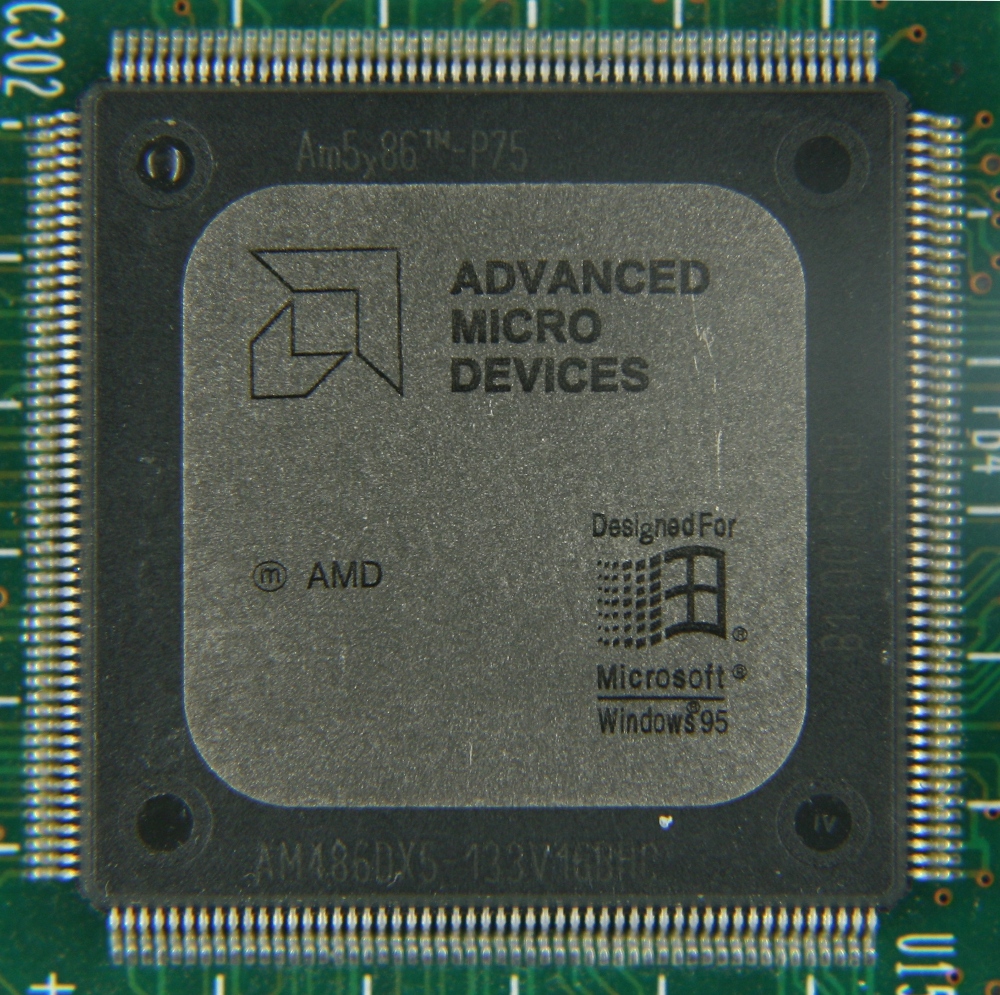
The Am5x86, announced by AMD in November 1995, is an x86-compatible processor designed for 486-class systems. Despite its name, it is a 486 CPU and lacks 586 or Pentium instructions like cmpxchg8b. Its main rival was the Pentium OverDrive, which is a genuine 586 processor.
Development of the chip, codenamed "X5," preceded its December 1995 release at a bulk price of $93 per unit. Also known as the 5x86-133, X5-133, or sold under third-party labels like Kingston Technology's "Turbochip," it is an Enhanced Am486 with an internal 4x clock multiplier, enabling 133 MHz operation on motherboards lacking official support for DX2 or DX4 multipliers. It features a write-back L1 cache of 16 KB, larger than the typical 8 KB, and a rare 150 MHz OEM version was also produced.
Because the 486's Socket 3 design only has a single CLKMUL pin and does not natively support a 4x multiplier, AMD engineered the 5x86 to accept a 2x setting from the motherboard while operating at 4x internally. The motherboard must be set to 2x. The chip physically fits older 486 sockets (Socket 1, 2, or the original 168-pin socket), but requires a replacement voltage regulator due to its 3.45-volt operation.
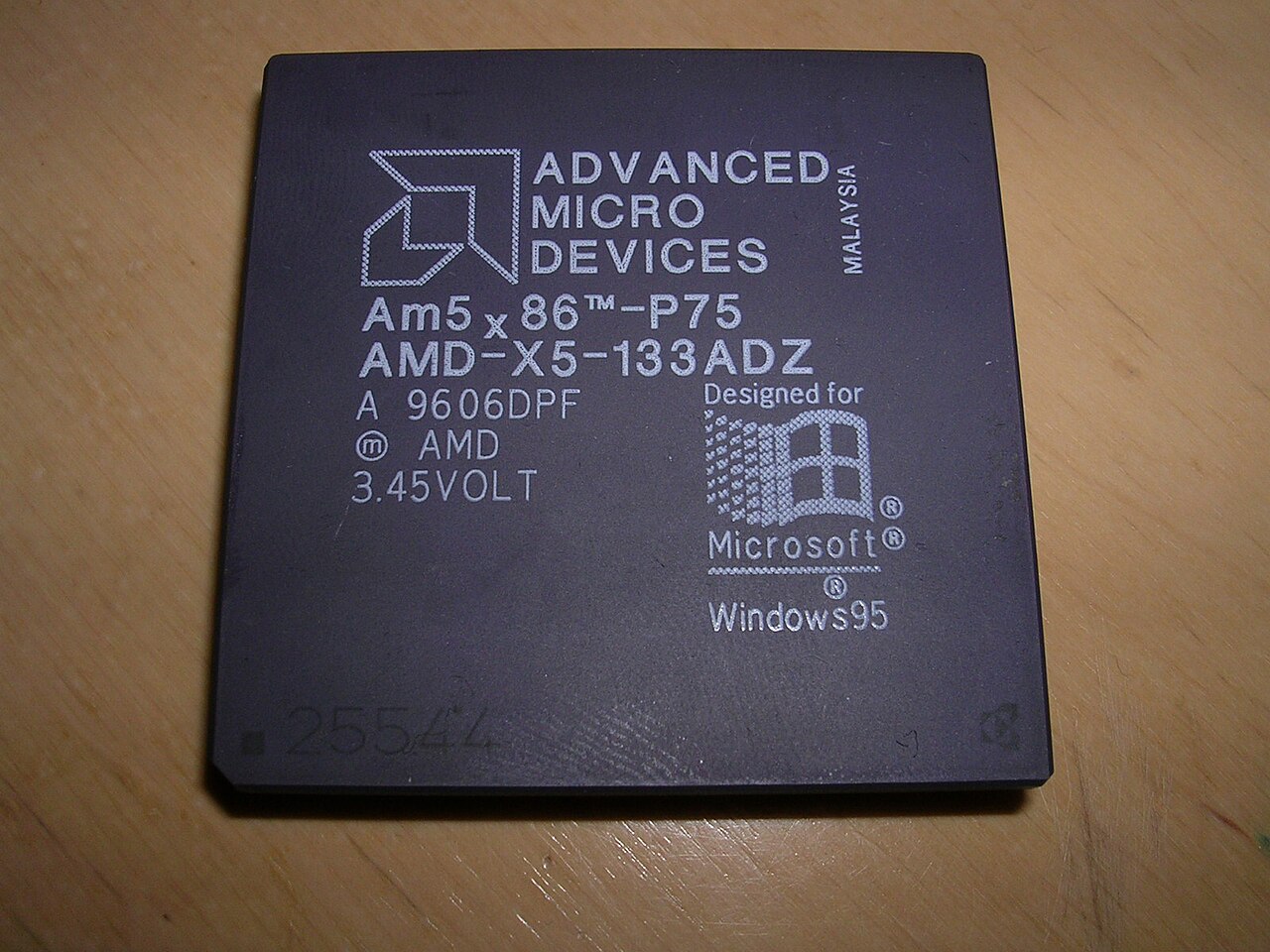
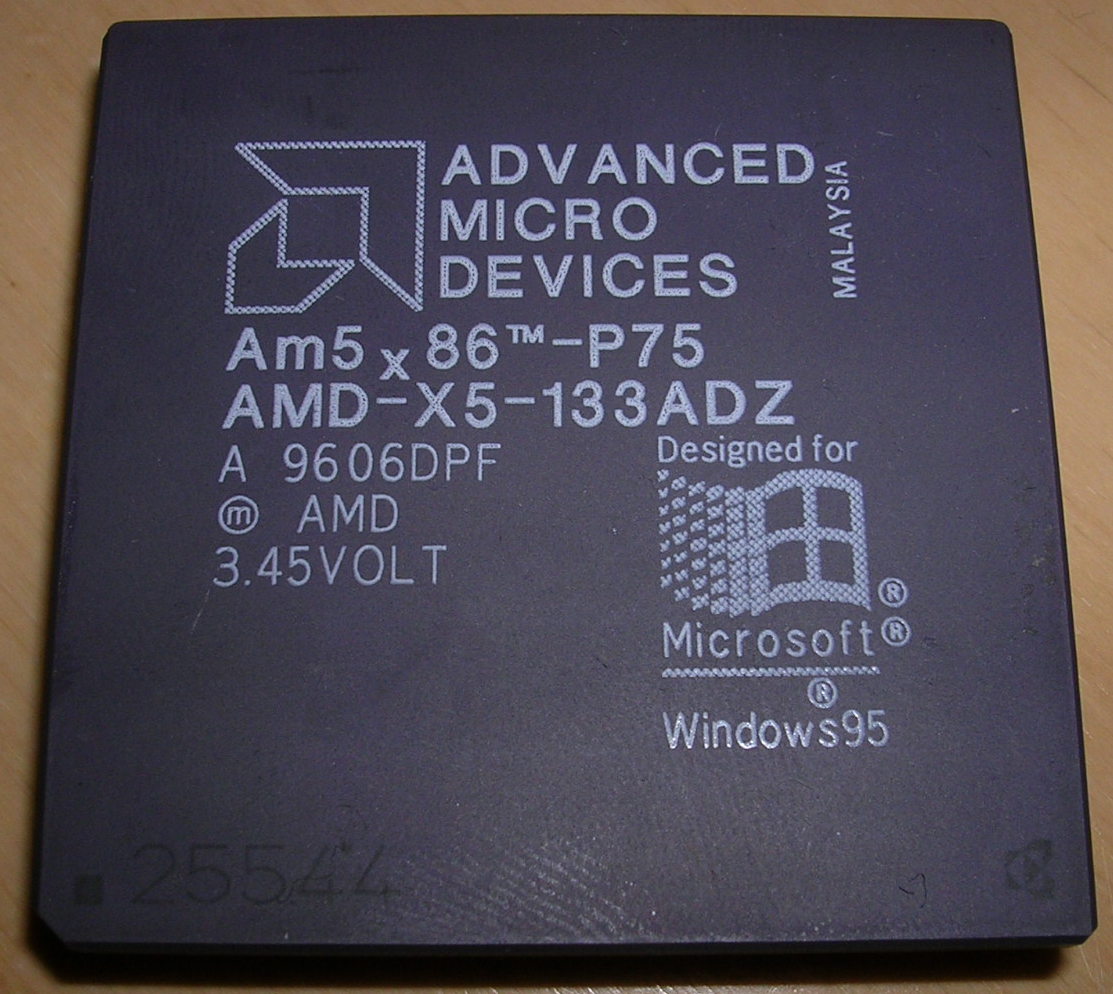
Its combination of 133 MHz clock speed and 16 KB write-back cache allows it to match or slightly exceed an Intel Pentium 75 MHz in integer benchmarks. Real-world performance varies, with later Windows versions and FPU-intensive games favoring the Pentium 75. Being a pure 486 design, it offers better compatibility with older systems than its rival, the Cyrix Cx5x86. It is commonly overclocked to 160 MHz, achieving performance similar to a Pentium 90. Four main socketed versions exist—ADW, ADY, ADZ, and BGC—with later models preferred for their higher temperature tolerance and overclocking headroom.
The Am5x86 was the first CPU to use the controversial PR rating, marketed as "Am5x86-P75" because its benchmark performance equaled a Pentium 75. Sales were a crucial revenue source for AMD during delays in bringing the AMD K5 to production.
AMD manufactured the Am5x86 for standard PCs until 1999. It was popular in entry-level desktops, many notebook models, and as an upgrade for older 486 systems. Companies sold upgrade kits including a voltage regulator and socket converter for virtually any socketed 486 motherboard, and some provided upgrades for notebooks by replacing soldered 486 CPUs.
Quick Facts
- Produced-Start
- November 1995
- Produced-End
- 1999
- Slowest
- 133
- Slow-Unit
- MHz
- Fastest
- 160
- Fsb-Slowest
- 33
- Fsb-Fastest
- 50
- Soldby
- AMD
Facts from the source article.
Lore & Background
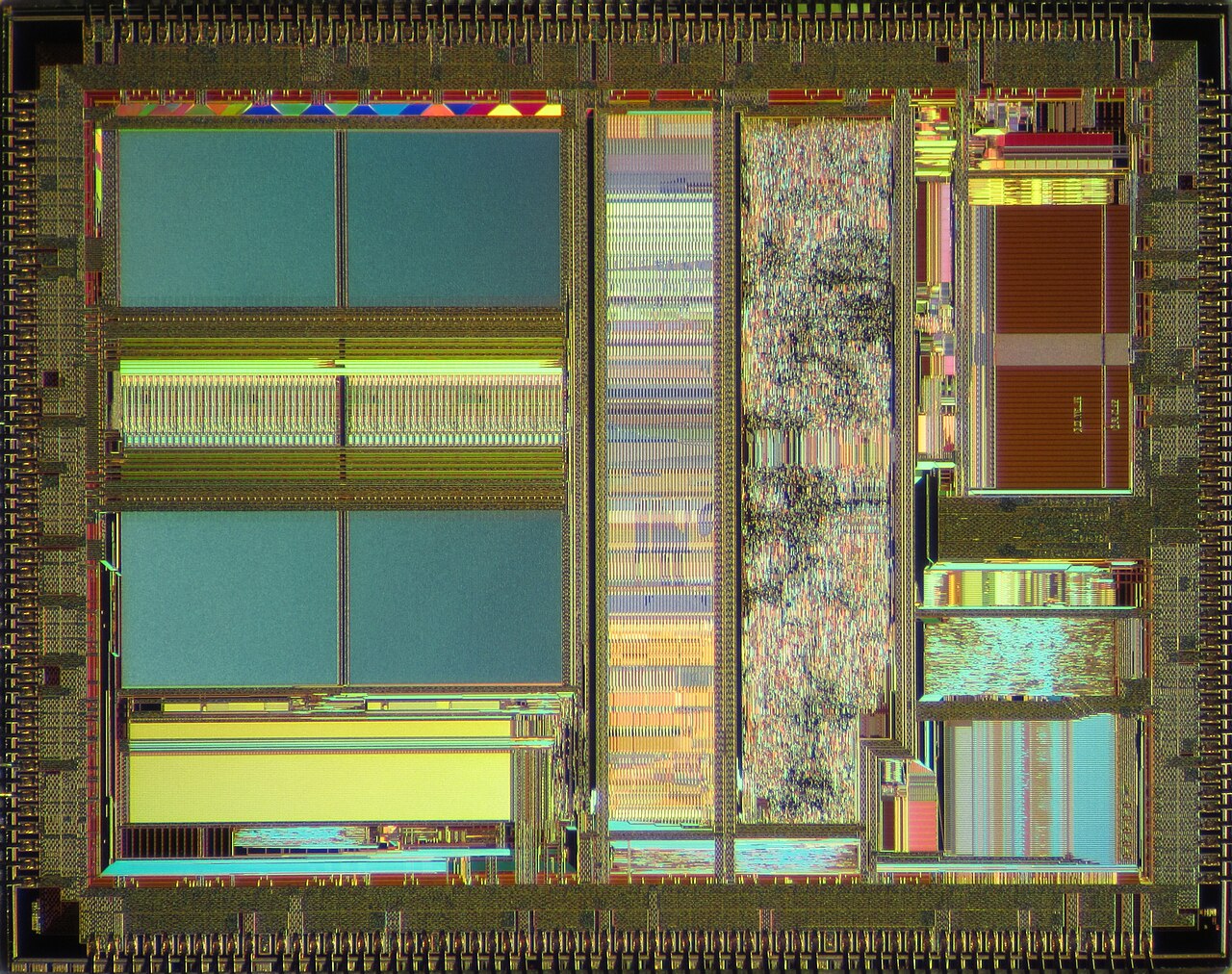
The Am5x86, also known as the 5x86-133, X5-133, and sold under third-party labels such as Kingston Technology's 'Turbochip', is an Enhanced Am486 processor with an internally set multiplier of 4, allowing it to run at 133 MHz on systems without official support for clock-multiplied DX2 or DX4 processors. Like all Enhanced Am486 chips, it featured write-back L1 cache, and unlike most, a generous 16 KB rather than the more common 8 KB. A rare 150 MHz-rated OEM part was also released. Since a clock multiplier of four is not part of the original Socket 3 design, AMD made the 5x86 accept a 2x setting from the motherboard and instead operate at 4x; the motherboard must be set to the 2x setting. The chip physically fits into older 486 sockets such as Socket 1 or 2 or the original 168-pin 80486 socket, but requires a replacement voltage regulator because it runs at 3.45 volts.
The combination of clock speed and the relatively large 16 KB write-back L1 cache allows the 5x86 to equal or slightly exceed an Intel Pentium 75 MHz processor in integer arithmetic in benchmarks. Real-world performance varies, with later Windows operating systems and many FPU-sensitive games favoring the Pentium 75 MHz. Because it is based on a pure 486 design, it is compatible with older systems, something its slightly faster rival, the Cyrix Cx5x86, has trouble with. The CPU is commonly overclocked to 160 MHz, giving performance similar to that of a Pentium 90 MHz system. There are four main versions of the socketed CPU: the common ADW variety, and the later ADY, ADZ, and BGC. Later models were preferred because they were rated for higher temperatures and thus more forgiving of overclocking.
The Am5x86 made the first-ever use of the controversial PR rating. Because the 5x86 is the equal of a Pentium 75 MHz processor in benchmarks, AMD later marketed the chip as 'Am5x86-P75'. Sales of the Am5x86 were an important source of revenue for AMD at a time when lengthy delays in bringing the AMD K5 to production were threatening the company's profitability.
Reader's Guide
AMD manufactured the Am5x86 processor for ordinary PC systems until 1999. It was popular for entry-level desktop systems, appeared in many notebook models, and sold separately as an upgrade processor for older 486 systems. Several companies made upgrade kits with an AMD 5x86 including a voltage regulator and socket converter, allowing its use on virtually every socketed 486 motherboard ever produced. Several companies also provided upgrades for older 486 notebooks by replacing soldered 486 CPUs. The chips were even used on later Acorn RiscPC 'PC card' second processors. The RiscPC's OpenBus memory interface was only 32-bit, meaning the Pentium could not be easily interfaced to it. Intel's expensive Pentium Overdrive for 486 systems is a troublesome CPU with many compatibility issues, so it was not used; the 5x86 therefore provided the acme of RiscPC Windows performance. The chip remained in production for a long time as a popular choice for embedded controllers. One derivative of the 5x86 family is the core used in the AMD Élan SC520 family of SoC microcontrollers, which powers the original Cisco PIX 501 model.
Gallery
Frequently Asked Questions
What is the AMD Am5x86?
The Am5x86 is an x86-compatible processor that AMD announced in November 1995 and began shipping in December of that year. Despite its '5x86' branding, it is fundamentally a 486-class chip rather than a true 586/Pentium-class design. It was marketed as an enhanced 486 with a 4x internal clock multiplier to reach 133 MHz on compatible motherboards.
Is the Am5x86 a true Pentium-class processor?
No. The Am5x86 does not support 586/Pentium instructions such as cmpxchg8b, making it a 486 CPU in all but name. Its '5x86' label was a marketing choice, and it should not be confused with the Pentium OverDrive, which is a genuine 586 processor.
What are the key specs of the Am5x86?
The chip runs at 133 MHz using an internal 4x multiplier, carries 16 KB of write-back L1 cache, and operates at 3.45 volts. In integer workloads it could compete with a Pentium 75, though it still lacked the full instruction set of a true 586.
What was the Am5x86's main rival?
Its primary competitor was the Pentium OverDrive, a genuine 586 processor that offered the full Pentium instruction set. The Am5x86 tried to match it on integer throughput at a lower price point, but it could not replicate the 586's instruction-level capabilities.
How much did the Am5x86 cost and who sold it?
AMD set a bulk price of $93 per unit at its December 1995 launch. The chip was also sold under third-party branding, such as Kingston Technology's 'Turbochip' label, and is sometimes listed under the names 5x86-133 or X5-133.
More in Intel and AMD Microprocessors, Part 3 1-24
Spotted an error? Know more?
Reader corrections go straight into our review queue. Suggest an edit · How this site is sourced