
Am386
AMD's first independently competitive x86 processor, a legal and market milestone.

Oligopolism · CC0
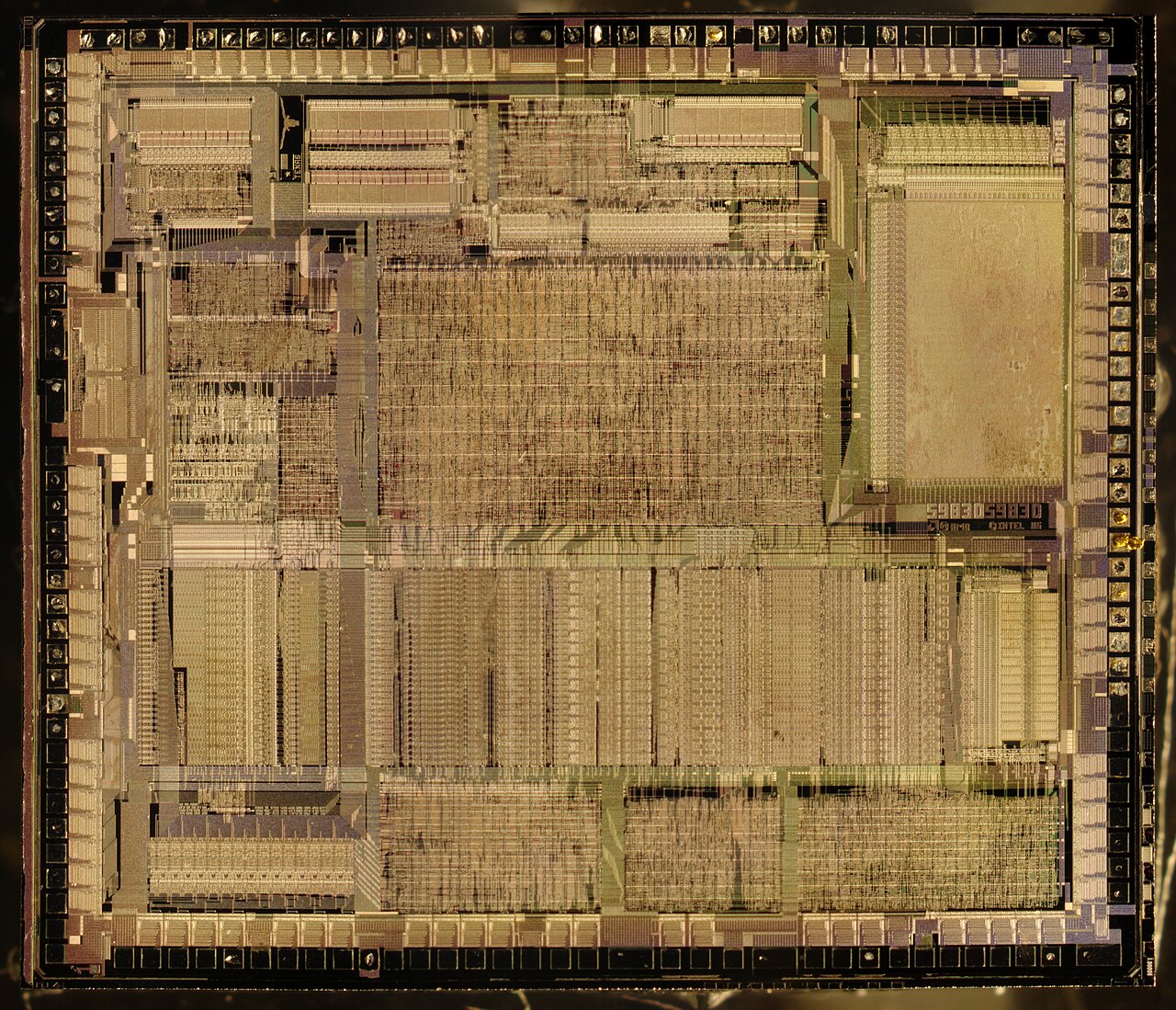
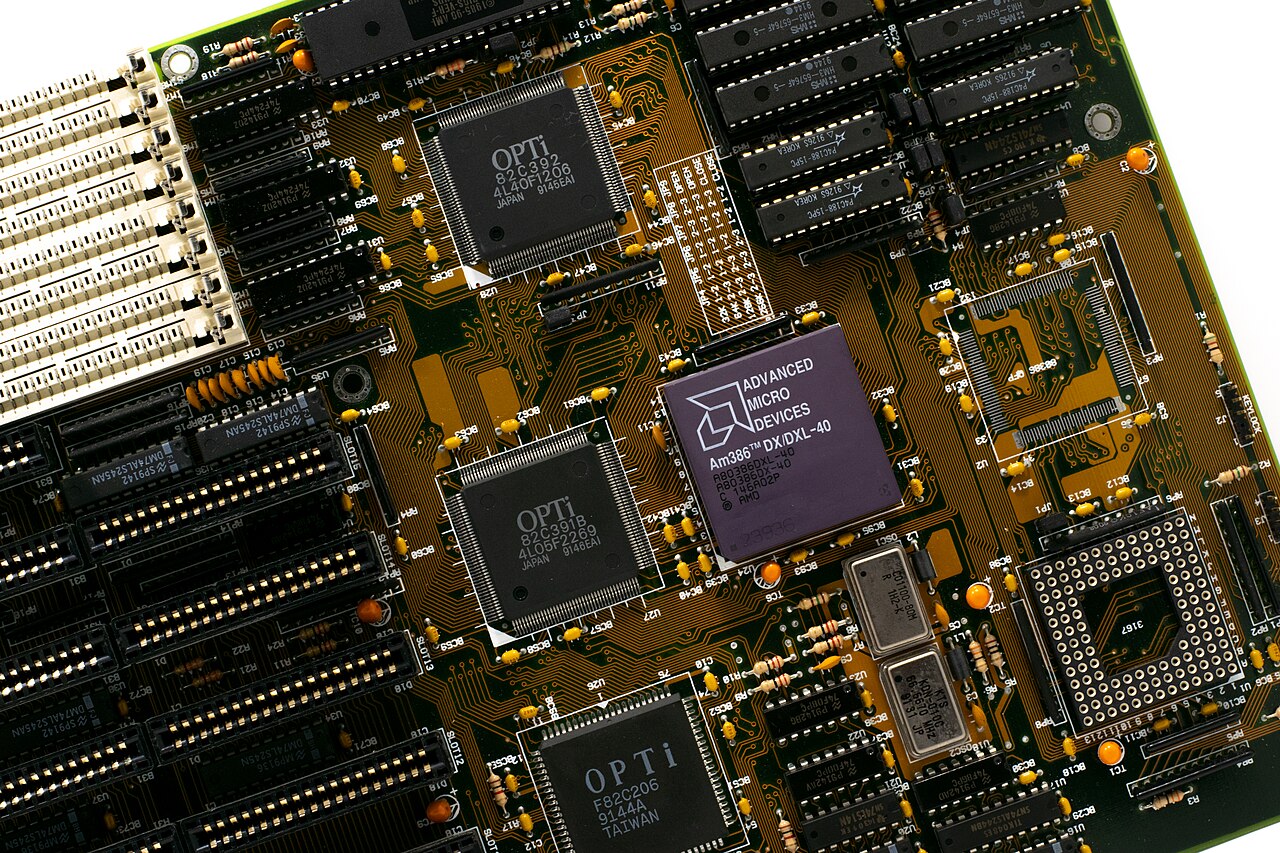
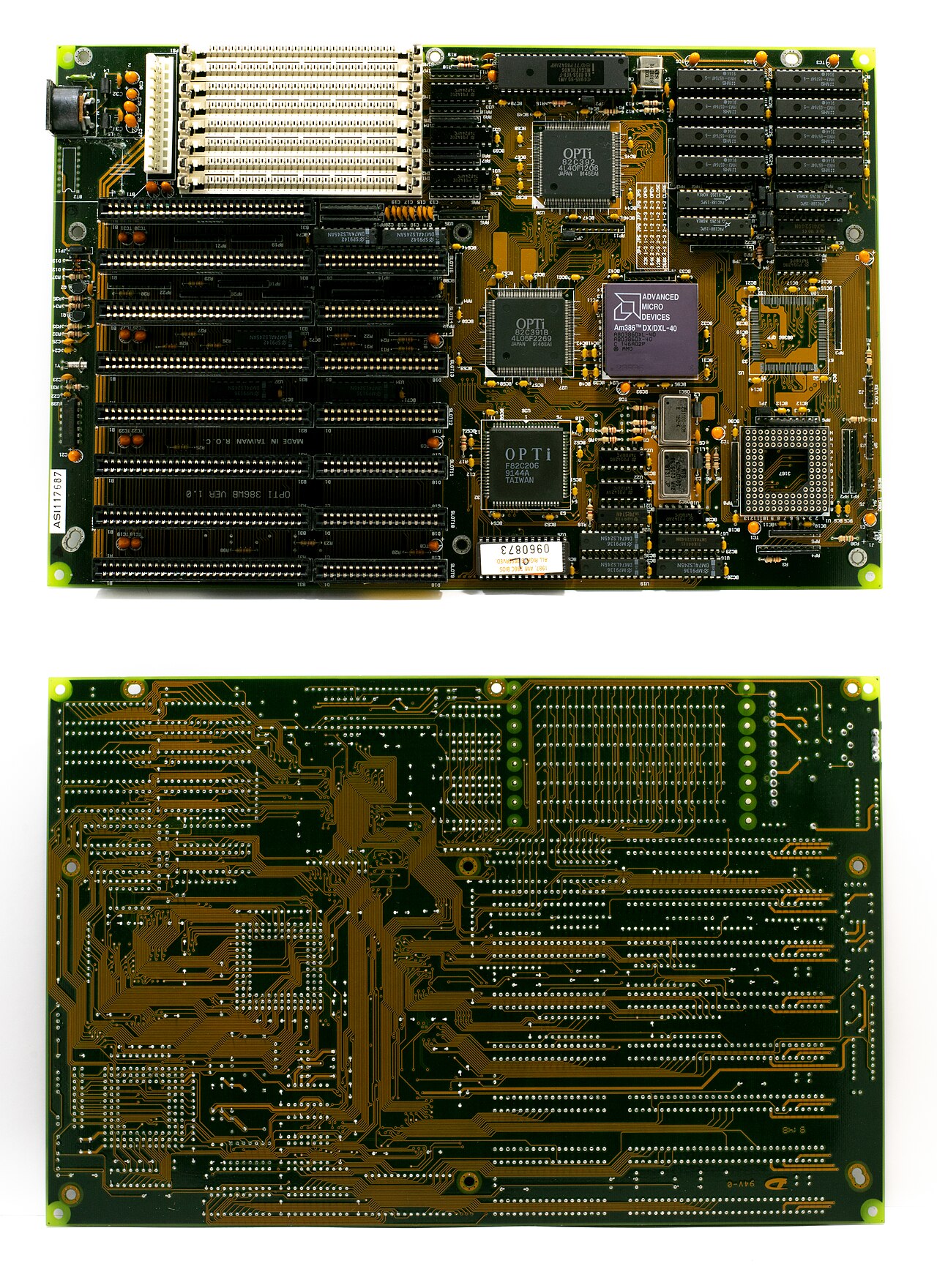
The Am386, a fully compatible clone of Intel’s 80386, launched in March 1991. It sold in the millions, transforming AMD from a secondary supplier of earlier x86 chips (the 8086 family) into a direct rival to Intel.
Though AMD had the chip ready before 1991, Intel kept it tied up in court. Intel learned of the Am386 when both companies hired employees with the same name who happened to stay at the same hotel; a package meant for AMD was accidentally forwarded to Intel’s employee. AMD had previously manufactured Intel’s 8086, 80186, and 80286 under a second-source agreement, and AMD argued that the 1982 contract covered all derivatives. Intel countered that the deal only applied to the 80286 and earlier chips, barring AMD from making 80386 CPUs in 1987. After years of litigation, AMD won the right to sell the Am386 in March 1991. This opened up competition in the 32-bit 80386-compatible market and drove down PC prices.
Intel’s 386 chips had topped out at 33 MHz in 1989, but AMD immediately offered 40 MHz versions of both the 386DX and 386SX, extending the architecture’s life. Over the next two years, the AMD 386DX-40 became popular with small PC clone makers and budget-conscious enthusiasts, delivering near-80486 performance at a much lower price. The 386DX-40 performed roughly on par with a 25 MHz 486, since the 486 needed fewer clock cycles per instruction thanks to tighter pipelining and an on-chip cache. However, the 386DX-40’s 32-bit, 40 MHz data bus gave it strong memory and I/O performance. Intel responded to AMD’s 40 MHz 386 with the 486SX.
The Am386DX had a 32-bit data bus that could also operate as a 16-bit bus via the BS16 input, a 32-bit physical address space (4 GB), and fetched code in four-byte units. It launched in March 1991, with DXLV/SXLV variants (featuring SMM) arriving in October 1991. The Am386DE was similar but lacked a paging unit.
In 1991, AMD also released advanced versions of the 386SX—not as a second-source part, but as reverse-engineered, pin-compatible chips. This was AMD’s first x86 entry outside of second-sourcing. AMD’s 386SX processors were available at higher clock speeds and lower prices than Intel’s. Built on a 0.8 μm process with a static core, they could drop to 0 MHz and consume just milliwatts.
Quick Facts
- Produced-Start
- 1991
- Slowest
- 20
- Slow-Unit
- MHz
- Fastest
- 40
- Soldby
- AMD
- Arch
- x86 (IA-32)
- Microarch
- 80386
Facts from the source article.
Lore & Background
While the Am386 CPU was essentially ready to be released prior to 1991, Intel kept it tied up in court. Intel learned of the Am386 when both companies hired employees with the same name who coincidentally stayed at the same hotel, which accidentally forwarded a package for AMD to Intel's employee. AMD had previously been a second-source manufacturer of Intel's Intel 8086, Intel 80186 and Intel 80286 designs, and AMD's interpretation of the contract, made up in 1982, was that it covered all derivatives of them. Intel, however, claimed that the contract only covered the 80286 and prior processors and forbade AMD the right to manufacture 80386 CPUs in 1987. After a few years in the courtrooms, AMD finally won the case and the right to sell their Am386 in March 1991. This also paved the way for competition in the 80386-compatible 32-bit CPU market and so lowered the cost of owning a PC.
While Intel's 386 CPUs had topped out at 33 MHz in 1989, AMD introduced 40 MHz versions of both its 386DX and 386SX out of the gate, extending the lifespan of the architecture. In the following two years the AMD 386DX-40 saw popularity with small manufacturers of PC clones and with budget-minded computer enthusiasts because it offered near-80486 performance at a much lower price than an actual 486. Generally the 386DX-40 performs nearly on par with a 25 MHz 486 due to the 486 needing fewer clock cycles per instruction, thanks to its tighter pipelining in combination with an on-chip CPU cache. However, its 32-bit 40 MHz data bus gave the 386DX-40 comparatively good memory and I/O performance. Intel responded to AMD's 40-MHz 386 with the 486SX.
In 1991 AMD also introduced advanced versions of the 386SX processor – again not as a second source production of the Intel chip, but as a reverse engineered pin compatible version. In fact, it was AMD's first entry in the x86 market other than as a second source for Intel. AMD 386SX processors were available at higher clock speeds at the time they were introduced and still cheaper than the Intel 386SX. Produced in 0.8 μm technology and using a static core, their clock speed could be dropped down to 0 MHz, consuming just some mWatts. Power consumption was up to 35% lower than with Intel's design and even lower than the 386SL's, making the AMD 386SX the ideal chip for both desktop and mobile computers. The SXL versions featured advanced power management functions and used even less power.
Reader's Guide
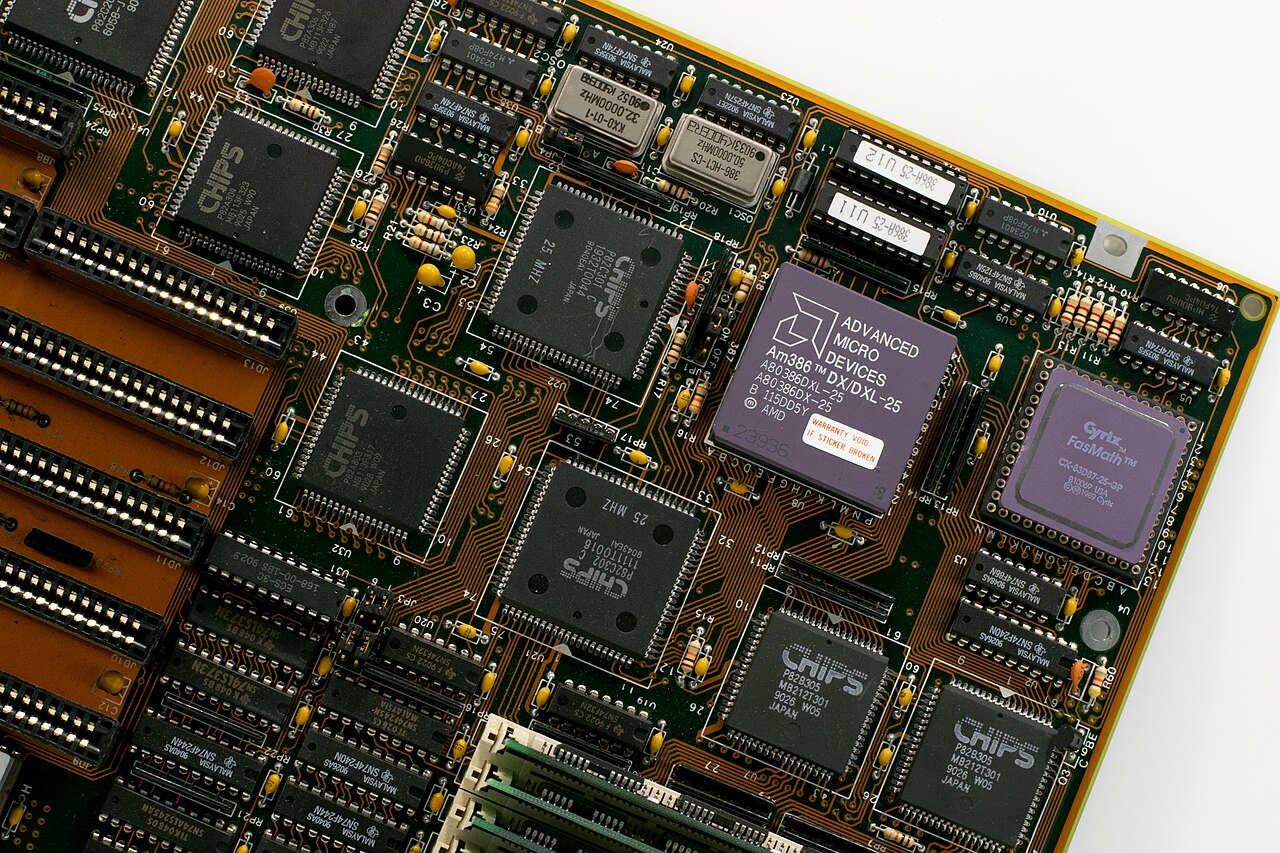
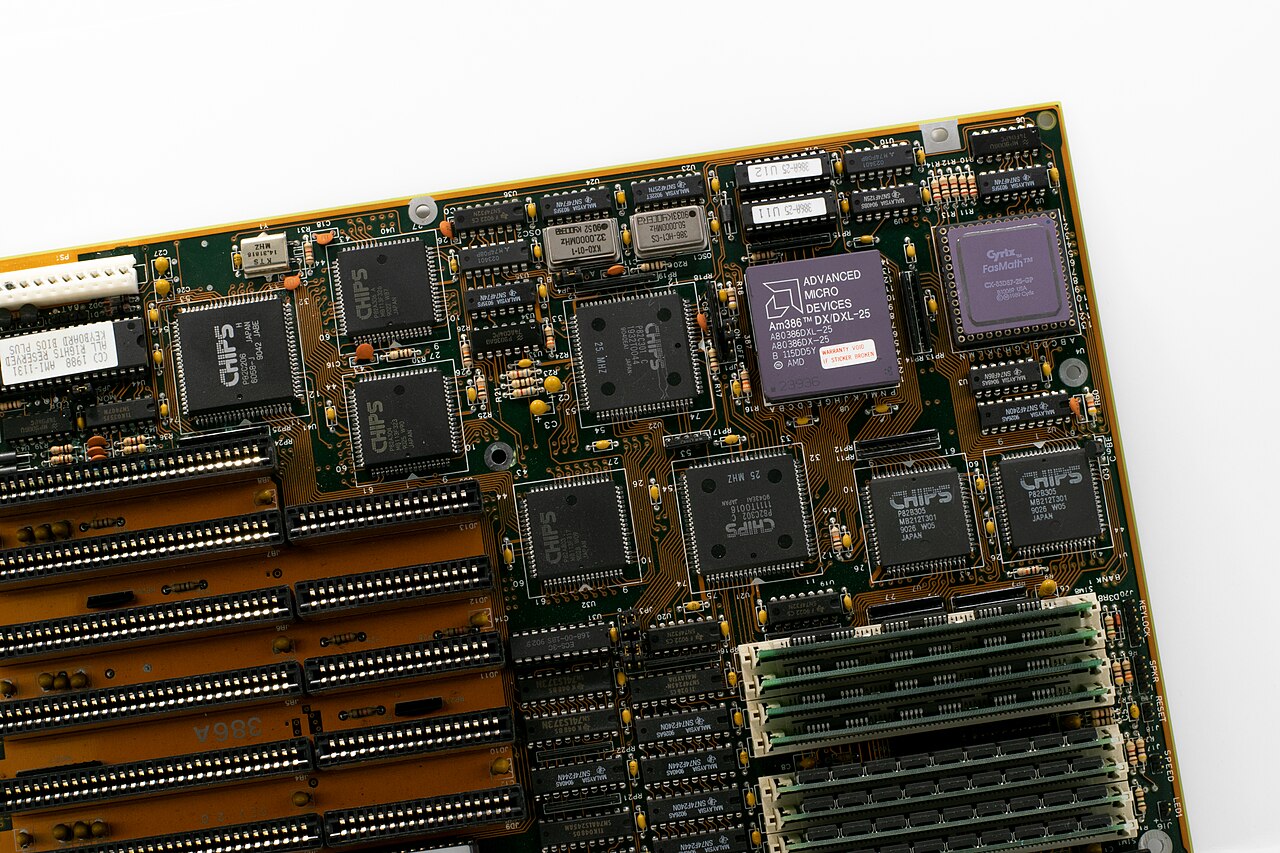
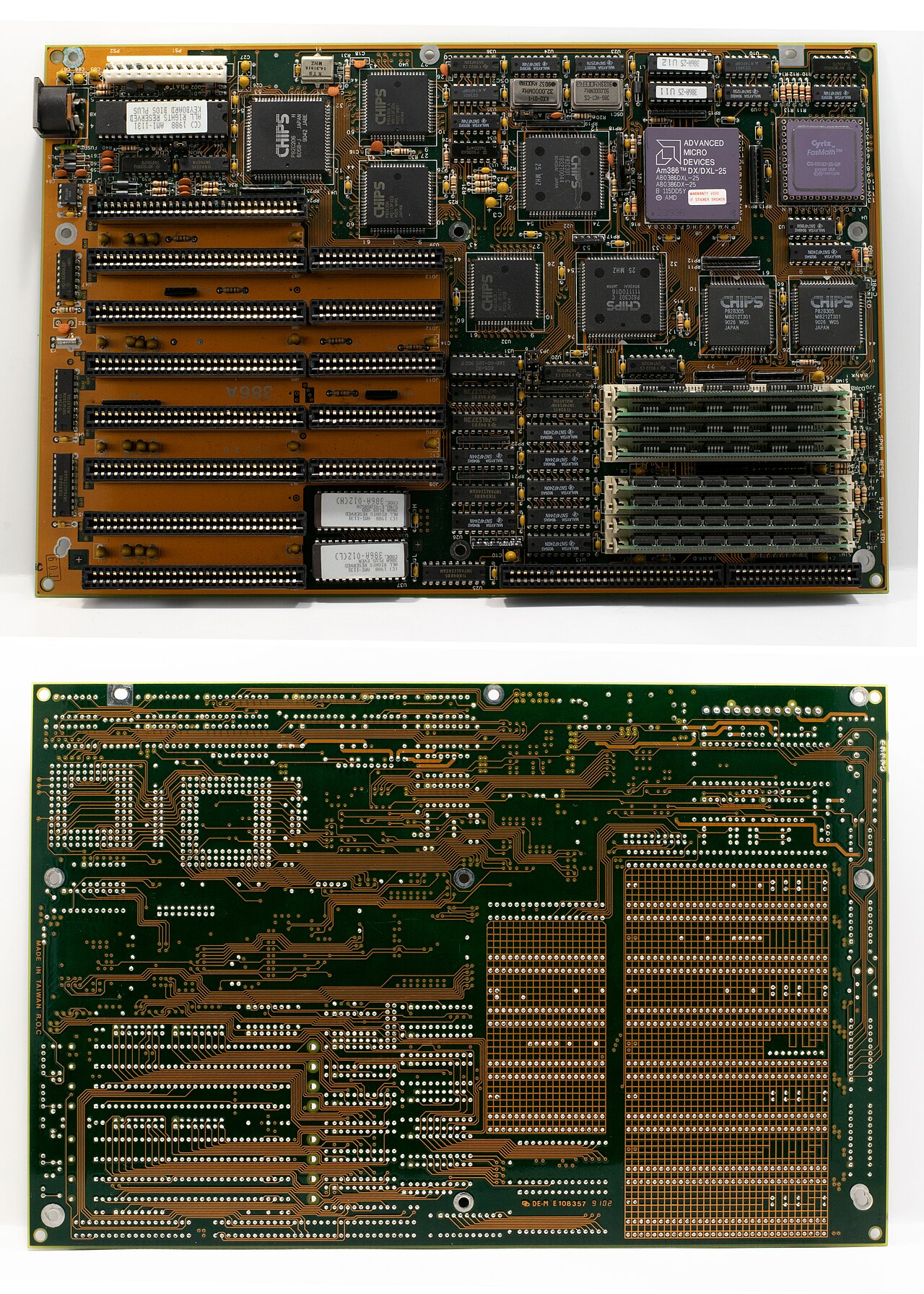
The Am386's significance lies in its role as AMD's first independently competitive x86 processor, breaking Intel's monopoly on the 80386 architecture. By winning the legal battle over the 1982 contract, AMD secured the right to sell the Am386, which sold millions of units and established AMD as a legitimate competitor rather than a mere second source. This competition lowered the cost of owning a PC and extended the lifespan of the 386 architecture, as AMD introduced 40 MHz versions when Intel had stopped at 33 MHz. The Am386DX-40 offered near-80486 performance at a lower price, appealing to budget enthusiasts and small PC clone manufacturers. The Am386SX, with its static core and lower power consumption, became suitable for mobile computers. The Am386 also found a longer life in embedded systems, with the Am386SC core integrated into the Élan series of SoCs in 1993. Although floating-point performance required an external i387 coprocessor and could not match the i486DX's on-chip FPU, the Am386 sold well first as a mid-range contender and later as a budget chip for MS-DOS and Windows 3.1x systems. Motherboards using the Am386 were sold well into the mid-1990s.
Did You Know?
- The Am386 was a 100%-compatible clone of the Intel 80386 design.
- Intel learned of the Am386 when a package for AMD was accidentally forwarded to an Intel employee who shared the same name as an AMD employee and stayed at the same hotel.
- The Am386SX used a static core, allowing its clock speed to be dropped to 0 MHz, consuming just some mWatts.
The Legal Battle That Forged a Competitor
AMD's path to releasing the Am386 was anything but straightforward. The chip was essentially ready before 1991, but Intel kept it locked in litigation. The dispute traced back to a 1982 contract under which AMD had been a second-source manufacturer for the 8086, 80186, and 80286. AMD interpreted that agreement as covering all future derivatives of those designs, while Intel insisted it applied only to the 80286 and earlier chips, explicitly blocking AMD from producing 80386-class processors in 1987. The irony of how Intel first learned of the Am386's existence is almost comical: both companies happened to employ people with the same name who checked into the same hotel, and a package meant for AMD's employee was accidentally forwarded to Intel's. After years of courtroom battles, AMD finally prevailed, and in March 1991 the Am386 hit the market. This victory was transformative—it shifted AMD from a mere second-source supplier into a genuine independent competitor in the x86 space, and it opened the 32-bit CPU market to real price competition, ultimately lowering the cost of owning a personal computer for millions of buyers.
Outpacing Intel on Speed and Value
When the Am386 launched in March 1991, it immediately outpaced Intel's own 386 line, which had maxed out at 33 MHz back in 1989. AMD shipped both the 386DX and 386SX at 40 MHz from the start, effectively extending the useful life of the 386 architecture. The 386DX-40 became a favorite among small PC-clone builders and budget-conscious enthusiasts because it delivered performance close to a 25 MHz 486 at a significantly lower price point. The key to that near-parity lay in the 32-bit data bus running at 40 MHz, which gave the chip strong memory and I/O throughput even though the 486's tighter pipelining and on-chip cache let it complete more work per clock cycle. Intel's answer to AMD's speed advantage was the 486SX, a stripped-down 486 aimed at the same budget segment. On the floating-point front, the Am386 could pair with an i387DX or i387SX coprocessor, but even then it fell well short of the integrated FPU in the i486DX, making it a weaker choice for scientific computing and CAD workloads. Still, those were niche markets in the early 1990s, and the chip sold millions of units as both a mid-range and then a budget processor.
Efficiency That Opened New Markets
AMD's 386SX implementation stood out for its energy efficiency. Built on 0.8-micron process technology with a static core design, the chip could be clocked all the way down to zero MHz, drawing only milliwatts of power in that idle state. In active operation, power consumption ran up to 35 percent below Intel's equivalent 386SX design, and the SXL variants pushed efficiency even further with advanced power-management features. This made the AMD 386SX an ideal processor for both desktop machines and portable computers, a combination that was still emerging in the early 1990s. The low-power profile also made the Am386 core attractive for embedded applications well beyond its PC lifespan. In October 1993, AMD took that advantage a step further by introducing the Am386SC, which married an Am386SXLV core with a set of PC/AT-compatible peripherals on a single die. Marketed as the Élan SC300 and SC310, it became the first chip in AMD's Élan series of system-on-chip products. A follow-up, the Am386EM microcontroller with 80186-compatible peripherals, was announced in 1994, though no evidence suggests it ever reached the market despite a datasheet existing.
A Chip That Outlived Its Generation
Although the Am386 was a 1991 product, it remained a commercially viable choice well into the mid-1990s. As Windows 95 began demanding more memory than older 386 motherboards could easily provide, boards built around the Am386 continued to sell as budget platforms for users who only needed MS-DOS or Windows 3.1x environments. The chip's 32-bit physical address space of four gigabytes and its ability to fetch code in four-byte units gave it architectural headroom that kept it relevant longer than its generation might have suggested. In the embedded world, the Am386 core enjoyed an even longer second life, powering specialized systems long after it had disappeared from mainstream PC shelves. The processor also served as the foundation for AMD's foray into system-on-chip design through the Élan line, marking a strategic pivot beyond discrete CPUs. Perhaps most importantly, the Am386's commercial success—selling millions of units—cemented AMD's identity as a true competitor in the x86 market rather than a mere second-source supplier, a position that would define the company's relationship with Intel for decades to come.
Gallery
Frequently Asked Questions
What is the Am386?
The Am386 is AMD's first fully independent x86 microprocessor, a pin-compatible clone of Intel's 80386 that hit the market in March 1991. It ended AMD's role as merely a second-source fabricator of Intel's 8086, 80186, and 80286 chips and turned the company into a direct competitor in the 32-bit PC market.
What's the difference between the Am386DX and the Am386SX?
The DX (and DE) variants carry a 32-bit data bus and can address up to 4 GB of physical memory, whereas the SX (and SE) variants use a 16-bit data bus and are capped at 16 MB of address space. Both lines top out at 40 MHz, and the SX was built on a 0.8 µm static-core process.
How did Intel first learn about AMD's 386 clone?
A package meant for an AMD employee was mistakenly forwarded to an Intel employee who happened to share the same name and be staying at the same hotel. Intel used that discovery to drag the already-finished Am386 into litigation, keeping it off shelves until the court case was resolved.
Why was the Am386's legal fight with Intel a turning point for AMD?
AMD argued that its long-standing second-source agreements covering the 8086 through 80286 entitled it to produce a 386-class part, and the court's ruling in its favor validated that claim. The outcome gave AMD the legal footing to sell millions of 386-compatible chips and compete head-to-head with Intel for the first time.
What were the key technical specs of the Am386?
The Am386DX/DE featured a 32-bit data bus with 4 GB of physical address space, while the Am386SX/SE offered a 16-bit bus and 16 MB of address space. All variants ran at a maximum of 40 MHz, and the SX line was fabricated using a 0.8 µm static-core process.
More in Intel and AMD Microprocessors, Part 3 1-24
Spotted an error? Know more?
Reader corrections go straight into our review queue. Suggest an edit · How this site is sourced