
Am486
AMD's 486-class processor that matched Intel clock-for-clock.

G8w · CC BY-SA 3.0
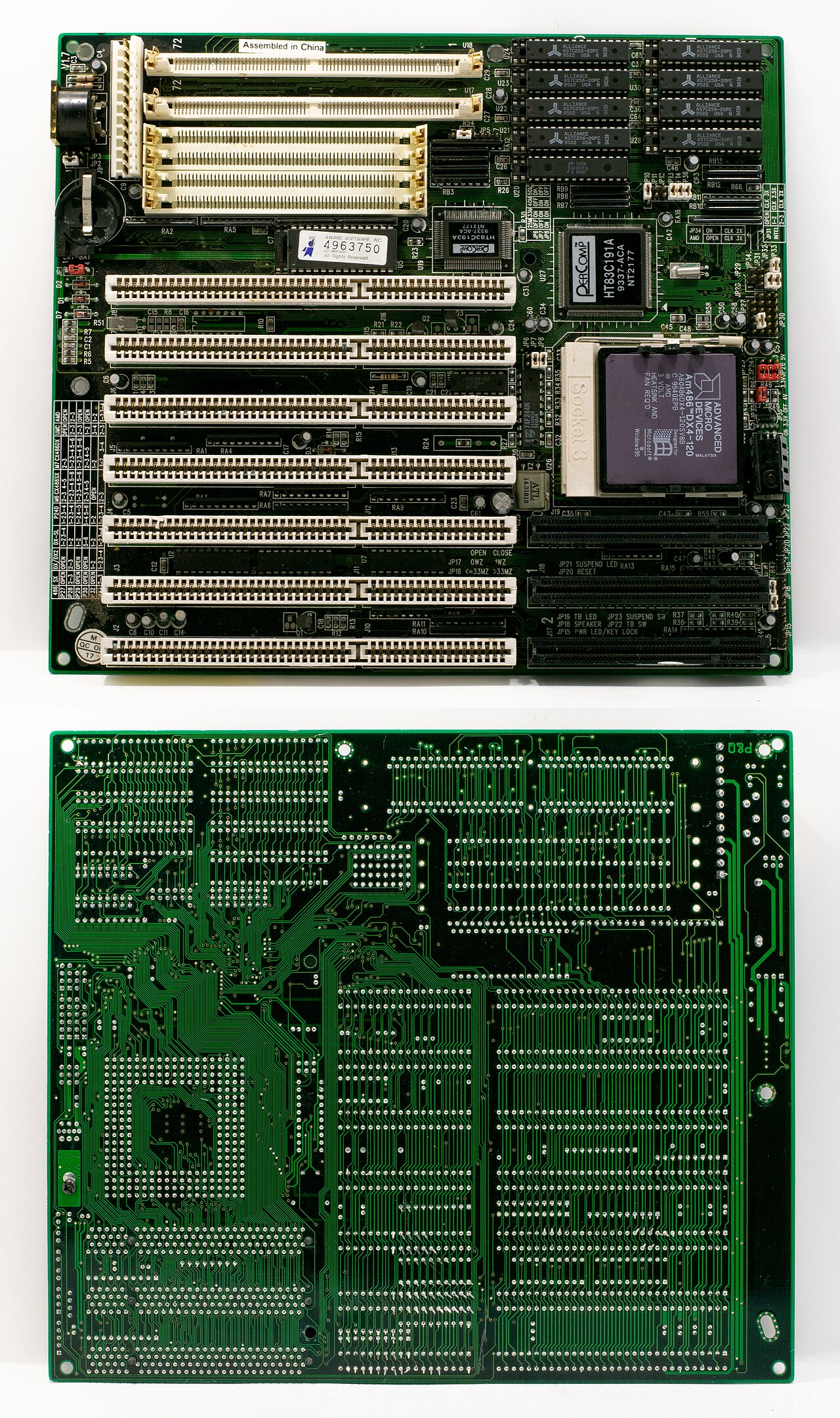
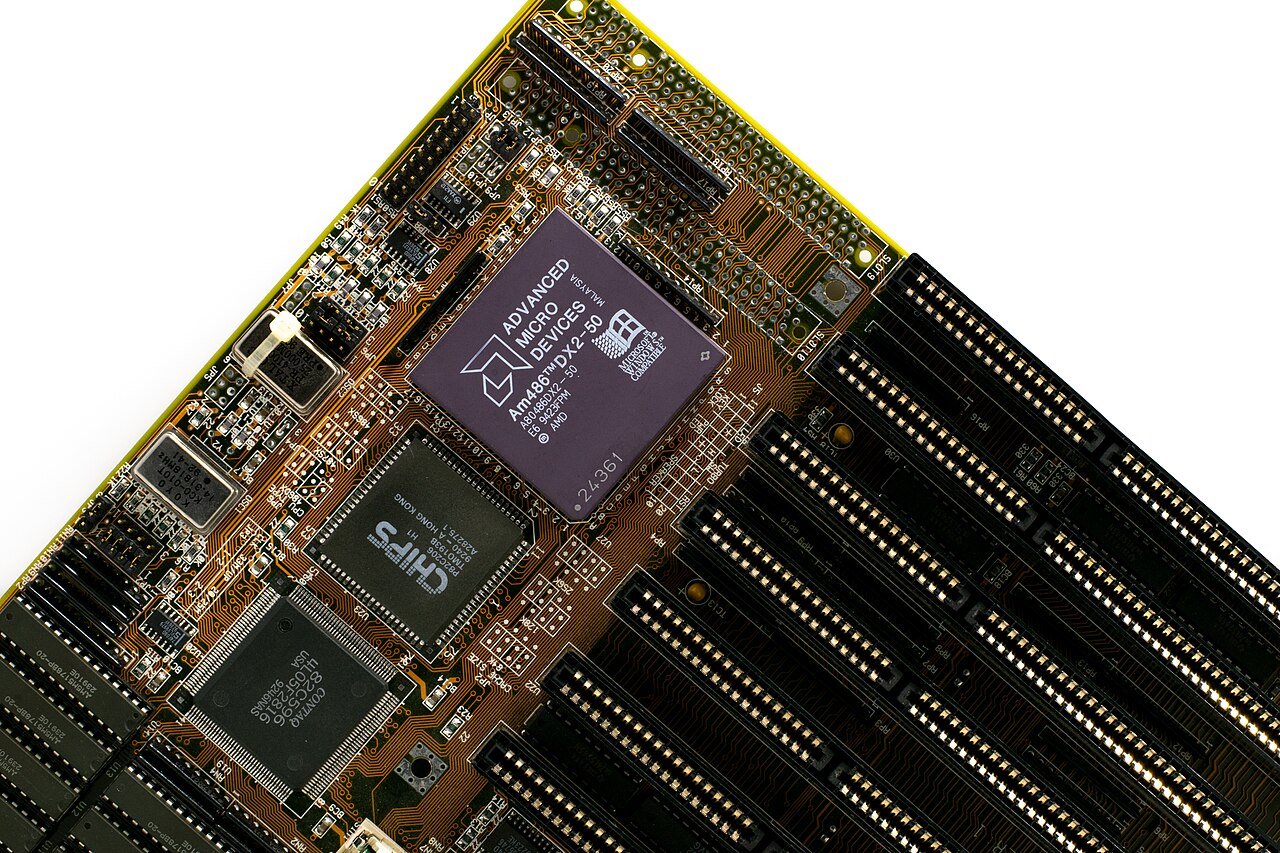
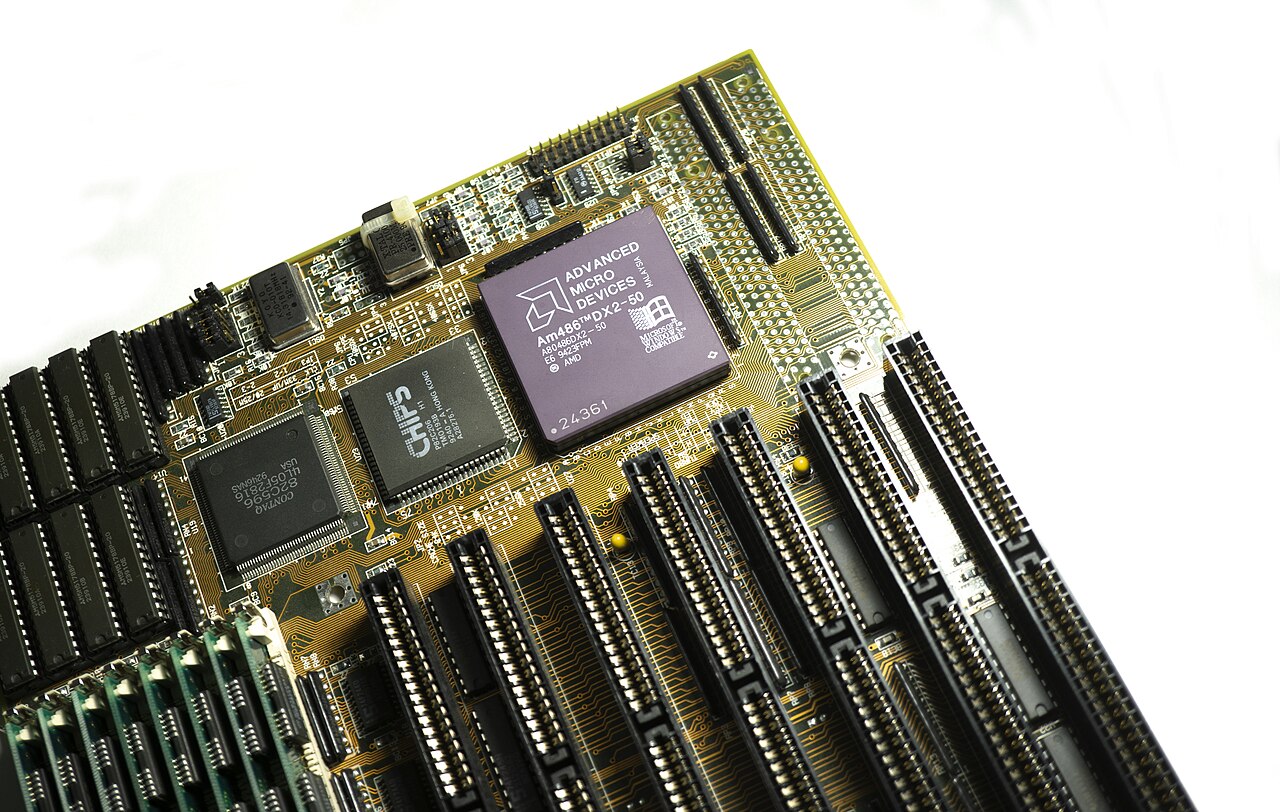
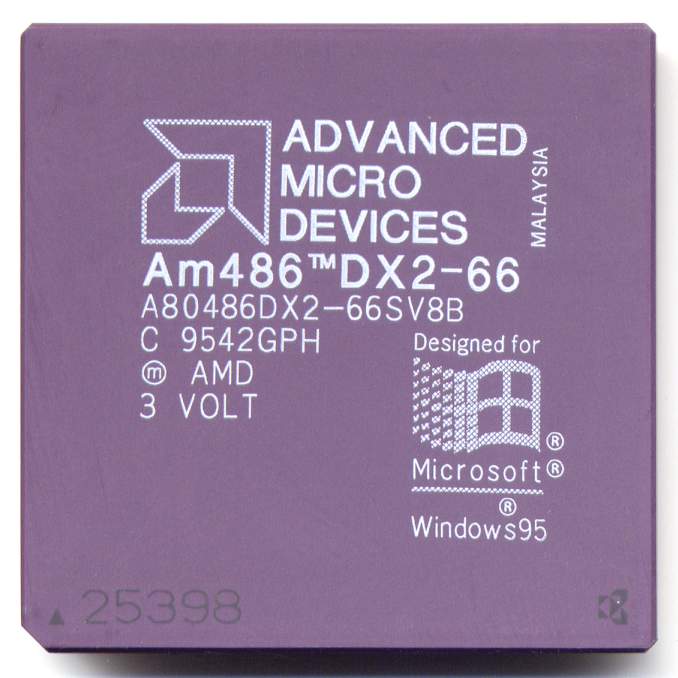
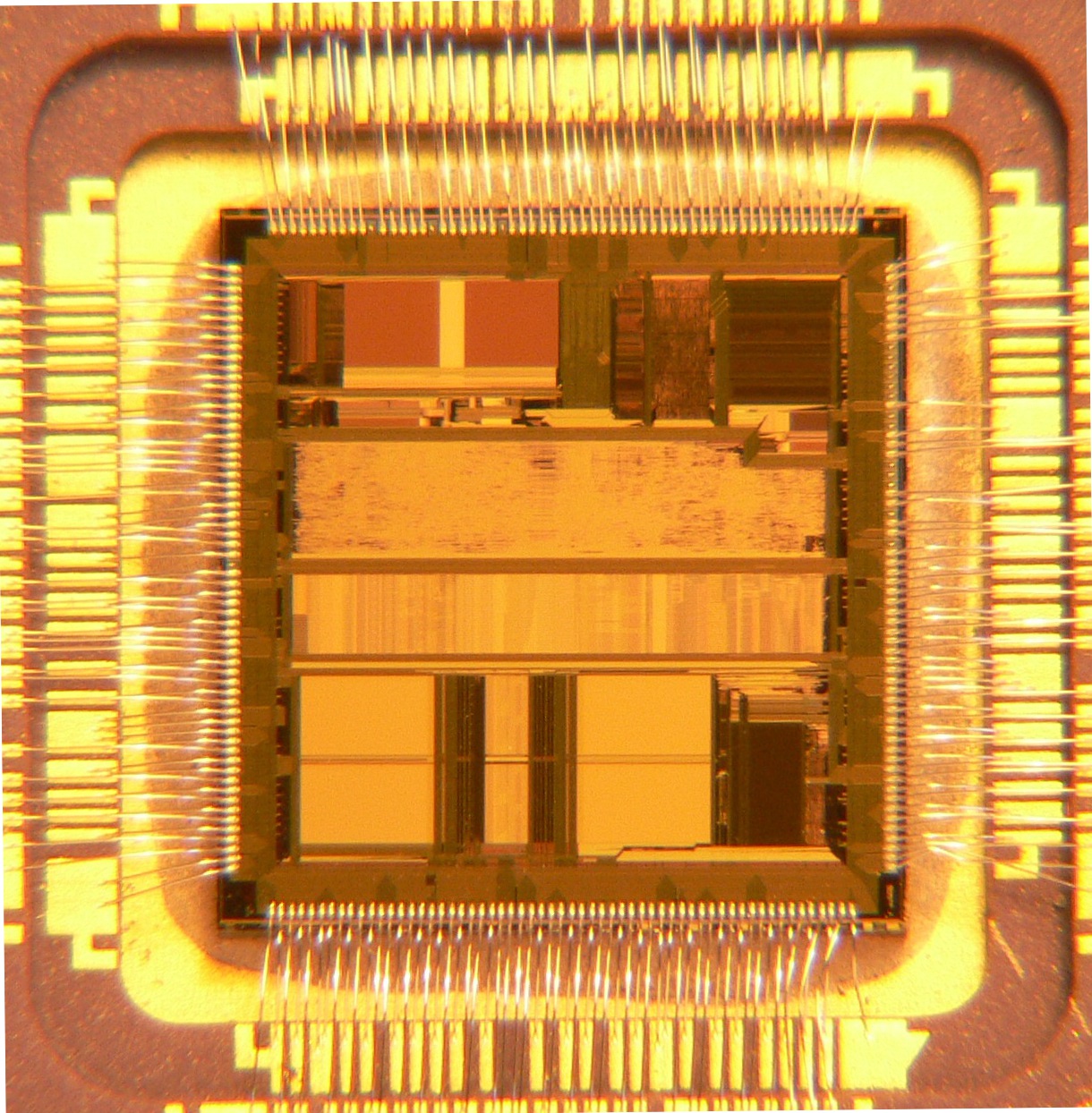
The Am486 is a family of 80486-class computer processors produced by AMD in the 1990s. It gained acceptance among larger computer manufacturers, including Acer and Compaq, particularly around 1994, and offered performance that matched Intel's 486 chips on a clock-for-clock basis.
- Family
- Am486
- Class
- 80486-class
- Manufacturer
- AMD
- Notable models
- Am486DX, Am486DX2, Am486SX2, Am486DE2, Enhanced Am486 DX4
- Cache variants
- 8 KiB Write-Back L1-Cache, later 16 KiB Write-Back L1-Cache
- Clock speeds mentioned
- 40 MHz, 66 MHz, 120 MHz
Lore & Background
The Am486 family arrived nearly four years after Intel's equivalent 486 chips. AMD priced its 40 MHz Am486 at or below Intel's price for a 33 MHz chip, offering about 20% better performance for the same price. While competing 486 chips from Cyrix benchmarked lower than Intel's, the Am486 matched Intel's performance on a clock-for-clock basis. The Am386 had been used primarily by small computer manufacturers, but the Am486DX, DX2, and SX2 chips gained acceptance among larger manufacturers, especially Acer and Compaq, in the 1994 time frame.
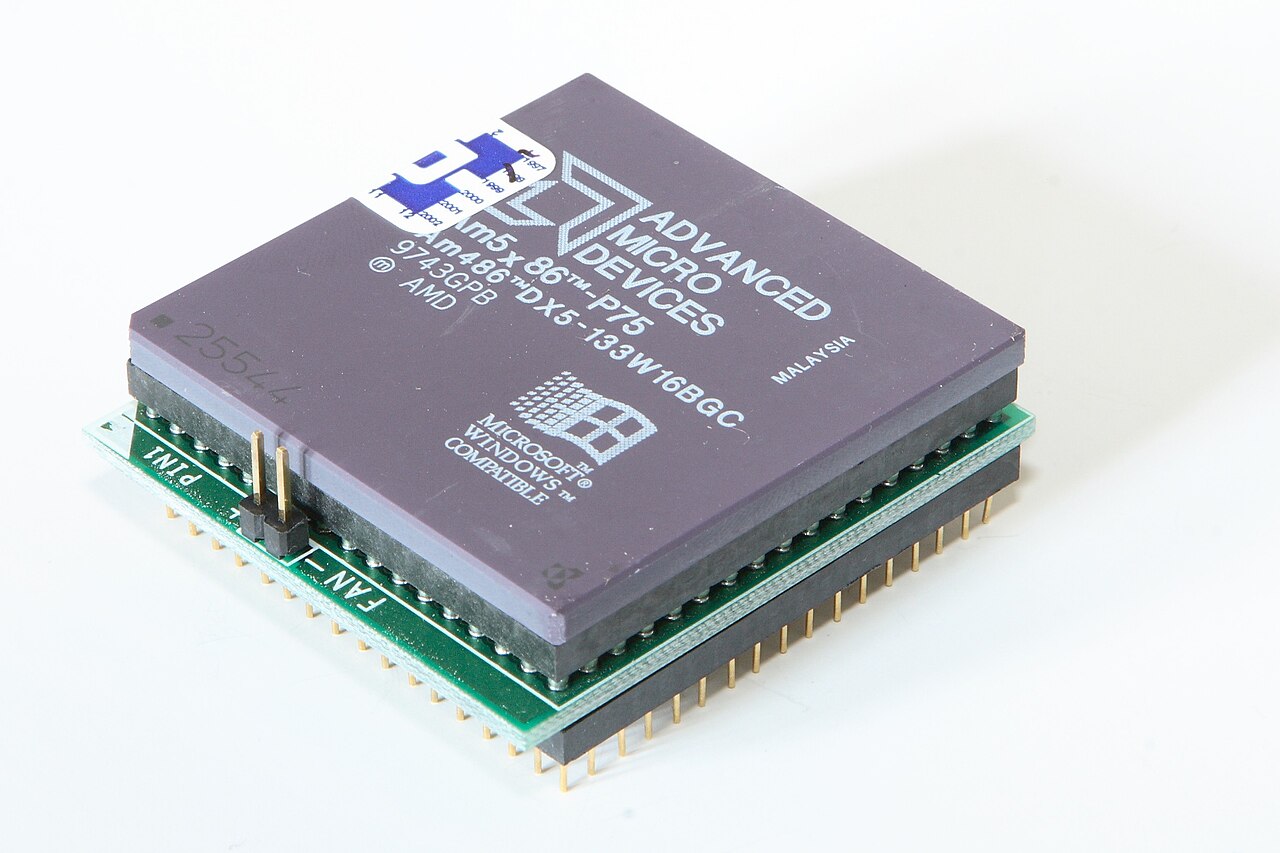
AMD's higher clocked 486 chips provided superior integer performance to many early Pentium chips, particularly the 60 and 66 MHz launch products. Intel's DX4 chips initially had twice the cache of AMD's chips, giving them a slight performance edge, but AMD's DX4-100 usually cost less than Intel's DX2-66. The enhanced Am486 series introduced extended power-saving modes and an 8 KiB Write-Back L1-Cache; later versions received an upgrade to 16 KiB Write-Back L1-Cache. The 133 MHz AMD Am5x86 was a higher clocked enhanced Am486. One derivative of the Am486 family is the core used in the AMD Élan SC4xx family of microcontrollers.
Reader's Guide
The Am486 family is significant as AMD's successful entry into the mainstream 486 market, securing design wins with major PC manufacturers like Acer and Compaq. By offering competitive performance at lower prices than Intel, AMD pressured pricing across the 486 segment. The Am486's clock-for-clock parity with Intel's 486 chips was a notable achievement, especially given that other competitors like Cyrix lagged in benchmarks. AMD's higher clocked 486 chips even outperformed early Pentium 60 and 66 MHz models in integer tasks, extending the useful life of the 486 architecture. The introduction of power-saving modes and write-back cache in the enhanced Am486 series improved efficiency and performance. The Am486 also served as the core for the Élan SC4xx microcontrollers, demonstrating its versatility beyond desktop PCs. The Am5x86, a 133 MHz derivative, pushed the 486 design to its highest clock speed. Overall, the Am486 helped establish AMD as a credible alternative to Intel in the x86 processor market during the mid-1990s.
Pricing Strategy and Market Positioning
AMD entered the 486-class processor market nearly four years after Intel had already established its presence, yet the company turned that delay into a competitive advantage through aggressive pricing. Rather than simply matching Intel's clock speeds, AMD positioned its 40 MHz 486 chip at or below the price Intel charged for its slower 33 MHz offering, delivering roughly twenty percent more performance for the same dollar. This strategy extended across the product line: while Intel's 80486DX4 chips carried a premium price tag and even required a minor socket modification to install, AMD's equivalent parts were priced significantly lower. In some cases, an AMD DX4-100 cost less than Intel's own DX2-66, a remarkable value proposition that made the choice straightforward for budget-conscious buyers. By consistently undercutting the market leader on price while matching or exceeding performance, AMD carved out a credible position in the mid-range desktop and workstation segment during the mid-1990s.
Performance Parity and the Pentium Challenge
Unlike rival 486-class chips from companies such as Cyrix, which benchmarked below their Intel counterparts, AMD's 486 processors achieved clock-for-clock parity with Intel's equivalent parts. This meant that at any given frequency, the Am486 delivered performance on par with the 80486, a significant distinction in a market where many competitors fell short. The advantage became even more pronounced when AMD pushed clock speeds higher: its higher-clocked 486 chips outperformed many early Pentium processors in integer operations, particularly the 60 MHz and 66 MHz launch variants of Intel's new line. While Intel's 80486DX4 chips initially held a slight edge due to twice the on-chip cache compared to AMD's offerings, the pricing disparity often made AMD's faster parts the more attractive option. For system builders and end users evaluating integer-heavy workloads, the Am486 presented a compelling alternative that challenged the assumption that Intel's newest architecture was automatically the best choice.
From Niche to Mainstream: OEM Acceptance
The path to mainstream acceptance was not immediate. AMD's earlier Am386 processor had found its primary market among small computer manufacturers, a niche that limited its broader industry visibility. The Am486 family, however, marked a turning point. By the 1994 timeframe, the Am486DX, DX2, and SX2 variants had earned the trust of major computer manufacturers, with both Acer and Compaq incorporating AMD's chips into their product lines. This was a significant leap from the small-system-builder audience that had defined the Am386 era. The acceptance by these larger OEMs signaled that AMD's 486-class parts met the quality, reliability, and performance thresholds required for volume production in corporate and consumer markets. For AMD, this represented validation that its strategy of matching Intel's performance while undercutting on price was not merely a budget workaround but a legitimate competitive position capable of winning shelf space in the industry's most prominent brands.
Architectural Evolution and Lasting Legacy
Beyond raw clock speed, the enhanced Am486 series introduced architectural refinements that extended the chip's relevance well past its initial release. The family supported extended power-saving modes, a feature that became increasingly important as portable and low-power computing grew in importance during the 1990s. The on-chip cache also evolved: the enhanced variants shipped with an 8 KiB Write-Back L1-Cache, and later revisions upgraded this to 16 KiB, improving data locality and reducing memory access penalties. The family's ceiling was pushed further with the 133 MHz AMD Am5x86, a higher-clocked enhanced Am486 that brought the 486-class architecture to its performance limit. Perhaps most remarkably, the Am486's core design did not disappear with the processor generation. A derivative of the family became the core used in the AMD Élan SC4xx family of microcontrollers, demonstrating that the architectural work invested in the 486 line found a second life in embedded and low-power applications long after desktop 486s had been superseded.
Gallery
Frequently Asked Questions
What is the Am486?
The Am486 was a line of 80486-class x86 processors that AMD designed and shipped during the 1990s. It served as AMD's direct answer to Intel's 486 lineup, covering a range of clock speeds from 40 MHz up to 120 MHz.
Which specific chips belonged to the Am486 family?
The family included the Am486DX, Am486DX2, Am486SX2, Am486DE2, and an Enhanced Am486 DX4 variant. Together they gave OEMs a spectrum of options from budget to high-clock-speed parts.
How did the Am486 stack up against Intel's 486 at the same clock speed?
AMD's chips delivered performance that was essentially on par with Intel's 486 when compared at identical clock frequencies. That clock-for-clock parity was a key selling point for system builders choosing between the two vendors.
What level of on-die cache did the Am486 carry?
Early revisions featured an 8 KiB write-back L1 cache, while later stepping bumped that to 16 KiB of the same write-back L1 design. The cache was integrated on the die itself rather than sitting on a separate chip.
Which large PC manufacturers actually put the Am486 in their machines?
By around 1994, both Acer and Compaq had qualified the Am486 for use in their product lines. That level of OEM adoption helped establish the chip as a credible alternative to Intel in the mid-range desktop market.
More in Intel and AMD Microprocessors, Part 3 1-24
Spotted an error? Know more?
Reader corrections go straight into our review queue. Suggest an edit · How this site is sourced