
Max Factor Sr.
Founder of Max Factor & Company, pioneer of modern cosmetics.

Max Factor · Public domain
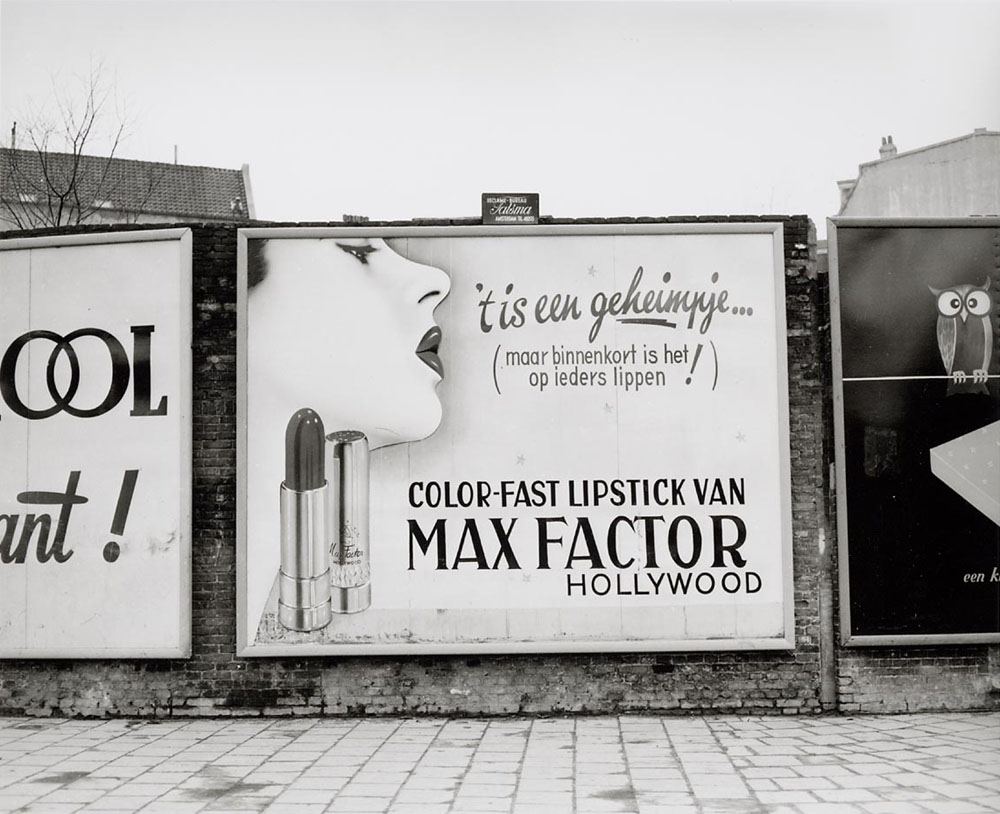
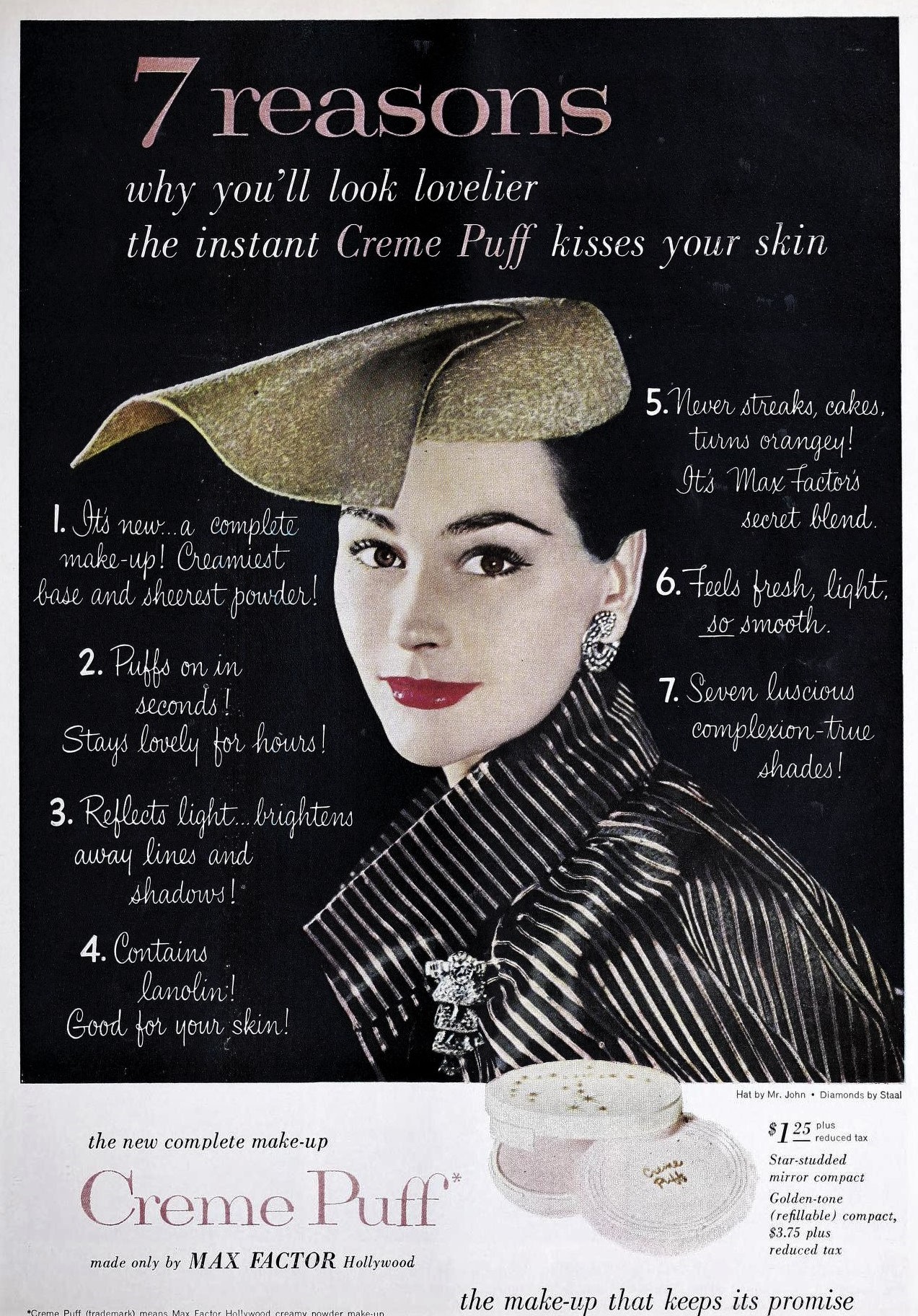
Max Factor Sr. (September 15, 1877 – August 30, 1938) was born Maksymilian Faktorowicz, a Polish-American businessman, beautician, entrepreneur, and inventor. He founded Max Factor & Company, largely shaping the modern U.S. cosmetics industry and helping popularize the noun "make-up" in the film industry. He also gave makeovers to starlets, creating signature looks like Jean Harlow's platinum hair, Clara Bow's bob, and Joan Crawford's overdrawn "Hunter's Bow" lips.
Factor was of Polish-Jewish descent, born in Zduńska Wola to Abraham Faktorowicz and Cecylia Wrocławska. His father—variously described as a grocer, rabbi, or textile mill worker—could not afford formal schooling for his four children. At age eight, Factor worked as an assistant to a dentist and pharmacist. By nine, he apprenticed with a wig maker and cosmetician in Łódź, which led to a job at Anton's of Berlin, a top hairstylist and cosmetics house. By fourteen, he worked at Korpo, a Moscow wig maker and cosmetician for the Imperial Russian Grand Opera. From eighteen to twenty-two, he served compulsory military duty in the Imperial Russian Army's Hospital Corps.
After discharge, he opened his own shop in Ryazan, selling handmade rouges, creams, fragrances, and wigs. He gained fame when a traveling theater troupe used his cosmetics for a performance before Russian nobility. The nobility appointed him official cosmetics expert for the royal family and the Imperial Russian Grand Opera—an honor that also put him under close watch. He married Esther Rosa (called Lizzie), and by early 1904 they had three children: Freda, Cecilia, and Davis. Worried about rising anti-Jewish persecution in Russia, he and his wife decided to follow his brother Nathan and uncle Fischel to America. Fearing he would not be released from royal service, he arranged a rest cure at Karlovy Vary with a friend's help; another account says he escaped with his family through frosty woods to a waiting ship. After reuniting, they traveled steerage on the S.S. Moltke III and were processed at Ellis Island on February 25, 1904, with $400. They settled in St. Louis, Missouri.
In the U.S., he sold his rouges and creams at the 1904 World's Fair under the newly respelled name Max Factor. A business partner stole his entire stock and profits.
- Born
- September 15, 1877, in Zduńska Wola, Poland
- Died
- August 30, 1938, in Beverly Hills, California
- Field
- Cosmetics, film industry
- Nationality
- Polish-American
- Known for
- Founding Max Factor & Company, developing modern cosmetics industry, helping popularize the term 'make-up' in film, creating signature looks for film stars
Lore & Background
Factor, of Polish-Jewish descent, was born in Zduńska Wola to Abraham Faktorowicz and Cecylia Wrocławska. His father, a hard-working grocer, rabbi, or textile mill worker (depending upon the source), could not afford formal education for his four children. By age eight, Factor worked as an assistant to a dentist and pharmacist; at nine, he was apprenticed to a wig maker and cosmetician in Łódź. He later worked at Anton's of Berlin and, by age fourteen, at Korpo in Moscow, a wig maker and cosmetician to the Imperial Russian Grand Opera. After compulsory military service in the Imperial Russian Army's Hospital Corps, he opened his own shop in Ryazan, selling hand-made rouges, creams, fragrances, and wigs. He became well known when a traveling theatrical troupe wore his cosmetics to perform for Russian nobility, leading to his appointment as official cosmetics expert for the royal family and the Imperial Russian Grand Opera. Concerned about anti-Jewish persecution, he emigrated to the United States in 1904, settling in St. Louis, Missouri.
Reader's Guide
Max Factor Sr. transformed the cosmetics industry by developing the first cosmetic specifically for motion picture use in 1914—a thinner greasepaint in cream form, packaged in a jar, in 12 precisely-graduated shades, which would not crack or cake. This innovation made him the authority on film cosmetics, and his products were used by virtually all major movie actresses. He insisted that every girl could look like a movie star by using Max Factor cosmetics. In 1920, he officially began referring to his products as 'make-up,' a term previously considered unsuitable for polite society. The Academy of Motion Picture Arts and Sciences presented him with an honorary Academy Award in 1929 for his contributions to the film industry. He also has a star on the Hollywood Walk of Fame. His legacy includes the global cosmetics brand Max Factor & Company and the enduring association of makeup with Hollywood glamour.
Did You Know?
- Max Factor Sr. was born Maksymilian Faktorowicz in Zduńska Wola, Poland.
- He developed the first cosmetic specifically for motion picture use in 1914, a cream greasepaint that would not crack or cake.
- He popularized the noun form of 'make-up' in 1920, replacing the term 'cosmetics'.
The Core Physics of Nuclear Fusion
Fusion power rests on a deceptively simple idea: when two light atomic nuclei are forced close enough together, the strong nuclear force overcomes their mutual electrostatic repulsion and they merge into a heavier nucleus, releasing energy in the process. For nuclei lighter than iron-56, this merging is exothermic, meaning it yields net energy rather than consuming it. Hydrogen, with its single proton, demands the least kinetic energy to initiate the reaction and produces the greatest net output of any fuel. In practice, the fuel must reach a plasma state—a superheated soup of stripped nuclei and free electrons. The Coulomb barrier describes the minimum kinetic energy particles need to close the gap before the strong force, which operates over roughly one femtometer, can take hold. The Lawson criterion then ties together the three critical parameters: temperature, pressure, and confinement time. In stars, gravity supplies all three naturally. On Earth, engineers must recreate those conditions artificially, and the probability of any given collision producing a reaction is captured by a quantity called the cross section, averaged over the Maxwell-Boltzmann velocity distribution of the plasma.
Two Roads to Confinement
Since the 1940s, researchers have pursued two fundamentally different strategies for trapping and heating fusion fuel. Magnetic confinement fusion uses powerful magnetic fields to hold the electrically conducting plasma away from reactor walls. The earliest concepts included the z-pinch, the stellarator, and the magnetic mirror, but the tokamak architecture rose to dominance after a series of Soviet experiments in the 1960s demonstrated its superior performance. The other major pathway, inertial confinement fusion, takes a radically different approach: instead of holding plasma in a magnetic cage, it fires high-energy lasers at tiny fuel pellets, compressing and heating them so rapidly that fusion ignites before the material can fly apart. ICF research accelerated primarily from the 1970s onward. Today the two largest active projects embody these approaches: ITER, under construction in France, represents the magnetic-confinement effort, while the National Ignition Facility in the United States is the flagship inertial-confinement installation. Beyond these giants, commercial and academic groups continue exploring alternatives such as magnetized target fusion and updated stellarator geometries.
Fuel, Energy Density, and the Tritium Problem
The workhorse reaction in most experimental reactors is DT fusion, in which a deuterium nucleus and a tritium nucleus combine to produce a helium nucleus and a fast, energetic neutron. The fuel is extraordinarily energy-dense, far surpassing anything chemical, yet tritium presents a persistent logistical headache. It is scarce in nature and radioactive, decaying with a half-life of roughly 12.3 years, so a reactor cannot simply stockpile it indefinitely. The standard solution under development is a lithium breeding blanket: a structural layer surrounding the core that, when bombarded by the neutrons emitted during each DT reaction, transmutes lithium into fresh tritium, effectively recycling the fuel supply. Despite the promise, the gap between a laboratory demonstration and a working power plant remains vast. As of 2025, the National Ignition Facility stands as the sole laboratory worldwide to have recorded a fusion energy gain factor exceeding one. However, the efficiencies required to reach engineering breakeven—where a reactor actually produces net electricity—or economic breakeven, where that electricity covers the plant's entire life-cycle cost, are still orders of magnitude beyond what has been achieved.
Safety, Waste, and the Road Ahead
Compared with conventional nuclear fission, fusion carries two compelling advantages: it generates minimal high-level radioactive waste, and the reaction itself poses lower inherent safety risks because the plasma will simply cool and the reaction stops if conditions are not maintained. There is no chain reaction to run away. However, the process is not without its own engineering headaches. Every DT reaction releases a high-energy neutron, and over time these neutrons bombard and gradually degrade the inner walls of the reactor, a materials-science problem with no simple fix. Achieving a sustained energy gain that comfortably exceeds breakeven, and then converting that thermal output into usable electricity with high efficiency, remain the two most formidable technical hurdles on the path to a commercial plant. Terminology also matters: a fusion experiment or device is a research tool for studying plasma physics, and not every such device routinely produces thermonuclear reactions. A true power-plant reactor would additionally require a breeding blanket for tritium supply and a heat engine to extract electricity—components that go well beyond the scope of a laboratory.
Gallery


Frequently Asked Questions
Who is Max Factor Sr.?
Max Factor Sr. was a Polish-American beautician and entrepreneur who founded Max Factor & Company, becoming a central figure in building the modern U.S. cosmetics industry. Born Maksymilian Faktorowicz in 1877, he lived until 1938 and left a lasting mark on both beauty and Hollywood.
What is Max Factor Sr. most famous for?
He is best known for constructing a cosmetics empire that helped define the modern beauty industry and for crafting signature looks for Hollywood stars such as Jean Harlow, Clara Bow, and Joan Crawford. He also played a key role in popularizing the word "make-up" within the film world.
Where and when was Max Factor Sr. born?
He was born on September 15, 1877, in Zduńska Wola, Poland, to Abraham Faktorowicz and Cecylia Wrocławska. He was of Polish-Jewish descent and eventually became a naturalized American citizen.
How did Max Factor Sr. influence Hollywood?
He gave defining makeovers to rising film stars, creating looks that became inseparable from their public personas—such as Jean Harlow's platinum blonde hair and Joan Crawford's overdrawn "Hunter's Bow" lips. His work helped cement the idea that cosmetics were essential to a star's on-screen image.
When and where did Max Factor Sr. die?
Max Factor Sr. passed away on August 30, 1938, in Beverly Hills, California. He was 60 years old at the time of his death.
More in Innovators In Industry 1-24
Spotted an error? Know more?
Reader corrections go straight into our review queue. Suggest an edit · How this site is sourced