
Lou Gerstner
CEO who reversed IBM's breakup and led its turnaround.

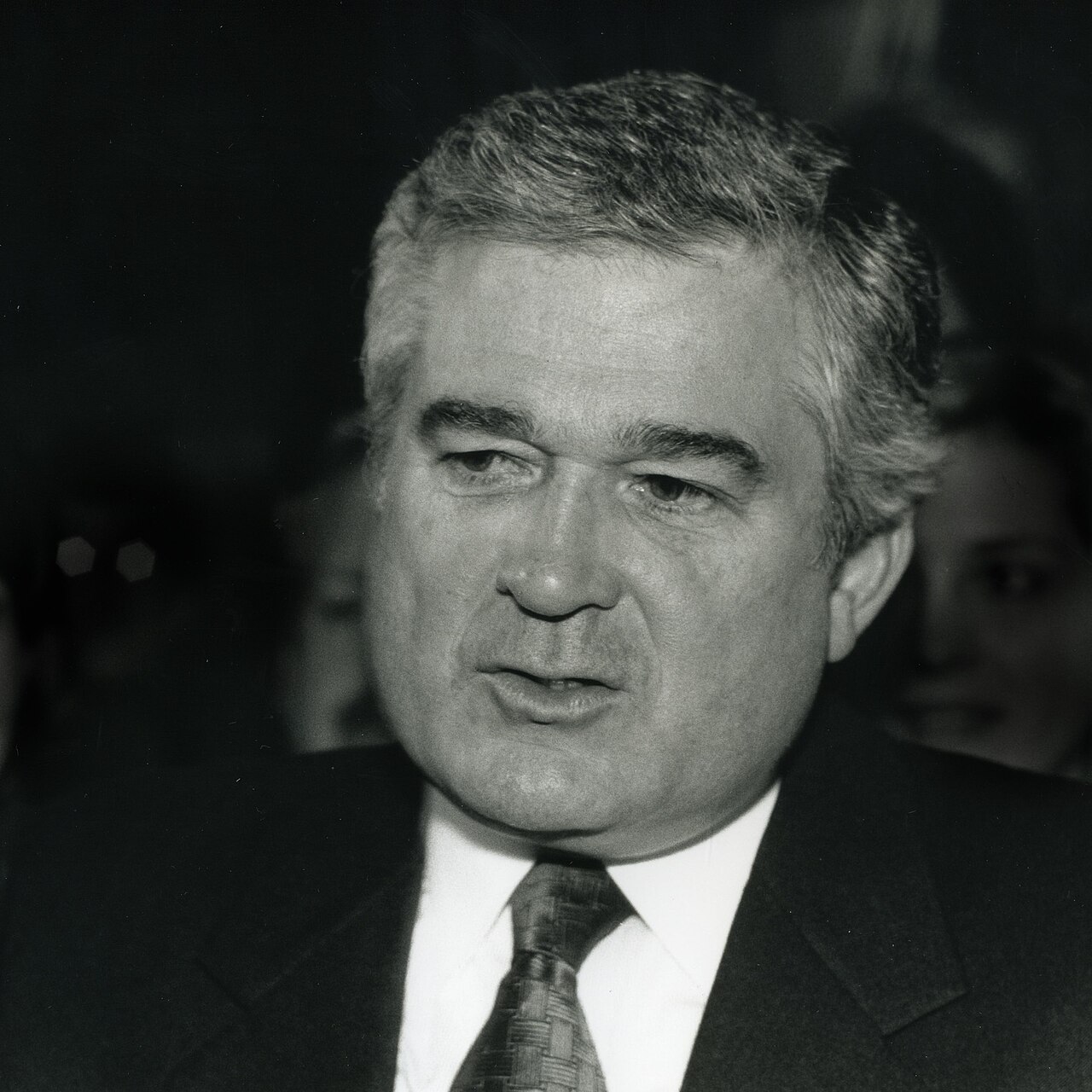
Kenneth C. Zirkel · CC BY-SA 3.0
Louis Vincent Gerstner Jr. was born on March 1, 1942, in Mineola, New York. He is remembered as the chairman and CEO who revived IBM, serving from April 1993 until his retirement as CEO in March 2002 and as chairman later that December. Before that, he ran RJR Nabisco, held top roles at American Express, and worked at McKinsey & Company. He graduated from Chaminade High School in 1959, earned an engineering science degree from Dartmouth College in 1963, and got an MBA from Harvard Business School in 1965. Gerstner later chaired the Broad Institute of MIT and Harvard and was chairman emeritus of the Gerstner Sloan Kettering Graduate School of Biomedical Sciences. He wrote *Who Says Elephants Can’t Dance?*, about IBM’s turnaround, and co-wrote *Reinventing Education: Entrepreneurship in America’s Public Schools*. He also led Gerstner Philanthropies.
Growing up, his parents remortgaged their house every four years to pay for his schooling, as he noted in his memoir. After Harvard, he joined McKinsey at 23, became a partner at 28, and a director (equivalent to senior partner) at 33. In 1978, he moved to American Express, heading its Travel Related Services unit. There, he boosted market share by finding new cardholders—college students, physicians, women—and convincing companies to use the card for expense tracking. He introduced exclusive Gold and Platinum cards. By 1982, he was chairman and CEO of that division, and by 1985, president of the parent company. He dismissed claims of being a workaholic, pointing out he took four weeks of vacation each year. His division led the financial services industry in profitability. But with CEO James D. Robinson III staying on for another 12 years, Gerstner left AmEx in 1989 to become CEO of RJR Nabisco after its leveraged buyout, later adding the chairman title.
IBM hired Gerstner as chairman and CEO in April 1993 after John Akers resigned under investor pressure. The board first looked inside the computer industry, but candidates like John Sculley, George Fisher, and Bill Gates declined. Gerstner, an outsider whose older brother Richard had run IBM’s PC division, was chosen. He famously said the company didn’t need a vision—it needed execution, decisiveness, and speed. He initially replaced only the CFO, HR chief, and three line executives.
- Born
- March 1, 1942
- Field
- Business
- Nationality
- American
- Known for
- Turning around IBM as chairman and CEO (1993–2002)
Lore & Background
Gerstner was born in Mineola, New York, on March 1, 1942. He attended Chaminade High School, Dartmouth College (undergraduate degree in engineering science), and earned an MBA from Harvard Business School. He joined McKinsey & Company at age 23, became a partner at 28, and a director (equivalent to senior partner) at 33. He joined American Express in 1978, heading its Travel Related Services unit, where he increased market share by finding new uses and users for the American Express Card, including college students, physicians, and women, and introduced exclusive versions such as the Gold Card and Platinum Card. He became chairman and CEO of that division in 1982 and president of the parent company in 1985. He left AmEx in 1989 to become CEO of RJR Nabisco following its leveraged buyout, later adding the chairman title.
Gerstner was hired as chairman and CEO of IBM in April 1993, the first outsider to hold that role.
Reader's Guide
Gerstner's significance lies in his role as the first outsider to lead IBM and his decision to reverse the company's planned breakup, keeping it intact as an integrated provider of information technology solutions. This decision, made after recognizing that major companies needed a broad-based integrator, is widely seen as the defining move of his tenure. He also shifted IBM's focus to e-business, positioning the company as a market leader in network-centric business transformation. His tenure involved difficult layoffs and cultural changes, moving IBM away from lifetime employment and unprofitable product lines like OS/2 and retail PCs. His memoir, Who Says Elephants Can't Dance?, documents this transformation. Gerstner's legacy is that of a turnaround leader who preserved and redirected a major technology company.
Did You Know?
- Gerstner was the first IBM CEO hired from outside the company.
- He wrote the book Who Says Elephants Can't Dance? about IBM's transformation.
- During his 11-year tenure at American Express, membership increased from 8.6 million to 30.7 million.
The Long Climb Through Corporate America
Louis Vincent Gerstner Jr. arrived in Mineola, New York, on March 1, 1942, into a family that treated education as a non-negotiable investment—his parents remortgaged their house every four years to keep him in school. That discipline carried him through Chaminade, a Catholic high school, and then to Dartmouth College, where he earned an undergraduate degree in engineering science in 1963. Two years later he walked out of Harvard Business School with an MBA and immediately joined McKinsey & Company at twenty-three. The consulting firm rewarded his momentum quickly: partner by twenty-eight, senior partner by thirty-one. In 1978 he crossed over to American Express, and in 1989 he took the helm of RJR Nabisco following its $25 billion leveraged buyout by Kohlberg Kravis Roberts. Each role sharpened his instincts for steering troubled organizations back to health, setting the stage for the single most consequential appointment of his career when IBM's board, unable to attract any insider or tech-industry rival, reached outside the computing world in April 1993.
The Decision to Keep the Elephant Whole
When Gerstner stepped into IBM's corner office in the spring of 1993, the company was actively preparing to tear itself apart. Under his predecessor John Akers, management had embraced a plan to break IBM into autonomous divisions for processors, storage, software, services, and printers, each rebranding independently. The prevailing logic held that the mainframe era was dying and smaller, focused units would compete better. Gerstner, the first CEO ever hired from outside the company, looked at that plan and reversed it. Drawing on lessons from American Express and RJR Nabisco, he recognized that the real challenge facing every large enterprise in 1993 was not choosing a single technology but integrating dozens of emerging ones into coherent solutions. IBM's unique strength, he argued, was its ability to stand behind a complete, integrated offering rather than selling isolated components. He made services the profit engine and used even barely profitable hardware as a doorway into far larger, more lucrative engagements. He also positioned e-business—particularly B2B commerce and enterprise-wide internet integration—as the company's strategic heartbeat. Rather than announcing a grand vision, he told staff the last thing IBM needed was one; what it needed was execution, speed, and the elimination of internal gridlock.
The Gold Card Years at American Express
Gerstner joined American Express in 1978 to lead its Travel Related Services unit, and over the next eleven years he transformed that division into the most profitable segment in the entire company and a leader across the broader financial-services industry. His approach was deceptively simple: find new audiences for the American Express Card. He courted college students, physicians, and women—demographics that had been largely overlooked—and persuaded corporations to adopt the card as a superior tool for tracking business expenses. He also engineered exclusive tiers for wealthier clients, introducing the Gold Card and the Platinum Card. The division's marketing became legendary, most famously through the "membership has its privileges" campaign that turned the card into a cultural status symbol. By the time Gerstner left in 1989, total AmEx membership had ballooned from 8.6 million to 30.7 million. Promoted to president of the parent company in 1985 at age forty-three, he nonetheless hit a glass ceiling: outgoing chief James Robinson III was not expected to step down for another twelve years. Gerstner, for his part, rejected the workaholic label often attached to his rise, noting to a reporter that he took four full weeks of vacation every year.
Beyond the Boardroom: Philanthropy, Scholarship, and the Written Word
After stepping down as IBM's CEO in March 2002 and as chairman in December of that year, Gerstner channeled his energy into causes that reflected his deep belief in education and scientific progress. He served as chairman of the Broad Institute, a joint venture of MIT and Harvard, and held the title of chairman emeritus at the Gerstner Sloan Kettering Graduate School of Biomedical Sciences. He also chaired Gerstner Philanthropies, directing his personal giving toward the causes he valued. Gerstner proved equally at home in the written word. His memoir, Who Says Elephants Can't Dance?, offered an unvarnished look at the IBM transformation and included a revealing anecdote about his parents remortgaging their house every four years to keep him in school. He also co-authored Reinventing Education: Entrepreneurship in America's Public Schools, extending his interest in institutional reform beyond the corporate sphere. He passed away on December 27, 2025, leaving behind a career that spanned four very different industries and a body of work that argued the same principle at every turn: institutions succeed when they serve a clear, integrated purpose.
Gallery
Frequently Asked Questions
Who is Lou Gerstner?
Louis Vincent Gerstner Jr. is an American business executive born in 1942 in Mineola, New York, who built a career spanning consulting, finance, and technology. He earned an engineering degree from Dartmouth and an MBA from Harvard Business School before rising to the top of several major corporations.
What is Lou Gerstner most famous for?
Gerstner is widely celebrated for rescuing IBM from a period of severe decline during his tenure as chairman and CEO from 1993 to 2002. He famously reversed the company's plan to split itself into separate units and instead pivoted IBM toward services and strategic partnerships.
What roles did Lou Gerstner hold before joining IBM?
Before his IBM chapter, Gerstner worked at McKinsey & Company, held senior leadership positions at American Express, and served as the head of the food conglomerate RJR Nabisco. That mix of consulting, finance, and consumer-goods experience shaped the broad, cross-industry perspective he later brought to technology.
How did Lou Gerstner's leadership at IBM come to an end?
He stepped down as CEO in March 2002 after roughly nine years of leading the company's transformation. He continued in the chairman role through December of that same year before moving into an emeritus position.
What has Lou Gerstner done since leaving IBM?
After his IBM years, Gerstner took on a chairmanship at the Broad Institute, the joint research center of MIT and Harvard. He has remained active in the business and academic spheres, holding emeritus titles and continuing to influence corporate governance and innovation discourse.
More in Innovators In Industry 1-24
Spotted an error? Know more?
Reader corrections go straight into our review queue. Suggest an edit · How this site is sourced