
Masaru Ibuka
Japanese co-founder of Sony and electronics pioneer.

Glogger · CC BY-SA 4.0
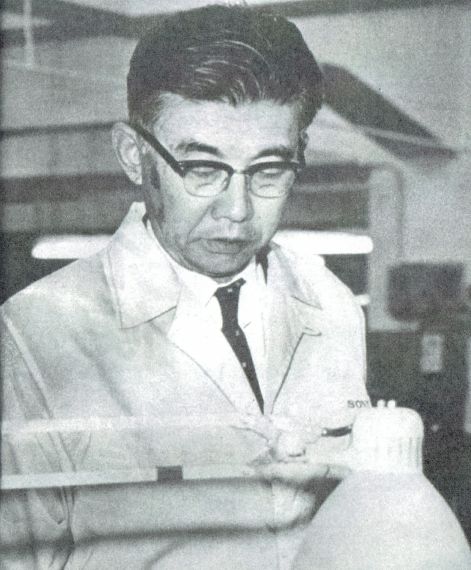
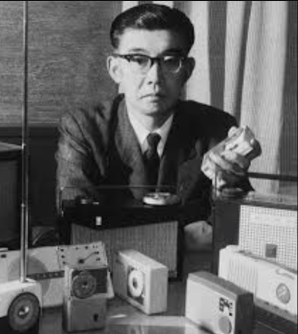
Masaru Ibuka was a Japanese electronics industrialist who co-founded Sony Corporation along with Akio Morita. He played a key role in the company's early success, particularly in securing transistor technology from Bell Labs and leading the development of the Trinitron color television. He also initiated the creation of the Walkman portable music player.
- Born
- April 11, 1908
- Died
- December 19, 1997
- Field
- Electronics industrialist
- Nationality
- Japanese
- Known for
- Co-founder of Sony, development of Trinitron color television, initiation of the Walkman
Lore & Background
Masaru Ibuka was born on April 11, 1908, the first son of Tasuku Ibuka, an architectural technologist. He lost his father at age two and was raised by his grandfather, later moving to Kobe after his mother remarried. He passed the entrance exam to Hyogo Prefectural 1st Kobe Boys' School. After graduating from the Waseda Higher School of Engineering in 1930, he left Waseda University without completing a degree from the main undergraduate program. He then worked at Photo-Chemical Laboratory and served in the Imperial Japanese Navy during World War II as a member of the Imperial Navy Wartime Research Committee. In September 1945, he left the company and navy to found a radio repair shop in a bombed-out department store in Tokyo.
In 1946, Akio Morita, a fellow wartime researcher, saw a newspaper article about Ibuka's venture and joined him. With funding from Morita's father, they co-founded Tokyo Telecommunications Engineering Corporation, later renamed Sony Corporation in 1958. Ibuka was instrumental in licensing transistor technology from Bell Labs in the 1950s, enabling non-military applications. He led the research and development team that created the Trinitron color television in 1967. He served as Sony's president from 1950 to 1971 and as chairman from 1971 until his retirement in 1976.
The Walkman was created because Ibuka wanted to listen to music on long flights. In 1979, he asked company engineers to make a portable music device, which they did by modifying a portable tape recorder. He liked it so much he passed it to chairman Akio Morita, who decided to manufacture it. Ibuka also authored the book *Kindergarten is Too Late* (1971), arguing that the most significant human learning occurs from birth to age three.
Reader's Guide
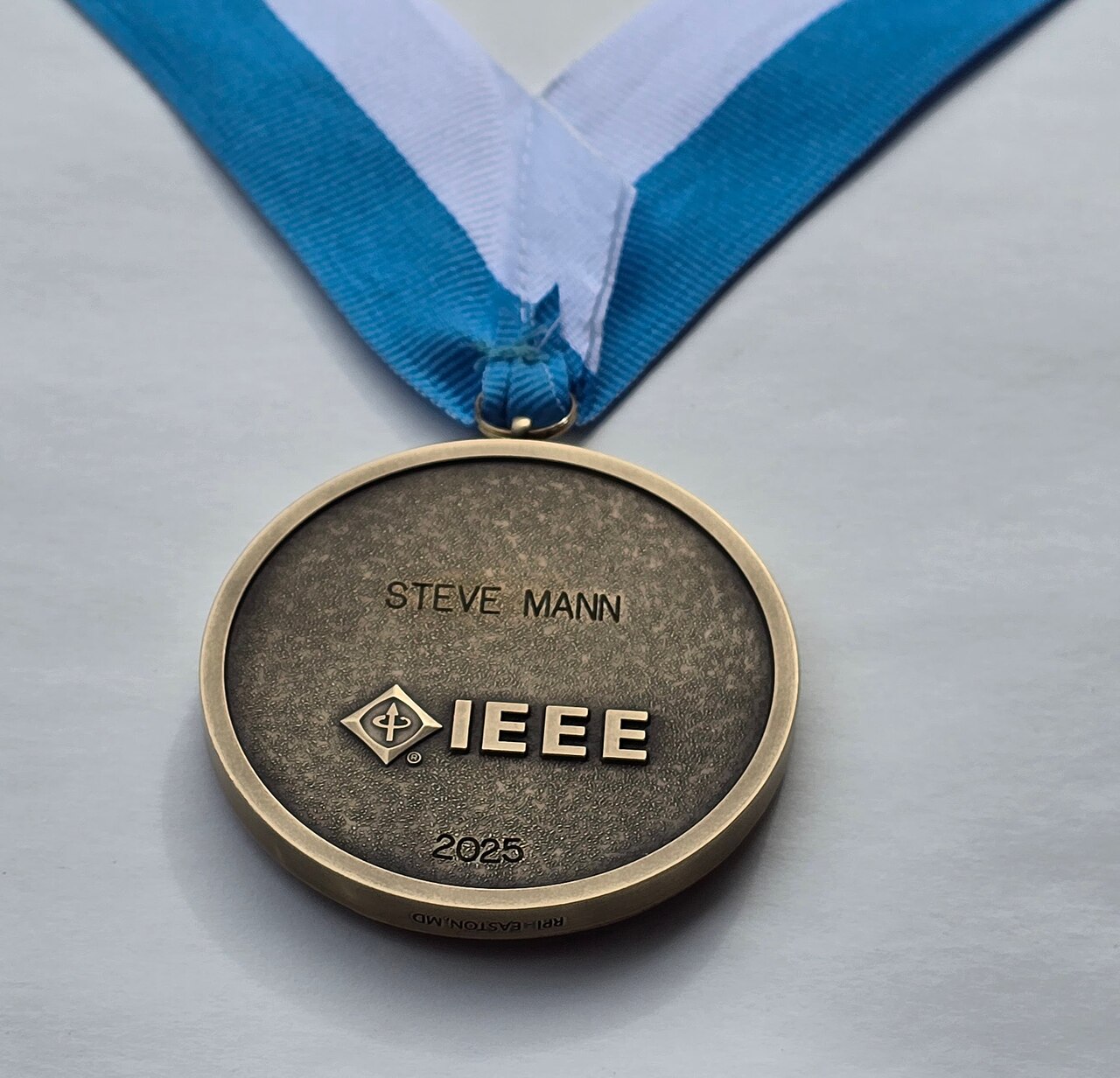
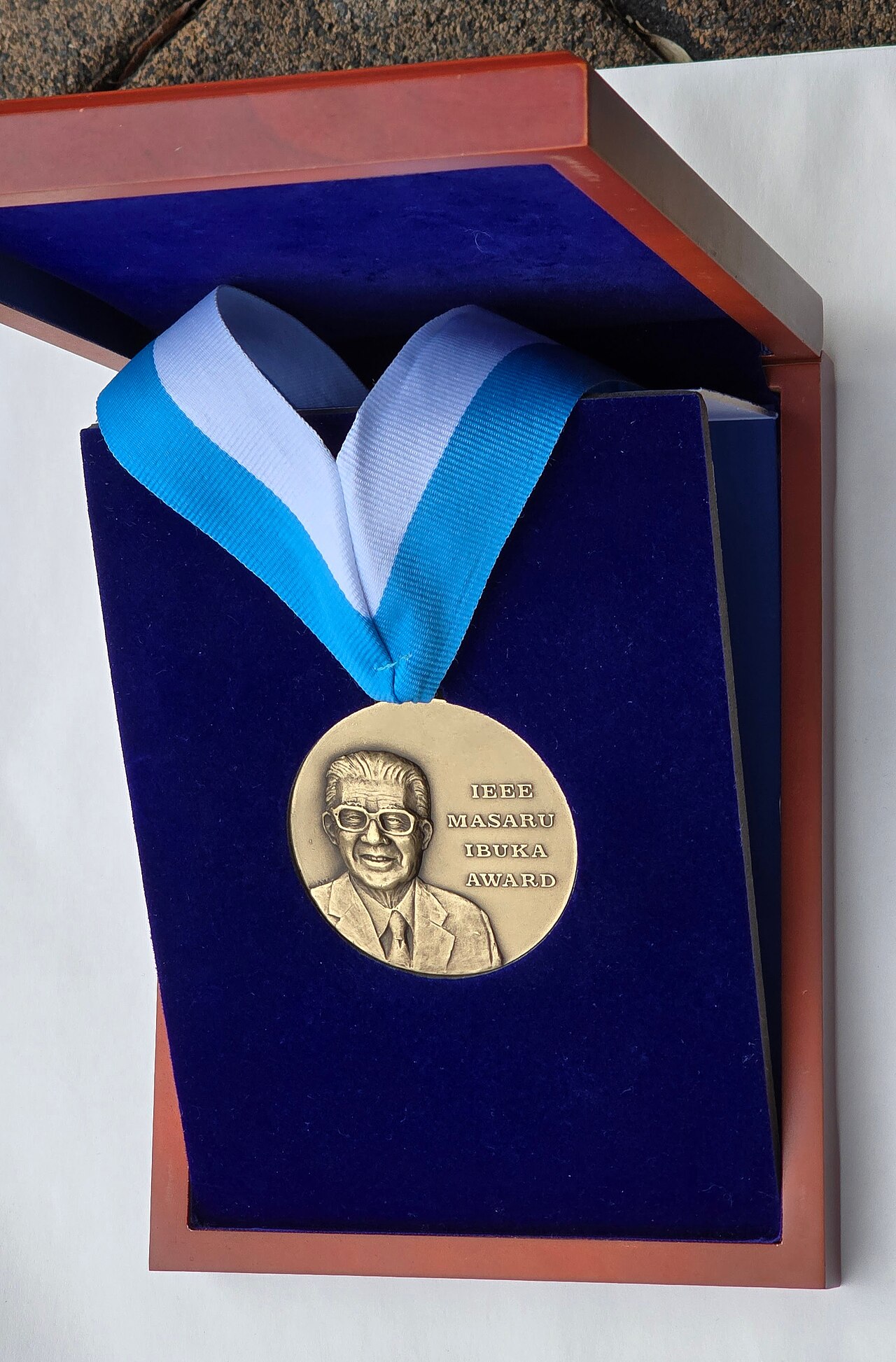
Masaru Ibuka's significance lies in his role as co-founder of Sony, a company that became a global leader in consumer electronics. His efforts to secure transistor technology from Bell Labs helped Sony become one of the first to apply transistors to non-military uses, paving the way for portable radios and other devices. His leadership of the Trinitron color television development produced a widely acclaimed display technology. The Walkman, born from his personal desire for portable music, revolutionized how people listened to music and created a new product category. His legacy also includes his book on early childhood education, reflecting his belief in the importance of learning from birth. He received numerous honors, including the Order of Culture and the IEEE Founders Medal, and the IEEE Masaru Ibuka Consumer Electronics Award was named after him. His work with the Boy Scouts of Nippon earned him the Bronze Wolf from the World Organization of the Scout Movement.
Did You Know?
- He co-founded Sony with Akio Morita in 1946, originally as Tokyo Telecommunications Engineering Corporation.
- The Walkman was created in 1979 because Ibuka wanted to listen to music on long flights.
- He authored the book *Kindergarten is Too Late*, which argues that most significant learning occurs from birth to age three.
Early Life and the Spark of a Hacker
Born in Helsinki on the last day of 1969, Linus Benedict Torvalds grew up in a household shaped by the counterculture of 1960s Finnish academia. His parents, both journalists, had been campus radicals at the University of Helsinki, and the family identified with the Swedish-speaking minority community. His first name honored the Nobel-winning chemist Linus Pauling, though Torvalds himself has joked that he was equally named after the blanket-carrying Peanuts character, making him half Nobel laureate and half cartoon. His computing journey ignited at eleven, when a VIC-20 landed in his hands in 1981. He quickly outgrew BASIC, dropping down to raw 6502 machine code. A Sinclair QL followed, which he tore apart and rebuilt, writing his own assembler and even a Pac-Man clone called Cool Man because commercial software was scarce in Finland. At the University of Helsinki he earned a master's degree in computer science from the NODES research group, though his studies were paused for an eleven-month officer training stint in the Finnish Navy's Nyland Brigade, where he served as an artillery observer and earned the rank of second lieutenant.
The Genesis of a New Operating System
The seeds of Linux were planted in 1990 when Torvalds first encountered Unix on a DEC MicroVAX running ULTRIX at his university. That experience sparked a deeper curiosity, and he purchased Andrew Tanenbaum's textbook on MINIX, a deliberately simplified educational version of Unix. On 5 January 1991, he bought an Intel 80386-based PC clone, and by late that year the first prototypes of his kernel were posted to an FTP server at the University of Helsinki. Version 1.0 arrived on 14 March 1994. A pivotal moment came in autumn 1991, when a fellow student, Lars Wirzenius, brought him to a talk by Richard Stallman at the Helsinki University of Technology. That encounter, combined with pressure from the growing contributor community, led Torvalds to abandon his original license, which had barred commercial use, in favor of the GNU General Public License version 2. The decision cemented Linux's place in the free-software movement. In 2012, the Millennium Technology Prize recognized his work, citing the creation of a new open-source operating system that led to the widely used Linux kernel.
From Silicon Valley to the Linux Foundation
After a late-1996 visit to Transmeta, Torvalds accepted a position at the California-based chip company, where he remained from February 1997 through June 2003. During those years he also contributed to 86open, a consortium working to standardize the binary format shared by Linux and Unix. His influence extended beyond code: in 1999, MIT Technology Review named him to its TR100 list of the world's top hundred innovators under thirty-five, and both Red Hat and VA Linux presented him with stock options as a thank-you for creating the kernel. When both companies went public that same year, his share value briefly touched roughly twenty million dollars. In 2003 he transitioned to the Open Source Development Labs, an organization that later merged with the Free Standards Group to form the Linux Foundation. In June 2004, he and his family relocated to Dunthorpe, Oregon, to be near the group's Beaverton headquarters. The Linux Foundation now sponsors him full-time so he can dedicate his efforts to improving the kernel, a role he has held continuously since 1991.
A Blunt Voice in a Collaborative World
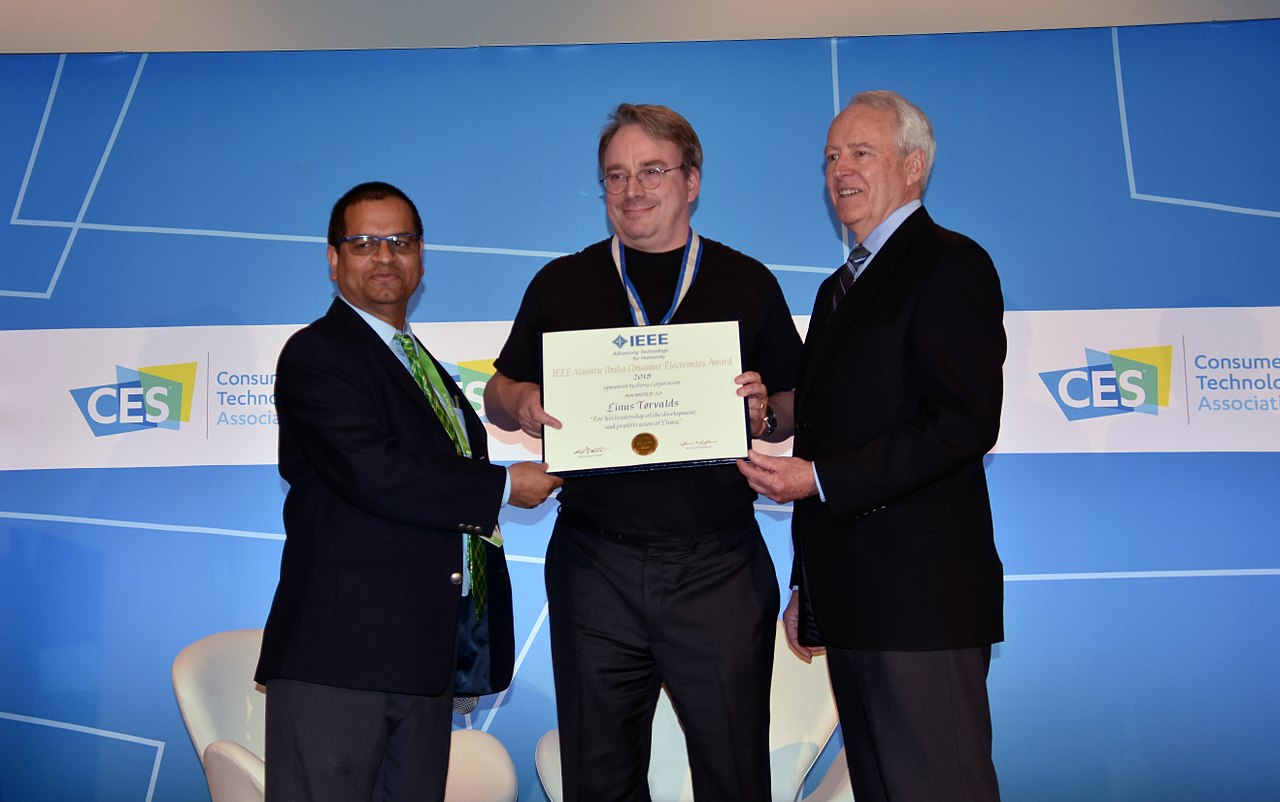
Torvalds has never hidden his temperament. He has called himself a really unpleasant person and admitted he would prefer to encourage contributors rather than call them idiots, but acknowledged he has struggled to change. In 2012, while speaking at Aalto University, he directed a profanity and a raised middle finger at Nvidia, which he described as the single worst company he had dealt with in kernel development. His candor extends to tooling: after controversy over his use of the proprietary BitKeeper for version control, he wrote Git as a free-software alternative. He also turned down a 2000 offer from Apple's Steve Jobs to work on macOS, arguing the Mach kernel was fundamentally too different from Linux. His desktop preferences have shifted over the years—Fedora for PowerPC support, a brief exile from GNOME after version 3.0, a stint with Xfce, and a 2013 return to GNOME once extensions made the interface workable again. The penguin Tux, his personal mascot, became the community's beloved symbol. His accolades include the 2014 IEEE Computer Pioneer Award and the 2018 IEEE Masaru Ibuka Consumer Electronics Award.
Gallery
Frequently Asked Questions
Who is Masaru Ibuka?
Masaru Ibuka was a Japanese electronics industrialist best known as the co-founder of Sony Corporation alongside Akio Morita. He served as a driving force behind the company's early growth and product vision.
What was Masaru Ibuka's role at Sony?
Ibuka was instrumental in Sony's formative years, notably arranging the licensing of transistor technology from Bell Labs and spearheading the development of the Trinitron color television. He helped shape the company's identity as an innovator in consumer electronics.
Did Masaru Ibuka invent the Walkman?
While he did not single-handedly invent it, Ibuka is credited with initiating the project that ultimately became the Walkman portable music player. His push to explore personal audio devices set the stage for one of Sony's most iconic products.
Why is Masaru Ibuka important in electronics history?
He helped transform Sony from a small post-war electronics shop into a global technology powerhouse by championing bold product investments. His decisions to pursue transistor-based products and color television laid groundwork for decades of consumer electronics innovation.
When was Masaru Ibuka born and when did he pass away?
Ibuka was born on April 11, 1908, in Japan, and he died on December 19, 1997. He lived to see Sony grow from a modest startup into one of the world's most recognized electronics brands.
More in Innovators In Industry 1-24
Spotted an error? Know more?
Reader corrections go straight into our review queue. Suggest an edit · How this site is sourced