
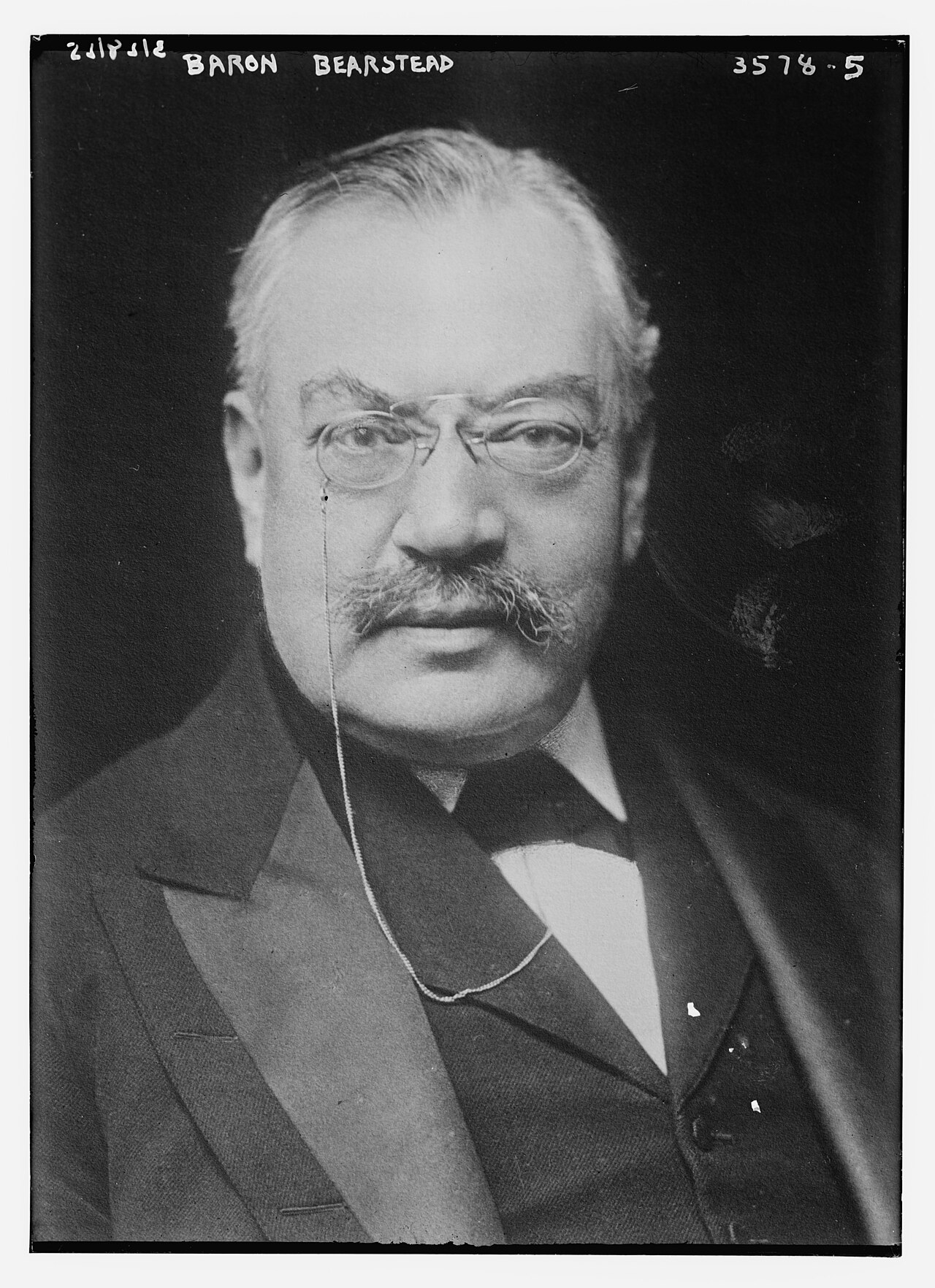
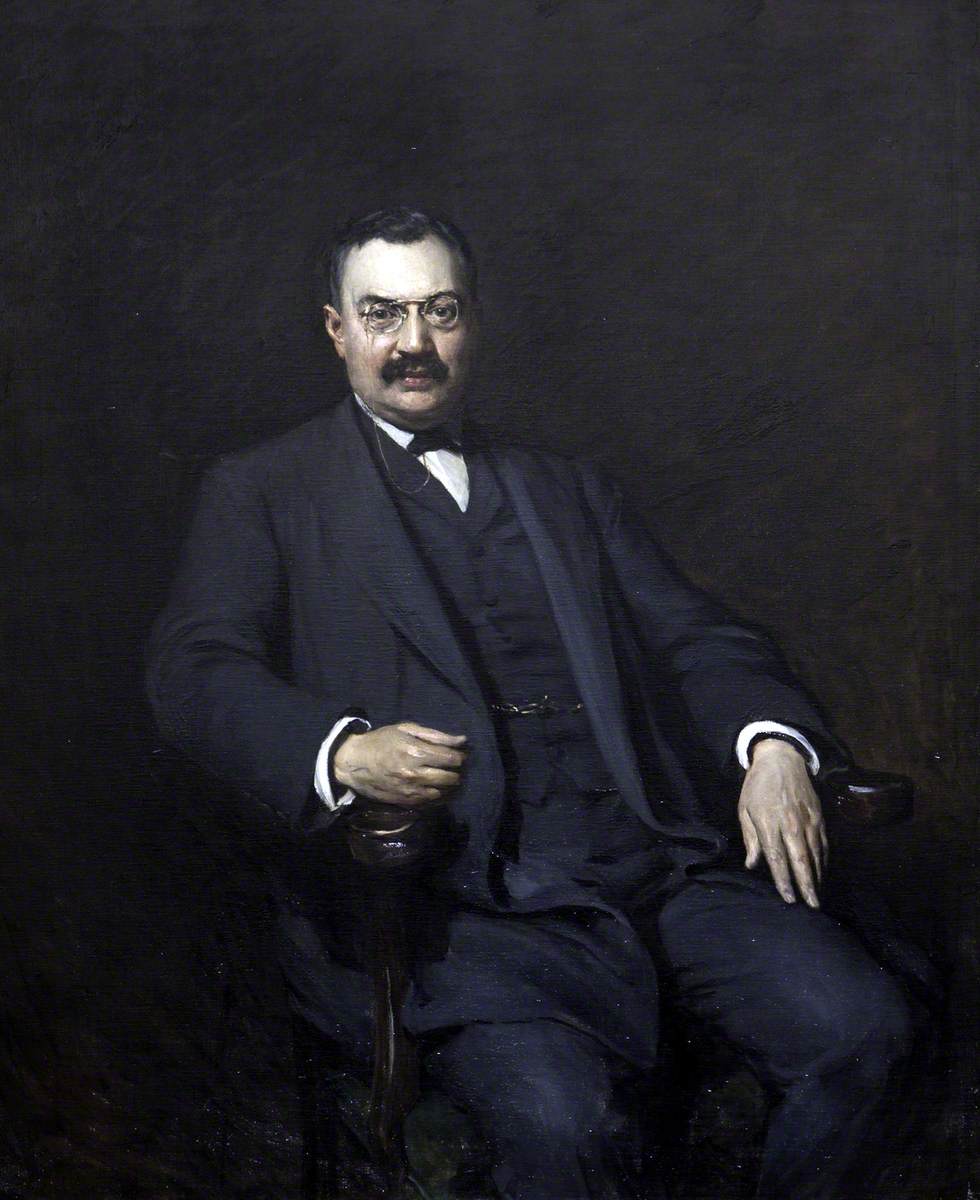
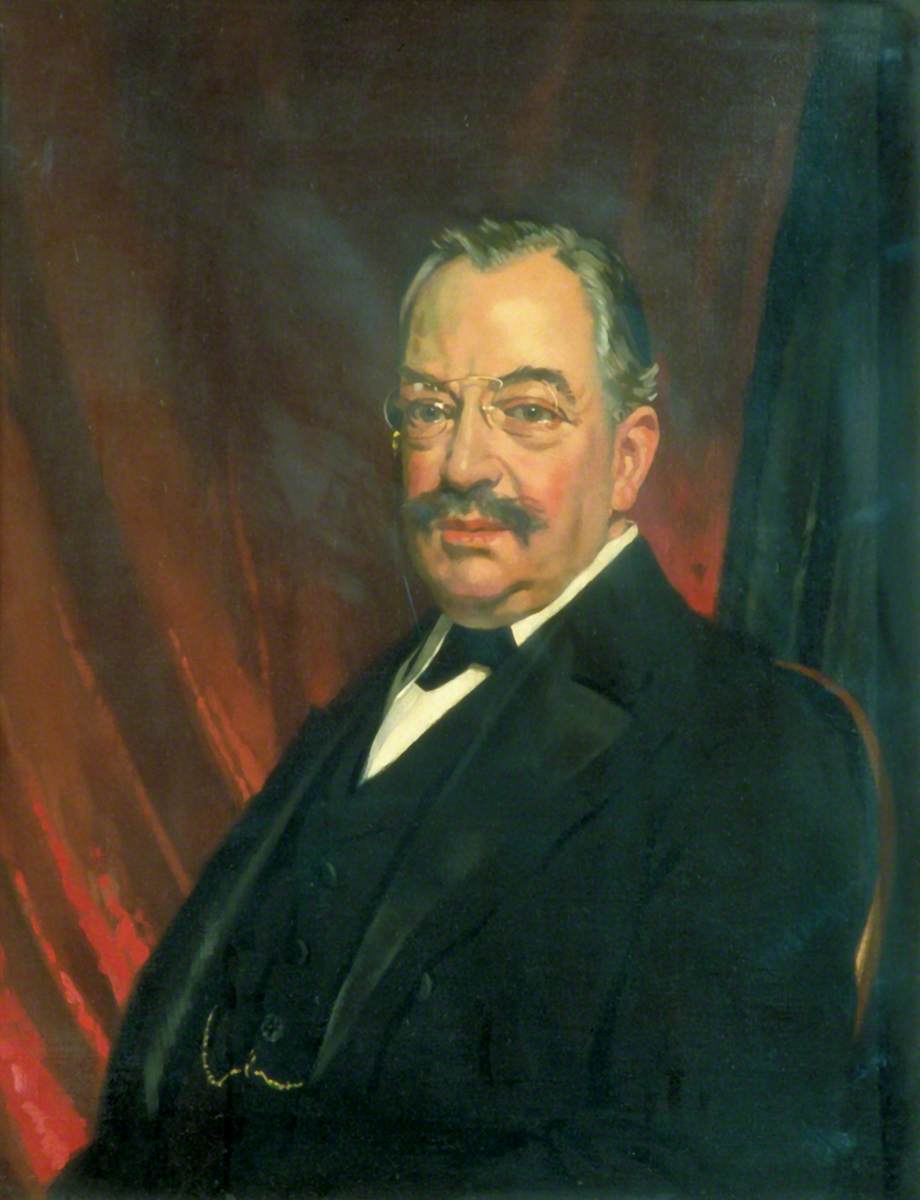
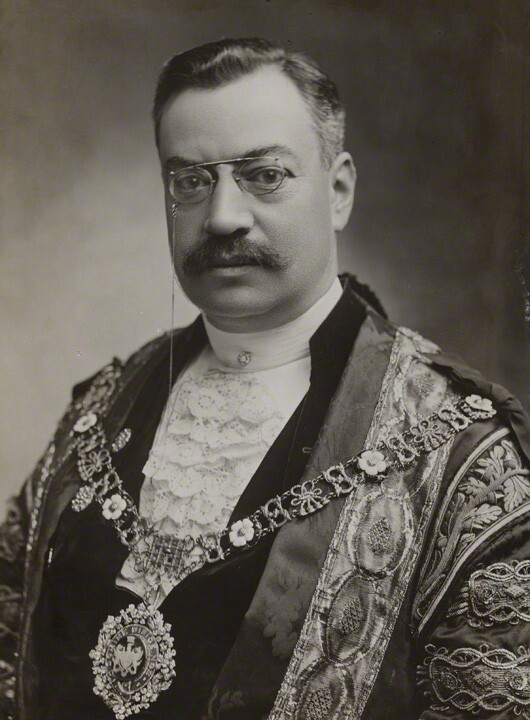
Marcus Samuel, 1st Viscount Bearsted
Founder of Shell and Lord Mayor of London.

Bain News Service, publisher · Public domain
Marcus Samuel, 1st Viscount Bearsted (5 November 1853 – 17 January 1927), was a British businessman and civic leader. He founded the Shell Transport and Trading Company, which later merged with a Netherlands-based company to form the Royal Dutch/Shell Group, a major force in the global oil industry. He also served as Lord Mayor of London and was elevated to the peerage.
- Born
- 5 November 1853
- Died
- 17 January 1927
- Field
- Business, civic government
- Nationality
- British
- Known for
- Founder of Shell Transport and Trading Company, Lord Mayor of London
Lore & Background
Marcus Samuel was born into a family of Baghdadi Jews in Whitechapel, London. His father ran an import-export business, M. Samuel & Co., trading with the Far East. Marcus carried on the business with his brother Samuel Samuel, and the firm launched the first Japanese gold sterling loan in 1897. Samuel was educated at Edmonton and in Brussels, and traveled extensively in Asia before settling into business.
Samuel realized the potential of the oil market during a prospecting trip to the Caucasus in 1890. In 1891, he secured a nine-year exclusive deal with the Rothschilds to sell Bnito's kerosene east of Suez. He commissioned a safer generation of tanker, the first being Murex, which transited the Suez Canal on 23 August 1892. He built ten additional ships named for seashells. In 1895, he received a concession in the Kutei region of east Borneo, where oil was discovered in 1897. That year, he incorporated the Shell Transport and Trading Company.
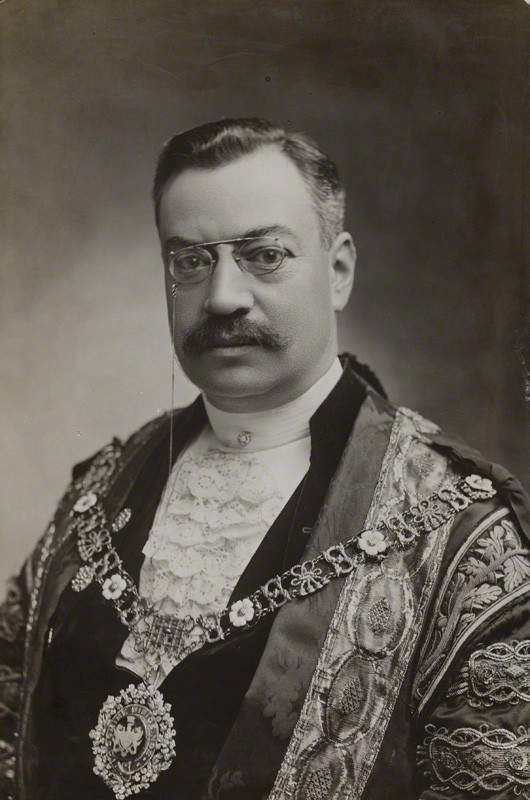
Samuel had a long career in the civic government of the City of London, serving as Alderman, Sheriff, and Lord Mayor (1902–1903). He received a knighthood for his services in connection with the transport of oil and his role as a shipowner. In 1907, his company combined with Royal Dutch Petroleum to create the Royal Dutch/Shell Group. He was created 1st Baron Bearsted in 1921 and 1st Viscount Bearsted in 1925.
Reader's Guide
Marcus Samuel's significance lies in his pivotal role in the early oil industry. By securing a deal with the Rothschilds and designing tankers safe for the Suez Canal, he opened new markets for kerosene east of Suez. His Shell Transport and Trading Company, later merged with Royal Dutch Petroleum, became a cornerstone of the modern energy giant Royal Dutch Shell. His civic contributions, including his tenure as Lord Mayor of London and his work on London unification and port commissions, reflect his influence beyond business. His legacy endures through the continued operations of Shell and the merchant bank Hill Samuel, formed from his family firm.
Did You Know?
- Marcus Samuel commissioned the tanker Murex, the first to transit the Suez Canal with a cargo of kerosene, on 23 August 1892.
- He was elected Lord Mayor of London in September 1902 and served from November 1902 to November 1903.
- His company, Shell Transport and Trading, was named in reference to his father's business as a 'shell merchant'.
- He was created 1st Viscount Bearsted in the 1925 Birthday Honours.
The Seashell Origins and the 1897 Founding
Marcus Samuel and his brother Samuel Samuel established The "Shell" Transport and Trading Company Limited in 1897, a British enterprise that would eventually reshape the global energy landscape. The company's name carried a deeply personal lineage: their father had run an antique shop in Houndsditch, London, which in 1833 broadened its trade to include importing and selling seashells. That modest addition to a family business became the seed from which one of the world's most recognizable energy brands would grow. Notably, the quotation marks around "Shell" were actually part of the company's legal name, a small but telling detail of its early identity. Marcus and Samuel's venture was conceived in a competitive era when America's Standard Oil was consolidating its grip on the petroleum market, and the brothers' British company would become one half of a partnership designed to challenge that dominance on a global scale.
The 1907 Merger and the Dual-National Architecture
In April 1907, the British "Shell" Transport and Trading Company merged with the Netherlands' Royal Dutch Petroleum Company to form what became the Royal Dutch Shell Group. The arrangement was brokered by Calouste Gulbenkian, a British-Armenian oil magnate who emerged as a major shareholder in the process. Rather than a full consolidation, the two firms maintained their separate legal identities while operating as a single commercial unit, a dual-listed structure born partly from national patriotic sensibilities that would not have permitted one country's company to absorb the other's. Stock ownership was split sixty percent to Royal Dutch and forty percent to Shell. Both entities became holding companies for two operational arms: Bataafse Petroleum Maatschappij, which handled production and refining, and the Anglo-Saxon Petroleum Company, based in London, which directed transport and storage. The Dutch company at The Hague oversaw manufacture, while the British arm in London managed the movement of products.
Ascending to the World's Foremost Oil Producer
The competitive impetus behind the 1907 amalgamation was the need to mount a credible global challenge to America's Standard Oil, and the combined enterprise answered that challenge with remarkable speed. By 1920, the company bearing Marcus Samuel's founding legacy had become the largest producer of oil in the world. By the close of the 1920s, it accounted for roughly eleven percent of global crude oil output and held a tenth of the world's tanker tonnage, a testament to the transport-and-trading DNA that the Samuel brothers had embedded in the company from its inception. Shell entered the chemicals sector in 1929 through the founding of Shell Chemicals, broadening its industrial footprint well beyond fuel. The company's stature was such that it became one of the so-called "Seven Sisters," the group of major oil firms that dominated the global petroleum industry from the mid-1940s through the mid-1970s.
Wartime Service and Geopolitical Ambition
The company Marcus Samuel helped create proved indispensable to Britain's war effort during the First World War. It served as the principal fuel supplier to the British Expeditionary Force, was the sole provider of aviation fuel, and furnished eighty percent of the British Army's TNT. The firm also volunteered its entire shipping fleet to the British Admiralty, a gesture that underscored the strategic importance of the transport and logistics infrastructure the Samuel brothers had originally built. In the interwar period, the group's geopolitical reach continued to expand: in 1912 it acquired the Rothschilds' Russian oil assets in a stock transaction, and at the 1922 Genoa Conference it entered negotiations for a monopoly over Soviet oilfields at Baku and Grosny, talks that ultimately collapsed after a draft treaty was leaked. The German invasion of Romania in 1916 destroyed seventeen percent of the group's worldwide production, a stark reminder of the vulnerabilities inherent in a globally dispersed energy empire.
Gallery

Frequently Asked Questions
Who is Marcus Samuel, 1st Viscount Bearsted?
He was a British businessman and civic leader who lived from 1853 to 1927. He is best remembered as the man who built the foundation of what would become one of the world's largest oil companies and later served as Lord Mayor of London.
What company did Marcus Samuel found?
He established the Shell Transport and Trading Company, a British enterprise focused on oil transport and trade. That company eventually merged with a Dutch firm to create the Royal Dutch/Shell Group.
What civic role did Marcus Samuel hold in London?
He served as Lord Mayor of London, a senior position in the city's government. This role reflected his broad influence beyond the boardroom and cemented his status as a leading public figure.
Why is Marcus Samuel, 1st Viscount Bearsted considered important in industry?
He is credited with creating the British half of what grew into the Royal Dutch/Shell Group, a dominant force in global petroleum. His work in oil transport and trading helped shape the modern energy landscape.
More in Innovators In Industry 1-24
Spotted an error? Know more?
Reader corrections go straight into our review queue. Suggest an edit · How this site is sourced