
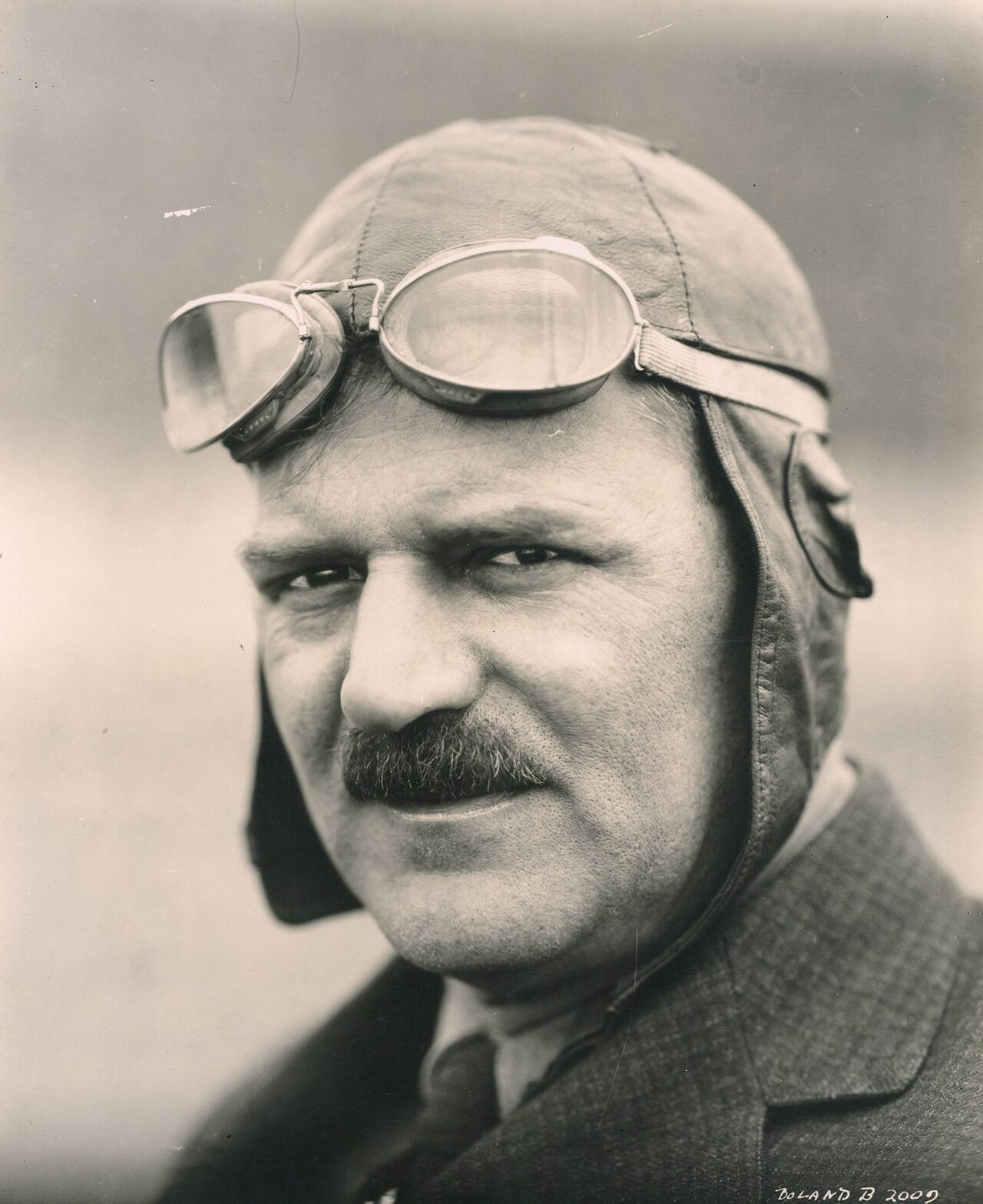
Louis Chevrolet
Swiss-born racer and co-founder of the Chevrolet car company.

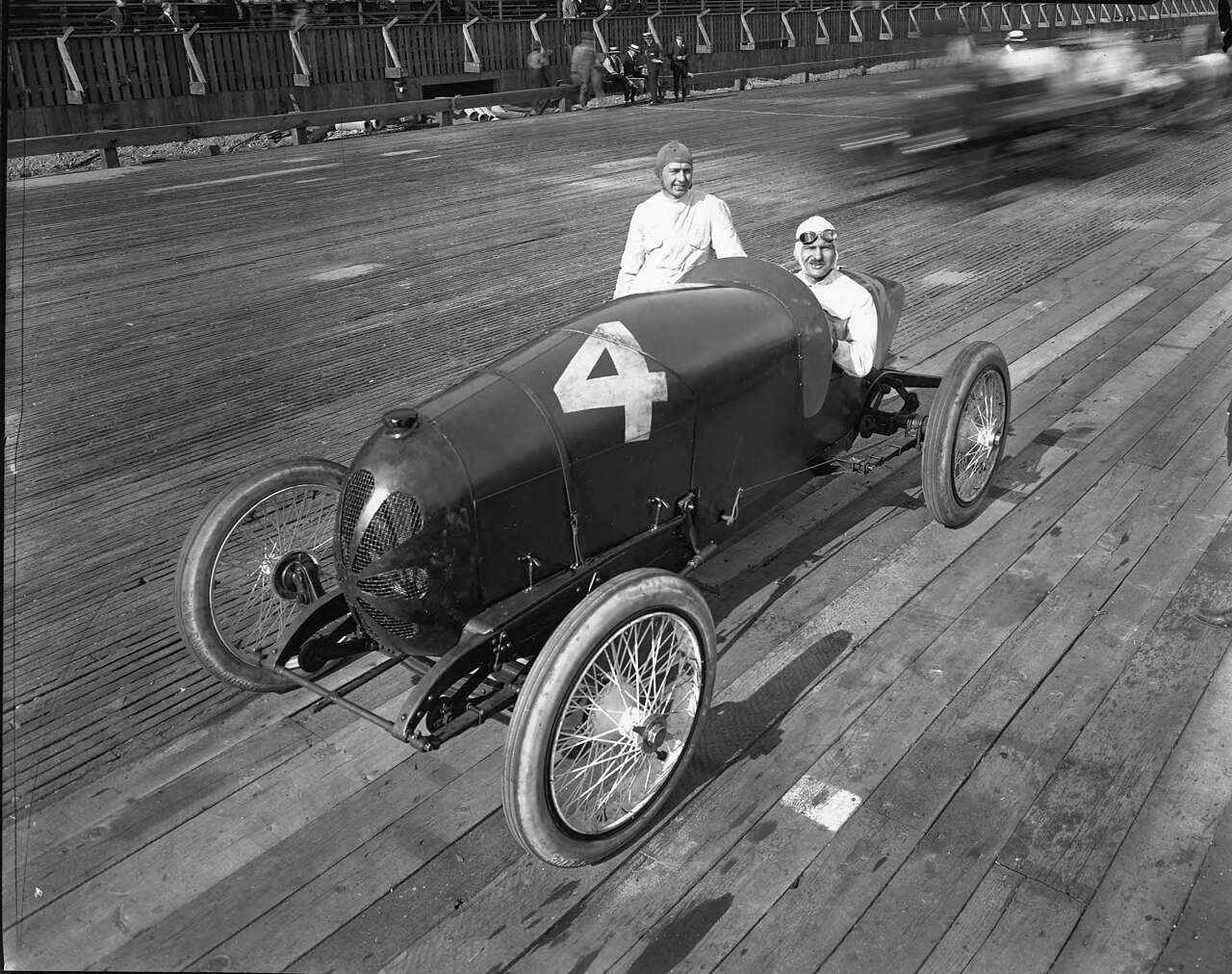
Marvin Dement Boland · Public domain
Louis-Joseph Chevrolet was born on December 25, 1878, in La Chaux-de-Fonds, a Swiss watchmaking hub. The second child of a watchmaker and his wife, his family originally came from Bonfol. In 1887, he and his father moved to Beaune, France, where he picked up mechanical skills and a passion for bicycle racing. There, he built a wine pump from a broken one-cylinder motor mounted on a tricycle.
Chevrolet worked at a mechanics shop in Beaune from around 1889 to 1899, then moved to Paris for similar work until 1900. That year, he emigrated to Montreal, Canada, as a mechanic, and soon after to New York City, where he worked for a Swiss immigrant’s engineering firm and then for de Dion-Bouton in Brooklyn. In 1905, he won his first race, driving a Fiat at Morris Park in the first national championship sanctioned by the AAA Contest Board. By 1907, he was hired by Autocar Company in Philadelphia, likely for a secret front-wheel-drive racing car project.
Chevrolet drove for Buick, befriending owner William C. Durant, founder of General Motors. He raced at the Giants Despair Hillclimb in 1909. Lacking formal education, he learned car design at Buick and began designing his own engine in 1909, building an overhead valve six-cylinder in his Detroit machine shop. He is credited as a co-designer of the 1910 Buick 60 Special, or "Buick Bug."
On November 3, 1911, Chevrolet co-founded the Chevrolet Motor Car Company with his brother Arthur, Durant, and partners William Little and Dr. Edwin R. Campbell. The company was based in Detroit. One story says the logo was a modified Swiss cross to honor his homeland; another claims it came from wallpaper in a Paris hotel room. Disagreeing with Durant over design, Chevrolet sold his share in 1915 and started building Chevrolets in Canada with McLaughlin’s Company. By 1916, Chevrolet stock trades allowed Durant to regain control of General Motors, and by 1917 the Chevrolet company was merged into GM. The McLaughlin Car Company merged with Chevrolet’s Canadian operations to form General Motors of Canada in 1918.
In 1916, Chevrolet and his brothers founded the Frontenac Motor Corporation to make racing parts for the Ford Model T.
- Born
- December 25, 1878, La Chaux-de-Fonds, Switzerland
- Died
- June 6, 1941, Detroit, Michigan, USA
- Field
- Automotive engineering, auto racing
- Nationality
- Swiss-born American (naturalized 1915)
- Known for
- Co-founding the Chevrolet Motor Car Company; racing driver; designer of the Frontenac racing car
Lore & Background
Louis-Joseph Chevrolet was born on December 25, 1878, in La Chaux-de-Fonds, Switzerland, a watchmaking center. In 1887 he moved with his father to Beaune, France, where he developed mechanical skills and an interest in bicycle racing. He invented a wine pump built from a defective one-cylinder motor mounted on a tricycle. After working in mechanics shops in Beaune and Paris, he emigrated to Montreal in 1900, then to New York City, working for de Dion-Bouton.
Chevrolet won his first race in 1905 at Morris Park, a national championship event. He drove for Buick, befriending owner William C. Durant, and learned car design while there. In 1909 he began designing his own overhead valve six-cylinder engine. On November 3, 1911, he co-founded the Chevrolet Motor Car Company with his brother Arthur, Durant, and others. Differences with Durant over design led Chevrolet to sell his share in 1915. He later founded the Frontenac Motor Corporation with his brothers to make racing parts for the Ford Model T, and also served as vice president and chief engineer of American Motors Corporation (unrelated to the later company).
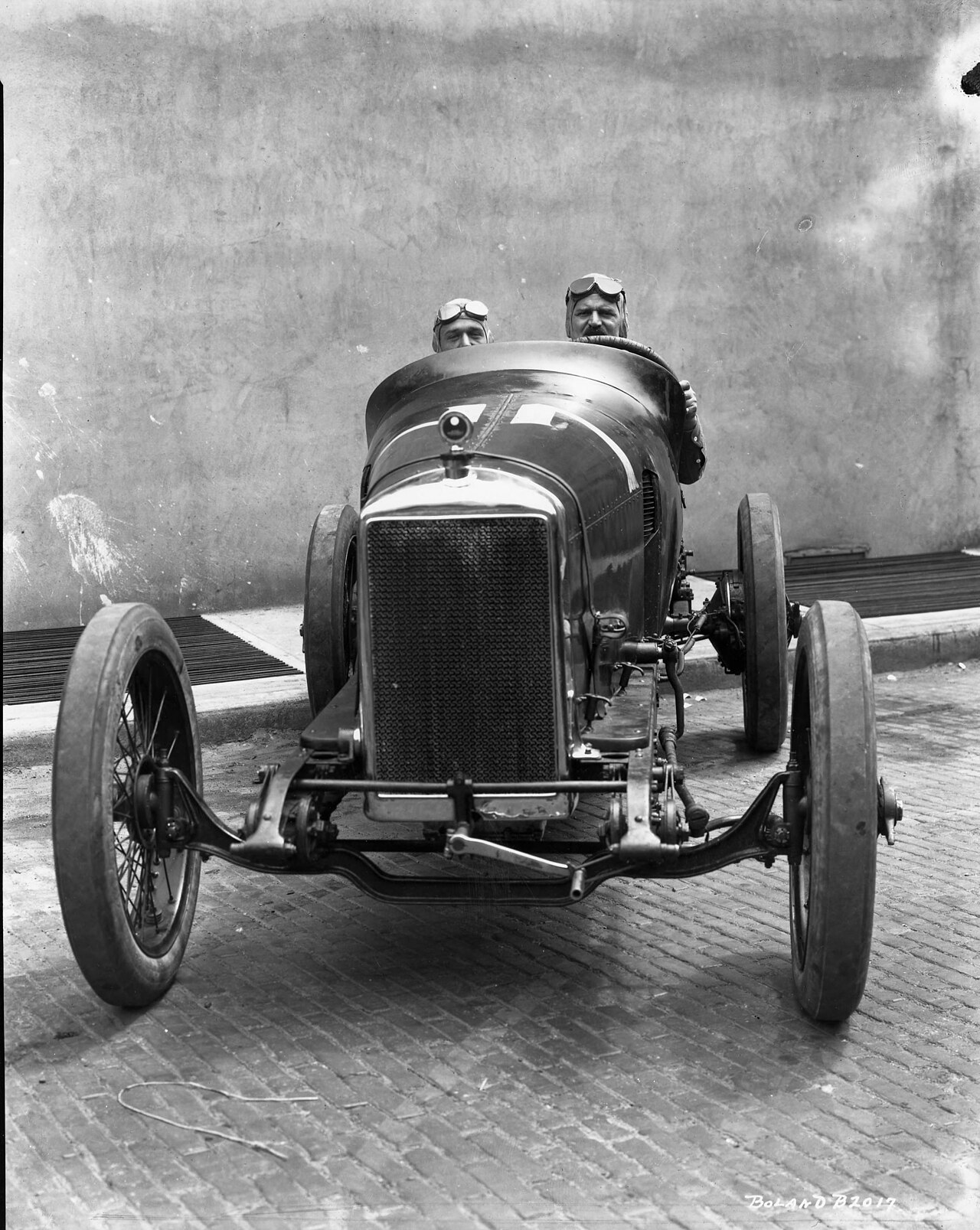
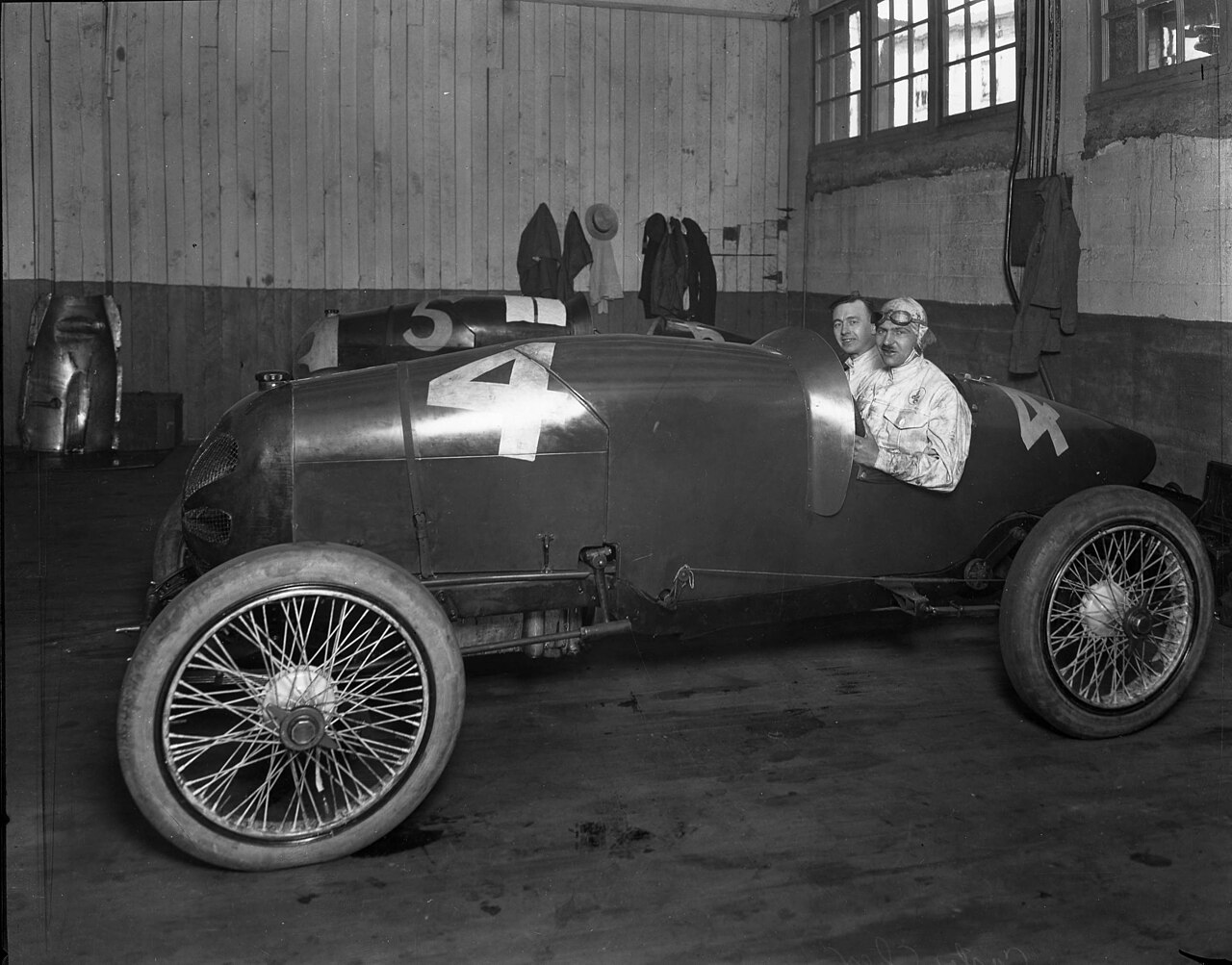
Chevrolet drove in the Indianapolis 500 four times, with a best finish of seventh in 1919. His brother Gaston won the 1920 Indianapolis 500 in a Frontenac. In 1927 Chevrolet launched the aircraft engine company Chevrolair, which failed three years later due to the Great Depression. He returned to work as a mechanic in Detroit factories. He died of a heart attack on June 6, 1941, in Detroit, and is buried in Indianapolis.
Reader's Guide
Louis Chevrolet's significance lies in his dual role as a pioneering racing driver and as the co-founder of one of the most enduring automobile brands in history. The Chevrolet Motor Car Company, established in 1911, was instrumental in enabling William C. Durant to regain control of General Motors, and by 1917 the company had been merged into GM. Although Chevrolet sold his stake early due to design disagreements, his name became synonymous with mass-market American automobiles. His mechanical ingenuity was evident early on, from a homemade wine pump to the overhead valve six-cylinder engine he built in his own shop. As a racer, he competed at the highest levels, including four Indianapolis 500s, and his Frontenac racing cars, particularly the Fronty-Ford, were successful. His legacy is recognized through multiple halls of fame, including the Automotive Hall of Fame and the International Motorsports Hall of Fame, and a memorial at the Indianapolis Motor Speedway Museum. The Swiss national train company SBB named a long-distance train after him, linking his birthplace to his lasting impact.
Did You Know?
- He co-founded the Chevrolet Motor Car Company on November 3, 1911, with his brother Arthur, William C. Durant, and others.
- His brother Gaston Chevrolet won the Indianapolis 500 in 1920 driving a Frontenac.
- Chevrolet became a naturalized American citizen in 1915.
The Compact Car Awakening
By the late 1950s, a quiet revolution was reshaping American automotive demand. The three dominant domestic manufacturers had steadily enlarged their entry-level offerings, effectively ceding the small-car segment to newcomers. American Motors Corporation, operating as a resource-constrained underdog, had staked its survival on fuel-efficient compacts like the Rambler, climbing to third place in domestic sales. Studebaker followed suit by rebranding its economy sedan as the Lark in 1959. Meanwhile, European imports from Volkswagen, Renault, and Fiat were steadily capturing budget-conscious buyers who wanted a practical second vehicle or an affordable primary car. General Motors, under the leadership of Ed Cole—who had risen from chief engineer to general manager of Chevrolet by 1956—recognized the threat. Chevrolet had actually attempted an air-cooled engine as early as 1923 with the Series M Copper-Cooled, but that experiment had collapsed under engineering difficulties. The Corvair represented a second, far more ambitious attempt to reclaim the compact market on Chevrolet's own unconventional terms, rather than simply shrinking an existing full-size car as Ford and Chrysler planned with the Falcon and Valiant.
A Radical Engineering Departure
Where Ford's Falcon and Chrysler's Valiant were essentially shrunken versions of conventional American cars with standard inline-six engines, the Corvair broke almost every Detroit convention of the era. Its powerplant was an air-cooled, horizontally opposed flat-six engine with numerous major components cast in aluminum, mounted at the rear of the vehicle and driving the rear wheels through a compact transaxle unit. All four corners featured independent suspension—a rarity in mass-produced American automobiles at the time. The structure employed unibody construction rather than the traditional body-on-frame approach. Exterior styling reinforced the departure: the Corvair's clean, boxy profile conspicuously omitted the tail fins and large grilles that dominated 1950s and early-1960s American design. The car also ran wider, low-profile tires on broader wheels, lending it handling characteristics distinct from its contemporaries. Production commenced in July 1959 at a purpose-built assembly plant in Willow Run, Michigan, utilizing an overhead conveyor system. The name had been registered with the U.S. government on August 6, 1959, and the vehicle was officially unveiled to the public on October 2 of that year.
Body Styles and the Corvair 95
The Corvair's two-generation run from 1960 through 1969 offered buyers a broad range of body configurations. The first generation (1960–1964) came as a four-door sedan, a two-door coupe, a convertible, and a four-door station wagon. When the second generation arrived in 1965, the lineup shifted to include a two-door hardtop, a four-door hardtop, and a convertible, reflecting evolving consumer preferences for pillarless designs. Beyond passenger cars, Chevrolet expanded the Corvair platform into a dedicated subseries called the Corvair 95, produced from 1961 to 1965. This line encompassed a passenger van, a commercial van, and a pickup truck variant—giving the name and engineering a presence in utility vehicles as well as personal transportation. Across all configurations and both generations, total production reached approximately 1.8 million units over the decade. The name "Corvair" itself carried a lineage: it had first appeared in 1954 on a Corvette-inspired fastback concept shown at the Motorama traveling exhibition, and when applied to the production car, the "air" suffix was a nod to the engine's air-cooling system.
Controversy, Safety, and the End of an Era
The Corvair's most enduring legacy is inextricably tied to a safety controversy that extended far beyond the automobile itself. Early models employed rear swing-axle suspension, a design that became the central target of Ralph Nader's book Unsafe at Any Speed. Nader argued aggressively that the configuration made the car prone to loss of control in extreme driving situations, sparking a national debate about automotive safety and corporate accountability. However, the picture proved more nuanced than the popular narrative suggested. A 1972 safety commission report prepared for the National Highway Traffic Safety Administration and conducted by Texas A&M University concluded that the 1960–1963 Corvair did not exhibit a greater potential for loss of control in extreme scenarios than comparable compact cars of the same period. Ultimately, the Corvair's market position eroded as Japanese imports like the Datsun 510 and the Volkswagen Beetle continued to dominate the budget segment. General Motors decided to replace the Corvair with the more conventionally designed Chevrolet Vega for the 1970 model year, bringing the unconventional rear-engined compact's production to a close.
Gallery
Frequently Asked Questions
Who is Louis Chevrolet?
Louis-Joseph Chevrolet was a Swiss-born American automotive engineer and competitive racing driver. He is best remembered as the co-founder of the Chevrolet Motor Car Company, established in 1911.
What is Louis Chevrolet most known for?
He co-founded the Chevrolet brand, which became one of the most recognizable names in American motoring. He was also a skilled racer and the designer behind the Frontenac racing car.
Where was Louis Chevrolet born and what was his early background?
He was born on December 25, 1878, in La Chaux-de-Fonds, Switzerland, a town long associated with watchmaking. His father worked as a watchmaker, and the family's roots traced back to the nearby village of Bonfol.
How did Louis Chevrolet transition from Switzerland to the automotive world?
After moving to Beaune, France, he picked up mechanical skills and a love of bicycle racing, even building a wine pump from a broken one-cylinder engine mounted on a tricycle. He emigrated to North America in 1900, working as a mechanic in Montreal before heading to the United States, where he eventually entered auto racing and car design.
When and where did Louis Chevrolet die?
He passed away on June 6, 1941, in Detroit, Michigan. By that time he had been a naturalized U.S. citizen since 1915, having built his entire adult career in the American automotive industry.
More in Innovators In Industry 1-24
Spotted an error? Know more?
Reader corrections go straight into our review queue. Suggest an edit · How this site is sourced