
Marcel Dassault
French aircraft industrialist and parliamentarian who survived Buchenwald.

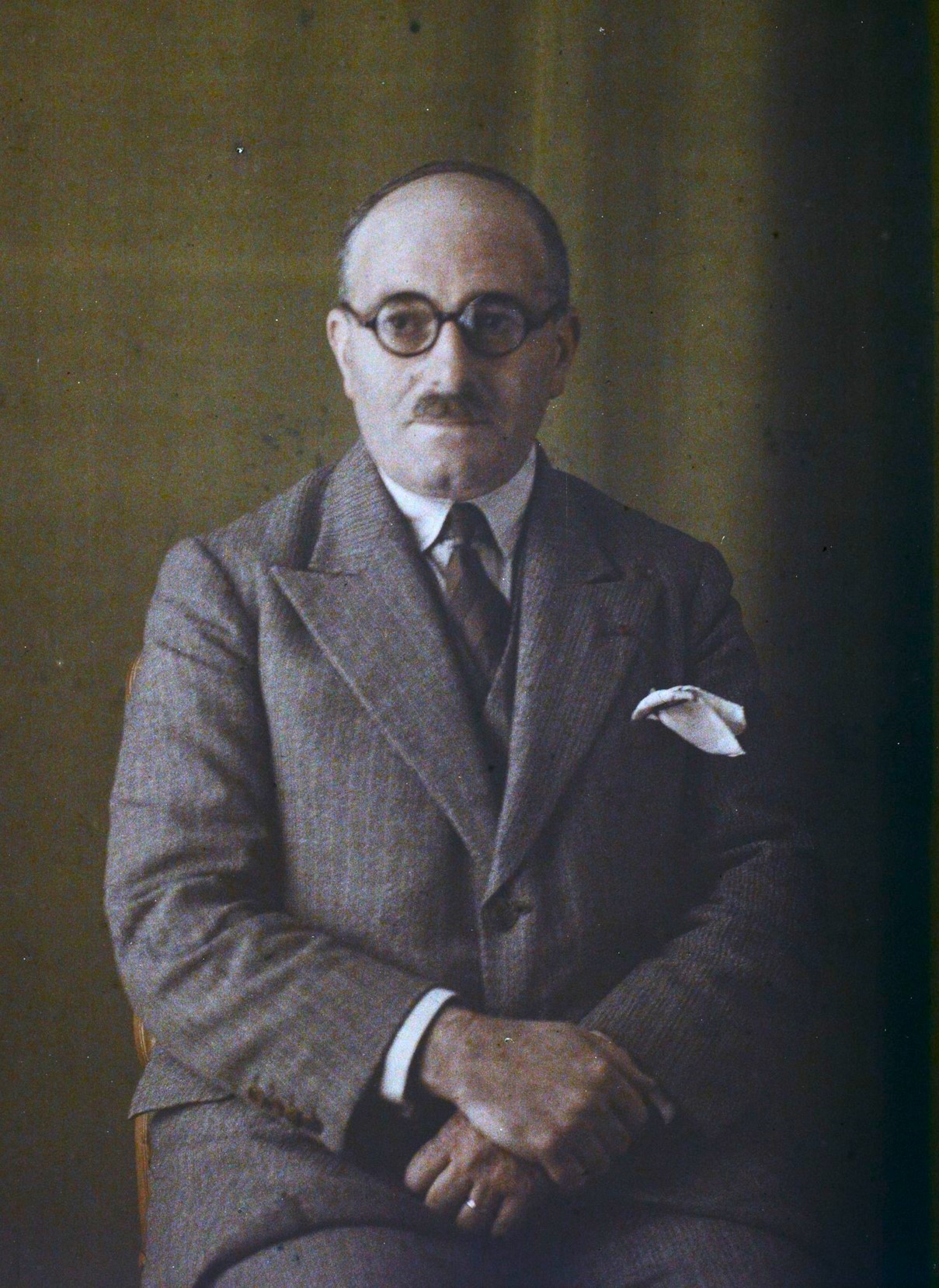
Georges Chevalier · CC BY 4.0
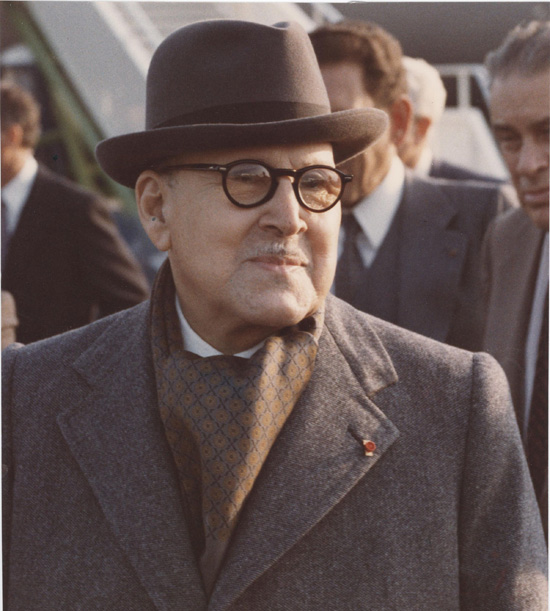
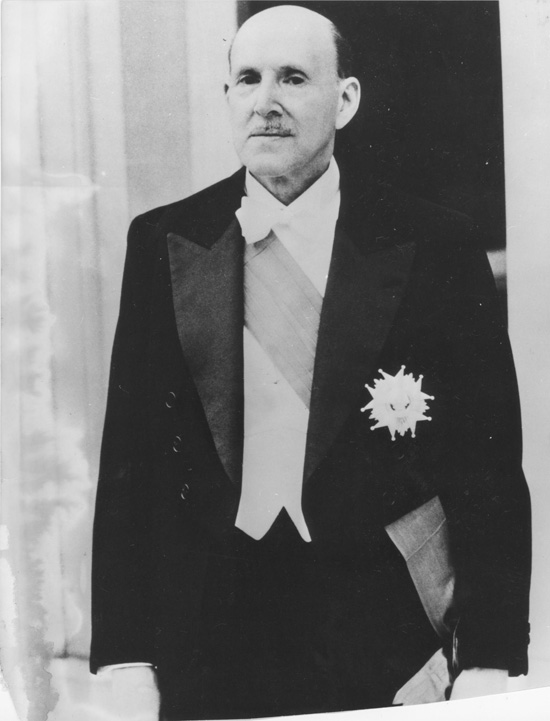
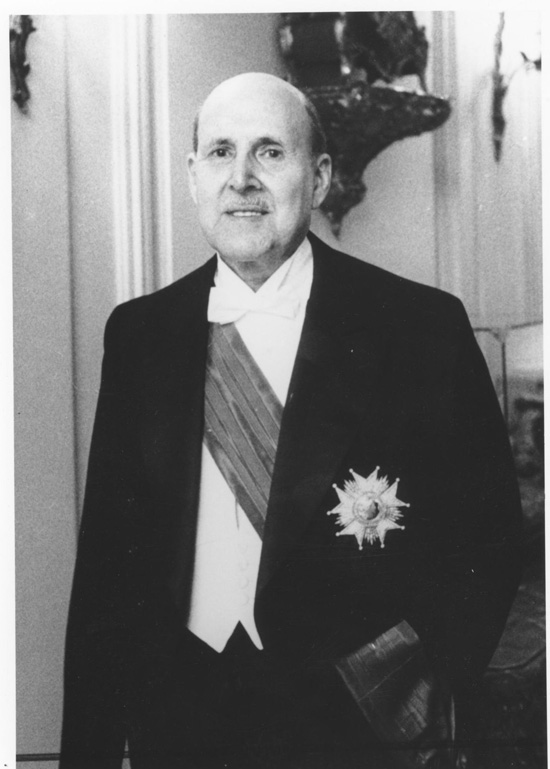
Marcel Dassault (born Marcel Ferdinand Bloch; 23 January 1892 – 17 April 1986) was a French engineer and industrialist who spent his career in aircraft manufacturing. He also served intermittently in both houses of the French Parliament from 1951 until his death. He survived imprisonment in the Buchenwald concentration camp during World War II and later changed his name to Dassault, building a major aviation group.
- Born
- 23 January 1892, Paris, France
- Died
- 17 April 1986, Neuilly-sur-Seine, France
- Field
- Aircraft manufacturing, engineering, politics
- Nationality
- French
- Known for
- Founding Société des Avions Marcel Bloch (later Dassault Aviation); inventing a type of aircraft propeller used by the French army in World War I; surviving Buchenwald concentration camp
Lore & Background
Marcel Dassault was born Marcel Ferdinand Bloch in Paris on 23 January 1892, the youngest of three children of Jewish parents Adolphe Bloch, a doctor, and Noémie Allatini. He attended Lycée Condorcet, studied electrical engineering, and graduated from the Breguet School and Supaéro. At Supaéro, he was classmates with Russian student Mikhail Gurevich, later instrumental in creating the MiG aircraft series. During World War I, Bloch worked at the French Aeronautics Research Laboratory at Chalais-Meudon and invented a type of aircraft propeller subsequently used by the French army. In 1916, with Henry Potez and Louis Coroller, he formed the Société d'Études Aéronautiques to produce the SEA series of fighters.
In 1928, Bloch founded the aircraft company Société des Avions Marcel Bloch, which produced its first aircraft in 1930. In 1935, he and Henry Potez agreed to buy Société Aérienne Bordelaise. In 1936, the company was nationalized as SNCASO, and Bloch became delegated administrator of the Minister for Air. During the Nazi occupation of France, Bloch refused to collaborate with German occupiers at Bordeaux-Aéronautique in October 1940 and was imprisoned by the Vichy government. In 1944, the Nazis deported him to Buchenwald concentration camp, where he was tortured, beaten, and held in solitary confinement. His wife Madeleine remained in France under surveillance but was not interned. Bloch was detained at Buchenwald until its liberation on 11 April 1945. He returned to Paris disabled, barely able to walk, and doctors advised him to settle his affairs, not expecting his recovery.
After the war, Bloch changed his name to Bloch-Dassault and in 1949 to Dassault, derived from 'Chardasso', the nom de guerre of his brother, General Darius Paul Bloch, a play on char d'assaut (French for 'assault tank'). In 1950, he converted to the Roman Catholic Church. In 1971, Dassault acquired Breguet, forming Avions Marcel Dassault–Breguet Aviation. He died at Neuilly-sur-Seine in 1986 and was buried at Passy Cemetery.
Reader's Guide
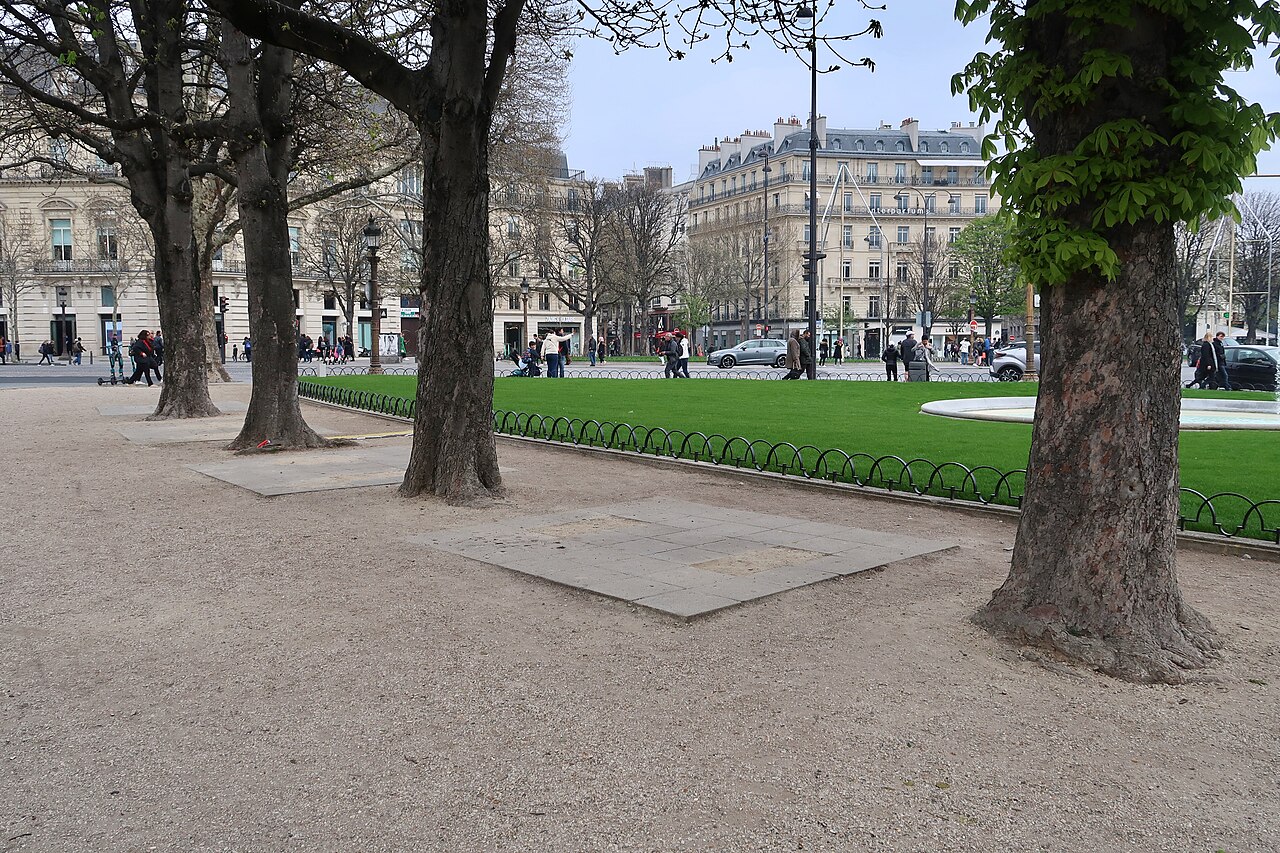
Marcel Dassault's significance lies in his long career in aircraft manufacturing, from inventing a propeller used in World War I to founding a company that evolved into Dassault Aviation. His survival of Buchenwald concentration camp after refusing to collaborate with the Nazi regime marked his resilience. Postwar, he changed his name and converted to Catholicism, while his company acquired Breguet in 1971. He also served intermittently in the French Parliament from 1951 until his death in 1986. His legacy includes the renaming of the rond-point des Champs-Elysées in Paris in his honor in 1991, and his younger son Serge Dassault became CEO of the restructured Groupe Industriel Marcel Dassault. Dassault was inducted into the International Air & Space Hall of Fame in 1973. His life and work are parodied in the Tintin book Flight 714 to Sydney as the tycoon Laszlo Carreidas.
Did You Know?
- Marcel Dassault was born Marcel Ferdinand Bloch and changed his name to Dassault in 1949, derived from his brother's Resistance codename 'Chardasso'.
- He was imprisoned in the Buchenwald concentration camp during World War II for refusing to collaborate with the Nazi regime.
- He was classmates at Supaéro with Mikhail Gurevich, who later helped create the MiG aircraft series.
From Indochina to Aerospace Engineering
Francis Bernard entered the world in 1940 in Hanoi, a city then belonging to French Indochina, the territory that is now Vietnam. His father held an engineering position in the coal mines of northern Vietnam. Bernard's childhood education took place in Haiphong and Dalat, and in 1952 his family made the move back to France, settling in Paris. There he attended the Janson-de-Sailly high school, worked through preparatory classes, and earned a place at Supaero, the Institut Supérieur de l'Aéronautique et de l'Espace, a university focused exclusively on aerospace engineering, in 1965. Following his mandatory military service, Bernard entered Dassault Aviation's technical division, which was led by Jean Cabrière. Within that structure he joined the Advanced Design Department under Pierre Bohn, a group responsible for aerodynamics, flight quality, and performance optimisation. Bernard concentrated on theoretical aerodynamics and rapidly moved into the software development of computer-aided design and computer-aided manufacturing programs.
A Decade of GEOVA in the Mainframe Age
Between 1967 and 1977, Bernard headed a compact team of five or six engineers to build GEOVA, an acronym standing for the computer-aided generation and operation of aircraft volumes. The system offered three-dimensional CAD capabilities aimed at producing more accurate wind tunnel models, alongside numerical control routines for machining structural components. Its guiding principle was to bind multiple software tools around one shared database so that individual developments would not drift apart. Over that decade GEOVA absorbed successive computing advances, swapping out alphanumeric terminals for interactive graphics displays and linking into CNC machining equipment. The period was still one of mainframes and punched cards, a setting that demanded deep software expertise and made user-friendly interfaces practically impossible. Bernard's group shouldered both the coding and the daily operation, so design offices had to route their calculation tasks through his team. The work was shaped by pressing demands from active military programmes such as the Alpha Jet and the Mirage III successors, as well as civilian projects including the Mercure and the Falcon.
Conceiving CATIA from the Ground Up
By the mid-1970s Bernard saw a clear divide: three-dimensional modelling delivered outstanding results for wind tunnel models and surface optimisation, yet design offices still depended on rows of two-dimensional drawing boards. In 1974 Dassault Aviation bought licences for CADAM, Lockheed's interactive drawing application, and Bernard built the bridges between GEOVA and CADAM, adding 2.5D functions that let engineers model wing ribs and fuselage frames for five-axis CNC machining. This combined environment was dubbed DRAPO. However, the relentless stream of new application requests created chronic integration headaches, and computer interfaces were growing more accessible by the year. In 1977, with the backing of Jean Cabrière and Pierre Bohn, Bernard set out to rewrite GEOVA entirely, designing a unified architecture with interactive graphical interfaces that non-specialists could operate. That project, first called CATI, would soon be known worldwide as CATIA.
A Bold Commercial Gamble and the IBM Alliance
In 1981 Dassault Aviation took the extraordinary step of marketing CATIA to the outside world, giving birth to Dassault Systèmes. At that moment no other aircraft manufacturer had exposed its three-dimensional design tools publicly, so the decision carried a real risk of leaking proprietary technology to rivals. The newborn company began with barely twenty staff and a single client, Dassault Aviation itself, while American firms such as CADAM, ComputerVision, and CALMA already fielded hundreds of employees, and French competitor Datavision offered a comparable product called Euclid. Initial ownership was split among Benno-Claude Vallières at ten percent, Charles Edelstenne at ten percent, and the Dassault family at eighty percent, with Edelstenne as board chairman and Bernard as CEO. From the outset, a partnership with IBM proved decisive: IBM committed to handling CATIA's entire marketing. The qualification process, launched in 1980, consumed months of intense competition, and IBM technicians evaluating candidates at Dassault's CADCAM centre in Saint-Cloud ultimately chose CATIA over submissions from Northrop and Nissan, seeing it as the product that would fill the three-dimensional gap left by CADAM.
Gallery
Frequently Asked Questions
Who is Marcel Dassault?
He was a French engineer and industrialist born in Paris in 1892 who built one of the most prominent aircraft manufacturing companies in Europe. He also held a seat in the French Parliament for much of his later life.
What is Marcel Dassault's key innovation?
He is credited with designing a type of aircraft propeller that saw service with the French army during World War I. More broadly, he founded the company that would become Dassault Aviation, shaping French military and civilian air travel for decades.
What happened to Marcel Dassault during World War II?
He was imprisoned in the Buchenwald concentration camp by the Nazis and survived the ordeal. After the war, he left the camp and went on to rebuild his aviation enterprise from the ground up.
Why is he called Dassault if his birth name was different?
He was born Marcel Ferdinand Bloch, but after surviving Buchenwald he adopted the surname Dassault. The name change marked a fresh start as he re-established his aircraft company in postwar France.
What was Marcel Dassault's role in French politics?
Between 1951 and his death in 1986, he intermittently served in both chambers of the French Parliament. This political career ran in parallel with his work as an industrialist and aviation pioneer.
More in Innovators In Industry 1-24
Spotted an error? Know more?
Reader corrections go straight into our review queue. Suggest an edit · How this site is sourced