
Marcus Goldman
German-American immigrant who co-founded the investment bank Goldman Sachs.

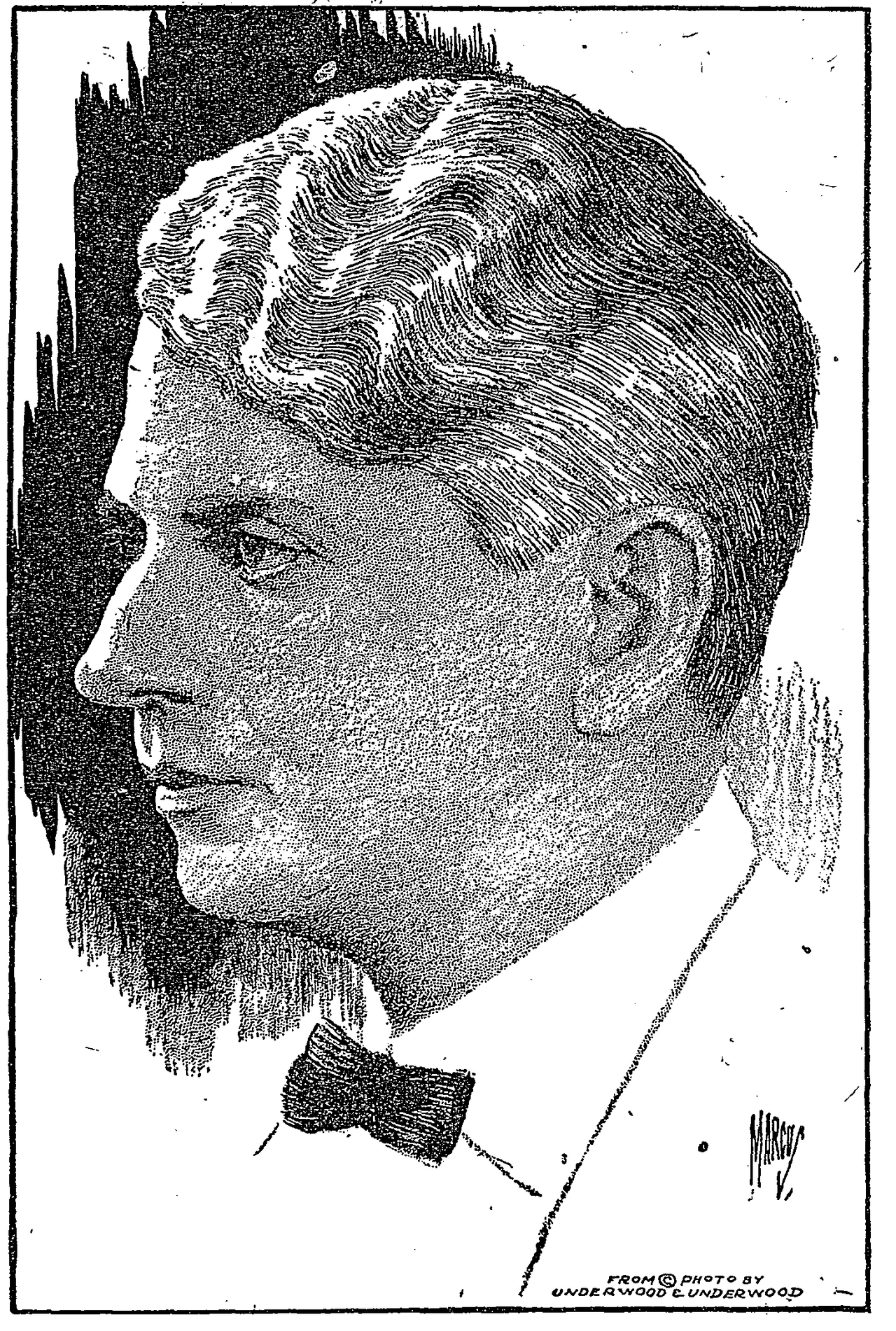
Underwood & Underwood · Public domain
Marcus Goldman (born Mark Goldmann; December 9, 1821 – July 20, 1904) was a German-American investment banker, businessman, and financier. He helped establish Goldman Sachs, now one of the world's largest investment banks.
Goldman was born in Trappstadt, Kingdom of Bavaria, to an Ashkenazi Jewish family. His father, Wolf Goldmann, worked as a farmer and cattle dealer. His mother, Bella Katz Oberbrunner, had been widowed with five children from her first marriage to Samuel Oberbrunner; she came from Zeil am Main. Goldman’s paternal grandfather, originally named Jonathan Marx, changed his surname to Goldmann in 1811, when Jews were first permitted to take surnames. While studying at a synagogue in Würzburg, Goldman met Joseph Sachs, who became a lifelong friend. In Bavaria, Goldman worked as a schoolteacher.
During the Revolutions of 1848 in the German states, Goldman immigrated to the United States from Frankfurt am Main, part of the first large wave of Jewish immigration to America. He married Bertha Goldman (no relation), a 16-year-old Jewish immigrant. According to one account, when courting her, Goldman could not afford a bouquet and instead gave her a bunch of radishes.
In Philadelphia, Goldman first worked as a peddler with a horse-drawn cart, then as a shopkeeper. He initially rented a room in a boarding-house that his old friend Joseph Sachs had previously occupied. Later, he opened a clothing store on Market Street. In 1869, seeking more profitable work, Goldman moved to New York City. He set up an office on Pine Street in lower Manhattan, hanging a sign reading "Marcus Goldman & Co." and identifying himself as a broker of IOUs.
From the start, Goldman could single-handedly transact up to $5 million worth of commercial paper each year. Yet his business remained small compared to other Jewish-German bankers of the era. Firms like J. & W. Seligman & Co., with $6 million in working capital in 1869 (equivalent to $145 million in 2025), were already modern investment bankers underwriting and trading railroad bonds. Goldman’s daughter Louisa married Samuel Sachs, and his elder daughter had already married Samuel’s brother, further uniting the two families.
In 1882, Goldman brought his son-in-law Samuel Sachs into the business and renamed the firm M. Goldman and Sachs.
- Born
- December 9, 1821, Trappstadt, Kingdom of Bavaria
- Died
- July 20, 1904, Elberon, New Jersey
- Field
- Investment banking, finance
- Nationality
- German-American
- Known for
- Co-founding Goldman Sachs
Lore & Background
Marcus Goldman was born on December 9, 1821, in Trappstadt, Kingdom of Bavaria, to an Ashkenazi Jewish family. His father, Wolf Goldmann, was a farmer and cattle dealer. His mother, Bella Katz Oberbrunner, who came from Zeil am Main, was widowed with five children from a former marriage. His paternal grandfather was called Jonathan Marx until he changed his name to Goldmann when Jews were allowed to have surnames in 1811. While attending classes at the synagogue in Würzburg, he met Joseph Sachs, who would become his lifelong friend. In Bavaria, Goldman worked as a schoolteacher.
Goldman immigrated to the United States from Frankfurt am Main, Germany, in 1848 during the first great wave of Jewish immigration to America, resulting from the Revolutions of 1848 in the German states. He married Bertha Goldman (no relation), who was likely 16 at the time of their marriage. According to one account, when courting her, Goldman could not afford a bouquet and instead gave her a bunch of radishes.
In Philadelphia, Goldman first worked as a peddler with a horse-drawn cart, then as a shopkeeper. He initially rented a room in a boarding-house that his old friend Joseph Sachs had previously occupied. Later, he opened a clothing store on Market Street. In 1869, seeking more profitable work, Goldman moved to New York City. He set up an office on Pine Street in lower Manhattan, hanging a sign reading "Marcus Goldman & Co." and identifying himself as a broker of IOUs.
From the start, Goldman could single-handedly transact up to $5 million worth of commercial paper each year. Yet his business remained small compared to other Jewish-German bankers of the era. Firms like J. & W. Seligman & Co., with $6 million in working capital in 1869 (equivalent to $145 million in 2025), were already modern investment bankers underwriting and trading railroad bonds. Goldman’s daughter Louisa married Samuel Sachs, and his elder daughter had already married Samuel’s brother, further uniting the two families.
In 1882, Goldman brought his son-in-law Samuel Sachs into the business and renamed the firm M. Goldman and Sachs. The firm adopted its present name Goldman Sachs & Co. in 1882.
Reader's Guide
Marcus Goldman's significance lies in his founding of what became Goldman Sachs, a firm that grew from a single broker of IOUs into a global investment bank. From his earliest days of his business, Goldman was able to single-handedly transact as much as $5 million worth of commercial paper a year. In 1882, Goldman invited his son-in-law Samuel Sachs to join him in the business and changed the firm's name to M. Goldman and Sachs. Business boomed—soon the new firm was turning over $30 million worth of paper a year—and the firm's capital was now $100,000 (equivalent of $3.3 million in 2025). In 1885, Goldman took his own son Henry and his son-in-law Ludwig Dreyfuss into the business as junior partners and the firm adopted its present name, Goldman Sachs & Co. In 1894, Henry Sachs entered the firm, and in 1896, the firm joined the New York Stock Exchange. When Goldman retired, he left the firm in the hands of his son Henry Goldman and his son-in-law Samuel Sachs. His legacy is that of a German-Jewish immigrant who built a financial dynasty through family partnerships, though his early business was insignificant compared to other Jewish-German bankers of the day.
Did You Know?
- Marcus Goldman was born Mark Goldmann in Trappstadt, Kingdom of Bavaria, in 1821.
- He immigrated to the United States in 1848 during the Revolutions of 1848 in the German states.
- When courting his wife, he was unable to afford a bouquet of flowers and gave her a bunch of radishes instead.
The Basement That Started It All
In 1869, Marcus Goldman opened a modest one-room office in the basement of a New York City building, positioned right beside a coal chute. There were no gleaming trading floors, no global network of offices, no Fortune 500 ranking to point to. What there was, in that cramped and soot-adjacent space, was the seed of what would eventually become one of the largest investment banks in the world by revenue. The setting was humble to the point of almost comical when measured against the institution that would later occupy the Battery Park City neighborhood of Manhattan and maintain offices in financial centers across the globe. Yet Goldman chose that basement as his starting point, and from that single room he began building the commercial relationships and financial infrastructure that would define the firm for generations. The coal chute beside his office is a detail that captures the era: a time when a man could found a financial enterprise with little more than a desk, a ledger, and the determination to serve New York's merchants and traders. What began in that basement would, over the decades, grow into a systemically important financial institution recognized by the Financial Stability Board.
From Solo Venture to Family Partnership
The early years of the firm were shaped as much by family as by finance. When Marcus Goldman first opened his New York office in 1869, it was his alone. But within a decade and a half, the operation had become a multi-generational enterprise. In 1882, his son-in-law Samuel Sachs stepped into the business, bringing a new surname into the partnership. Three years later, in 1885, two more family members joined: Goldman's own son, Henry Goldman, and another son-in-law, Ludwig Dreyfuss. With these additions, the firm formally adopted the name Goldman Sachs & Co., a title that would endure for well over a century. The progression from a single founder working in a basement to a named partnership of four men reflects a deliberate choice to build the institution around trusted relationships rather than anonymous capital. The inclusion of both sons and sons-in-law in the firm's leadership during this formative period established a pattern of internal succession and family stewardship that would define the organization's culture for decades to come.
Pioneering Tools for a New Economy
One of the most consequential contributions of the firm Marcus Goldman founded was its early adoption and promotion of commercial paper as a financing tool for entrepreneurs. In an era when most lending was tied to hard assets like land and machinery, the firm recognized that growing businesses needed flexible credit that did not require them to pledge physical property. By championing commercial paper, Goldman Sachs opened a financing channel for a broader class of American businesses. This innovation was complemented by the firm's admission to the New York Stock Exchange in 1896, which gave it access to capital markets and elevated its standing among New York's financial institutions. By 1898, just three decades after that basement opening, the firm's capital had reached $1.6 million—a remarkable figure for the period and a testament to the steady growth that Goldman's original vision had set in motion. These early structural choices positioned the firm not merely as a broker of existing instruments but as a shaper of how American companies would access capital for generations.
A National Footprint Takes Shape
The firm that Marcus Goldman started in a single New York City basement room would, over the following decades, spread its roots across the American landscape. In 1900, just three years after joining the New York Stock Exchange, the firm opened offices in both Boston and Chicago, extending its reach into two of the country's most important commercial centers. The expansion continued through the next two decades: a San Francisco office followed in 1918, and by 1920 the firm had established presences in Philadelphia and St. Louis as well. This geographic growth transformed what had been a regional New York operation into a genuinely national financial institution. The pattern of expansion—moving from the East Coast into the Midwest and then to the West Coast—mirrored the broader industrialization of the American economy and the increasing need for financial services in emerging commercial hubs. For a firm that began beside a coal chute in Manhattan, the decision to plant offices in five additional cities represented a fundamental leap in ambition and scale, cementing the institutional identity that Marcus Goldman's original vision had made possible.
Gallery


Frequently Asked Questions
Who is Marcus Goldman?
Marcus Goldman was a German-American financier and businessman born in 1821 in Bavaria who emigrated to the United States and became a foundational figure in American investment banking.
What is Marcus Goldman best known for?
He is most widely recognized as the co-founder of Goldman Sachs, the investment banking institution that eventually grew into one of the most powerful financial firms in the world.
Where was Marcus Goldman born and what was his family background?
He was born in Trappstadt, Kingdom of Bavaria, into an Ashkenazi Jewish household where his father worked as a farmer and cattle dealer. His mother, Bella Katz Oberbrunner, came from Zeil am Main and had been previously widowed with five children.
How did Marcus Goldman's life end?
Goldman died on July 20, 1904, in Elberon, New Jersey, at the age of 82, having lived to see the firm he helped build grow well beyond its original scope.
Why is Marcus Goldman considered important in the history of industry?
As the originating partner behind Goldman Sachs, he established the institutional framework that would evolve into a globally dominant investment bank, fundamentally shaping the landscape of modern corporate finance.
More in Innovators In Industry 1-24
Spotted an error? Know more?
Reader corrections go straight into our review queue. Suggest an edit · How this site is sourced