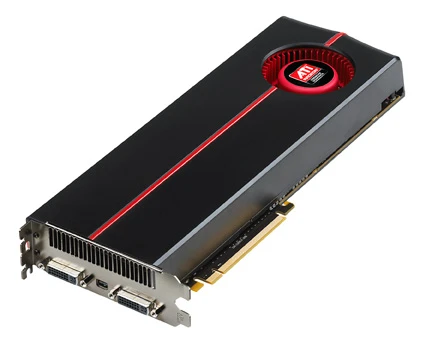
Voodoo3
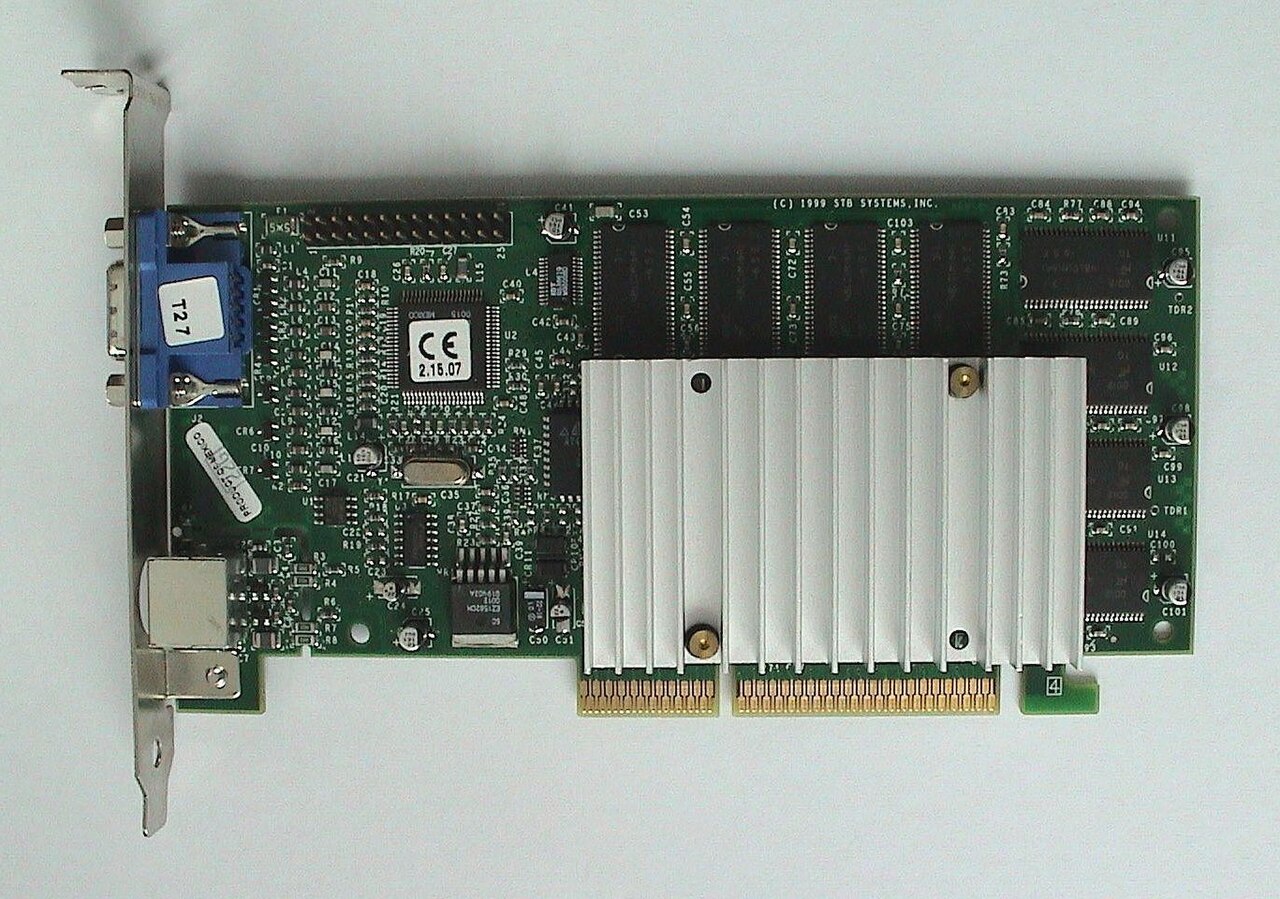
Voodoo3: 3dfx's Avenger core with dual-texturing and 16-bit dithered output.

Trio3D · CC BY-SA 3.0
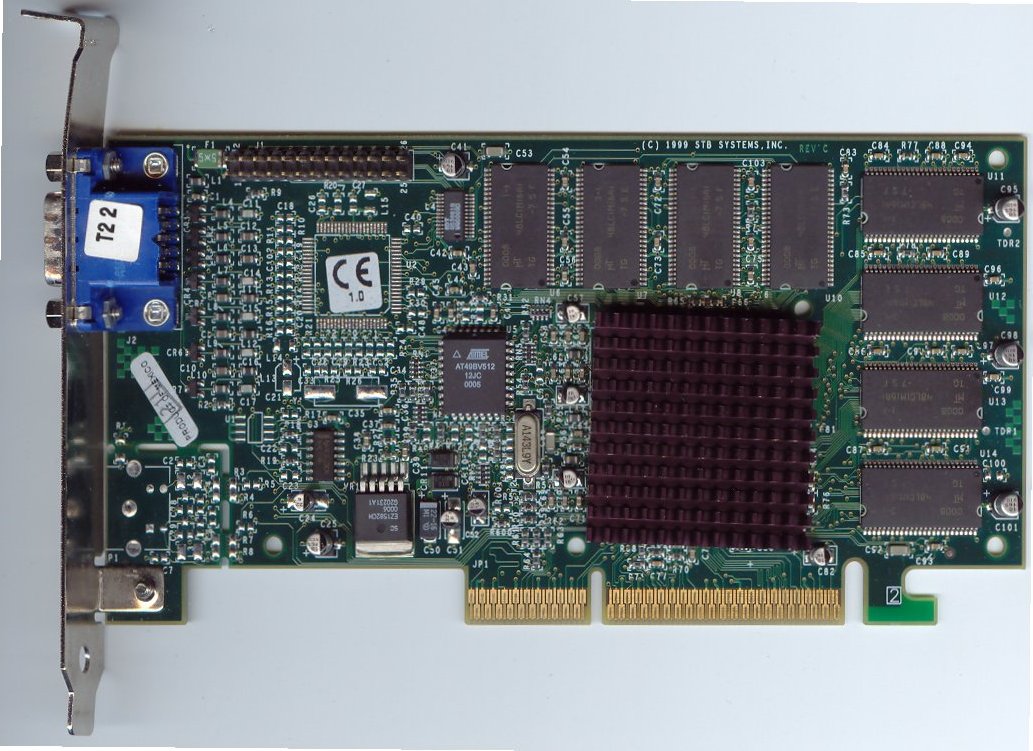
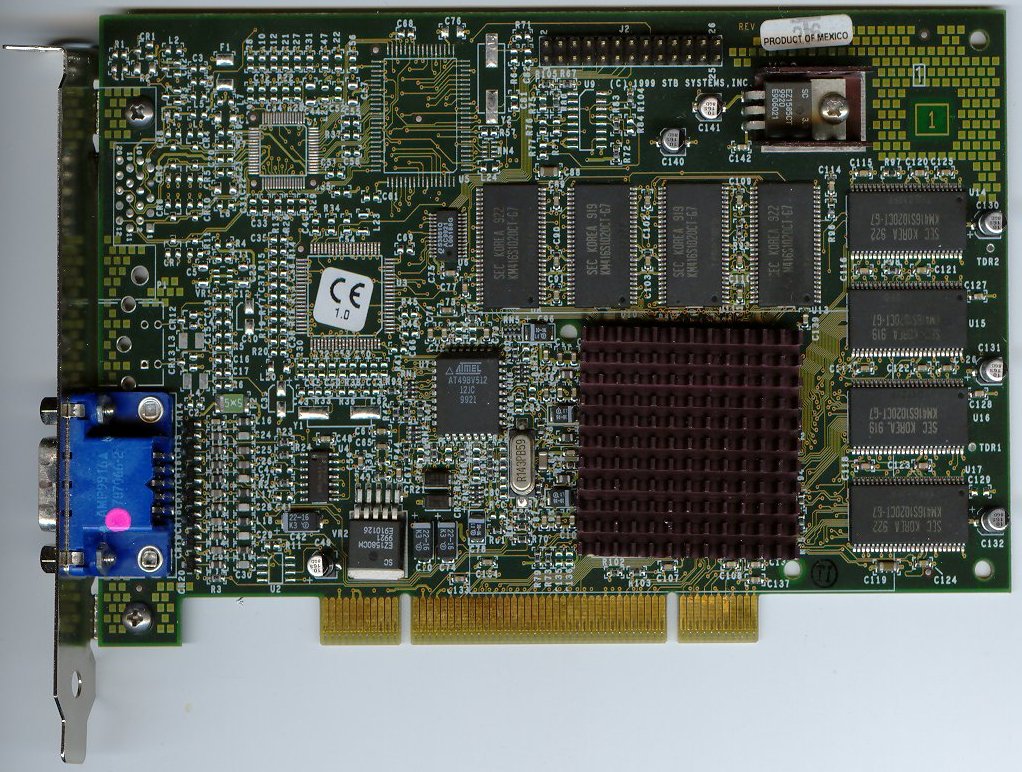
The Voodoo3 is a series of computer gaming video cards designed and manufactured by 3dfx Interactive, announced at COMDEX '98 and released in early 1999. It succeeded the Voodoo2 line and was based heavily on the older Voodoo Banshee. The Voodoo3 line was the first product manufactured by the combined STB Systems and 3dfx.
Quick Facts
- Codename
- Avenger
- Created
- March 1999
- Entry
- Velocity 100, Velocity 200
- Midrange
- Voodoo3 1000, Voodoo3 2000
- Highend
- Voodoo3 3000, OEM Voodoo3 3500
- Enthusiast
- Voodoo3 3500 TV
- Predecessor
- Voodoo2
- Successor
- Voodoo 5
- Support Status
- Unsupported
Facts from the source article.
Lore & Background
The 'Avenger' graphics core was conceived immediately after Banshee, but mismanagement by 3dfx caused delays to the next-generation 'Rampage' project. Avenger was pushed to the forefront as it offered quicker time to market; it was essentially the Banshee core with a second texture mapping unit added, making it a Voodoo2 with an integrated 128-bit 2D accelerator and twice the clock speed. The Voodoo3 operated with full 32-bit precision in its texture mappers and pixel pipeline, but rendered output was dithered to 16-bit to save framebuffer space. Its RAMDAC then applied a 2x2 box or 4x1 line filter to almost reconstruct the original 24-bit color, which 3dfx claimed as '22-bit' equivalent quality. The pixel pipeline was a conventional single-issue, dual-texture design similar to Voodoo2 but working on 32-bit data. The 128-bit GDI accelerator from Banshee made the Voodoo3 considered high-performance for its generation. Models 2000, 3000, and 3500 differed in clock frequencies and features such as TV output and tuner. The Velocity line, based on the same chipset, had 8 MB RAM and one TMU disabled, though enthusiasts could re-enable it via registry.
Reader's Guide
The Voodoo3 line was 3dfx's attempt to quickly bring a competitive product to market after the Voodoo2, but its architecture was essentially a stopgap. While it offered strong multi-textured fillrate—especially the 3000 and 3500 at 166 and 183 MHz—its single-textured fillrate was nearly half that of the rival Nvidia RIVA TNT2, disadvantaging it in games not using multiple texturing. The 16-bit dithered output controversy arose because screenshots did not reflect the filtered display quality, which 3dfx claimed was close to 24-bit. The Voodoo3 remained performance competitive throughout its life, often trading benchmark places with the TNT2, but was eventually outclassed by Nvidia's GeForce 256 and ATI's Radeon. It was often beaten by Voodoo2 SLI configurations. The ill-fated Voodoo 5 was created to counter newer competitors. After 3dfx shut down, third-party drivers extended support to Windows XP. The Velocity sub-line targeted OEM system builders, leveraging brand names acquired from STB Systems.
Did You Know?
- The Voodoo3's framebuffer stored dithered 16-bit data, but its RAMDAC filtered the output to approximate 24-bit quality, which 3dfx called '22-bit'.
- The Velocity boards had 8 MB RAM and one TMU disabled, but enthusiasts could re-enable the disabled TMU via a registry alteration.
- The Voodoo3 supported MPEG-2 video acceleration.
Origins and the Rush to Market
The Avenger graphics core that powered the Voodoo3 was conceived almost immediately after the Banshee product cycle, but 3dfx's internal mis-management set off a chain of setbacks. The company's true next-generation project, codenamed Rampage, suffered delays that ultimately proved fatal to the entire business. Faced with a hollowed-out product roadmap, 3dfx pulled Avenger forward as a stopgap, prioritizing a faster path to shelves over architectural ambition. The result was essentially a Banshee core with a second texture mapping unit restored—the very unit Banshee had shed relative to Voodoo2. In practical terms, Avenger amounted to a Voodoo2 paired with an integrated 128-bit 2D video accelerator and double the clock speed. The card was announced at COMDEX in 1998 and reached retail in early 1999, making the Voodoo3 line the first product to carry the combined identity of STB Systems and 3dfx following their merger.
The Color Precision Controversy
Much of the early criticism aimed at the Voodoo3 centered on what was widely described as a 16-bit color rendering limitation, yet the reality was far more nuanced. Inside the texture mappers and pixel pipeline, Avenger actually processed data at full 32-bit precision—eight bits per channel, yielding 16.7 million colors—surpassing the 16-bit precision that both earlier 3dfx chips and rival vendors had employed. To conserve framebuffer memory, the rendered output was dithered down to 16 bits before being stored, a technique that produced noticeably better visual fidelity than a true 16-bit mode. The controversy intensified when it emerged that the RAMDAC stage applied a 2x2 box or 4x1 line filter across the dithered image, effectively reconstructing something close to a 24-bit color signal for the display. 3dfx marketed this as "22-bit" equivalent quality. The practical consequence was that screenshots captured from the framebuffer never reflected what viewers actually saw on screen, making the card's true output closer to the 24-bit results of Nvidia's RIVA TNT2 and ATI's Rage 128.
Performance in the Multi-Texturing Era
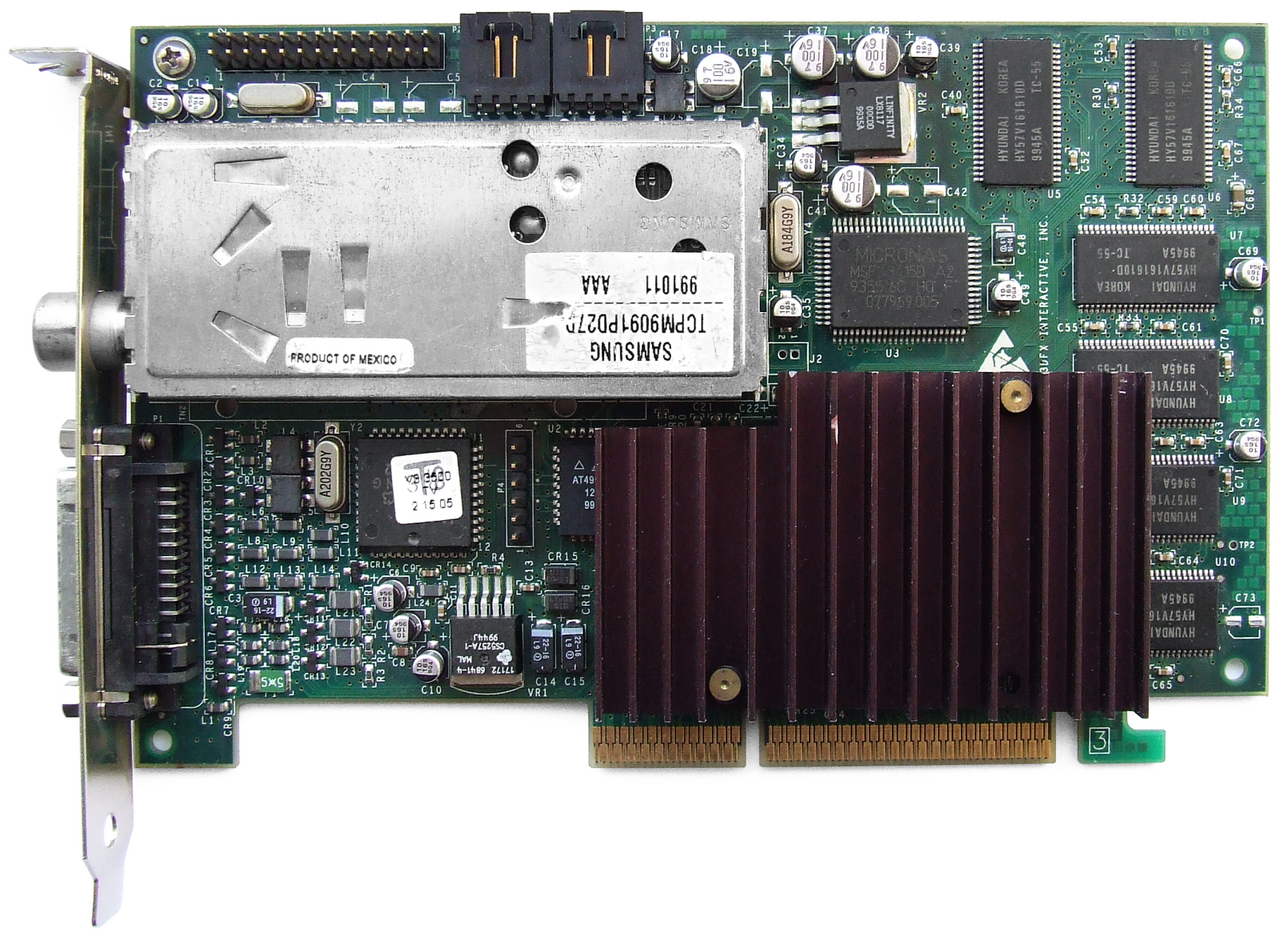
The Voodoo3 family came in three variants—2000, 3000, and 3500—distinguished primarily by their synchronous core and memory clock speeds of 143, 166, and 183 MHz respectively. This gave the 3000 and 3500 a meaningful theoretical edge in multi-textured fillrate over Nvidia's RIVA TNT2, which ran at 125 MHz. However, the architectural split mattered enormously: Avenger featured a single multi-texturing pipeline, while the TNT series employed twin single-texturing pipelines. As a result, the TNT2 delivered nearly twice the single-textured fillrate, leaving the Voodoo3 at a disadvantage in titles that did not leverage multiple textures. In the multi-texturing games that defined the era—Quake III Arena and Unreal Tournament—the Voodoo3 held its own, and benchmark results saw it trading positions with the TNT2 frequently. Ironically, in head-to-head comparisons the card was often outperformed by a pair of Voodoo2 cards running in SLI. The 3500 model added a TV tuner and a broad array of video inputs and outputs, while the line also supported MPEG-2 video acceleration.
The Velocity Line and Life After 3dfx
When 3dfx absorbed STB Systems, it inherited the Velocity brand, which had long been a staple in OEM systems built by companies like Gateway. 3dfx leveraged this recognition to ship a value-oriented line of cards built on the same Avenger chipset. These Velocity boards carried only 8 MB of RAM—half the 16 MB found on a standard Voodoo3—and had one of the two texture mapping units disabled, reducing them to something closer to a Banshee. Enthusiasts quickly discovered that a simple registry edit could re-enable the dormant TMU, and the boards ran at 143 MHz, identical to a Voodoo3 2000. After 3dfx ceased operations, the community stepped in: loyal customers developed third-party drivers for Windows 98, 98SE, 2000, ME, and XP, with XP drivers still downloadable through Microsoft. The final official driver releases were version 1.07.00 for Win9x and 1.03.00 for Win2000, while Mac OS 8 and 9 received dual-monitor support in build 1.1.3b. Ultimately, the Voodoo3 was rendered obsolete by Nvidia's GeForce 256 and ATI's Radeon, prompting 3dfx to attempt the ill-fated Voodoo 5 as a response.
Gallery
Frequently Asked Questions
What is the Voodoo3 and who made it?
The Voodoo3 is a line of dedicated gaming video cards that 3dfx Interactive designed and shipped in early 1999. It was officially unveiled at COMDEX '98 and positioned as the successor to the Voodoo2 family.
What GPU core does the Voodoo3 use?
The card is built around the Avenger core, which adds dual-texturing support and 16-bit dithered output to the pipeline. The architecture draws heavily from the earlier Voodoo Banshee design.
How much video memory and what clock speeds does a Voodoo3 have?
Standard Voodoo3 models carry 16 MB of VRAM, while the budget Velocity variant is equipped with 8 MB. Core clocks range from 143 MHz on the 2000 model up to 183 MHz on the 3500.
What happened to 3dfx after the Voodoo3?
The Voodoo3 line was the first product to ship under the merged STB Systems and 3dfx banner. The company's final official Windows 9x driver release was version 1.07.00, and 3dfx ultimately folded, making the Voodoo3 one of its last product lines.
Why does the Voodoo3 still matter to retro PC gamers?
It stands as the last major 3dfx-branded gaming card and the final product born from the STB-3dfx merger. For enthusiasts who remember the golden era of dedicated 3D acceleration, it closes the book on 3dfx's legendary run.
More in Graphics Hardware, Part 3 1-24
Spotted an error? Know more?
Reader corrections go straight into our review queue. Suggest an edit · How this site is sourced