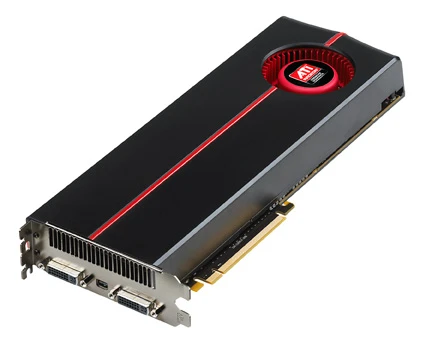
3dfx
Pioneer of 3D graphics accelerators and the Glide API.

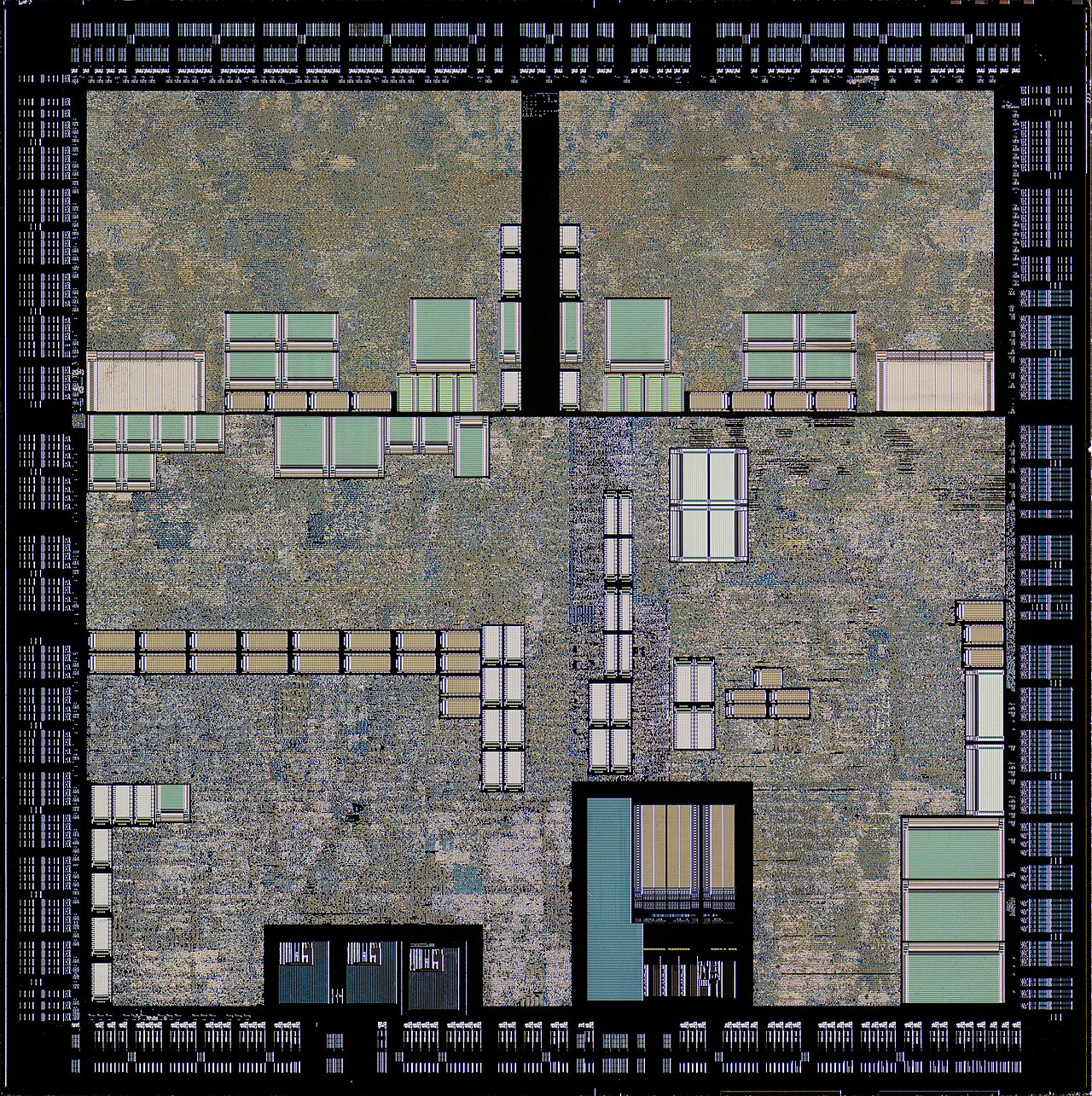
Fritzchens Fritz · CC0
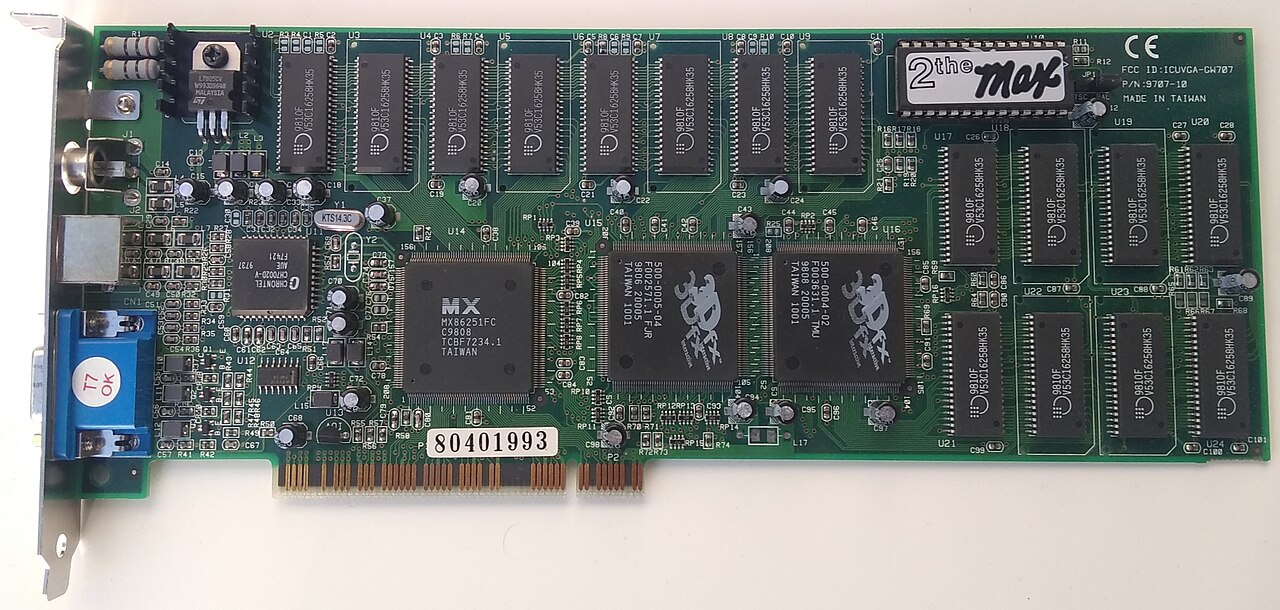
3dfx Interactive, Inc., an American company based in San Jose, California, was founded in 1994 and focused on making 3D graphics processing units and later video cards. It was a key innovator in the field from the mid-1990s until 2000. Its first product, the Voodoo Graphics, was an add-in card that only accelerated 3D rendering, leaving 2D tasks to the computer’s existing video card. Despite this drawback, the Voodoo Graphics and its successor, the Voodoo2, became very popular, and many 3D games adopted support for 3dfx’s proprietary Glide API.
A surge in interest for 3D gaming drove the company’s success, and by the late 1990s, cards combining 2D output with 3D performance began to emerge. The rise of Microsoft’s Direct3D, a single high-performance API that could run on these combined cards, greatly reduced the appeal of Glide. Although 3dfx continued to release high-performance products, their value no longer stood out. In the late 1990s, an infringement lawsuit, along with declining sales, led Nvidia to acquire about one hundred of 3dfx’s engineers. Most of the company’s assets, mainly intellectual property, were bought by Nvidia on December 15, 2000, with the deal finalized as a purchase by the first quarter of Nvidia’s fiscal year 2002. 3dfx stopped supporting its products on February 15, 2001, and filed for bankruptcy on October 15, 2002.
The company was founded on August 24, 1994, as 3D/fx, Inc. by Ross Smith, Gary Tarolli, and Scott Sellers, all former Silicon Graphics Inc. employees, who were soon joined by Gordie Campbell from TechFarm. Its first chip, the Voodoo Graphics 3D accelerator, went into production on November 6, 1995. It supported rendering techniques like point-sampled texture mapping, Z-buffering, double buffering, Gouraud shading, subpixel correction, alpha compositing, and anti-aliasing. Alongside the chip, 3dfx created the Glide API to fully use the Voodoo Graphics’ features, claiming no existing API could do so—DirectX 3.0 was lacking, and OpenGL was seen as only suitable for CAD/CAM workstations. The first graphics card using the chip was Orchid Technology’s Righteous 3D, released on October 7, 1996. 3dfx only made the chips and some reference boards, acting as an OEM supplier to card companies that designed, built, marketed, and sold their own Voodoo-based products.
3dfx first gained notice in arcades.
Quick Facts
- Founded
- 1994-08-24
- Founders
- Ross Smith, Scott Sellers, Gary Tarolli
- Defunct
- 2002-10-15
- Fate
- Bankrupt; acquired by Nvidia Corporation
- Hq Location
- San Jose, California, U.S.
- Industry
- Semiconductors
- Products
- Voodoo Graphics series
Facts from the source article.
Lore & Background
The company was founded on August 24, 1994, as 3D/fx, Inc. by Ross Smith, Gary Tarolli and Scott Sellers, all former employees of Silicon Graphics Inc., soon joined by Gordie Campbell of TechFarm. 3dfx released its first product, the Voodoo Graphics 3D chip, to manufacturing on November 6, 1995. The chip is a VGA 3D accelerator featuring point-sampled texture mapping, Z- and double buffering, Gouraud shading, subpixel correction, alpha compositing, and anti-aliasing. Alongside the chip came 3dfx's Glide API, designed to take full advantage of the Voodoo Graphics' features; the company stated that Glide's creation was because no existing APIs at the time could fully utilize the chip's capabilities. The first graphics card to use the chip was Orchid Technology's Righteous 3D, released on October 7, 1996. 3dfx initially acted as an OEM supplier for graphics card companies, which designed, manufactured, marketed, and sold their own graphics cards including the Voodoo chipset.
3dfx gained initial fame in the arcade market, with the first arcade machine using Voodoo Graphics hardware being a 1996 baseball game called ICE Home Run Derby. Later that year it was featured in Atari's San Francisco Rush and Wayne Gretzky's 3D Hockey. 3dfx also developed MiniGL after id Software's John Carmack released a 1997 version of Quake that used the OpenGL API; MiniGL translated OpenGL commands into Glide, giving 3dfx an advantage as the sole consumer chip company to deliver a functional graphics library driver until 1998. By the end of 1997, the Voodoo Graphics was by far the most widely adopted 3D accelerator among both consumers and software developers.
In 1997, 3dfx worked with Sega on a console design code-named 'Blackbelt', but Sega terminated the contract on July 22, 1997, choosing NEC's PowerVR chipset for what became the Dreamcast. 3dfx sued Sega for breach of contract, accusing Sega of starting the deal in bad faith; the case was settled out of court. In early 1998, 3dfx began the Rampage development project for a new graphics card. 3dfx acquired STB Systems for US$141 million on December 14, 1998, intending to start manufacturing and selling its own graphics cards, but the integration never materialized smoothly. In the late 1990s, an infringement lawsuit combined with lower sales led Nvidia to acquire 3dfx for their engineers, acquiring around one hundred. Most assets were acquired by Nvidia on December 15, 2000, mostly for intellectual property rights. 3dfx ceased supporting its products on February 15, 2001, and filed for bankruptcy on October 15, 2002.
Reader's Guide
3dfx's significance lies in its pioneering role in consumer 3D graphics acceleration from the mid 1990s to 2000. Its Voodoo Graphics and Voodoo2 products, despite accelerating only 3D rendering and relying on a separate 2D card, became popular and established the Glide API as a standard for 3D games. The company's initial success was driven by renewed interest in 3D gaming, but the value of Glide eroded with the introduction of Microsoft's Direct3D, which provided a single high-performance API that could be implemented on cards combining 2D and 3D performance. While 3dfx continued to offer high-performance options, the value proposition was no longer compelling. The company's acquisition of STB Systems failed to deliver intended benefits due to cultural and structural differences. An infringement lawsuit and lower sales led to Nvidia acquiring 3dfx for its engineers and intellectual property. The acquisition was accounted for as a purchase by Nvidia and completed by the first quarter of its fiscal year of 2002. 3dfx ceased product support on February 15, 2001, and filed for bankruptcy on October 15, 2002, marking the end of a key player in early 3D graphics.
Did You Know?
- 3dfx was founded on August 24, 1994, as 3D/fx, Inc. by former Silicon Graphics Inc. employees Ross Smith, Gary Tarolli, and Scott Sellers.
- The first arcade machine using 3dfx Voodoo Graphics hardware was a 1996 baseball game called ICE Home Run Derby.
- 3dfx developed MiniGL to translate OpenGL commands into Glide after id Software's John Carmack released a 1997 version of Quake using OpenGL.
Founding and the Birth of Hardware 3D
3dfx Interactive was born out of the Silicon Graphics talent pool. On August 24, 1994, Ross Smith, Gary Tarolli, and Scott Sellers—three former SGI employees—registered the company as 3D/fx, Inc. in San Jose, California. Gordie Campbell, coming from TechFarm, joined the team shortly after. Their mission was narrow and ambitious: build dedicated 3D graphics processing hardware for personal computers. The company's first tangible product, the Voodoo Graphics chip, entered manufacturing on November 6, 1995. It brought a suite of rendering techniques to the PC—point-sampled texture mapping, Gouraud shading, alpha compositing, anti-aliasing, and Z-buffering—that had previously been the domain of expensive workstations. Crucially, the team also created the Glide API from scratch, reasoning that neither DirectX 3.0 nor OpenGL could fully exploit the silicon's capabilities. Rather than selling finished cards, 3dfx operated as a chip and reference-board supplier, letting partners like Orchid Technology (whose Righteous 3D launched in October 1996) handle design, marketing, and retail.
Seizing the Consumer Market
DRAM prices fell sharply by the close of 1995, and 3dfx seized the opportunity to undercut the handful of existing 3D solutions with aggressive consumer pricing. The timing was perfect: titles like Doom and Quake had already been pushing gamers to upgrade from 386 to 486 to Pentium machines, and now affordable hardware acceleration was within reach. By the end of 1997, the Voodoo Graphics had become the most widely adopted 3D accelerator among both players and developers. The competitive landscape was not without rivals. PowerVR shipped a comparable 3D-only add-on card, though it trailed Voodoo in both image quality and raw performance. A broader set of combined 2D/3D cards—from Nvidia's NV1, Matrox Mystique, S3 ViRGE, Vérité V1000, to ATI 3D Rage—offered inferior 3D output but won OEM system builders with their lower cost and simplicity. 3dfx also made inroads into arcades, powering 1996 titles such as ICE Home Run Derby, San Francisco Rush, and Wayne Gretzky's 3D Hockey. When id Software's Quake shifted to OpenGL in 1997, 3dfx responded with MiniGL, a translator that converted OpenGL calls into Glide, preserving its position as the sole consumer chip vendor with a functioning graphics driver until 1998.
The Dreamcast Gamble That Never Was
In 1997, 3dfx found itself in a high-stakes bidding war with Sega over the graphics core of a next-generation home console. Sega had commissioned two competing designs: a Japan-built unit codenamed Katana, built around NEC and Imagination Technologies (then VideoLogic) silicon, and an American-designed system called Blackbelt, powered by 3dfx hardware. For a company that had built its identity on PC 3D acceleration, a console contract represented a transformative expansion into the living-room market. On July 22, 1997, Sega pulled the plug on the 3dfx partnership. The company chose NEC's PowerVR chipset instead, though it still intended to purchase the rights to 3dfx's technology to block competitors from accessing it. 3dfx publicly stated that Sega offered no explanation for the decision. Industry analyst Dale Ford of Dataquest suggested that NEC's proven track record supplying the Nintendo 64, combined with its demonstrated capacity to scale production on short notice, tipped the balance. In a market defined by relentless price wars, Sega apparently prioritized manufacturing reliability over raw 3D performance.
The Erosion and the End
The very success that made 3dfx a household name in 3D gaming ultimately set the stage for its decline. Microsoft's Direct3D arrived as a unified, high-performance API that could run on combined 2D/3D cards, dramatically reducing the unique value of 3dfx's Glide software layer. By the latter half of the 1990s, integrated cards from competitors offered acceptable 3D performance alongside 2D output, and 3dfx's standalone-3D value proposition lost its edge. Compounding the competitive pressure, an infringement lawsuit in the late 1990s drained resources, and sales continued to slide. Nvidia, recognizing the talent and intellectual property still embedded in the company, moved to acquire 3dfx. The deal, finalized around December 15, 2000, brought roughly one hundred engineers into Nvidia's ranks and transferred most of 3dfx's IP portfolio. Nvidia booked the transaction as a purchase, completing it by the first quarter of its fiscal year 2002. 3dfx stopped supporting its products on February 15, 2001, and formally filed for bankruptcy on October 15, 2002, closing the chapter on the company that had defined a generation of PC 3D gaming.
Gallery
Frequently Asked Questions
Who was 3dfx?
3dfx Interactive was a San Jose, California-based company founded in August 1994 by Ross Smith, Gary Tarolli, and Scott Sellers. They specialized in designing dedicated 3D graphics chips and eventually full video cards, becoming one of the most influential names in PC gaming hardware through the late 1990s.
What was the Voodoo Graphics and why did it matter?
Released in November 1995, the Voodoo Graphics was a standalone add-in card that handled only 3D rendering, meaning users still needed their regular video card for 2D desktop tasks. Despite that limitation, it and the later Voodoo2 became massively popular and set the standard for dedicated 3D acceleration.
What is the Glide API?
Glide was 3dfx's proprietary graphics calling interface that let games tap directly into Voodoo hardware for faster 3D rendering. A large number of mid-1990s titles built native Glide support, making it one of the most widely adopted game graphics interfaces of its era.
Why is 3dfx considered important in graphics history?
3dfx is widely credited as the company that proved dedicated 3D accelerators could transform PC gaming, turning 3D from a novelty into an expected feature. Their hardware and the Glide API pushed the entire industry toward the integrated 3D-capable GPUs that became standard a few years later.
More in Graphics Hardware, Part 3 1-24
Spotted an error? Know more?
Reader corrections go straight into our review queue. Suggest an edit · How this site is sourced