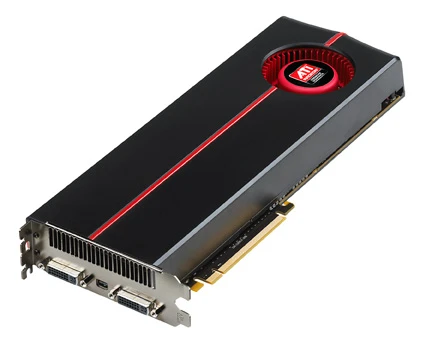
Video display controller
Integrated circuit generating video signals for 1980s computers and consoles.

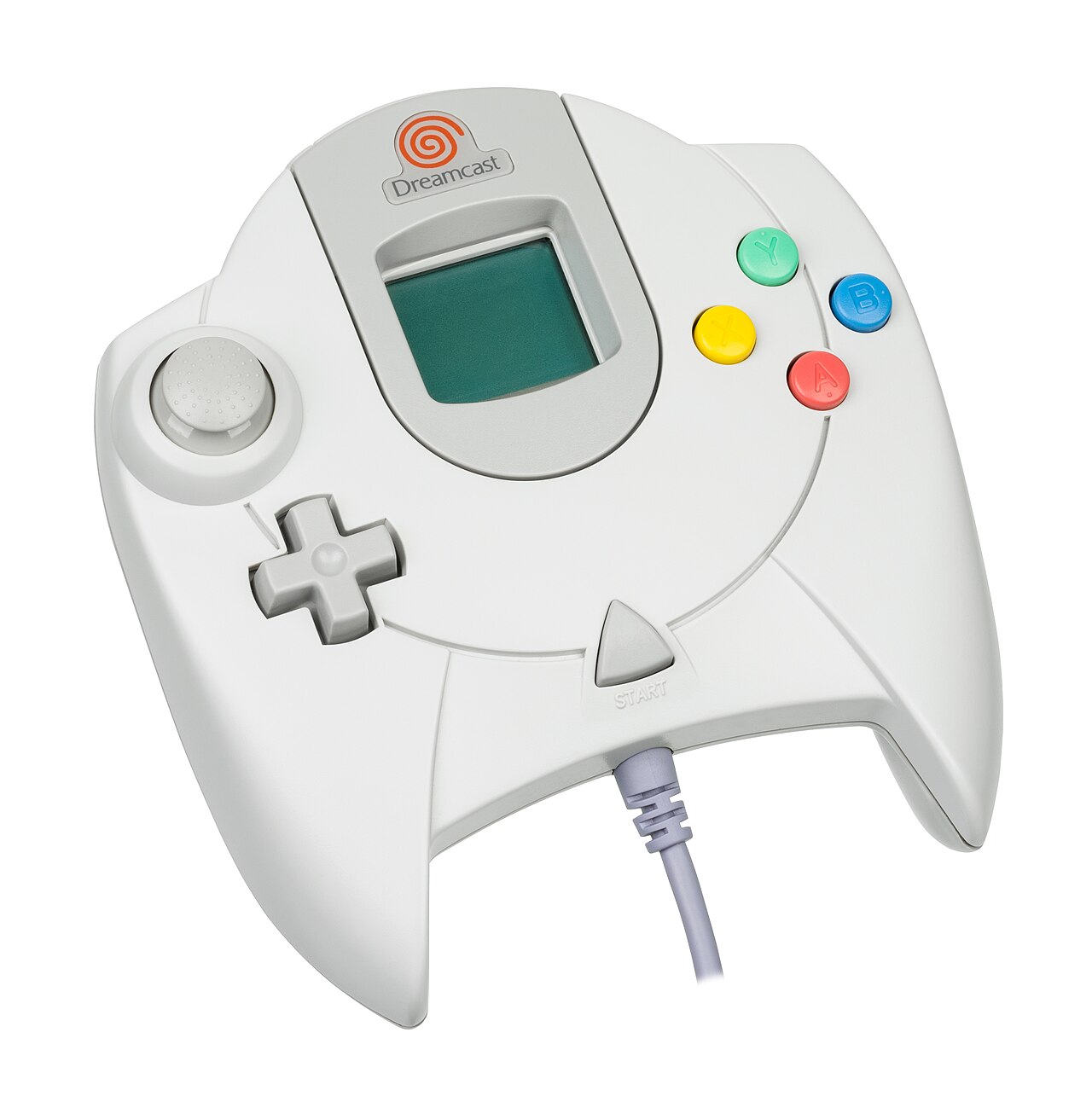
Evan-Amos · Public domain
A video display controller (VDC)—also known as a display engine or display interface—is an integrated circuit that forms the core of a video-signal generator, the part of a computing or game system that creates the video signal. While some VDCs can also produce an audio signal, that is not their primary purpose. These chips were common in home computers from the 1980s, as well as in game consoles and arcade machines.
The VDC handles the timing of video signals, including horizontal and vertical synchronization signals and the blanking interval. To build a complete system, additional supporting chips were sometimes needed, such as RAM for pixel data, ROM for character fonts, or discrete logic like shift registers. Typically, the VDC works as an extension of a host computer, fully integrated so that the memory holding graphics data appears in the same memory map as the main CPU. This setup lets the CPU write new data to memory, which the VDC then reads and displays. In some designs, the VDC acts as a coprocessor that can manipulate RAM contents independently. Because early dynamic RAM was slow, some VDCs used a separate pool of DRAM that the VDC could read without interrupting or being interrupted by the CPU. Later systems avoided these performance issues by using dual-ported video RAM, which allowed the CPU to read or write memory from one port while the VDC read it from the other.
**VDC vs.
The line between a display controller, a graphics accelerator, a blitter, and a graphics processing unit (GPU) is often fuzzy, since some chips called one thing include features of another. For instance, the TMS9918 is sometimes called a VDC and sometimes a video display processor, depending on the source. In general, a canonical VDC lacks internal capability to perform graphics operations on its own—like drawing lines or filling areas—and relies on the host CPU to do those calculations and place the results in memory for the VDC to read. Blitters add some of these features, requiring extra registers and math hardware on the chip to run those routines. Some chips labeled VDCs in the 1980s did include such features, making them technically closer to blitters; the terminology often came down to manufacturer preference.
VDCs and blitters were popular from the 1980s into the 1990s.
- Types
- Video shifters, CRT controllers, video interface controllers, video coprocessors
- Example chips
- RCA CDP1861, TIA, Intel 8275, Motorola 6845, Signetics 2636/2637, MC6847, MOS 6560/6561, MOS 6567/8562/8564, MOS 8563/8568, MOS 7360, Philips SCC66470
- Era of use
- 1980s into the 1990s
- Common hosts
- Home computers, game consoles, arcade games
Lore & Background
The VDC is the main component of the video signal generator logic, responsible for generating timing signals such as horizontal and vertical synchronization and the blanking interval. Supporting chips like RAM for pixel data, ROM for character fonts, or discrete logic such as shift registers were sometimes necessary. Most often the VDC is used as an extension to a host computer system, with graphics memory appearing in the same memory map as the main CPU, allowing the CPU to write data that the VDC reads and displays. In some cases, the VDC functions as a coprocessor that can manipulate RAM contents independently. Due to low performance of early dynamic RAM, some VDCs used a separate DRAM pool that it could read without interrupting the CPU; later systems used dual-ported video RAM to avoid performance issues.
The difference between a display controller, graphics accelerator, blitter, and GPU is often blurred. A canonical VDC would not include internal capability to perform graphics operations like drawing lines or filling areas, relying on the host CPU. Blitters add some of these features. Some chips called VDCs in the 1980s include some of these features, making them technically closer to blitters. VDCs and blitters were popular during the 1980s and into the 1990s, often having special hardware for sprites. Early examples include Atari's ANTIC and the Texas Instruments TMS9918. Later designs generalized sprites by implementing Bit Blitter functions, including the VDP2 of the Sega Saturn and the Lisa (AGA) chip used in later Amiga computers.
Reader's Guide
Video display controllers were foundational to the graphics capabilities of 1980s home computers and game consoles, providing the timing and data conversion needed to generate a video signal. Their significance lies in their role as the primary graphics component before the rise of more powerful GPUs. The article notes that VDCs can be divided into several types: video shifters, which are the simplest and rely on the CPU to feed data byte by byte; CRT controllers (CRTCs), which generate timings and read RAM but depend on external logic for capabilities; video interface controllers, which embed more circuitry and often support sprites and palette registers; and video coprocessors, which have their own internal CPU to manage video RAM and can execute commands from the main CPU. The legacy of VDCs is seen in how later systems evolved into GPUs, which include more powerful math hardware and the ability to run custom programs locally. The Motorola 6845 CRTC, for example, was used in many early PC video adapters (MDA, CGA, EGA) and its logic is still reproduced in all later VGA-compatible adapters, meaning all current IBM PC compatible PCs still incorporate its logic. This shows how VDC designs influenced modern graphics architecture.
Did You Know?
- Some VDCs also generate an audio signal, but that is not their main function.
- The TMS9918 may be referred to as either a video display controller or a video display processor, depending on the source.
- The Motorola 6845 CRTC was used for the Amstrad CPC, BBC Micro, and almost all early PC video adapters such as MDA, CGA, and EGA.
- The MOS Technology 7360 (TED) used in the Plus/4 and Commodore 16 had integrated audio capability.
Origins & Hardware Design
VGA debuted in 1987 as a built-in component of IBM's PS/2 line rather than as a separate expansion card. This distinction was deliberate: the name "array" rather than "adapter" signaled that it was a single integrated component rather than a standalone device. The engineering behind this integration was significant—IBM consolidated the color palette RAM and its digital-to-analog converter into a single RAMDAC chip, while folding the cathode-ray tube controller into one main VGA chip. This consolidation eliminated several discrete chips that had cluttered earlier graphics adapters. The result was a remarkably small part count: beyond the integrated chips, VGA only needed external video RAM and timing crystals. This compact design is what made motherboard integration possible. The PS/2 shipped with 256 KiB of video RAM and a new DE-15 connector, replacing the older DE-9 used by MDA, CGA, and EGA cards. IBM later offered a standalone PS/2 Display Adapter for machines lacking the built-in component, but the initial commercial implementation was exclusively the integrated version.
The Industry's Common Ground
Within just three years of its 1987 introduction, VGA had become ubiquitous across the IBM PC compatible industry. It holds a unique historical position as the last graphics standard that the vast majority of compatible manufacturers chose to conform to, establishing it as the lowest common denominator for virtually all post-1990 PC graphics hardware. By the mid-1990s, this status was cemented in operating systems: Windows 95 and OS/2 Warp 3.0 expected a 640×480, 16-color mode using VGA's specific memory and register specifications, offering no support for lower resolutions or alternative register layouts without additional drivers. Even well into the 2000s, after the VESA standard became commonplace, the VGA graphics mode persisted as a compatibility option in PC operating systems. Third parties extended the base specification into the collective Super VGA family, and modern custom graphics processing units, despite their proprietary interfaces, continue to implement common VGA modes and interfaces to this day.
Graphics Modes & Flexibility
VGA's mode set built upon everything its predecessors offered—MDA, CGA, and EGA compatibility—while adding several new options. The headline modes included 320×200 in 4 or 16 colors, 640×480 in 16 colors or monochrome, and the celebrated 320×200 256-color Mode 13h. The 640×480 16-color and 320×200 256-color modes featured fully redefinable palettes, with each entry selectable from an 18-bit gamut of 262,144 colors. Beyond these standard modes, the hardware permitted a wide range of nonstandard resolutions. Horizontal widths could stretch from 256 to 800 pixels, while vertical line counts ranged from 200 up to 600 lines at reduced refresh rates. This flexibility enabled square-pixel modes like 768×576, "fat pixel" configurations such as 400×600, and "narrow" modes like 256×224 that simply masked down wider modes—useful for arcade game conversions and console emulators. Games like Scorched Earth exploited these nonstandard resolutions, defaulting to 360×480 with many other options available.
A Name That Outlived the Hardware
The term "VGA" has evolved far beyond its original meaning as a specific IBM graphics controller. Today it can refer to the display standard itself, the 15-pin D-subminiature connector found on countless cables and ports, or simply the 640×480 resolution that became synonymous with the technology. The analog interface that VGA established was extended over the decades to support resolutions up to 2048×1536 for general use, with specialized applications pushing even further. A small but telling detail of the hardware lives on in the connector: pin 9, which powers an EEPROM chip in the monitor to communicate its capabilities to the graphics card, was omitted on some machines and cables, marking an older revision of the standard. Despite the rise of proprietary GPU architectures and digital display interfaces, VGA's legacy endures as a baseline compatibility layer. It remains the reference point against which new graphics technologies are measured, a ghost in the machine that no modern system can entirely discard.
Gallery
Frequently Asked Questions
What is a Video Display Controller?
A Video Display Controller (VDC) is a dedicated integrated circuit that generates the video signal for a computing or gaming system. It sits at the heart of the display pipeline, shaping the raw data into a properly timed signal that a monitor can render.
What exactly does a VDC do?
The VDC manages horizontal and vertical synchronization, blanking intervals, and the overall structure of the outgoing video signal. Some variants can also emit an audio signal, but producing a correct video output remains their primary job.
Which well-known chips count as VDCs?
Classic examples include the Motorola 6845, MOS 6567/8564, Signetics 2636/2637, and RCA CDP1861, among others. These chips powered home computers, arcade cabinets, and game consoles from the 1980s well into the 1990s.
Where would you typically find a VDC in a system?
They were standard components in 1980s home computers, dedicated game consoles, and arcade machines. The chip was paired with additional supporting circuitry to form a complete video-signal generation subsystem.
Why is the VDC important in graphics hardware history?
Before integrated GPUs took over, the VDC was the single chip responsible for turning a computer's internal data into something a CRT could actually display. It represents a foundational layer of video hardware that made personal computing and home gaming visually possible.
More in Graphics Hardware, Part 3 1-24
Spotted an error? Know more?
Reader corrections go straight into our review queue. Suggest an edit · How this site is sourced