Aesthedes
A six-screen CAD system for designers, no computer knowledge needed.

WHiZZi · CC BY-SA 4.0
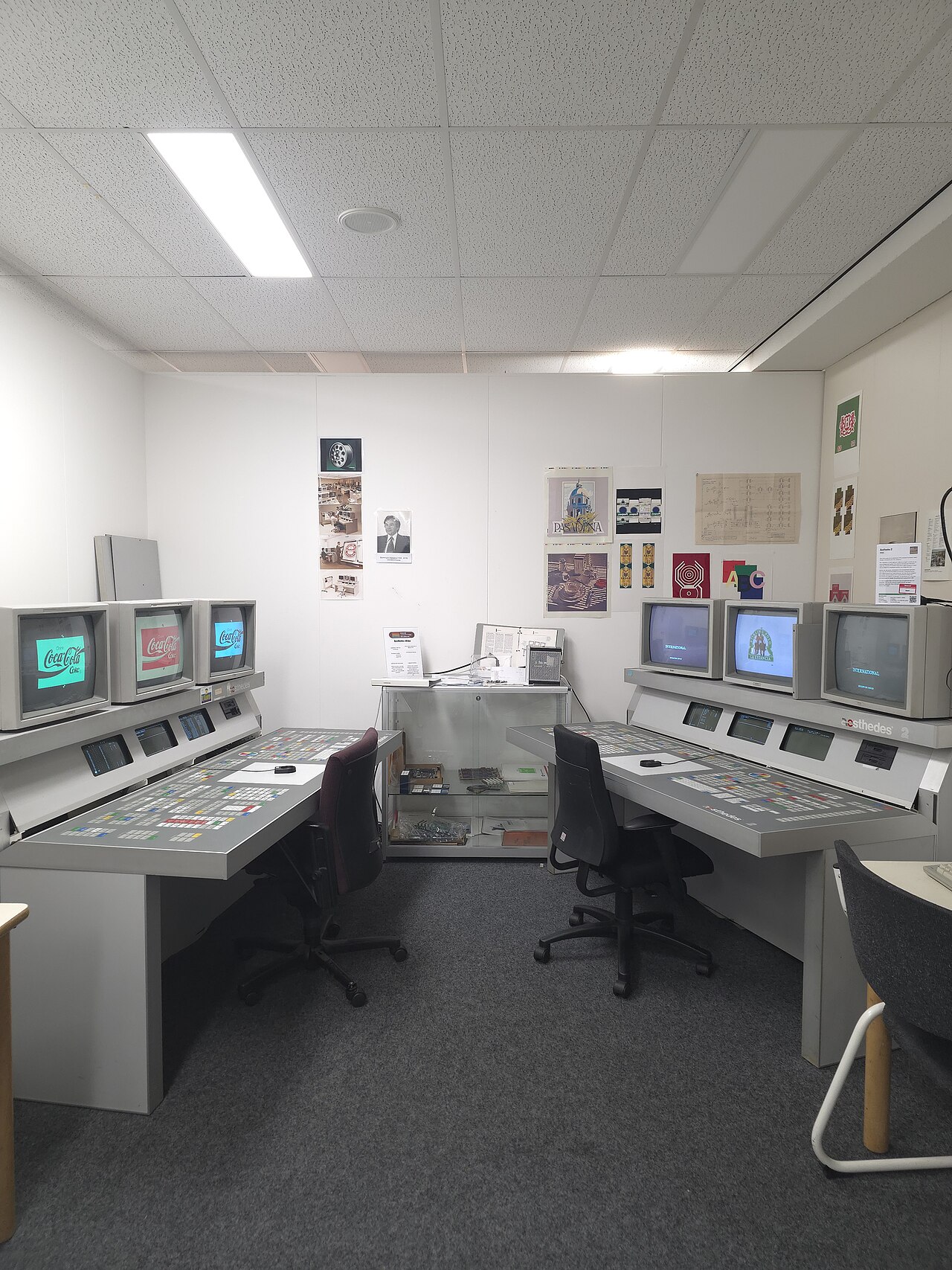
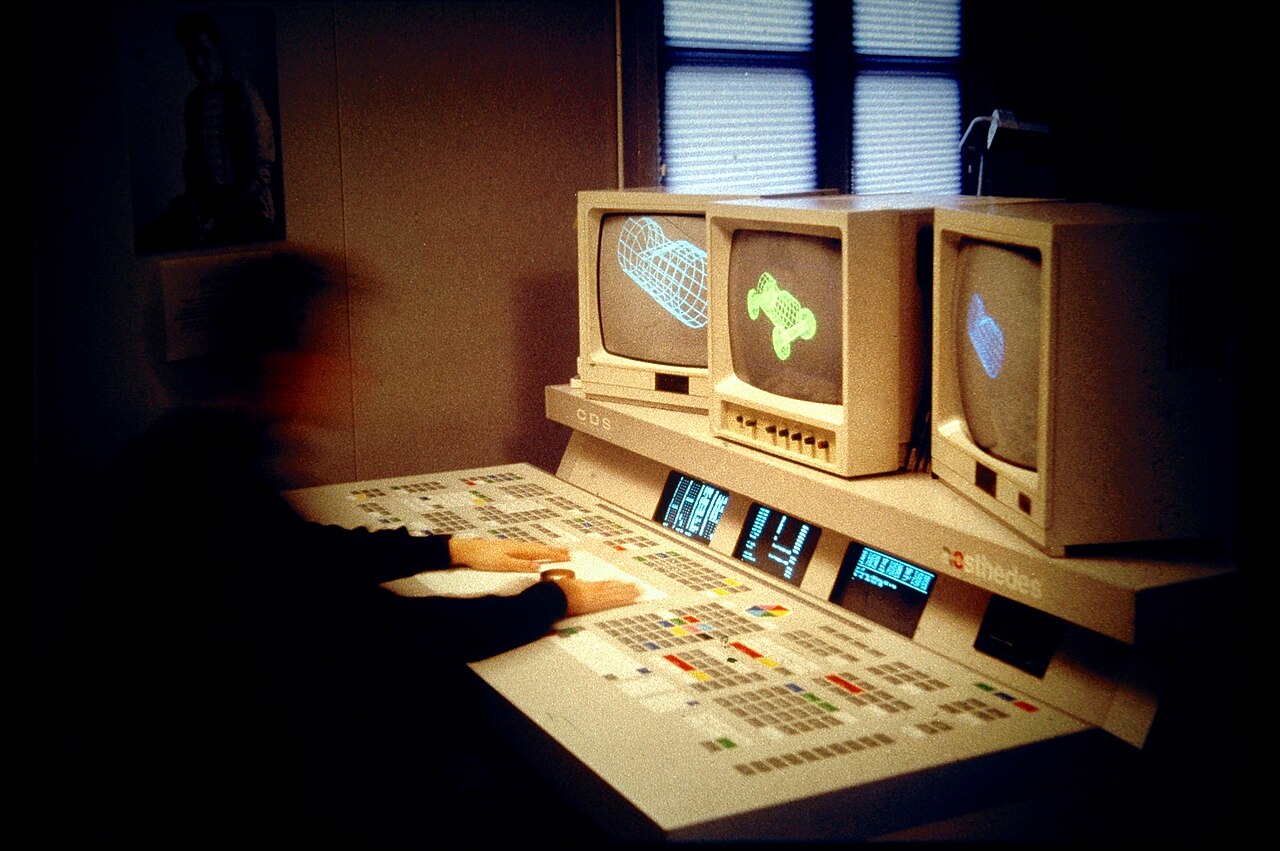
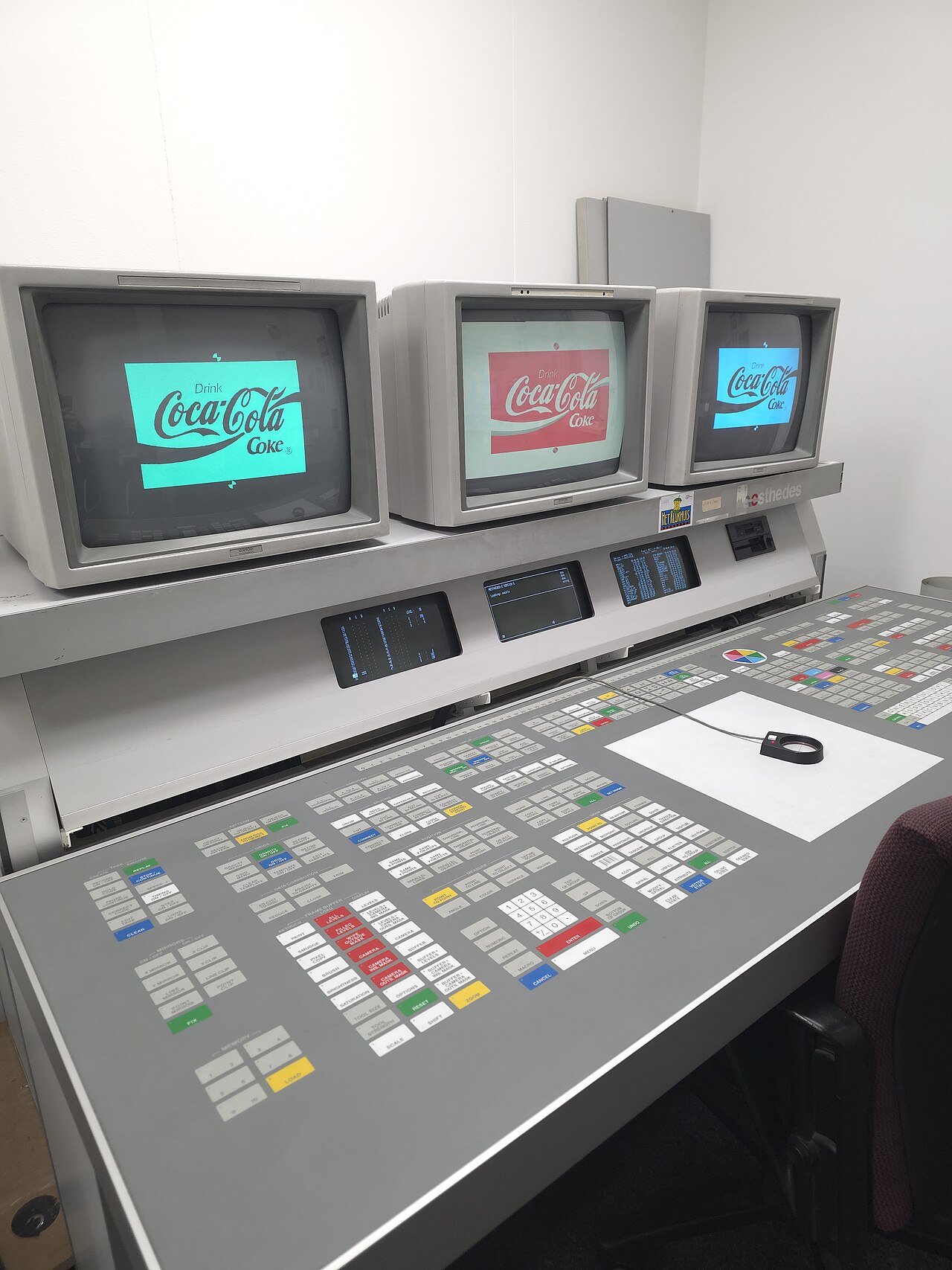
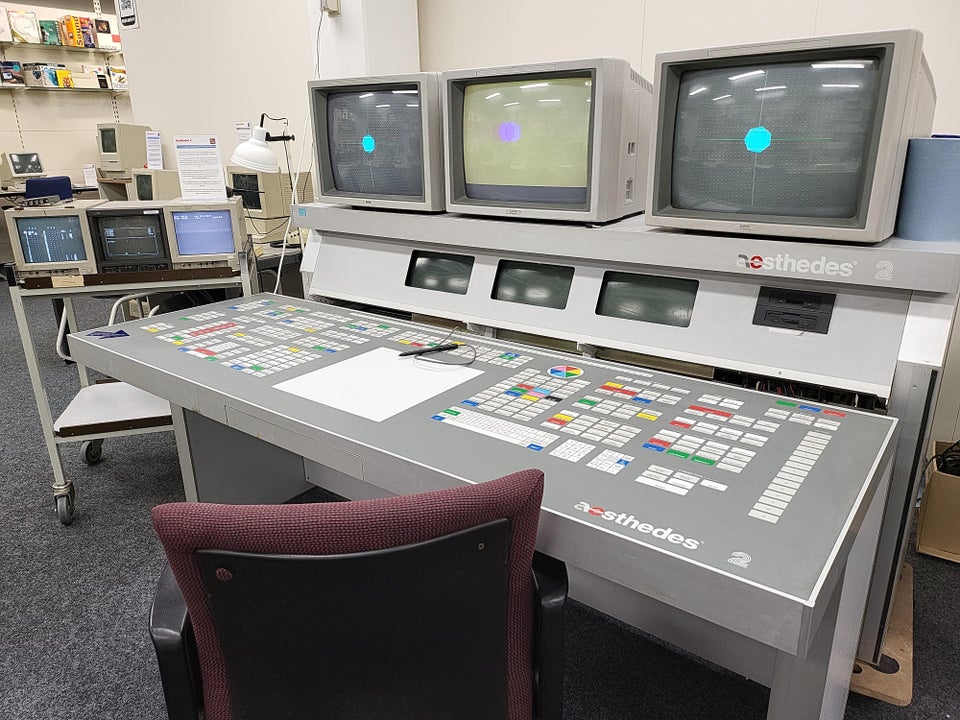
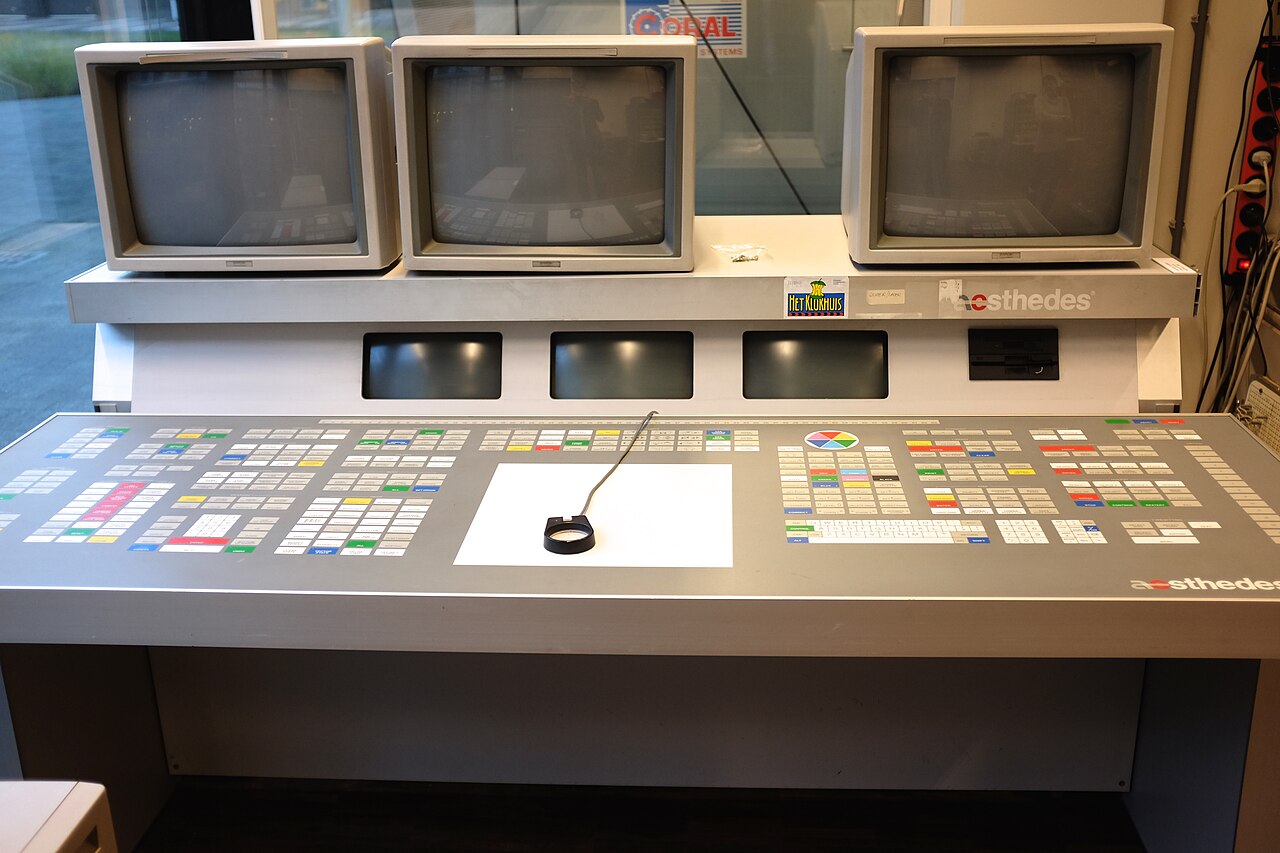
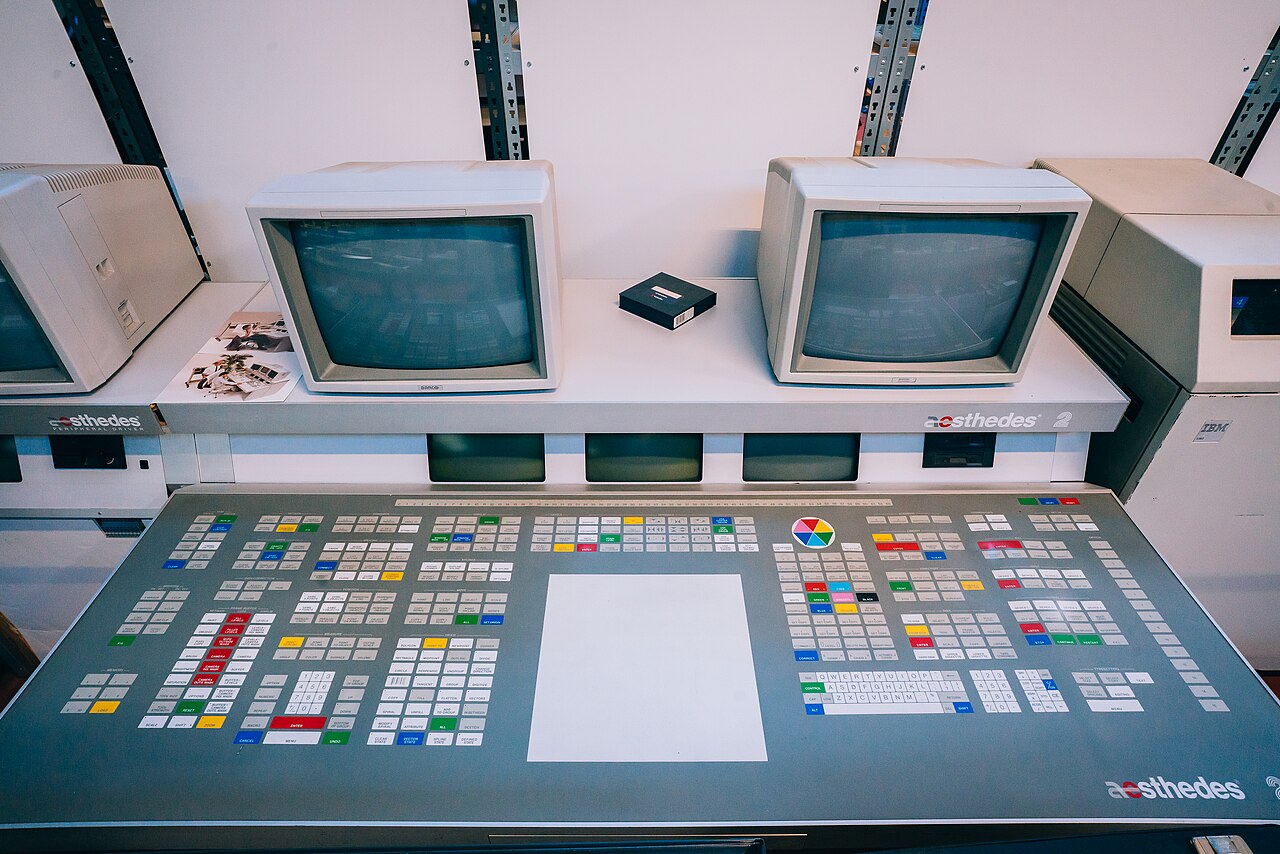
The Aesthedes was a computer graphics and CAD system built during the 1970s and 1980s by Claessens Product Consultants, a firm based in Hilversum, Netherlands, now known as Cartils. D.P.G. Claessens (1922–2019) brought it to market in 1984. He had studied monumental art at the State Academy of Art in Amsterdam before moving into Industrial Design, and in 1960 he founded Claessens Product Consultants, whose clients included Heineken, Amstel, Bijenkorf, Philips, Douwe Egberts, Friese Vlag, and Bols. By the mid-1960s, he was experimenting with electronic tools to aid his design work. A growing internal need for equipment that did not yet exist drove the Aesthedes’ creation. Claessens believed a designer should be able to work immediately, without any computer knowledge. To let the creative brain operate without interruption from the cognitive brain, a keyboard was designed to mirror a designer’s physical desk layout—everything within reach, no overlapping windows. This led to a setup with six screens: three data displays (below) showing project data, RGB values of the current layer, and the last ten commands executed; and three color monitors (above). The left “Zoom screen” allowed up to 100x magnification, the center “Creation screen” showed all layers stacked together, and the right screen displayed the active working layer along with any animations. The three color monitors each showed 16 million colors at 512 x 512 resolution. Users could work across 64 layers on a canvas of 64,000 x 64,000 units, with the unit scale definable per project—small for a postage stamp or large enough that a map of the Netherlands could be measured in kilometers at real-life scale. The system launched commercially in 1985 from offices in Hilversum, London, Cologne, and Los Angeles. The first version ran ten Motorola 68000 microprocessors, with three 20-inch full-color high-resolution screens and three smaller data displays. It was unique for its era in manipulating B-splines in real time and producing camera-ready, ultra-high-resolution artwork for offset printing and photogravure. One of the earliest Dutch customers was the state printer SDU, which used the Aesthedes to design hard-to-forge elements of the 25-guilder note (the “robin” by Jaap Drupsteen). Heineken and Amstel beer bottle labels were also designed with it.
Quick Facts
- Developer
- Claessens Product Consultants
- Release Date
- 1984
- Cpu
- 10x Motorola 68000 (Model 1), / 2x Motorola 68020 (Model 2)
- Graphics
- 4x Thomson EF9365
- Display
- 3x 12" data displays, 3x 20" Barco RGB colour monitors
- Os
- Microware OS-9
Facts from the source article.
Lore & Background
The Aesthedes was conceived by D.P.G. Claessens, who studied monumental art at the State Academy of Art in Amsterdam and then Industrial Design. He started a product development company in 1960, Claessens Product Consultants, serving clients such as Heineken, Amstel, Bijenkorf, Philips, Douwe Egberts, Friese Vlag, and Bols. In the mid-1960s, he began experimenting with electronic equipment to support design work, and a growing need within his company for such equipment led to the Aesthedes. Claessens' vision was that a designer should be able to start immediately, without knowledge of computers. To meet the need of designers to use their creative brain without switching to the cognitive part, a keyboard was developed that matched the layout of a creative designer's desk. Everything had to be within reach, with no overlapping windows, which is why the Aesthedes has six screens: three data screens below showing project data, RGB values of the layer, and the last 10 commands executed; and three screens above: a Zoom screen (zoom up to 100x), a Creation screen showing the total image of all layers, and a right screen for the current working layer and animations. The three color monitors show 16 million colors at 512x512 resolution. There are 64 layers available on a canvas of 64000 x 64000 units, which could be defined to a project's needs—small for a postage stamp or huge for large format prints. A legendary example was defining a unit so that a map of the Netherlands was at real-life scale, allowing distances to be measured in kilometers on screen.
Reader's Guide
The Aesthedes was notable for being able to manipulate B-splines in real time and produce camera-ready finished artwork for offset printing and photogravure. One of the earliest customers in the Netherlands was the state printer, SDU, which used the machine to design hard-to-forge works, including parts of the Dutch 25-guilder note Jaap Drupsteen (the 'robin'). It was also used extensively in the design of Heineken and Amstel beer bottle labels. Its launch customer in the UK was Marks & Spencer, which used it to design signage and food packaging. Other early customers included the supermarket Asda and design agencies Michael Peters & Partners and Holmes & Marchant. The Apple Macintosh revolutionized the graphic design world and rendered the Aesthedes effectively obsolete. The company was sold by Claessens to Barco.
Did You Know?
- The Aesthedes had six screens: three data screens and three color monitors.
- It used ten Motorola 68000 microprocessors in its first version.
- The system could zoom a drawing up to 100x on one of its screens.
- A legendary example of its scale system defined a unit so a map of the Netherlands was at real-life scale.
Origins & the Designer-First Vision
D.P.G. Claessens (1922–2019) first studied monumental art at the State Academy of Art in Amsterdam before pivoting to Industrial Design. In 1960 he established Claessens Product Consultants in Hilversum, Netherlands, and quickly assembled a roster of prestigious clients that included Heineken, Philips, Bijenkorf, Douwe Egberts, Friese Vlag, and Bols. By the mid-1960s he had begun experimenting with electronic equipment to support his studio's design work. What began as a personal curiosity evolved into a pressing internal need: the tools his team required simply did not yet exist anywhere on the commercial market. That gap became the seed of the Aesthedes. Claessens' guiding philosophy was radical for its era. He insisted that a designer should be able to sit down and create immediately, with absolutely no prior knowledge of computers. The machine had to serve the creative mind, never forcing the user to shift into a different cognitive mode. Every design decision—from the keyboard layout to the spatial arrangement of displays—flowed directly from that single conviction.
Hardware & the Six-Screen Workstation
The Aesthedes workstation was built around a principle of total physical accessibility. Claessens designed a keyboard that mirrored the layout of a traditional creative designer's desk, ensuring every control sat within arm's reach and no windows overlapped. The system featured six screens: three large 20-inch Barco RGB colour monitors displaying 16 million colours at 512×512 resolution, and three smaller 12-inch data displays showing project information, RGB layer values, and the ten most recent commands. The top row comprised a Zoom screen (magnification up to 100×), a Creation screen overlaying all layers, and a working-layer screen that also handled animations. Sixty-four layers were available on a canvas of 64,000×64,000 units, with scale definable per project. The Aesthedes 1 ran on ten Motorola 68000 microprocessors with 1.9 MB of RAM, while the Aesthedes 2 upgraded to two Motorola 68020 chips and four Thomson EF9365 graphic processors. Both versions could manipulate B-splines in real time and output camera-ready artwork for offset and photogravure printing.
Commercial Launch & a Who's-Who of Early Clients
The Aesthedes hit the market in 1984, with full commercial operations launching in 1985 from offices in Hilversum, London, Cologne, and Los Angeles. Its early clientele read like a who's-who of Dutch and British industry. In the Netherlands, the state printer SDU became one of the first customers, deploying the system to design security features for hard-to-forge currency, including elements of the 25-guilder note featuring the robin Jaap Drupsteen. Heineken and Amstel turned to Aesthedes for beer bottle label design. Across the Channel, Marks & Spencer was the launch customer in the UK, using it for signage and food packaging. The supermarket chain Asda and prominent design agencies such as Michael Peters & Partners and Holmes & Marchant also adopted the system. The breadth of these early adopters—spanning government printing, consumer branding, retail, and independent design—demonstrated that the machine's designer-first philosophy resonated well beyond Claessens' own Hilversum studio.
Legacy & the Macintosh Disruption
The Aesthedes occupied a fascinating niche: a high-end, purpose-built CAD system that prioritized creative workflow over raw computational power. Its flexible scale system allowed a designer to work on a postage stamp or a full-scale map of the Netherlands, measuring actual distances in kilometres on screen. Yet for all its ingenuity, the system's fate was sealed by a different kind of revolution. The Apple Macintosh, with its approachable interface and rapidly expanding software ecosystem, democratized graphic design in ways the Aesthedes' specialized hardware could not match. The Macintosh rendered the Aesthedes effectively obsolete almost overnight. Claessens sold the company to Barco, the Belgian display technology firm whose monitors had been integral to the Aesthedes' visual output. The machine endures today as a curiosity—preserved at the HomeComputerMuseum and documented in online galleries—a reminder of an era when a single visionary in Hilversum believed a computer should bend to the designer, not the other way around.
Gallery
Frequently Asked Questions
What was the Aesthedes?
The Aesthedes was a six-monitor CAD workstation developed in the Netherlands during the 1970s and 1980s. It was built so that product designers could work with graphics without needing any programming or computing background.
Who was behind the Aesthedes?
D.P.G. Claessens, an industrial designer who had originally trained in monumental art in Amsterdam, developed the system through his firm Claessens Product Consultants in Hilversum. The company was launched in 1960 and the Aesthedes itself hit the market in 1984.
What were the Aesthedes's display specifications?
The system featured a 512-by-512 pixel frame buffer capable of 24-bit colour, which was quite advanced for its era. It drove six separate screens to give designers a wide, multi-panel workspace.
Who used the Aesthedes in practice?
It was aimed squarely at product and industrial designers rather than programmers or engineers. Claessens's client roster included well-known Dutch brands such as Philips, Heineken, and Bijenkorf, suggesting the system saw use in real commercial design studios.
How did the Aesthedes come to be?
Claessens had been tinkering with electronic aids for his design workflow as early as the mid-1960s, well before the system was formally released. The Aesthedes represented roughly two decades of that experimentation, culminating in a turnkey CAD package when it launched in 1984.
More in Graphics Hardware, Part 3 1-24
Spotted an error? Know more?
Reader corrections go straight into our review queue. Suggest an edit · How this site is sourced