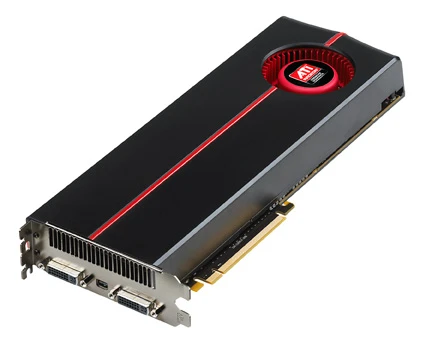
ATI Technologies
Canadian fabless GPU developer acquired by AMD in 2006.

ATI Technologies Inc. was a Canadian semiconductor company headquartered in Markham, Ontario, focused on making graphics processing units and chipsets. Founded in 1985, it went public in 1993 and was bought by AMD in 2006. As a major fabless semiconductor firm, ATI handled its own research and development but contracted out manufacturing and assembly. After 3dfx collapsed and went bankrupt in 2000, ATI and its main competitor Nvidia became the two leading forces in the graphics processor market, pushing other manufacturers into smaller roles.
AMD’s 2006 purchase of ATI was key to developing its Fusion line of processors, which combined general computing and graphics functions on a single chip. This design became widely used in computers, especially budget models, in the years that followed. After the acquisition, AMD kept ATI Technologies as a subsidiary, but in 2010 it dropped the ATI brand name, rebranding its flagship Radeon graphics processors under AMD’s own name.
**History**
ATI was founded in 1985 by Lee Ka Lau, Francis Lau, Benny Lau, and Kwok Yuen Ho, originally called Array Technology Incorporated, then Array Technologies Incorporated, and finally ATI Technologies. The company started by making integrated graphics cards for PC manufacturers like IBM and Commodore in the OEM market. By 1987, ATI had become an independent graphics-card retailer, launching the EGA Wonder and VGA Wonder product lines that year. In the early 1990s, it released products that could process graphics without relying on the CPU: the Mach8 in May 1991, and the Mach32 in 1992, which offered better memory bandwidth and graphical user interface acceleration. ATI went public in 1993, listing shares on NASDAQ and the Toronto Stock Exchange.
In 1994, the Mach64 accelerator debuted, powering the Graphics Xpression and Graphics Pro Turbo cards. It provided hardware support for YUV-to-RGB color space conversion and hardware zoom, early forms of hardware-based video acceleration. ATI released its first combined 2D and 3D accelerator, the 3D Rage, based on the Mach64 but with basic 3D capabilities. The ATI Rage line powered most of ATI’s graphics products. The Rage Pro, in particular, was one of the first viable 2D-plus-3D alternatives to 3dfx’s 3D-only Voodoo chipset.
Quick Facts
- Former Name
- Array Technology Inc. (Aug.–Sept. 1985) / Array Technologies Inc. (Sept.–Dec. 1985)
- Traded As
- ATY · ATYT
- Founders
- K.Y. Ho · Benny Lau · Lee Ka Lau · Francis Lau
- Defunct
- 2006-10-25
- Fate
- Acquired by AMD, brand phased out in 2010
- Area Served
- Worldwide
- Key People
- K.Y. Ho (CEO) · Lee Ka Lau (president)
- Isin
- CA0019151052 / CA0019411036
- Industry
- Semiconductor
- Revenue
- 2.2 billion
- Revenue Year
- 2005
- Net Income
- 16.9 million
Facts from the source article.
Lore & Background
ATI was founded in 1985 as Array Technology Incorporated, later renamed Array Technologies Incorporated and finally ATI Technologies. Working primarily in the OEM field, ATI produced integrated graphics cards for PC manufacturers such as IBM and Commodore. By 1987, ATI had grown into an independent graphics-card retailer, introducing EGA Wonder and VGA Wonder card product lines. In the early nineties, they released products able to process graphics without the CPU: in May 1991, the Mach8, in 1992 the Mach32, which offered improved memory bandwidth and GUI acceleration. ATI Technologies went public in 1993, with shares listed on NASDAQ and on the Toronto Stock Exchange.
In 1994, the Mach64 accelerator debuted, powering the Graphics Xpression and Graphics Pro Turbo, offering hardware support for YUV-to-RGB colour space conversion and hardware zoom. ATI introduced its first combination of 2D and 3D accelerator under the name 3D Rage. The ATI Rage line powered almost the entire range of ATI graphics products. The All-in-Wonder product line, introduced in 1996, was the first combination of integrated graphics chip with TV tuner card and the first chip that enabled display of computer graphics on a TV set. ATI entered the mobile computing sector by introducing 3D-graphics acceleration to laptops in 1996. In 1997, ATI acquired Tseng Labs's graphics assets, which included 40 engineers.
The Radeon line of graphics products was unveiled in 2000. The initial Radeon GPU offered an all-new design with DirectX 7.0 3D acceleration, video acceleration, and 2D acceleration. In 2000, ATI acquired ArtX, which engineered the Flipper graphics chip used in the GameCube video game console. Microsoft contracted ATI to design the graphics core (codenamed Xenos) for the Xbox 360. On July 24, 2006, a joint announcement revealed that AMD would acquire ATI in a deal valued at $5.6 billion. After the acquisition, AMD retained ATI Technologies as a subsidiary, but in 2010 AMD ceased using the ATI brand name, renaming its flagship Radeon graphics processor products with its branding instead.
Reader's Guide
ATI's significance lies in its rise to become one of the two dominant players in the graphics processors industry after the decline of 3dfx in 2000, alongside Nvidia. The company's acquisition by AMD in 2006 was important to AMD's strategic development of its Fusion series of computer processors, which integrated general processing abilities with graphics processing functions within a single chip, a popular option on computers in following years, especially lower cost models. ATI's product lines, including the Rage series, Radeon series, and All-in-Wonder cards, established key technologies such as hardware video acceleration, TV-out, and mobile graphics. The Radeon line became the direct competitor to Nvidia's GeForce. ATI also contributed to console graphics, designing chips for the GameCube, Wii, and Xbox 360. The retirement of the ATI brand in 2010 marked the end of its independent identity, but its technology continued under AMD's Radeon branding.
More in Graphics Hardware, Part 3 1-24
Spotted an error? Know more?
Reader corrections go straight into our review queue. Suggest an edit · How this site is sourced