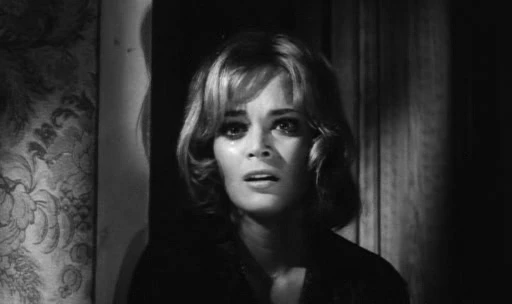
The Bird with the Crystal Plumage
A giallo that popularized the genre and launched Argento's career.

The Bird with the Crystal Plumage (Italian: *L'uccello dalle piume di cristallo*) is a 1970 giallo film that marked Dario Argento’s first time as both writer and director. The story follows Tony Musante’s character, an American writer in Rome who stumbles upon a serial killer preying on young women and races to identify the murderer before he himself is targeted. The cast includes Suzy Kendall, Enrico Maria Salerno, Eva Renzi, Umberto Raho, and Mario Adorf.
This film is an Italian–West German co-production and kicks off what is often called Argento’s “Animal Trilogy,” which continues with *The Cat o’ Nine Tails* (1971) and *Four Flies on Grey Velvet* (1972). Argento’s script draws heavily from Fredric Brown’s 1949 novel *The Screaming Mimi*, which had already been turned into a 1958 American film. Upon release, the movie was a hit both commercially and critically, helping to popularize the giallo genre—a style of Italian horror-thriller that emerged in the 1960s—and launching Argento’s filmmaking career.
**Plot** Sam Dalmas, an American writer struggling with writer’s block, is vacationing in Rome with his English girlfriend, Julia, a model. They plan to return to the United States in two days. One evening, walking home, Sam sees a man in a black raincoat and leather gloves attacking a woman inside an art gallery. When he tries to intervene, he gets stuck between the gallery’s automatic sliding glass doors, and the attacker escapes. The woman, Monica Ranieri—wife of gallery owner Alberto Ranieri—survives. The police, believing the assailant is a serial killer who has already murdered three young women in the city, confiscate Sam’s passport to keep him from leaving.
Haunted by the event, Sam is convinced he missed a crucial detail and decides to help Inspector Morosini with the case. He visits an antique shop where the first victim worked and learns that the last item she sold was a disturbing painting of a man in a raincoat stabbing a woman in a snowy landscape. The killer later calls Sam at his apartment, threatening to kill Julia unless he stops investigating; Sam records the call. He then tracks down the painting’s artist in a nearby town, pretending to want to buy a piece. The artist reveals the painting was inspired by an actual attack on a young woman a decade earlier.
- Release year
- 1970
- Director
- Dario Argento
- Country
- Italy and West Germany
- Genre
- Giallo
- Lead actor
- Tony Musante
- Composer
- Ennio Morricone
- Based on
- Fredric Brown's 1949 novel The Screaming Mimi
Lore & Background
The film's plot follows Sam Dalmas, an American writer vacationing in Rome with his girlfriend Julia. He witnesses an attack in an art gallery and becomes trapped between sliding glass doors, allowing the assailant to escape. The victim, Monica Ranieri, survives, and the police confiscate Sam's passport as he is a key witness to a serial killer who has murdered three young women. Sam becomes obsessed with a clue he cannot identify and works with Inspector Morosini to solve the case. The killer threatens Sam's girlfriend, leading to a recorded phone call that reveals a rare bird call, which leads Sam to the zoo and eventually to the Ranieri apartment, where Alberto Ranieri falls to his death after confessing to the murders. Sam later discovers that Monica is the true killer, having been traumatized by a painting of an attack ten years earlier, and she is apprehended by police.
Reader's Guide
The Bird with the Crystal Plumage is credited with popularizing the giallo genre, an Italian horror-thriller style developed in the 1960s. It was an international commercial and critical success on release and launched Dario Argento's career as a filmmaker. The film's screenplay borrows liberally from Fredric Brown's 1949 novel The Screaming Mimi, which had been adapted into a 1958 American film. Argento made several changes, including moving the setting from Chicago to Rome and making the killer the wife of an art dealer. The killer's outfit of a black raincoat, hat, and gloves, introduced in Mario Bava's Blood and Black Lace (1964), became a standard giallo trope. The film's score by Ennio Morricone was his first for a giallo and his first of five collaborations with Argento. The film was shot primarily in English and MOS, with all dialogue and foley dubbed, to accommodate the international cast and facilitate English-language distribution.
Did You Know?
- The film is the first in Dario Argento's thematic 'Animal Trilogy,' followed by The Cat o' Nine Tails (1971) and Four Flies on Grey Velvet (1972).
- Argento was introduced to Fredric Brown's novel The Screaming Mimi by director Bernardo Bertolucci, who had acquired the film rights.
Literary Roots & Genre Lineage
The screenplay for this 1970 Italian-West German co-production draws heavily from Fredric Brown's 1949 pulp novel The Screaming Mimi, which had already been adapted into a 1958 Hollywood feature directed by Gerd Oswald. Dario Argento first encountered Brown's story through his friend Bernardo Bertolucci, who had acquired the film rights and was planning to direct his own adaptation. Argento spent several weeks on vacation in Tunisia writing his screenplay, reshaping Brown's Chicago setting into Rome, swapping the exotic-dancer killer for the wife of an art dealer, and replacing the triggering statuette with a painting. The narrative also echoes Mario Bava's 1963 giallo The Girl Who Knew Too Much, which similarly features a witness who later discovers the supposed victim was actually the murderer. The iconic black raincoat, hat, and gloves worn by the killer trace back to Bava's 1964 film Blood and Black Lace, though Argento cemented the look as a defining visual shorthand for the entire giallo subgenre.
From Screenwriter to Director
Argento had no original plans to helm the project. Titanus executive Goffredo Lombardo optioned the script after being impressed by Argento's screenwriting on Metti, una sera a cena (1969), but when established directors such as Duccio Tessari and Terence Young passed on the assignment, Argento stepped in to direct himself. His father Salvatore took on the producing role, and Argento worked alongside assistant Aldo Lado to heavily revise the script during the actual shoot. The film became a co-production between Italy and West Germany, starring Tony Musante as the American writer Sam Dalmas, with Suzy Kendall, Enrico Maria Salerno, Eva Renzi, Umberto Raho, and Mario Adorf rounding out the ensemble. What began as a writing assignment thus became Argento's directorial debut, a transformation that would set the trajectory for his entire career as a filmmaker.
The Double-Twist Narrative
The plot centers on Sam Dalmas, an American writer vacationing in Rome with his English model girlfriend Julia, who witnesses what he believes is a serial killer attacking a woman in an art gallery. Police confiscate his passport, and he becomes embroiled in Inspector Morosini's investigation into three prior murders of young women. A key clue emerges from a recorded threatening phone call: a strange cricketing sound that Sam's ornithologist friend Carlo identifies as the call of a rare South Caucasus bird whose only Italian specimen lives in a Roman zoo. The Ranieri apartment overlooks the bird's cage, leading the group to the gallery owner's home, where Alberto Ranieri falls to his death and confesses to the killings. Yet the true twist arrives when Sam discovers Julia bound and Carlo dead, realizing that Monica Ranieri—the woman he thought was the victim in the gallery—was actually the attacker all along. A psychiatrist's television interview later reveals that Monica suffered a traumatic attack ten years prior, and seeing a painting of that event drove her to identify with the assailant rather than the victim, while Alberto's induced psychosis led him to cover up and commit further murders.
Genre Legacy & The Animal Trilogy
On release, The Bird with the Crystal Plumage achieved both international commercial and critical success, and it is widely credited with popularizing the giallo genre—an Italian horror-thriller tradition that had been developing since the 1960s—on a global scale. The film also launched Dario Argento's career as a filmmaker, establishing his reputation in European cinema. It serves as the first installment in what has been called Argento's thematic 'Animal Trilogy,' a grouping that includes his subsequent gialli The Cat o' Nine Tails (1971) and Four Flies on Grey Velvet (1972). The black raincoat, hat, and gloves worn by the killer in this film became a standard visual shorthand for the entire giallo subgenre, a trope that originated in Mario Bava's 1964 Blood and Black Lace but was cemented in popular consciousness by Argento's debut. For audiences encountering Italian thriller cinema for the first time, this 1970 film remains the most iconic and accessible gateway into the genre, and its success demonstrated that a first-time director working from an adapted pulp novel could redefine an entire cinematic tradition.
Frequently Asked Questions
Who directed and wrote The Bird with the Crystal Plumage?
Dario Argento handled both the writing and directing duties, making this his feature-film debut. The 1970 picture was a joint Italian–West German production.
What is the plot of The Bird with the Crystal Plumage?
An American writer staying in Rome stumbles onto a serial killer preying on young women and finds himself racing to unmask the murderer before becoming the next target. Tony Musante leads a cast that includes Suzy Kendall, Enrico Maria Salerno, Eva Renzi, and Mario Adorf.
Who composed the score for The Bird with the Crystal Plumage?
Ennio Morricone wrote the musical score for the film.
Why is The Bird with the Crystal Plumage considered important to giallo cinema?
The film is widely credited with bringing the giallo genre to a broader international audience and effectively launching Dario Argento's career as a director. It also serves as the first entry in what fans commonly call Argento's "Animal Trilogy."
What countries produced The Bird with the Crystal Plumage?
It was a co-production between Italy and West Germany, released in 1970.
More in Giallo films 1-24
Spotted an error? Know more?
Reader corrections go straight into our review queue. Suggest an edit · How this site is sourced