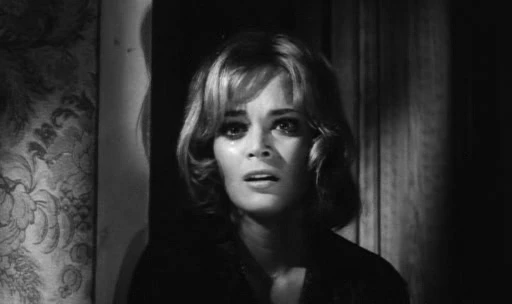
Black Belly of the Tarantula
A giallo film about a killer who paralyzes victims like a wasp.

Black Belly of the Tarantula (Italian: La tarantola dal ventre nero) is a 1971 giallo film directed by Paolo Cavara and starring Giancarlo Giannini, Barbara Bouchet and Barbara Bach. The film follows Inspector Tellini as he investigates a series of murders in which the killer injects victims with a paralyzing chemical, mirroring the behavior of a wasp that paralyzes a tarantula. It is one of many Italian giallo films inspired by Dario Argento's The Bird with the Crystal Plumage (1970).
- Title
- Black Belly of the Tarantula
- Original title
- La tarantola dal ventre nero
- Year
- 1971
- Director
- Paolo Cavara
- Genre
- giallo
- Country
- Italy
- Music by
- Ennio Morricone
Lore & Background
The film's plot begins when Maria is murdered during a massage after her husband Paolo accuses her of infidelity. The killer, dressed in black and wearing surgical gloves, injects her with a chemical that leaves her paralyzed but conscious. Inspector Tellini is assigned to the case and struggles with his suitability for homicide work. The killer strikes again, murdering a clothing store owner, and Tellini traces the needles to a local doctor. A scientist acquaintance of the second victim demonstrates how a wasp uses a toxin to paralyze and eviscerate a tarantula to lay its eggs, a parallel to the killer's method. Tellini later arrests the scientist on drug possession charges. The film was primarily shot at Cinecittà Studios, not on location.
Reader's Guide
Black Belly of the Tarantula is a notable entry in the giallo genre, which flourished in Italy in the late 1960s and 1970s. The film was shot on location in Rome in 1971 and features a music score by Ennio Morricone. Though fairly obscure for many years, it has recently gained a rising fan base within the horror community. One writer at Horrorview.com cited it as the best giallo ever made. The film was released on DVD by Blue Underground Entertainment in 2006, and a 3-disc 4K UHD and Blu-ray Limited Edition, featuring a new 4K transfer from the original camera negative, is scheduled for release by Celluloid Dreams in May 2026. Its legacy is tied to the influence of Dario Argento's The Bird with the Crystal Plumage (1970), which inspired many Italian giallo films.
Did You Know?
- The film's music score was composed by Ennio Morricone.
- The killer uses a chemical that paralyzes victims but leaves them conscious, similar to a wasp's method of paralyzing a tarantula.
- No 4K UHD or Blu-ray Limited Edition release has been officially announced by Celluloid Dreams as of 2025.
Narrative Architecture and the Tarantula Metaphor
Inspector Tellini pursues a serial killer who paralyzes victims with a chemical injection, leaving them conscious while the murder is completed. The killer wears black and surgical gloves, and the victims—Maria, a clothing store owner, Franca, Jenny, and Laura—are linked through a blackmail ring in which Laura and her lover Mario photograph lovers' indiscretions for leverage. Tellini's own life unravels in parallel: a sex tape of him and his artist wife Anna surfaces at Mario's apartment, and he nearly dies in a staged car accident. The film's central biological metaphor arrives through a scientist who demonstrates how a wasp injects a tarantula with a paralytic toxin, then lays its eggs inside the living corpse. The killer is ultimately unmasked as the spa's blind masseur, who had been faking his sightlessness since murdering his unfaithful wife five years earlier. Tellini saves Anna in a final struggle, then wanders Rome's crowded streets, still disillusioned with police work.
Production, Cast, and the Morricone Score
Paolo Cavara directed the film, which was shot on location throughout Rome in 1971. The cast features Giancarlo Giannini as the brooding Inspector Tellini, with Barbara Bouchet and Barbara Bach in supporting roles. The Italian title, La tarantola dal ventre nero, carries the wasp-and-tarantula imagery that anchors the plot's central metaphor. Perhaps most significantly, Ennio Morricone composed the musical score, lending the thriller a distinctive atmospheric quality that deepens its tension and dread. Morricone's involvement places the film within a constellation of Italian genre productions that benefited from his legendary ear for mood and rhythm. The decision to film in actual Roman settings—apartments, spa interiors, crowded streets—grants the narrative a grounded, lived-in texture rather than a sterile studio feel. Together, the on-location shooting, the strong cast, and Morricone's score position the film as a carefully crafted entry in the early-1970s Italian thriller wave, even though it would sit in relative obscurity for decades.
Giallo Lineage and Critical Reassessment
The film belongs to a wave of Italian giallo thrillers that sprang up after Dario Argento's breakout debut, The Bird with the Crystal Plumage, arrived in 1970. Cavara absorbed the genre's signature ingredients—stylized violence, an enigmatic killer, sexual undercurrents, and a solitary detective—while layering in his own distinctive biological metaphor and a more psychologically motivated antagonist. For years the movie remained fairly obscure, overlooked by both mainstream audiences and many genre scholars. That changed as the global fan base for the giallo genre swelled, sparking a significant critical reassessment. The horror community has embraced the film with particular enthusiasm, and one writer at Horrorview.com went so far as to name it the best giallo ever made. This renaissance reflects a broader appetite for the genre's more experimental, psychologically layered entries, reframing Cavara's work not as a simple imitation of Argento but as a distinctive and enduring voice within the tradition.
Preservation and the Home Media Journey
The film's availability to wider audiences has unfolded slowly. In 2006, Blue Underground Entertainment issued a DVD release, making the title accessible to English-speaking collectors and giallo enthusiasts in a home format for the first time. That release helped seed the growing appreciation that would eventually drive the film's critical comeback. Looking ahead, Celluloid Dreams has announced a three-disc Limited Edition set combining 4K UHD and Blu-ray, scheduled for May 2026. The edition will feature a new 4K transfer made directly from the original camera negative, representing a major step in preserving the film's visual fidelity for future generations. The multi-disc format suggests a comprehensive approach, likely including supplementary materials alongside the restored picture and Morricone's score. This trajectory—from obscurity to a modest DVD to a premium 4K restoration—mirrors the film's broader critical journey and underscores how essential archival work is to keeping lesser-known Italian genre cinema alive and visible for new audiences.
Frequently Asked Questions
What is Black Belly of the Tarantula?
It is a 1971 Italian giallo directed by Paolo Cavara in which a police inspector pursues a serial killer who immobilizes victims with a paralytic chemical before finishing them off.
Who stars in Black Belly of the Tarantula?
Giancarlo Giannini leads the cast as Inspector Tellini, joined by Barbara Bouchet and Barbara Bach in supporting roles.
What is the killer's signature method in Black Belly of the Tarantula?
The murderer injects each victim with a paralyzing agent, directly echoing the way a wasp stings a tarantula to render it completely motionless.
Why is Black Belly of the Tarantula often discussed alongside other 1970s gialli?
It emerged from the wave of Italian murder-mysteries that followed Dario Argento's The Bird with the Crystal Plumage, borrowing similar atmospheric and structural elements.
What is the original Italian title of Black Belly of the Tarantula?
The film was released in Italy as La tarantola dal ventre nero, which translates literally to 'The Tarantula with the Black Belly.'
More in Giallo films 1-24
Spotted an error? Know more?
Reader corrections go straight into our review queue. Suggest an edit · How this site is sourced