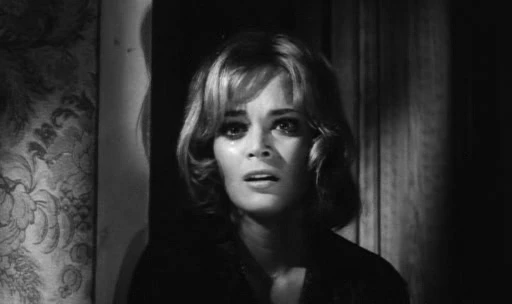
Blood and Black Lace
A masked killer hunts models for a scandalous diary.

Blood and Black Lace (Italian: *6 donne per l’assassino*, meaning “Six Women for the Murderer”) is a 1964 giallo film directed by Mario Bava, with Eva Bartok and Cameron Mitchell in the lead roles. Its plot follows a masked killer who murders models at a Roman fashion house in a frantic effort to retrieve a diary that could expose scandals.
The project came together shortly after Bava ended a long partnership with Galatea Film, the studio behind most of his earlier work as both cinematographer and director. Its budget was smaller than several of Bava’s previous horror films. The production was an international co‑production involving Italy, France, and West Germany, with Emmepi Cinematografica, Les Productions Georges de Beauregard, and Monachia Film. Screenplay credits vary across sources and ministerial documents, but most attribute the writing to Marcello Fondato, Giuseppe Barillà, and Bava; co‑star Mary Arden is credited with adapting the dialogue into English. Much of the technical crew and several cast members had worked on Bava’s earlier films. Principal photography began in Rome in late 1963 with a multilingual, international cast—some actors delivered their lines fluently, while others performed them phonetically.
Film historians and critics, including Tim Lucas and Roberto Curti, see *Blood and Black Lace* as a turning point in Bava’s style and in the thriller genre. Bava had already used thriller conventions in *The Girl Who Knew Too Much* and in “The Telephone,” a segment of *Black Sabbath*. Here, he blended elements of contemporary West German murder‑mystery films (krimis) with the lurid mix of eroticism and violence found in popular fiction of the era, notably the long‑running Giallo Mondadori pulp novels. Although the film did not immediately spark a trend, it has since been described as one of the first gialli, because its exaggerated color photography and its shift away from traditional mystery plotting toward graphic murder set pieces became hallmarks of the genre.
The film premiered in Rome on March 14, 1964, and was a commercial failure. Contemporary and later reviews praised Bava’s direction and visual style, though some criticized the plot as weak and lacking character development.
- Release year
- 1964
- Country
- Italy (co-production with France and West Germany)
- Director
- Mario Bava
- Genre
- Giallo
- Screenplay
- Marcello Fondato, Giuseppe Barillà, and Mario Bava (most sources); Mary Arden adapted dialogue into English
- Budget
- Lower than several of Bava's prior horror films
- Premiere
- Rome, March 14, 1964
Lore & Background
Blood and Black Lace began development shortly after Mario Bava ended his long-time association with Galatea Film. It was an Italian, French, and West German international co-production between Emmepi Cinematografica, Les Productions Georges de Beauregard, and Monachia Film. Different sources and ministerial papers provide varying degrees of information on the authorship of the film's screenplay, with most sources crediting Marcello Fondato, Giuseppe Barillà, and Bava as co-writers; co-star Mary Arden is credited with having adapted the script's dialogue into English. Most of the technical staff and several cast members were veterans of Bava's previous films. Principal photography began in Rome in late 1963 with an international, multilingual cast; some actors read their lines fluently, while others performed them phonetically.
Reader's Guide
Film critics and historians such as Tim Lucas and Roberto Curti have identified Blood and Black Lace as representing an evolution in both Bava's style and the thriller genre. Bava used this film to combine elements of contemporary West German murder mystery films (krimis) with the lurid juxtaposition of eroticism and violence present in popular fiction of the time, namely the long-running Giallo Mondadori series of pulp novels. Though it did not start a trend in the genre, the film has retrospectively been described as among the first giallo films, as its exaggerated use of colour photography and eschewing of a traditional mystery in favour of a focus on set pieces of graphic murder would become staples of the form. After the successful release of Dario Argento's The Bird with the Crystal Plumage in 1970, a wave of gialli were made in Italy, with many sharing stylistic traits from Blood and Black Lace. Works by such filmmakers as Martin Scorsese and Pedro Almodóvar have referenced the film, and it has appeared on several 'best of' lists related to thriller, horror, and slasher films.
Did You Know?
- The film premiered in Rome on March 14, 1964, where it was commercially unsuccessful.
- The plot involves a diary detailing the staff's personal lives and vices, which the killers try to recover.
- The murderer uses a white, featureless mask, a black fedora, and a trenchcoat.
Frequently Asked Questions
Who directed Blood and Black Lace?
Mario Bava directed the 1964 film, which was among his first projects after ending his long-running collaboration with Galatea Film, the studio behind most of his earlier work.
What is Blood and Black Lace about?
The story follows a masked killer who murders models at a Roman fashion house in a frantic bid to recover a diary full of compromising scandals. Eva Bartok and Cameron Mitchell anchor the cast as the targets and investigators caught in the hunt.
Why is Blood and Black Lace important to giallo history?
It helped codify core giallo conventions—masked serial killer, glamorous fashion-house setting, and a rapid-fire string of stylized murders—that became the blueprint for the subgenre. Coming from Bava, who had already shaped Italian horror as a cinematographer, it signaled his full transition into directing the genre.
What does the Italian title '6 donne per l'assassino' mean?
It translates to 'Six Women for the Murderer,' a reference to the multiple female victims the killer eliminates while chasing the incriminating diary.
Who wrote the screenplay for Blood and Black Lace?
The screenplay is credited to Marcello Fondato, Giuseppe Barillà, and Mario Bava, with Mary Arden adapting the dialogue into English for the international release.
More in Giallo films 1-24
Spotted an error? Know more?
Reader corrections go straight into our review queue. Suggest an edit · How this site is sourced