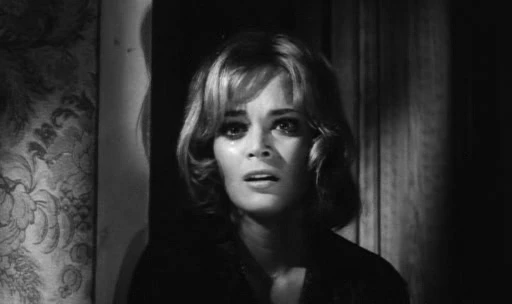
Amer (film)
A giallo in three parts about Ana's oppressive sexual development.

Amer (lit. 'Bitter') is a 2009 experimental psychological horror drama film written and directed by Hélène Cattet and Bruno Forzani. The film stars Cassandra Forêt, Charlotte Eugène Guibeaud and Marie Bos as the character Ana at different stages of her life. It is a giallo in three parts that follows Ana's sexual development on the French Riviera, focusing on her oppressive teenage years leading to her womanhood. The film premiered at the 2009 Lund International Fantastic Film Festival in Sweden and received generally favourable reviews, earning a nomination for the Magritte Award for Best Film.
- Release year
- 2009
- Country
- Belgium (co-produced with France)
- Genre
- Experimental psychological horror drama
- Directors
- Hélène Cattet and Bruno Forzani
- Lead actors
- Cassandra Forêt, Charlotte Eugène Guibeaud, Marie Bos
- Runtime
- Not specified in source
- Awards
- The Blade award at Lund International Fantastic Film Festival; Discovery Motion Picture Diploma at Sitges Film Festival
Lore & Background
The film's production was funded by Belgian producer Eve Commenge, who created a company for the purpose. Directors Hélène Cattet and Bruno Forzani needed additional funding outside Belgium and found French co-producer François Cognard. The directors had only one third of their original budget, but the producers allowed production to start based on the directors' experience making short films for very little money. Extensive preparations were made before shooting the actors, with all shots tested using digital video cameras while the two directors played all the parts to avoid surprises during filming with the other actors. The film was shot at the French Riviera and in Belgium over 39 days.
Reader's Guide
Amer is significant as a modern homage to the Italian giallo genre, structured in three distinct parts that trace the sexual and psychological development of its protagonist, Ana. The film's experimental approach, blending reality and chromatic fantasy, and its focus on sensory and oppressive experiences, set it apart from conventional horror. Its reception was generally favorable, with a 79% approval rating on Rotten Tomatoes and a Metacritic score of 72 out of 100, indicating 'generally favorable' reviews. Critics praised its aesthetic qualities and surrealism, though some noted it might alienate viewers unmoved by its visceral content. The film's legacy includes winning the inaugural The Blade award at the Lund International Fantastic Film Festival and a Discovery Motion Picture Diploma at the Sitges Film Festival, as well as a Magritte Award nomination for Best Film. It remains a distinctive entry in experimental horror cinema.
Did You Know?
- The film's title 'Amer' translates to 'Bitter' in English.
- The directors tested all shots with digital video cameras, playing all the parts themselves, before filming with the actual cast.
- The film won the inaugural The Blade award at the 2009 Lund International Fantastic Film Festival.
- The film was shot over 39 days at locations on the French Riviera and in Belgium.
Literary Roots and the Yellow Cover
In Italian, giallo simply means 'yellow,' yet the word carries a deep literary pedigree. In 1929, the publisher Mondadori began issuing a line of cheap paperback crime and mystery novels called Il Giallo Mondadori, named after the trademark yellow background on their covers. The series consisted almost entirely of Italian translations of British and American writers—Agatha Christie, Ellery Queen, Edgar Allan Poe, Raymond Chandler, Edgar Wallace, Rex Stout, and Ed McBain all featured. The line's commercial success prompted rival Italian publishers to imitate the yellow covers and release competing mystery paperbacks. Gradually, giallo became a colloquial synonym in Italy for any mystery novel, and even for a puzzling or unsolved affair in everyday speech. The film genre sprang directly from this literary tradition. Early Italian pictures were straightforward screen adaptations of those pulp novels, including a 1933 film simply titled Giallo. Over time, directors moved beyond literal adaptation, retaining the whodunit skeleton while steering the material toward psychological thriller and horror territory with the full range of modern cinematic technique.
The Archetypal Giallo Film
Giallo films are generally described as gruesome murder-mystery thrillers that fuse the slow-burn suspense of detective fiction with scenes of shocking, graphic horror. The visual language is unmistakable: stylish camerawork, excessive bloodletting, and often jarring musical scores punctuate the narrative. At the center of the archetypal plot is a mysterious, black-gloved psychopathic killer who stalks and butchers a series of beautiful women. While most gialli feature a human antagonist, a subset incorporates a supernatural element. The protagonist is typically an outsider—a traveller, a tourist, an outcast, a disgraced private investigator, or most often a young woman who is lonely and alone in a strange or foreign setting. Law enforcement officers rarely take the lead role, a distinction that separates gialli from the action-driven poliziotteschi. Crucially, the protagonist is usually unconnected to the murders before they begin and is drawn into the investigation by witnessing one of the killings. Scholar Michael Mackenzie has proposed dividing gialli into male-focused and female-focused variants, the latter tending toward more sexual and psychologically intimate storytelling centered on the heroine's psyche and fragile mental state. The killer's identity, concealed behind a hat, mask, sunglasses, gloves, and trench coat, is typically revealed in the climactic act.
Terminology and Genre Boundaries
The word giallo means different things depending on who is using it. For Italian audiences, it is a broad umbrella covering any murder mystery or horror thriller regardless of the film's country of origin. English-speaking viewers, by contrast, reserve the label specifically for Italian-produced thriller-horror films, a category Italians themselves call giallo all'italiana. In the Anglophone world these pictures are also nicknamed spaghetti thrillers or spaghetti slashers, echoing the way Italian Westerns became spaghetti Westerns. Critics broadly agree that giallo constitutes a distinct category with its own thematic and stylistic fingerprints, though they occasionally disagree on exactly which films qualify, creating some confusion at the edges. The genre should not be confused with the poliziotteschi, another popular Italian crime genre of the 1970s that favored action-oriented stories about violent law-enforcement officers, drawing inspiration from gritty American pictures like Bullitt, Dirty Harry, and The French Connection. Directors and actors frequently crossed between the two genres, and some early poliziotteschi—such as Investigation of a Citizen Above Suspicion (1970) and No, the Case Is Happily Resolved (1973)—borrowed psychological themes from gialli, blurring the boundary. Films like Fernando Di Leo's Naked Violence (1969) and Massimo Dallamano's La polizia chiede aiuto (1974) sit comfortably under either banner.
Timeline, Peak, and Lasting Influence
The Italian giallo genre took shape in the mid-to-late 1960s, reached its commercial and artistic peak throughout the 1970s, and then gradually receded from the mainstream over the following decades, even though individual examples continue to be produced. Its stylistic DNA—stylized depictions of a mysterious killer whose identity is withheld until the final act, a blend of thriller suspense with slasher violence and eroticism reminiscent of the French fantastique tradition—proved enormously influential. Giallo is widely recognized as a direct predecessor to the later American slasher film genre, and many of its signature characteristics were absorbed into that tradition. The genre's formula of combining the atmosphere and tension of thriller fiction with the shock of horror and the sensuality of eroticism created a template that filmmakers across multiple countries have continued to reference. Even as the commercial dominance of the giallo waned after its 1970s zenith, the visual grammar it established—gloved hands, masked killers, jarring soundtracks, and the slow unraveling of a whodunit mystery—remains a recognizable and enduring strand in global horror and thriller cinema.
Frequently Asked Questions
What is Amer (film)?
Amer is a 2009 Belgian-French co-production in the experimental psychological horror drama genre, written and directed by the filmmaking duo Hélène Cattet and Bruno Forzani. It is classified as a giallo and is told in three distinct parts.
Who stars in Amer and what role do they play?
Three different actresses—Cassandra Forêt, Charlotte Eugène Guibeaud, and Marie Bos—each portray the same character, Ana, at a separate stage of her life. This casting choice underscores the film's focus on her evolving identity.
What is the plot of Amer about?
The narrative follows Ana's sexual development along the French Riviera, with particular emphasis on the oppressive weight of her teenage years as she gradually transitions into womanhood. The story unfolds across three segments that track this progression.
Where did Amer premiere and what recognition did it receive?
It had its world premiere at the 2009 Lund International Fantastic Film Festival in Sweden. Critics responded generally favourably, and the film earned a nomination for the Magritte Award for Best Film.
How is Amer structured narratively?
The film is divided into three parts, each featuring a different actress embodying Ana at a successive life stage. This tripartite format allows the directors to explore her psychological and sexual awakening as a layered, non-linear journey rather than a single continuous arc.
More in Giallo films 1-24
Spotted an error? Know more?
Reader corrections go straight into our review queue. Suggest an edit · How this site is sourced