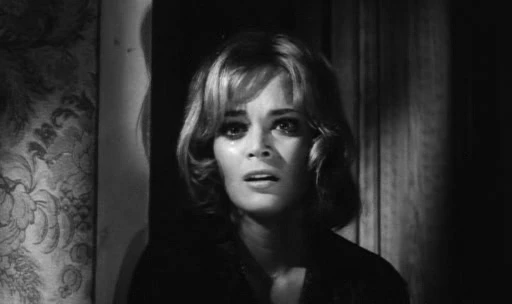
Giallo
Italian thriller-horror genre blending mystery, violence, and eroticism.

Giallo is an Italian film genre that mixes murder mystery, horror, and thriller elements, often including slasher violence, psychological tension, sexploitation, and occasionally supernatural horror. These films typically combine the atmosphere of a thriller with horror-style violence and eroticism, similar to the French fantastique tradition, and frequently feature a stylized killer whose identity stays hidden until the final act. The genre emerged in the mid-to-late 1960s, reached its peak in the 1970s, then faded from mainstream commercial cinema over the following decades, though new examples still appear. It was an important forerunner of the later American slasher film genre.
The term "giallo" comes from Italian for "yellow," originating with the *Il Giallo Mondadori* series of pulp crime novels published by Mondadori starting in 1929, named for their yellow covers. These cheap paperbacks were mostly Italian translations of British and American mystery writers like Agatha Christie, Ellery Queen, Edgar Wallace, Ed McBain, Rex Stout, Edgar Allan Poe, and Raymond Chandler. Their success led other Italian publishers to release similar series with yellow covers, and the word *giallo* became Italian shorthand for any mystery novel—and, in casual or media use, for any mysterious or unsolved affair. Early Italian film adaptations of these novels began as literal translations, but directors soon used modern cinematic techniques to create a distinct genre that kept the mystery and crime elements while moving closer to psychological thriller or horror. Many traits of these films later influenced American slasher movies.
In Italy, *giallo* in a film context refers to any murder mystery or horror thriller, regardless of origin. English-speaking audiences, however, use the term specifically for Italian-produced thriller-horror films, sometimes called *giallo all'italiana*. These are also referred to as spaghetti thrillers or spaghetti slashers, similar to how Italian Westerns and poliziotteschi films are called spaghetti Westerns and spaghetti crime films.
Most critics agree that gialli form a distinct category with characteristic themes and style, though definitions vary slightly, causing some confusion over which films qualify.
- Origin
- Italy
- Genre type
- Film and literary genre
- Literary origin
- Il Giallo Mondadori (1929)
- Peak period
- 1970s
- Key elements
- Mystery, slasher violence, eroticism, psychological horror
- Influence
- Predecessor to slasher film genre
Lore & Background
The term giallo derives from a series of crime-mystery pulp novels entitled Il Giallo Mondadori, published by Mondadori from 1929, named for their trademark yellow cover background. These novels were Italian translations of mystery novels by British and American writers such as Agatha Christie, Ellery Queen, and Edgar Allan Poe. The success of these cheap paperbacks led other Italian publishers to mimic the yellow covers, establishing giallo as a synonym in Italian for a mystery novel.
The Italian film genre began as literal adaptations of the original giallo mystery novels. Directors soon used modern cinematic techniques to create a unique genre that retained mystery and crime fiction elements but veered more closely into psychological thriller or psychological horror. The archetypal giallo plot involves a mysterious, black-gloved psychopathic killer who stalks and butchers a series of beautiful women, often with the killer's identity concealed until the final act.
Most critics agree that giallo represents a distinct category with characteristic thematic and stylistic features, though various critics have proposed slightly different characteristics, creating some confusion over which films can be considered gialli. The genre is noted for psychological themes of madness, alienation, sexuality, and paranoia, and often features an outsider protagonist, frequently a young woman alone in a strange environment.
Reader's Guide
Giallo's significance lies in its unique fusion of detective fiction, horror, and eroticism, creating a stylized and influential genre that directly preceded and shaped the American slasher film. Its focus on grisly death sequences, voyeuristic murder perspectives, and black-gloved killers became hallmarks later adopted by slasher cinema. The genre also reflects Italy's tradition of opera and grand guignol drama, filtered through modern cinematic techniques.
In the English-speaking world, Italian giallo films are sometimes referred to as spaghetti thrillers or spaghetti slashers, analogous to spaghetti Westerns. While the genre declined in commercial mainstream filmmaking after the 1970s, it continues to be produced and remains influential. The term giallo in Italian colloquial and media usage also applies to any mysterious or unsolved affair, demonstrating its cultural penetration beyond cinema.
Gialli should not be confused with the poliziotteschi genre, which includes more action-oriented films about violent law enforcement officers, though some overlap exists. The genre's association of female sexuality with brutal violence has led to accusations of misogyny, but its stylistic and narrative innovations remain a subject of study and appreciation.
Did You Know?
- The term giallo means 'yellow' in Italian, derived from the yellow cover background of the Il Giallo Mondadori pulp novels published from 1929.
- Giallo films often feature a black-gloved killer whose identity is not revealed until the final act.
- The genre was a predecessor to and had significant influence on the later slasher film genre.
- In Italian colloquial usage, giallo also refers to any mysterious or unsolved affair.
Aesthetic Identity and Signature Elements
Giallo occupies a distinctive niche in Italian cinema by fusing the slow-burn tension of the thriller with the visceral shock of horror and the sensuality of eroticism. Rather than relying on a single mode of audience engagement, the genre weaves all three threads into a cohesive atmospheric experience. The murder-mystery framework provides the structural spine, while slasher-style violence and erotic undertones supply the emotional and sensory charge that distinguishes giallo from a straightforward whodunit. At the narrative level, the genre has cultivated a set of recognizable conventions. The antagonist is typically a figure shrouded in anonymity, often concealed behind a disguise, and almost invariably wears black gloves as a marker of their predatory nature. This masked or veiled killer operates through a series of escalating murders, and the story's architecture is built around the eventual unmasking—usually reserved for the climactic sequence—where the true identity is finally revealed to both the characters and the audience. These recurring motifs have become shorthand for the genre and are instantly recognizable to viewers familiar with Italian cinema of the period.
Historical Arc: From Emergence to Peak
The giallo genre emerged in the mid-to-late 1960s as Italian filmmakers began experimenting with a hybrid form that married suspense-driven plotting with graphic horror and erotic suggestion. What started as a relatively new creative direction rapidly gained momentum, and by the 1970s the genre had reached the height of its commercial and cultural popularity. The decade became synonymous with the form, producing a dense concentration of titles that defined the aesthetic vocabulary still associated with the label. Following that golden era, however, the genre experienced a gradual retreat from the commercial mainstream. Over the subsequent decades, fewer studios and audiences embraced the particular blend of eroticism, stylized violence, and mystery that had once driven box-office success. Yet the decline was never absolute. Filmmakers continued to produce works in the tradition well into the 2000s, 2010s, and even the 2020s, ensuring that the giallo remained a living, if smaller, strand within Italian and international cinema rather than a purely historical curiosity.
Influence on the Slasher Tradition
One of the most significant consequences of the giallo's creative output was its role as a direct predecessor to the slasher film genre that would dominate global horror in the decades that followed. The Italian form established many of the narrative and visual conventions that later slasher filmmakers would adopt and adapt: a concealed killer who moves through a series of victims, a structure built toward a final identity reveal, and an emphasis on stylized, almost choreographed violence. The black-gloved, disguised murderer who stalks a small community of characters became a template that crossed borders and languages. The influence was not merely superficial. Giallo's integration of erotic tension with horror, its atmospheric use of color and setting, and its willingness to blend genre elements in ways that resisted easy categorization all left a mark on subsequent horror filmmaking. Critics and scholars have traced direct lineages from Italian giallo to the broader international slasher tradition, confirming that the genre's impact extended far beyond the borders of Italian cinema and the decades in which it was most commercially active.
Enduring Presence and Key Voices
Although the genre's commercial peak passed in the 1970s, the giallo has maintained a persistent presence in Italian filmmaking across multiple decades. The span of titles stretching from the 1960s through the 2020s demonstrates that the form has never fully disappeared, even as its production frequency and mainstream visibility diminished. Directors such as Dario Argento returned to the genre repeatedly over the years, contributing titles as late as 2022, while other filmmakers like Luciano Onetti sustained a steady output of giallo-adjacent works throughout the 2010s. The continued production of these films speaks to a lasting creative and cultural attachment to the genre's particular blend of mystery, horror, and sensuality. Whether through a director's personal homage to the form's conventions or through a new generation of filmmakers discovering the tradition, the giallo endures as a recognizable and evolving strand. The fact that titles continue to appear in the 2020s confirms that the genre, while no longer a dominant commercial force, retains enough artistic and audience appeal to keep it alive in the broader landscape of Italian cinema.
Frequently Asked Questions
What is Giallo?
Giallo is an Italian film genre that fuses murder-mystery plotting with horror and thriller conventions. It typically layers slasher-style violence, psychological dread, and erotic tension into a single narrative, often keeping the killer's true identity concealed until the very end.
Where does the word 'Giallo' come from?
The name traces back to Il Giallo Mondadori, a line of Italian paperback mystery novels launched in 1929 that were recognizable by their yellow covers. The term was later adopted to label the wave of Italian thriller-horror films that drew on those pulp-story roots.
What elements define a Giallo film?
Core hallmarks include a stylized, often masked killer, escalating graphic violence, heavy use of erotic imagery, and a mystery structure that withholds the perpetrator's identity. Psychological horror and atmospheric tension round out the formula, distinguishing it from straightforward slasher or supernatural horror.
When did Giallo reach its peak?
The genre first emerged in the mid-to-late 1960s and hit its commercial and creative high point during the 1970s. After that decade it gradually lost mainstream box-office traction, though it continued to influence filmmakers well into the following decades.
How did Giallo influence later horror cinema?
Giallo is widely regarded as a direct precursor to the slasher film genre, having popularized the hidden-killer structure and stylized, almost artistic depictions of murder. Its blend of eroticism, psychological tension, and graphic violence became a template that many later horror filmmakers borrowed from or reacted against.
More in Giallo films 1-24
Spotted an error? Know more?
Reader corrections go straight into our review queue. Suggest an edit · How this site is sourced