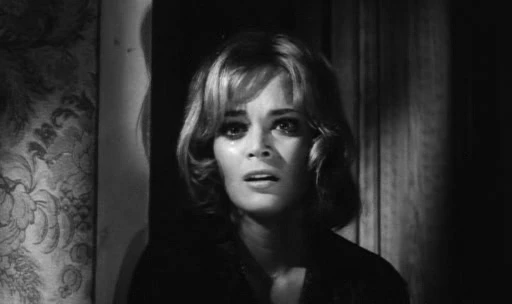
La bambola di Satana
A gothic horror with a uranium mine plot.

La bambola di Satana ("The Doll of Satan") is a 1969 Italian gothic horror film written and directed by Ferruccio Casapinta. It is Casapinta's only film credit as a director. The film follows Elizabeth, a young woman who inherits her late uncle's mansion and becomes entangled in a plot involving a valuable uranium mine hidden beneath the castle.
- Genre
- gothic horror
- Lead actress
- Erna Schürer
Lore & Background
La bambola di Satana was filmed at Castle Borghese in Pomezia, Pratica di Mare and in Abruzzo. Lead actress Erna Schürer described the production as a "troubled shoot," stating that Casapinta's assistant director was the person who "did everything on set" and that Casapinta "was an idiot who couldn't do anything." The film was released in Italy on 12 June 1969, distributed by Cinediorama, and grossed a total of 118,009,000 Italian lire. It was never dubbed into English and did not receive a theatrical release in the United States.
Reader's Guide
La bambola di Satana occupies a marginal place in Italian horror cinema, noted primarily as the sole directorial effort of Ferruccio Casapinta. Critical reception has been mixed to negative: Roberto Curti stated that Casapinta "shows no directorial flair at all" and that the film "looks awful," citing poor editing and terrible special effects. Louis Paul, however, found the film "certainly rooted within the classic gothic atmosphere of early Italian horrors" while noting its nudity and black-gloved killer as signs of the genre's evolution. AllMovie gave the film three and a half stars out of five, praising its "slicker look and a better sense of humor" and describing its histrionics as "immensely enjoyable, for their camp value if nothing else." The film received limited-edition Blu-ray releases in 2016 (Twilight Time, 3,000 units) and 2021 (88 Films).
Did You Know?
- The film's plot involves a valuable uranium mine hidden beneath the inherited mansion.
- Ferruccio Casapinta's only film credit as a director is La bambola di Satana.
- Lead actress Erna Schürer called the production a 'troubled shoot' and said Casapinta 'was an idiot who couldn't do anything.'
Plot & Narrative Structure
The narrative centers on Elizabeth, a young woman who comes into possession of her deceased uncle's castle. Upon arrival, she is greeted by the estate's administrator, Mrs. Carroll, who paints the property as a ghost-ridden place and steadily nudges Elizabeth toward selling it to a buyer named Paul Reynaud. As unsettling occurrences accumulate, Elizabeth grows increasingly convinced that divesting herself of the property is wise. The story darkens sharply when the castle's waiter is found murdered, and Elizabeth's fiancé Jack begins to suspect that Carroll is behind the deaths rather than any supernatural force. Enlisting a private investigator who infiltrates the household under the guise of a painter, Jack and Elizabeth peel back the layers of deception. What emerges is a scheme of greed: Carroll and Reynaud had been secret lovers, and Carroll had overheard the old uncle confessing to the existence of a valuable uranium mine beneath the mansion. Their entire ghost story was a manipulative ploy to acquire the property at a fraction of its true worth.
Production & Behind the Scenes
Behind the camera, La bambola di Satana represents the singular directorial effort of Ferruccio Casapinta, a name that would never appear again in that capacity. According to lead actress Emma Costantino, the production was anything but smooth. She recalled that Casapinta's assistant director was the one who effectively handled every aspect of on-set work, and she was blunt in her assessment of Casapinta himself, calling him someone who simply could not manage the practical demands of filmmaking. The shoot took place across several real Italian locations, including Castle Borghese in Pomezia, the coastal area of Pratica di Mare, and the Abruzzo region, giving the film a tangible, location-based texture. The cast assembled for the project included Erna Schürer in the lead role of Elizabeth, Roland Carey as her fiancé Jack, Aurora Battista as Claudine, and Ettore Ribotta as Paul Reno, among others. Despite the evident difficulties on set, the film was completed and entered the Italian theatrical circuit in the summer of 1969.
Critical Reception & Genre Positioning
Critical responses to the film have been sharply divided, reflecting its awkward position between two eras of Italian horror. Roberto Curti, in his survey of Italian gothic horror from 1957 to 1969, was unsparing, noting that Casapinta displayed no directorial instinct whatsoever. He singled out the editing for alternating day and night footage within single scenes, and dismissed the special effects, particularly the artificial thunderstorms and peculiar pink clouds hovering over the castle, as genuinely poor. His verdict was that the film was an obscure and rightly forgotten entry in the genre. Louis Paul offered a more nuanced reading, acknowledging the film's roots in the classic Italian gothic tradition while pointing out that elements like substantial nudity and a black-gloved killer signal a shift toward the emerging giallo sensibility. AllMovie struck a different tone entirely, awarding three and a half stars and celebrating the film's operatic excess and camp energy as genuinely entertaining for fans of Italian horror who do not expect restraint.
Release, Distribution & Legacy
La bambola di Satana opened in Italian cinemas on 12 June 1969 under the distribution banner of Cinediorama. Its theatrical run generated a total of 118,009,000 Italian lire, a modest figure that reflected the film's niche appeal. Crucially, the picture was never dubbed into English and never received a theatrical release in the United States, which meant that for decades it remained largely inaccessible to international audiences. This changed in 2016, when Twilight Time issued the first-ever Blu-ray edition in a limited run of 3,000 copies, making the film available to collectors and horror enthusiasts outside Italy for the first time. A second limited-edition Blu-ray followed in 2021 from 88 Films, further cementing the picture's status as a cult curiosity. For a work that critics described as an obscure and deservedly forgotten addition to the gothic canon, these physical releases have ensured that La bambola di Satana retains a small but dedicated following among fans of Italian horror cinema.
Frequently Asked Questions
Who directed La bambola di Satana?
Ferruccio Casapinta wrote and directed the 1969 film, and it stands as his sole directorial credit in his career.
What is the plot of La bambola di Satana?
The story follows Elizabeth, a young woman who inherits her late uncle's mansion and finds herself pulled into a conspiracy centered on a valuable uranium mine concealed beneath the castle.
Who plays the lead role in La bambola di Satana?
Erna Schürer stars as Elizabeth, the young heiress whose arrival at the ancestral estate sets the gothic horror plot in motion.
What genre is La bambola di Satana?
It is a 1969 Italian gothic horror film that blends atmospheric dread with a thriller-style subplot involving a hidden uranium mine.
Why is La bambola di Satana notable to Italian horror fans?
The film is significant both as Casapinta's one and only directorial work and for its unusual pairing of classic gothic-mansion horror with a uranium-mining conspiracy, which distinguishes it from more conventional giallo entries.
More in Giallo films 1-24
Spotted an error? Know more?
Reader corrections go straight into our review queue. Suggest an edit · How this site is sourced