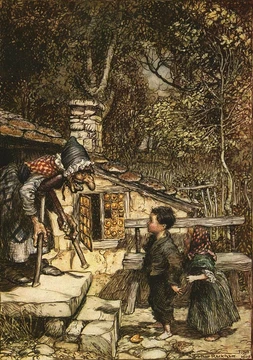
Germanic dragon
Serpentine dragons of Germanic myth, often venomous gold-hoarders.

Pjotr Mahhonin · CC BY-SA 3.0
Germanic dragons, often referred to as worms (Old English: wyrm; Old Norse: ormr; Old High German: wurm), are serpentine creatures in Germanic mythology and folklore. They are frequently portrayed as large venomous snakes and hoarders of gold, though later tales sometimes give them wings, sharing features with other European dragons.
- Field
- Germanic mythology and folklore
- Known for
- Portrayed as large venomous snakes, gold hoarders; later sometimes winged
- Notable examples
- Beowulf's dragon, Fáfnir, Nidhogg, Jǫrmungandr
Lore & Background
In early Germanic depictions, the distinction between dragons and regular snakes is blurred, with both referred to as 'worm', 'snake', or 'adder'. The term 'worm' originally meant 'long legless animal', encompassing serpents and invertebrates. Prominent worms include the dragon that killed Beowulf, Fáfnir from the Völsung Cycle, Nidhogg, and the world serpent Jǫrmungandr. Subcategories include lindworms and sea serpents.
Reader's Guide
The evolution of Germanic dragons from wingless, legless worms to flying, four-legged romanesque dragons is likely due to influence from continental Europe, facilitated by Christianisation and translated romances. The term 'dragon' (Old English: draca; Old Norse: dreki) stems from Latin dracō, itself from Ancient Greek. Later Icelandic sagas distinguish between ormar (worms) and drekar (dragons), with winged dragons sometimes specified as flugdreki. The word 'worm' remains in modern English for snake-like dragons, while 'wyrm' has been borrowed back to mean 'dragon'. Technical terms like 'drakorm' (dragon serpent) have been proposed to categorise ambiguous beings.
Did You Know?
- The Old English form 'wyrm' has been borrowed back into modern English to mean 'dragon'.
- A 11th-century poem by Þjóðólfr Arnórsson uses all four terms—worm, snake, adder, and dragon—in a single poem about Sigurd.
- The term 'flugdreki' (flying dragon) appears in later Icelandic sagas, while 'flugormr' (flying serpent) is also recorded.
- Old Swedish 'floghdraki' was borrowed into Finnish as 'louhikäärme', later folk-etymologically becoming 'lohikäärme' (salmon serpent).
The Roots of the Word
The Germanic vocabulary for dragons is rooted in a deceptively simple physical observation. In Old Germanic, the ancestor of the English word "worm" was not a narrow term at all but a general label for any long, legless animal—a category that included serpents, invertebrates, and, by extension, mythological beasts. This is why the 10th-century Beowulf can call its dragon both a wyrm and a draca without contradiction; the two words simply name the creature from different linguistic angles. The word "dragon" itself is a later import, arriving through Latin dracō and ultimately Ancient Greek drákōn, both meaning "big serpent." A curious split appears in the Norse forms: Old West Norse dreki opens with an e-vowel, a feature largely unique among the Germanic cognates, which otherwise share an a-vowel. Scholars suggest this points to an early borrowing from Old English dræce. The East Norse forms draki and draghæ, by contrast, align with a Central European root. Modern English "dragon" descends from Old French, while the older Germanic shape endures as "drake."
Shifting Shapes in the Written Record
The physical image of the Germanic dragon evolves noticeably across the medieval literary record. In Beowulf, the beast is a venomous, gold-hoarding serpent, and the poem also recounts Sigemund slaying a treasure-guarding dragon, a motif scholars trace to older pagan dragon-slayer traditions. The Eddic poem Völuspá envisions Nidhogg at the dawn of the renewed world as both a "flying dragon" and a "shimmering adder" who carries the dead between his feathers. The Nibelungenlied, composed around 1200, calls its unnamed dragon a lintrache, a worm-like drake. The Eddic Fáfnismál, written around 1270, describes Fáfnir as flightless and snake-like, an ormr. Yet the later Völsunga saga gives him shoulders, suggesting legs, wings, or both, and calls him both dreki and ormr. 11th-century picture stones known as Sigurd stones depict Fáfnir sometimes limbless, sometimes with various limbs. By the 14th century, Icelandic sagas treat ormar and drekar as distinct categories, specifying winged ones as flugdreki, yet still describing the tail as a sporðr, a word for a swimming or serpent tail.
The Great Dragons of Germanic Myth
A handful of named dragons anchor the Germanic mythological landscape. Fáfnir, the central figure of the Völsung Cycle, shifts in character across sources: a flightless, snake-like ormr in the Eddic Fáfnismál, a shouldered creature in the later Völsunga saga, and a limbless or limbed animal on 11th-century Sigurd stones. Nidhogg, foretold in Völuspá, is a flying dragon and shimmering adder destined to carry the dead between his feathers at the world's end. Jǫrmungandr, the great world serpent, embodies the cosmic scale of these beings. The dragon slain by Beowulf is a venomous hoarder of gold, a role echoed in the Sigemund episode within the same poem. Subcategories such as lindworms and sea serpents further expand the taxonomy, while the dialectal Knucker of Sussex shows how these figures permeated regional folklore well beyond the major literary cycles.
Echoes in Modern Tongues
The Germanic dragon vocabulary has left a remarkably dense imprint on modern languages. In English, "wyrm" was borrowed back from Old English to specifically denote a dragon, while "worm" retains its older, broader sense in compound names like blindworm, hazelworm, and slowworm—terms for the common legless lizard. The Old French wivre yields "wyvern," ultimately from Latin vīpera, "viper." Across the Nordic languages, the descendants of Old Norse ormr—Danish orm, Faroese ormur, Icelandic ormur, Norwegian and Swedish orm—serve as the everyday word for snake in several of these tongues, while in Danish and Icelandic they lean toward invertebrate worms. Yet all retain a poetic or archaic register for mythological serpentine creatures. German preserves the tradition in compounds like Lindwurm and Tatzelwurm. Perhaps the most striking testament to this layered vocabulary is an 11th-century poem by the Icelandic skáld Þjóðólfr Arnórsson, who reportedly composed it spontaneously and managed to weave all four Germanic dragon terms into a single verse about Sigurd the dragon slayer.
Gallery
Frequently Asked Questions
What is a Germanic dragon?
In Germanic mythology, the 'dragon' is really a serpentine beast called a wyrm (Old English), ormr (Old Norse), or wurm (Old High German). These are enormous, venomous snake-like creatures that appear across Norse, Anglo-Saxon, and broader Germanic legends.
What are the defining traits of a Germanic dragon?
They are consistently portrayed as massive, venomous, wingless snakes that guard vast caches of gold and treasure. This grounded, serpentine form sets them apart from the winged, fire-breathing dragons of later medieval European tradition.
Which Germanic dragons are the most famous?
Standout examples include Fáfnir (the dwarf-turned-serpent who guards a cursed hoard), Níðhöggr (the serpent that gnaws the roots of Yggdrasil), Jörmungandr (the World Serpent encircling Midgard), and the dragon ultimately slain by Beowulf.
How did the Germanic wyrm become the winged European dragon?
Early Germanic sources uniformly describe wyrms as wingless, snake-like beasts. The addition of wings and other embellishments came later as Germanic motifs merged with broader medieval European dragon lore.
Why do Germanic dragons hoard gold?
Within the Germanic mythological framework, wyrms are intrinsically bound to treasure-keeping, guarding mounds of gold and precious metals. This hoarding role makes them natural antagonists for heroes who seek wealth or must confront a cursed hoard.
More in German folklore 1-24
Spotted an error? Know more?
Reader corrections go straight into our review queue. Suggest an edit · How this site is sourced