Dwarf Nose
A fairy tale about a cursed boy who becomes a cook.

RAF Dunsfold, Royal Air Force official photographer · Public domain
Wilhelm Hauff’s fairy tale “Dwarf Nose” first appeared in a collection of stories in 1826. It was later included by Andrew Lang in the *Violet Fairy Book*.
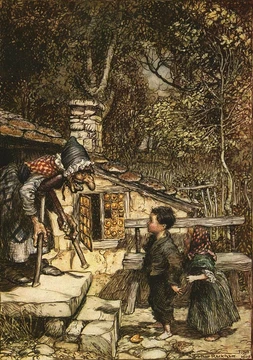
The story centers on Jacob, the twelve-year-old son of a cobbler, who lives in a small German town. He is described as having a handsome face and figure. His mother, Hanne, sells fruit and vegetables at the market, and Jacob helps by carrying customers’ purchases home. One day, an ugly old woman with a long, crooked nose and a thin neck arrives at the stall. She is later revealed to be the fairy Wise-herb. She disrupts the display, ruining the herbs so that no one wants to buy them. Jacob insults her appearance, and she curses him, wishing him a long nose and no neck. She buys a few cabbages and has Jacob carry them to her house.
At her home, the cabbages turn into human heads. The house is staffed by guinea pigs and squirrels that behave like people. The woman offers Jacob soup while remarking about a herb he will never find. After eating, he falls asleep and dreams he lives and works as a squirrel in her house for seven years, learning to cook. During this time, he discovers a certain herb, smells it, and wakes up.
Returning to his family, no one recognizes him. His own parents call him a hideous dwarf and drive him away. He has become a dwarf with a long nose, no neck, a hump, and brown hands. Rejected, Jacob seeks work as a cook. He travels to the Duke of Franconia (Herzog von Franken), a gourmet ruler. (The story is set in the Orient, where a German tells it as a tale from the land of the Franks.) Jacob impresses the chef and is hired as sous chef, earning the name Dwarf Nose. He becomes highly respected.
Two years later, Jacob buys three geese at market. One, named Mimi, speaks to him. She explains she is the daughter of the wizard Wetterbock from the island of Gotland, cursed by a wicked sorceress. She knows about magic herbs and tells Jacob he must find the herb that transformed him to break his curse.
When a visiting nobleman demands the queen of all pâtés, a Souzeraine, Jacob does not know the recipe, but Mimi helps him bake it. The earl complains it lacks the herb “sneeze-with-pleasure.” Jacob must find it or be beheaded. Mimi helps him search. When he finds and smells the herb, he transforms back to his original self. In gratitude, he takes Mimi to her father, who lifts her curse.
- Author
- Wilhelm Hauff
- Published
- 1826
- Field
- Fairy tale
- Nationality
- German
- Known for
- Story of a boy cursed to become a dwarf with a long nose
Lore & Background
After this rejection, Jacob decides to try his luck as a cook and visits the Duke of Franconia (Herzog von Franken), who is known as a gourmet. There he manages to convince the chef of his talent and the duke, who loves his cooking as well, employs him as the sous chef and gives him the name Dwarf Nose. After two years, Jacob buys three geese at the market and one of them talks to him. The goose tells him that her name is Mimi and that she was the daughter of the wizard Wetterbock from the island of Gotland. She, too, had been cursed by a wicked sorceress. She tells Jacob that he has to find the herb which transformed him in order to be liberated. With Mimi's help, he finds the herb, transforms back, and takes Mimi to her father who lifts her curse as well.
Reader's Guide
In his works, Wilhelm Hauff often comments on the political situation of his time. In the pre-March era, Germany was torn into several different small countries, which were governed by their arbitrary king, duke or earl. Hauff dreamt of witnessing these injustices being persecuted. He also believed that a righteous and strong king could provide the people with fortune and wealth. In Dwarf Nose his criticism also becomes obvious through the names of the dishes, which the bewitched boy has to prepare for his nobleman: the Danish soup, red hamburger dumplings and – upon a special request of the earl – 'the queen of all dishes, the pâté Souzeraine', a clear allusion to the political expression suzerainty. It is consequently no accident, that Hauff ends his story with a 'pâté peace'. The art of cooking becomes Jacob's purpose in life, which thereby compensates for the rejection from his family. It is typical for a family tale by Hauff that Jacob marries no utopian princess, but Mimi, an ordinary woman (daughter of the wizard).
Did You Know?
- The story was published in a collection of fairytales in 1826.
- The tale has been adopted by Andrew Lang in the Violet Fairy Book.
- The fairy who curses Jacob is named Wise-herb.
- The goose Mimi is the daughter of the wizard Weatherbuck from the island of Gotland.
Narrative Arc & Transformation
The tale follows Jacob, a handsome twelve-year-old cobbler's son in a small German town, whose mother Hanne sells vegetables and fruit at the local market. His world shatters when an ugly old woman with a long crooked nose—later revealed to be the fairy Wise-herb—deliberately wrecks his mother's herb display. Jacob insults her appearance, and she curses him with a long nose and no neck. After eating soup at her house and dreaming seven years as a squirrel, he wakes to discover he has become a hideous dwarf with a hump and brown hands. His own parents reject and chase him from their home. He rebuilds his life as a cook in the court of a duke in Frankistan, earning the nickname Dwarf Nose. A talking goose named Mimi, daughter of the wizard Weatherbuck, guides him toward the herb that will undo his change. The story climaxes in a high-stakes culinary challenge requiring him to produce a pâté called the Souzeraine, and the herb sneeze-with-pleasure ultimately restores his original form.
Political Allegory & Hauff's Commentary
Wilhelm Hauff wove pointed political critique into the fairy tale's kitchen setting. Written during the pre-March era, when Germany was fractured into numerous small states each ruled by an arbitrary king, duke, or earl, the story channels Hauff's frustration with that fragmented governance. The dish names function as coded references to power: the requested pâté Souzeraine directly invokes the political concept of suzerainty, and the tale's resolution—a perfectly baked pâté ending a war between two nobles—underscores Hauff's conviction that a righteous, strong ruler could bring fortune and wealth to ordinary people. The narrative frames political conflict as something resolvable through skill and cooperation rather than brute force, with the humble transformed cook holding the key to reconciliation. Hauff's dream of seeing injustice persecuted shines through the structure, where a rejected boy ultimately possesses the power to end a nobleman's war over a single missing ingredient.
Identity, Rejection & Purpose
A central tension in the tale is the violent collision between outward appearance and inner worth. Jacob begins as a beautiful youth, yet after the fairy's curse he becomes a dwarf with a long nose, no neck, a hump, and brown hands. The most devastating moment arrives not from the transformation itself but from the total rejection by his own parents, who call him a hideous dwarf and drive him from their home. This abandonment forces Jacob to construct an identity wholly separate from family. Cooking becomes his vocation and his salvation; in the duke's kitchen he earns respect, a title, and a place in the world that his bloodline had denied him. Hauff's choice to pair Jacob with Mimi—an ordinary woman, the daughter of a wizard, rather than an idealized princess—reinforces the story's grounded humanism. The fairy tale ultimately argues that purpose and skill can redeem what appearance and kinship have destroyed, and that a person's value is not written in their face.
Publication & Cultural Legacy
First published in 1826 as part of a collection of fairy tales, Wilhelm Hauff's story quickly reached a broader audience when Andrew Lang included it in his Violet Fairy Book, introducing the narrative to English-speaking readers throughout the nineteenth century. The tale's vivid imagery and moral clarity have made it a perennial subject for visual adaptation. Film versions have been produced in 1952, 1986, and 2008 under the German title Zwerg Nase, while a separate adaptation titled Karlik Nos also entered the cinematic record. These repeated screen treatments testify to the story's enduring appeal and its capacity to translate across media and generations. The blend of whimsical fantasy—talking geese, guinea pigs serving as household staff, cabbages that transform into human heads—with its grounded political and emotional stakes ensures the tale remains a touchstone of German literary fairy tradition, bridging the intimate domestic world of a market stall with the grander concerns of court and state.
Gallery




Frequently Asked Questions
What is 'Dwarf Nose' and where does it come from?
'Dwarf Nose' is a German fairy tale written by Wilhelm Hauff, first published in 1826. It tells the story of a young cobbler's son who is magically cursed into becoming a dwarf with an exaggeratedly long nose. The tale was later collected in Andrew Lang's Violet Fairy Book, introducing it to English-speaking readers.
Who is the fairy Wise-herb and what does she do?
Wise-herb appears at the market in the form of an ugly old woman with a long, crooked nose and a thin neck. She is the magical force behind Jacob's curse, and her disruptive visit to the family's produce stall sets the central conflict of the story in motion.
What happens to Jacob after the curse?
Once transformed into a deformed dwarf, Jacob ends up finding work as a cook. His new life in this altered state forms the middle portion of the tale before the story moves toward its resolution.
Why is 'Dwarf Nose' considered important in German folklore?
As a product of the German Romantic period, it exemplifies Hauff's gift for weaving moral transformation, maternal devotion, and magical retribution into a compact narrative. Its later inclusion in a widely read English anthology helped cement its place in the broader European fairy-tale canon.
Who is Jacob's mother and what does the family do for a living?
Jacob's mother, Hanne, sells fruit and vegetables at the local market, while his father works as a cobbler. Twelve-year-old Jacob helps out at the stall by carrying finished purchases home for customers.
More in German folklore 1-24
Spotted an error? Know more?
Reader corrections go straight into our review queue. Suggest an edit · How this site is sourced