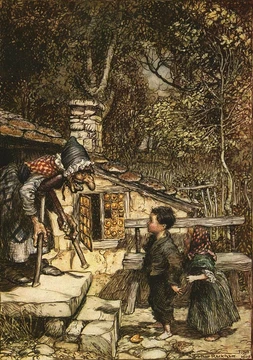
1862 Fairytale Maskenfest
A German masquerade ball celebrating fairytales and folklore in 1862.

The 1862 Fairytale Maskenfest was a German masquerade ball held on February 15, 1862 at the Royal Odeon in Munich. Organized by the artist's association 'Jung-München' ('Young Munich') and spearheaded by Christian Jank and other members, the event was an elaborate celebration of fairytales and folklore during the height of German Carnival season. Advertised as a 'German Fairy Tale World,' it featured extensive staging, costuming, and performances at a time when fairytales were surging in popularity in Germany.
- Key figure
- Christian Jank (stage designer and primary organizer)
Lore & Background
Young architectural painter and stage designer Christian Jank oversaw stage and set decorations, painting a large painted backdrop featuring a Romanesque panoramic scene with a medieval-style 'Märchenschloss' (fairy-tale castle) on a rocky outcrop, complete with towers, battlements, oriels, and drawbridges, with the Rhine in the distance. The event was attended by the 16-year-old heir to the Bavarian throne, later known as King Ludwig II, famed as the 'Märchenkönig' (Fairytale King).
Reader's Guide
The 1862 Fairytale Maskenfest stands as a notable cultural event in 19th-century Germany, reflecting the era's fascination with fairytales and folklore, particularly the collections of the Brothers Grimm and Ludwig Bechstein. Organized by the Jung-München artists' association, it exemplified the carnival-season 'Künstlerfeste' that blended artistic camaraderie with public spectacle. The involvement of key figures like Wilhelm Busch, Moritz von Schwind, and Georg Kremplsetzer highlights the intersection of humor, visual art, and music in a single celebration. The event's documentation through Joseph Albert's photographs and a surviving souvenir booklet provides valuable historical insight into costume and performance trends of the time. The attendance of the young King Ludwig II, later known as the 'Märchenkönig,' adds a layer of royal patronage that would influence his later architectural projects. The ball's elaborate staging, including Christian Jank's massive backdrop, demonstrates the scale and ambition of such festivities. While the costumes reportedly diverged from the intended illustrations, the event remains a key example of how fairytales were performed and popularized in German society.
Did You Know?
- The event was advertised as a 'German Fairy Tale World' during the height of German Carnival season.
- Photographs by court photographer Joseph Albert document attendees dressed as mermaids, hare-and-hedgehog pairs, and Puss in Boots.
- A 21-page souvenir booklet for the 1862 Maskenfest survives in the Bavarian State Library.
- Composer Georg Kremplsetzer contributed a musical work at the ball, though the famous Singspiel 'Hansel and Gretel' was composed by Engelbert Humperdinck in 1893, not performed at this event.
The Creative Engine Behind the Ball
The 1862 Fairytale Maskenfest was the brainchild of Jung-München, an informal collective of Munich-based painters, sculptors, writers, and composers that operated between 1853 and 1864. Rather than pursuing a rigid artistic manifesto, the group thrived on camaraderie and the joy of festive gatherings, particularly during the carnival season known as Fasching, when costumed parties and parades reached their peak in the week before Ash Wednesday. Among its most recognizable members were the humorist Wilhelm Busch, the painter Moritz von Schwind, and the composer Georg Kremplsetzer. Busch took on the role of program director for the February 15 event at the Royal Odeon, stipulating that all decorations, costumes, props, and skits should draw upon the fairy-tale illustrations of Schwind and Ludwig Richter. The ball was marketed as a 'German Fairy Tale World,' riding the wave of widespread enthusiasm for the folk narratives collected by the Brothers Grimm and Ludwig Bechstein. What emerged was an elaborate celebration of folklore staged at the height of German Carnival season, uniting the city's creative community in a shared imaginative enterprise.
Transforming the Odeon into a Fairy-Tale Landscape
The visual spectacle of the 1862 Maskenfest owed much to the young architectural painter and stage designer Christian Jank, who was enlisted to oversee all stage and set decorations. Working alongside fellow artists in what was described as a months-long competition among friends, Jank and his collaborators transformed the Royal Odeon into an immersive fairy-tale landscape. The centerpiece was a staggering Romanesque panoramic backdrop painted on a canvas measuring 800 meters wide and 50 meters high. This vast scene depicted a medieval-styled Märchenschloss—a fairy-tale castle perched atop a rocky outcrop, complete with towers, battlements, oriels, and drawbridges—with the Rhine stretching into the distance. The event's printed materials were equally imaginative: admission tickets, lithographed by Jung-München artist Andreas Müller, featured dancing maidens and two music-making gnomes. A 21-page souvenir booklet produced for the occasion survives today in the Bavarian State Library, offering a glimpse into the event's promotional and commemorative design. Together, these elements created a fully realized fairy-tale environment that enveloped every guest from the moment they crossed the threshold.
A Royal Audience and a Living Fairy Tale
The 1862 Fairytale Maskenfest drew not only Munich's entire art world but also the Bavarian royal court, an attendance that lent the evening a particular gravitas. Most notably present was the sixteen-year-old heir to the Bavarian throne, the future King Ludwig II, who would later earn the enduring nickname Märchenkönig—the Fairytale King. His presence at a ball celebrating Grimm and Bechstein folklore foreshadowed the lifelong fascination with fairy-tale imagery that would define his reign. The musical program was equally ambitious: composer Georg Kremplsetzer, a fellow Jung-München member, composed and performed a Singspiel titled Hansel and Gretel for the assembled public and court, to a successful reception. Wilhelm Busch was also credited as a writer of the operetta. The costumed attendees brought the fairy-tale world to life in vivid, if sometimes unorthodox, fashion. Photographs from the evening capture groups including Aschenbrödel's entourage, a Hedgehog and Hare pair, and Puss in Boots, alongside mermaids and medieval figures. Notably, the International League of Antiquarian Booksellers observed that the actual costumes worn by guests bore little resemblance to the Schwind and Richter illustrations that had inspired the official program, suggesting a gap between the curated vision and the revelers' personal interpretations.
Preserving the Evening in Photograph and Print
Among the most valuable surviving records of the 1862 Fairytale Maskenfest are the photographs taken by court photographer Joseph Albert, who was present at the event to document the costumed attendees. His images capture a rich variety of fairy-tale and animal characters: Aschenbrödel's entourage, a pairing of Hedgehog and Hare, Puss in Boots, mermaids, and medieval figures. These photographs are currently preserved and displayed by the Munich City Museum, offering a rare visual window into the creative exuberance of mid-nineteenth-century Munich's artistic and social circles. Beyond photography, the event left behind tangible printed artifacts. The lithographed admission tickets, designed by Jung-München artist Andreas Müller and featuring dancing maidens flanked by two music-making gnomes, serve as small works of graphic art in their own right. A 21-page souvenir booklet produced specifically for the Maskenfest survives in the collections of the Bavarian State Library, providing textual and visual documentation of the program. Together, these materials—photographs, tickets, and the booklet—ensure that the 1862 ball endures not merely as a historical footnote but as a vividly documented cultural moment at the intersection of German folklore, artistic camaraderie, and public celebration.
Frequently Asked Questions
What is the 1862 Fairytale Maskenfest?
It was an elaborate masquerade ball in Munich that celebrated German fairytales and folklore. The event was staged as a 'German Fairy Tale World' and featured extensive costuming and theatrical performances during Carnival season.
Who organized the 1862 Fairytale Maskenfest?
The artist's collective known as 'Jung-München' (Young Munich) put the event together, with stage designer Christian Jank serving as the primary driving force behind its creation.
Where and when did the 1862 Fairytale Maskenfest take place?
The ball was held on February 15, 1862, at the Royal Odeon theater in Munich. It fell squarely within the peak of German Carnival season.
What made the 1862 Fairytale Maskenfest visually distinctive?
The event was heavily staged with elaborate sets, costumes, and live performances designed to immerse guests in a fairy-tale atmosphere. This level of theatrical production reflected the surging popularity of German folk narratives at the time.
Why is the 1862 Fairytale Maskenfest notable in German folklore history?
It stands as a rare documented example of a public event in the 19th century that deliberately centered on German fairytales as its entire creative framework. The ball captured a cultural moment when folk narratives were experiencing a major surge in public fascination across Germany.
More in German folklore 1-24
Spotted an error? Know more?
Reader corrections go straight into our review queue. Suggest an edit · How this site is sourced