Easter Bunny
Folkloric figure bringing eggs and gifts at Easter.

Superbass · CC BY-SA 4.0
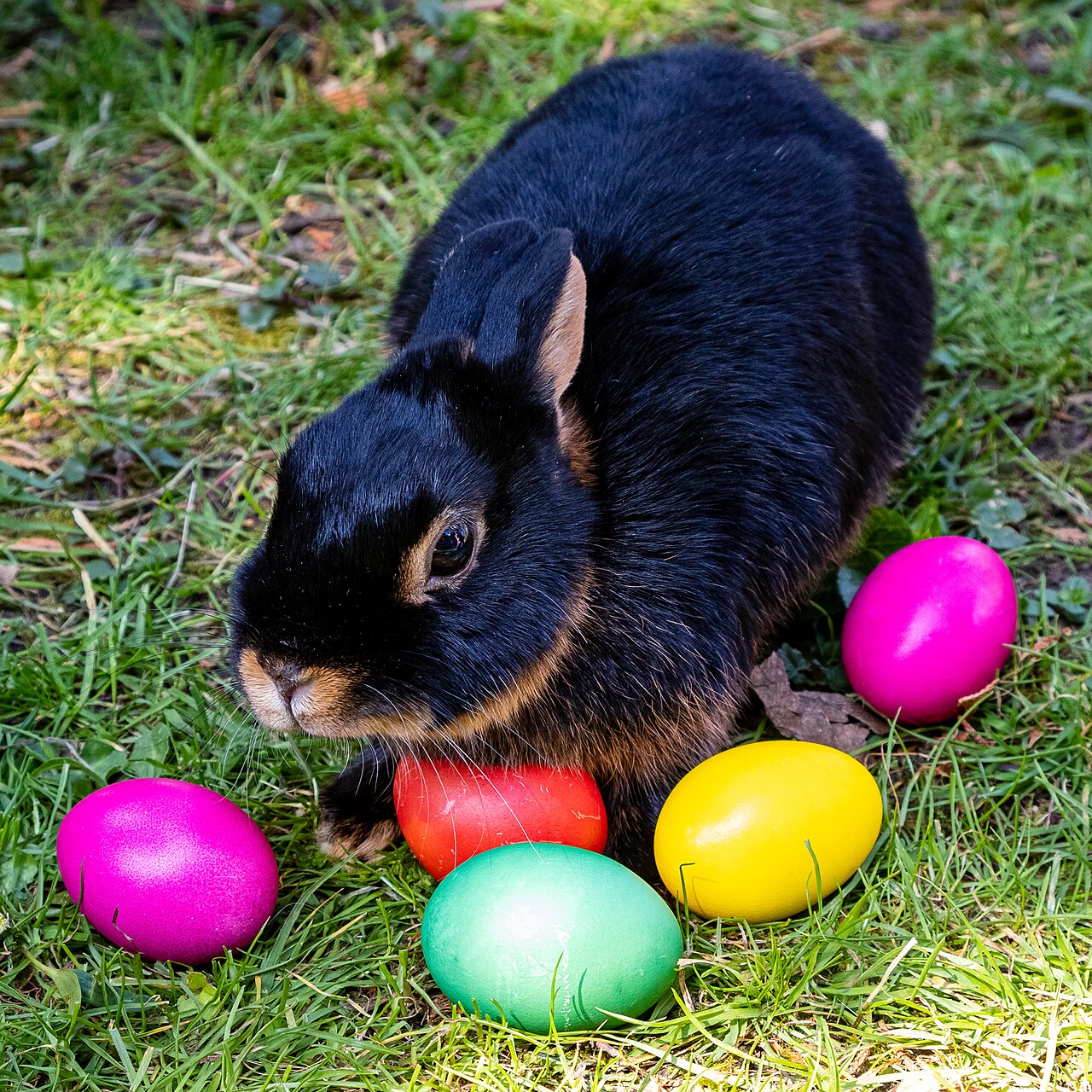
The Easter Bunny, also called the Easter Rabbit or Easter Hare, is a folkloric figure and symbol of Easter. Depicted as a rabbit—sometimes dressed with clothes—it brings Easter eggs to people. Originating among German Lutherans, the Easter Hare originally played the role of a judge, evaluating whether children were good or disobedient at the start of Eastertide, similar to Santa Claus's naughty-or-nice list. The creature carries colored eggs in its basket, as well as candy and sometimes toys, to children's homes, showing similarities to Santa or the Christkind by bringing gifts on the night before a holiday.
- Earliest attested reference
- 1682 in De ovis paschalibus by Georg Franck von Franckenau
Lore & Background
Georg Franck von Franckenau's De ovis paschalibus ('About Easter Eggs') in 1682 refers to a German folk belief of an Easter Hare laying eggs hidden in garden and bushes for children to find in egg hunts. The idea of an egg-giving hare went to the U.S. in the 18th century, brought by Protestant German immigrants in the Pennsylvania Dutch area, who told their children about the 'Osterhase' (sometimes spelled 'Oschter Haws'). According to the legend, only good children received gifts of colored eggs in the nests they made in their caps and bonnets before Easter.
Reader's Guide
The Easter Bunny's significance lies in its role as a central figure in modern Easter celebrations, particularly in the tradition of egg hunts and gift-giving. Originating among German Lutherans, the figure evolved from a judge of children's behavior to a benevolent gift-bringer. The custom spread across Europe and to America through German immigrants, becoming widely popularized in the 19th century via Easter-themed cards, toys, and books. While some have proposed an association with the Anglo-Saxon goddess Ēostre, the Oxford Dictionary of English Folklore states there is no evidence for this link; the only writer to mention Ēostre, Bede, does not connect her with any animal. A legend that Eostre turned a bird into a hare that laid eggs dates only from 1883 and has no basis in pre-Christian folklore. The Easter Bunny remains a prominent cultural symbol, blending Christian themes of resurrection with springtime motifs of renewal and fertility.
Origins as a Moral Arbiter
The Easter Bunny's earliest documented identity is far removed from the cheerful egg-deliverer familiar today. Rooted in German Lutheran tradition, the figure originally known as the Easter Hare served a judicial function: assessing whether children had behaved well or poorly during the early days of Eastertide. This evaluative role drew clear parallels to the naughty-or-nice ledger associated with Santa Claus, and the creature's gift-bringing on the eve of the holiday echoed the Christkind's Christmas customs. The tradition appears in a 1572 German text that casually references the possibility of the Easter Bunny escaping and its eggs being lost, suggesting the custom was already woven into household life. A more formal scholarly mention arrives in 1678, when physician Georg Franck von Franckenau recorded in his treatise De ovis paschalibus that a folk belief held the Easter Hare laid eggs hidden in gardens and bushes for children to discover. The creature's basket typically held colored eggs, candy, and occasionally small toys, reinforcing its role as a seasonal reward-giver for well-behaved young people.
Sacred Symbolism in Art and Liturgy
Long before the Easter Bunny became a commercial mascot, the hare occupied a deeply spiritual place in European visual culture. Medieval church art frequently featured the hare as a motif, and ancient writers including Pliny, Plutarch, Philostratus, and Aelian propagated the belief that the animal was hermaphroditic. This notion of reproduction without loss of virginity led artists to associate hares with the Virgin Mary, and the creatures appear in illuminated manuscripts and Northern European paintings of the Virgin and Christ Child. The three-hares motif, in which three rabbits share ears in a continuous loop, was linked to the Holy Trinity. The egg carried its own theological weight: in Christian Eastertide observance it represents the tomb from which Jesus rose. Because eggs were forbidden during the Lenten fast, medieval English children would go door-to-door begging for eggs on the Saturday before Lent began, treating them as special pre-fast treats. Eastern Orthodox and Oriental Orthodox Christians still dye eggs red in memory of Christ's blood, while the Ukrainian tradition of pysanky and similar decorative arts across eastern and central Europe preserve the custom of ornate egg decoration as a spring celebration.
From Pennsylvania Dutch Kitchens to Global Pop Culture
The Easter Bunny's arrival in North America traces directly to 18th-century Protestant German settlers in the Pennsylvania Dutch region. These immigrants told their children about the Osterhase—sometimes spelled Oschter Haws—a figure whose name, Hase, specifically means hare rather than the rabbit commonly used in English. In the original legend, only well-behaved children earned colored eggs placed in small nests they had fashioned inside their caps and bonnets before the holiday. The custom remained largely confined to German-speaking communities until the 19th century, when a wave of Easter-themed greeting cards, toys, and illustrated books spread the hare or rabbit image across the broader European landscape. German immigrants then carried the tradition to both Britain and America, where it gradually evolved into the more generalized Easter Bunny figure. Scholar Richard Sermon has suggested that hares, being common sights in spring gardens, provided a convenient folk explanation for why colored eggs appeared hidden among the grass, while another long-standing European belief held that hares actually laid eggs—a notion possibly rooted in the visual resemblance between a resting hare and a lapwing's nest, both encountered in spring grassland.
The Ēostre Controversy and Folklore Mythmaking
Perhaps no aspect of the Easter Bunny's mythology has generated more scholarly debate than its alleged connection to the Anglo-Saxon goddess Ēostre. In 1835, Jacob Grimm's Deutsche Mythologie first proposed a link between the Easter season and that deity, and in 1874 German philologist Adolf Holtzmann admitted the Easter Hare was unintelligible to him but speculated the hare had been sacred to Ostara. The claim was repeated by authors such as Charles Isaac Elton and Charles J. Billson, and in 1961 Christina Hole declared the hare the true Easter beast once sacred to a European spring goddess. The 1993 BBC documentary Shadow of the Hare presented the association as established fact to a wide audience. Yet the Oxford Dictionary of English Folklore states flatly that no supporting evidence exists for the connection, and Bede—the sole ancient writer who mentions Ēostre—never links her with any animal. A popular legend claiming Eostre transformed a frozen bird into an egg-laying hare dates only to 1883, when K. A. Oberle published it in a German book and H. Krebs quoted it in the journal Folk-Lore. No authentic pre-Christian source supports the story.
Gallery



Frequently Asked Questions
Who is the Easter Bunny in German folklore?
The Easter Bunny, also called the Easter Hare or Easter Rabbit, is a folkloric creature depicted as a rabbit that delivers colored eggs, candy, and occasionally small toys to children's homes on the night before Easter. It serves as both a gift-bringer and a moral judge of children's behavior during Eastertide.
What role did the Easter Hare originally play?
Among German Lutherans, the Easter Hare acted as a judge who assessed whether children had been well-behaved or disobedient at the start of Eastertide. This naughty-or-nice evaluation function closely parallels the role Santa Claus fulfills in other traditions.
Where does the Easter Bunny tradition originate?
The custom traces back to German Lutheran communities, where the hare figure became tied to Easter celebrations. It gradually evolved into the broader gift-bringing symbol now recognized across many cultures.
When was the Easter Bunny first documented in writing?
The earliest known written reference dates to 1682, appearing in Georg Franck von Franckenau's treatise De ovis paschalibus. That text marks the first attested mention of the Easter Hare as a distinct folkloric figure.
How does the Easter Bunny compare to Santa Claus or the Christkind?
Like Santa and the Christkind, the Easter Bunny visits children's homes on a specific holiday night to deliver gifts such as eggs, sweets, and small toys. What sets it apart is its unique combination of gift-giving with a moral judgment of the children's conduct during the Easter season.
More in German folklore 1-24
Spotted an error? Know more?
Reader corrections go straight into our review queue. Suggest an edit · How this site is sourced