Brathering
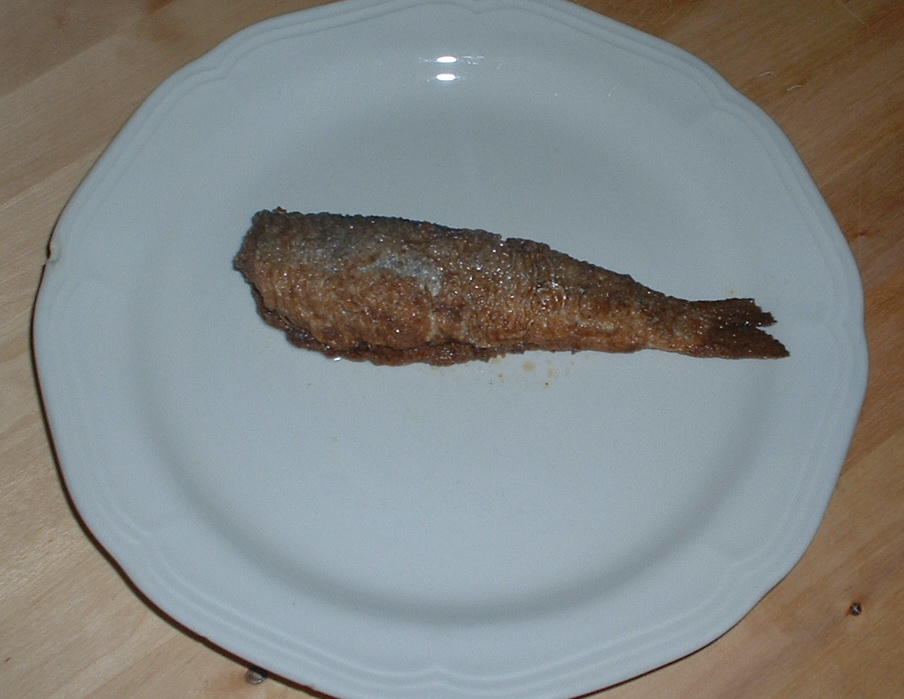
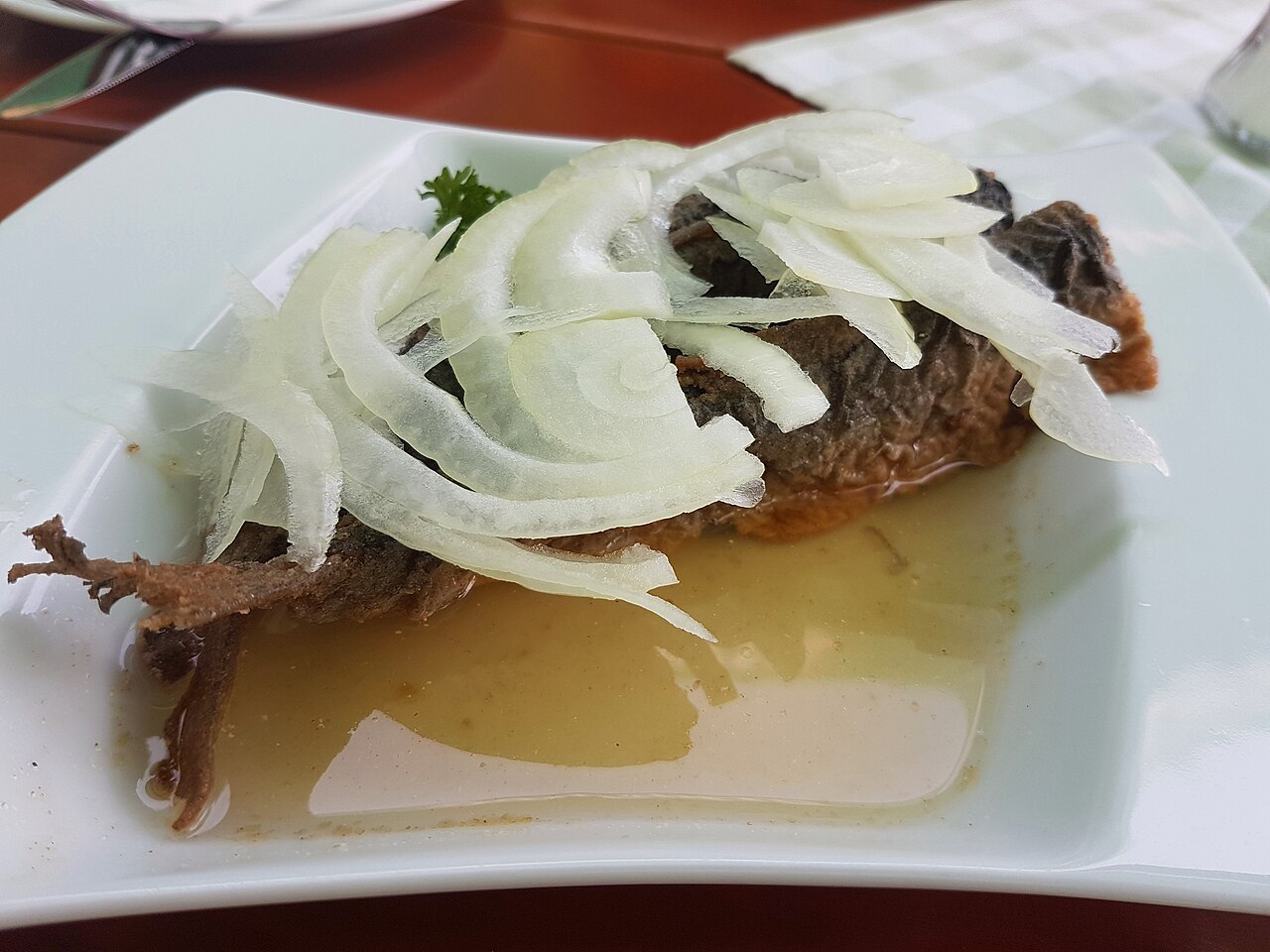
Traditional German marinated fried herring, served cold.

Zoe Hill · CC BY-SA 2.0
Brathering (German: [ˈbʁaːtˌheːʁɪŋ]; English: "fried herring") is a traditional German dish made from fried herring that has been marinated. It is common in northern Germany and the northern Netherlands, often eaten for lunch or as a snack from fast food stands and take-out restaurants.
To prepare it, fresh green herring (with heads and guts removed) is either breaded or dusted with flour, then fried. After frying, it is pickled in a marinade of white vinegar, briefly boiled water, onions, salt, and spices such as pepper, bay leaves, mustard seeds, and a little sugar. The thin bones of the fresh herring partly dissolve in the marinade, making them easy to eat. When refrigerated, the fried herring can keep for up to two weeks. Brathering is also sold commercially in cans.
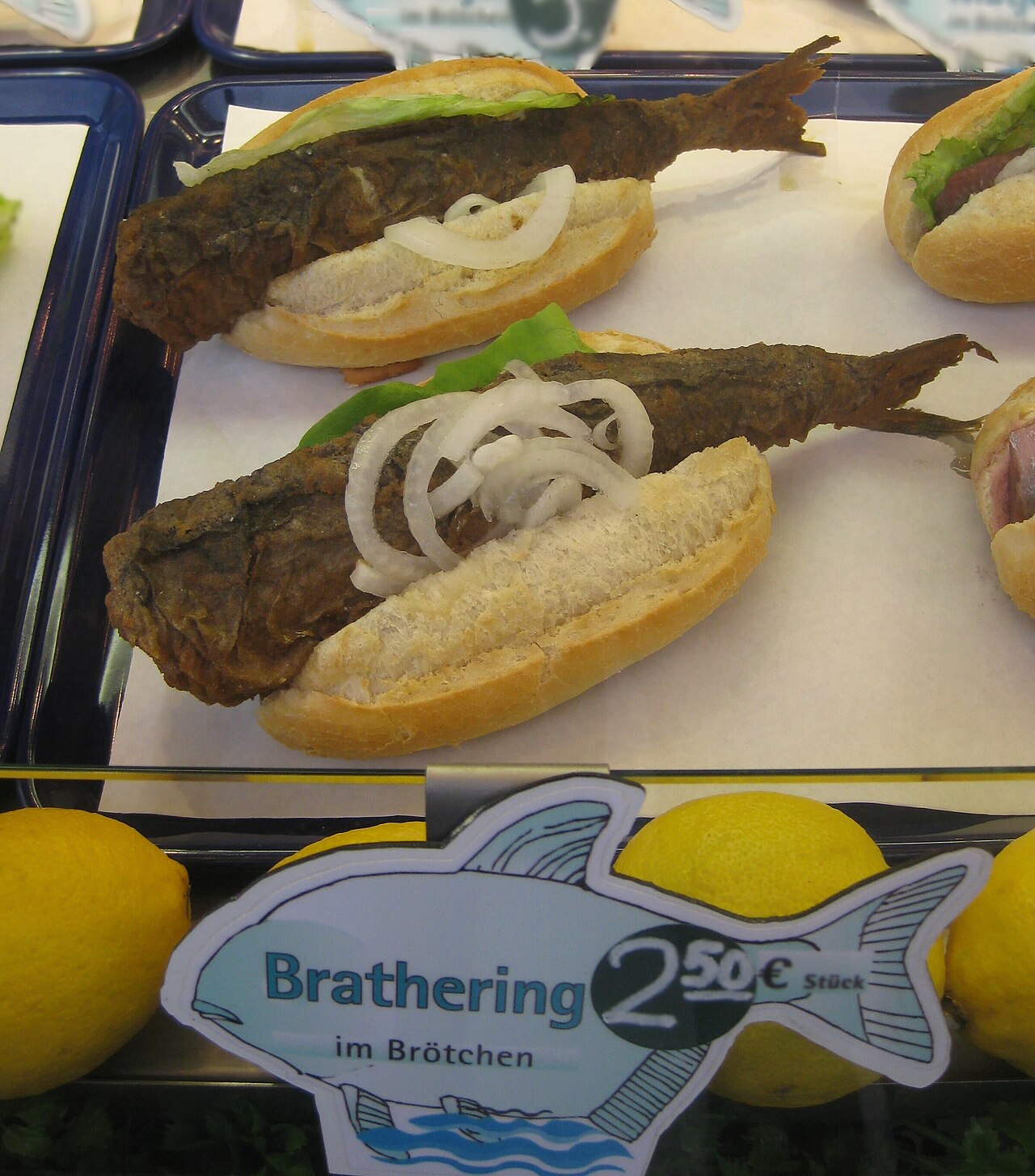
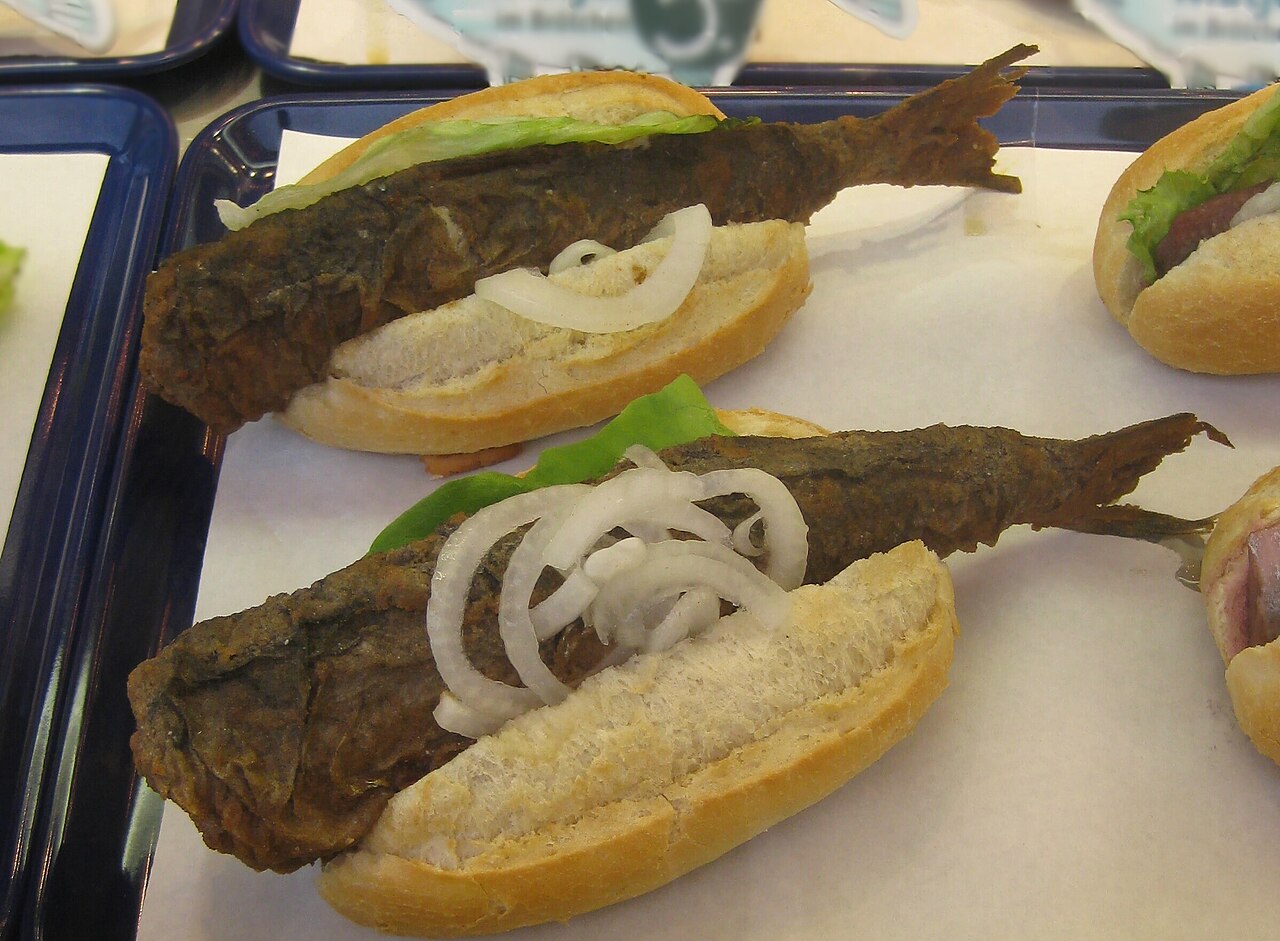
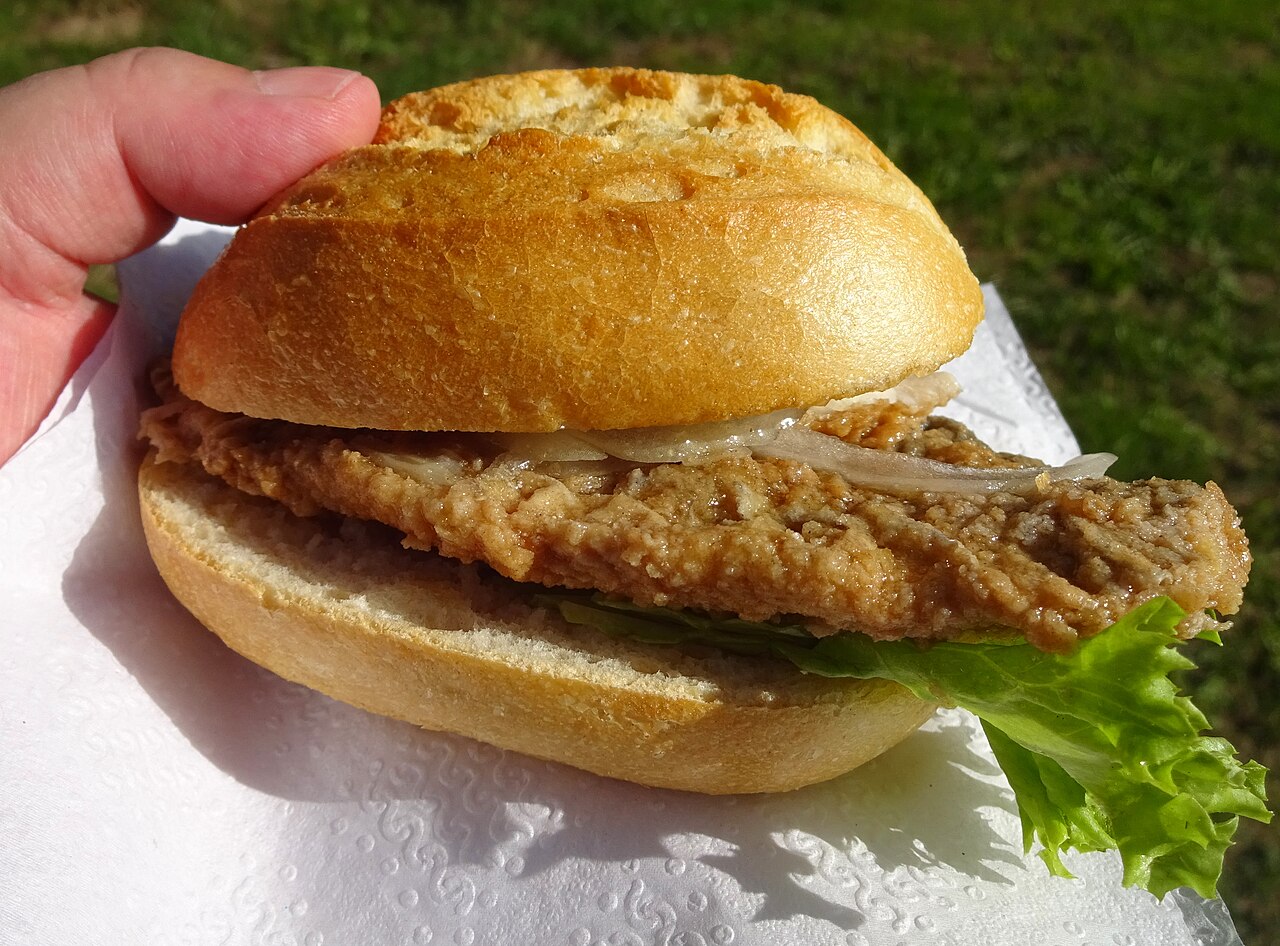
It is served cold, once the marinade has fully permeated the fish, and is typically accompanied by warm fried potatoes (Bratkartoffeln) or cold potato salad (Kartoffelsalat). It may also appear in fish sandwiches (Fischbrötchen).
Martin Luther is said to have counted Brathering with cooked green peas and mustard among his favorite dishes.
- type
- dish
- cuisine
- German and northern Dutch
- main_ingredient
- green herring
- preparation
- breaded or floured, fried, then pickled in vinegar marinade
- serving_temperature
- cold
- common_accompaniments
- warm fried potatoes or cold potato salad
Lore & Background
Brathering is prepared by removing the heads and guts of fresh green herring, then either breading or turning them in flour before frying. The fried fish is pickled in a marinade of white vinegar, briefly boiled water, onion, salt, spices such as pepper, bay leaves, and mustard seeds, and a little sugar. The thin bones partially dissolve in the marinade, making them easy to eat. If refrigerated, the dish can be preserved for up to two weeks, and it is also available as a commercial product in cans.
Reader's Guide
Brathering holds significance as a traditional dish in northern Germany and the northern Netherlands, reflecting regional culinary practices of preserving fish through pickling. Its preparation method—frying then marinating—creates a distinctive flavor and texture, and the partial dissolution of bones makes it accessible to eat. The dish is versatile, served cold with warm fried potatoes or cold potato salad, and sometimes as part of fish sandwiches. Its mention by Martin Luther as a favorite dish with cooked green peas and mustard highlights its historical cultural resonance. Brathering remains a common offering at fast food stands and take-out restaurants, as well as a preserved commercial product, demonstrating its enduring place in everyday cuisine.
Did You Know?
- Martin Luther stated that Brathering served with cooked green peas and mustard was one of his favorite dishes.
- The thin bones of the green herring are partially dissolved in the marinade, so they hardly interfere with eating.
- If refrigerated, fried herring may be preserved for up to two weeks.
- Brathering is also available as a commercial product in cans.
Regional Identity & Everyday Presence
Brathering occupies a humble yet deeply rooted place in the culinary landscape of northern Germany and the northern reaches of the Netherlands. Far from being a gourmet curiosity, this dish of marinated fried herring is a staple of everyday eating, commonly encountered as a midday meal or a quick snack. It thrives in the unpretentious settings of fast food stands and take-out restaurants, where workers and locals grab a plate without ceremony. The very name—translating simply to "fried herring" in English—reflects its straightforward, no-frills character. In German it carries the phonetic weight of [ˈbʁaːtˌheːʁɪŋ], a word that belongs as naturally to the coastal and riverine communities of the north as the herring itself does to their waters. It is a dish that asks nothing of its diner except an appetite, and in that simplicity it has secured a permanent seat at the table of northern European food culture.
From Pan to Pickle: The Making of Brathering
The preparation of Brathering follows a deceptively simple sequence that transforms a raw fish into a tangy, shelf-stable delicacy. The process begins with green herring—meaning fresh, unsmoked fish—whose heads and internal organs are removed. The fillets are then either coated in breadcrumbs or dusted lightly with plain flour before being fried until crisp. The true alchemy, however, happens after the frying: the golden pieces are submerged in a marinade composed of white vinegar, briefly boiled water, sliced onion, salt, a blend of spices including pepper, bay leaves, and mustard seeds, and just a touch of sugar. This acidic bath does more than impart flavor; it gradually softens the thin bones of the green herring until they barely register on the tongue. The result is a dish that can be refrigerated and enjoyed for up to two weeks, and it is even produced commercially in canned form for those who prefer convenience over the kitchen.
The Plate: Serving & Accompaniments
Brathering is a dish that demands to be eaten cold, its flavors fully developed after soaking in the vinegar marinade. The traditional presentation pairs the chilled, tangy herring with one of two potato preparations: warm, pan-fried potatoes known as Bratkartoffeln, or a crisp, cold potato salad called Kartoffelsalat. The contrast between the cold, sharp fish and the warm, starchy potatoes creates a balance of temperature and texture that has made this combination a reliable lunchtime pairing across northern Germany and the Netherlands. Beyond the classic plate, Brathering also finds its way into the bread—tucked into a fish sandwich, or Fischbrötchen, where the marinated herring shares space with soft white bread. This versatility, from a full plated meal to a handheld snack, underscores the dish's role as a flexible, everyday food rather than a special-occasion affair.
A Dish with Historical Pedigree
Few street-food staples can claim the endorsement of a figure as towering as Martin Luther, yet Brathering does. The reformer reportedly counted a plate of Brathering served alongside cooked green peas and a generous helping of mustard among his personal favorite meals—a detail that lends the humble fried herring an almost canonical status in German culinary memory. Centuries later, the dish has continued to earn its place in the written record, appearing in specialized references such as Eloi Rylan Koios's 2011 catalog of raw fish dishes and seafood, as well as in the OECD's 2009 Multilingual Dictionary of Fish and Fish Products, which dedicates a page to the term. The fact that Brathering is now manufactured and sold in cans speaks to its enduring popularity beyond the kitchen, while its continued presence at fast food stands and take-out counters confirms that it remains, five centuries after Luther's time, a working dish of the everyday.
Gallery

Frequently Asked Questions
What is Brathering?
Brathering is a classic northern German and northern Dutch dish made from herring that has been fried and then steeped in a tangy vinegar marinade. It is typically eaten cold as a quick lunch or casual snack.
How is Brathering actually made?
Fresh green herring, with the head and guts already removed, is dusted with flour or coated in breading and then deep-fried. After frying, the fish is pickled in a marinade of white vinegar, briefly boiled water, sliced onions, salt, and spices like pepper, bay leaves, mustard seeds, and a touch of sugar.
Where is Brathering from and where can you find it?
The dish is rooted in the coastal food culture of northern Germany and the northern Netherlands, regions where herring has long been a dietary staple. You will most often encounter it at fast-food stands, fish shops, and take-out restaurants in those areas.
What do you typically eat Brathering alongside?
Warm fried potatoes or a cold potato salad are the classic accompaniments. Because the herring itself is always served cold, the warm potato side provides a popular textural and temperature contrast.
How is Brathering different from other herring preparations?
Unlike raw or lightly cured herring dishes, Brathering is fully cooked through frying before being pickled, which gives the flesh a firmer, crisper bite. The combination of a fried exterior and the sharp vinegar marinade distinguishes it from simpler marinated or smoked herring varieties.
More in German cuisine 1-24
Spotted an error? Know more?
This is a living reference — every entry is fact-audited, and reader corrections feed straight into our audit queue. Suggest an edit · See this site's audit record