Aachener Printen
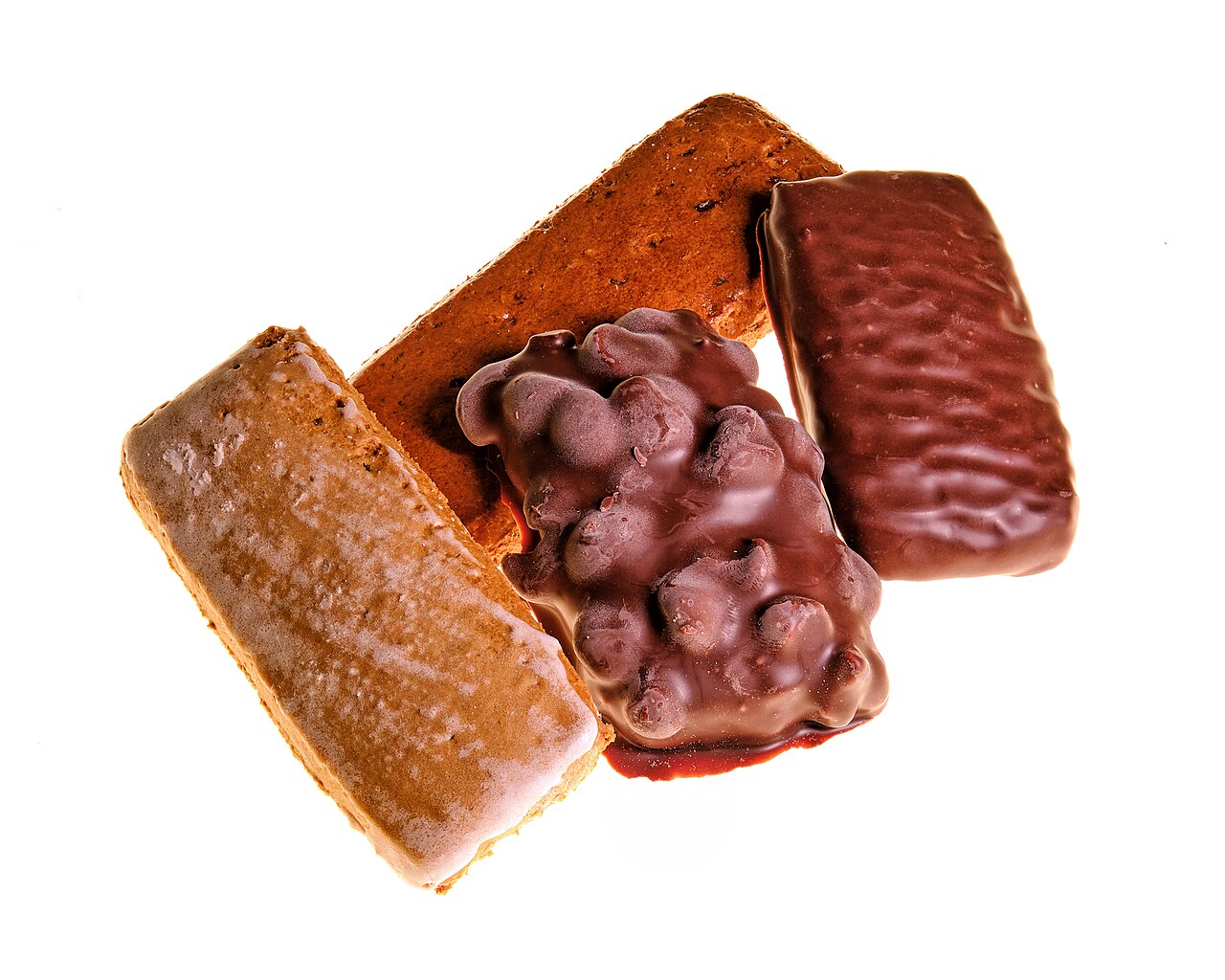
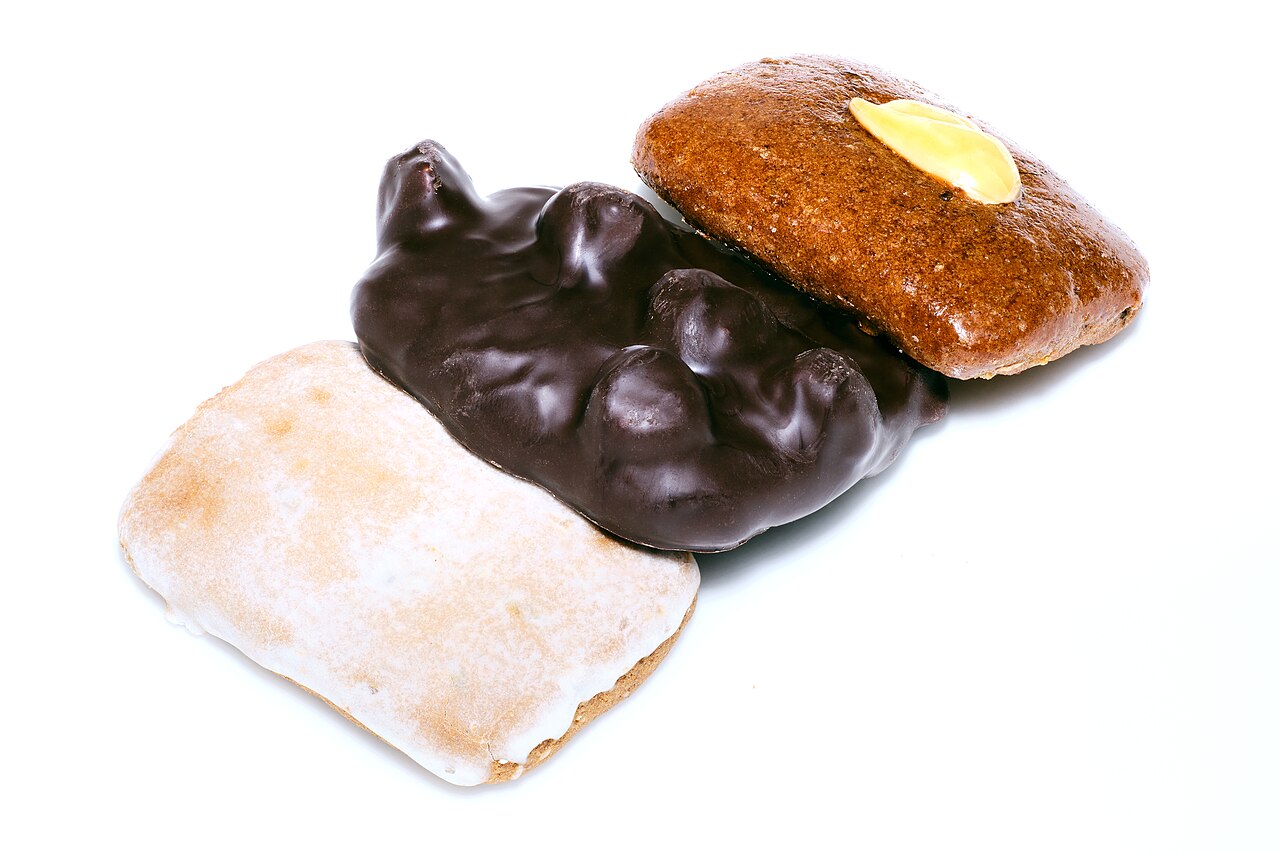
A spiced gingerbread from Aachen, sweetened with beet syrup since 1806.

SKopp · CC BY-SA 3.0
Aachener Printen are a type of Lebkuchen originating from Aachen, Germany, similar to gingerbread. Originally sweetened with honey, they are now generally sweetened with syrup made from sugar beets, a change driven by Napoleon's 1806 trade blockade. The term is a protected geographical indication, meaning all manufacturers must be located in or near Aachen.
- first recorded
- 16th century (around 1530)
Lore & Background
Aachener Printen were at least partially created due to the numerous pilgrims visiting Aachen Cathedral. They may have been inspired by Couque de Dinant, a pastry from Dinant baked in figurative forms. The earliest documented mention of 'Printen' in Aachen dates to around 1530, though the connection to immigrant blacksmiths is speculative.
The Aachener Printen became what they are now in 1806, when Napoleon blocked British trade routes, cutting off Aachen's supply of cane sugar and honey. Bakers replaced these sweeteners with sugar and syrup from local beets. The technique of rolling out dough over raised molds predates the 19th century and is not attributed to Henry Lambertz, whose company was founded in 1688. The robust cookies could be efficiently produced in large quantities and were ideal as travel provisions, spreading their reputation far beyond Aachen.
Around 1820, some Aachen bakers succeeded in creating a stable pastry with a bittersweet fine taste, completely foregoing fats such as butter or nut and almond flour. The addition of various cake spices led to the first Kräuterprinte. The name 'Aachener Printe' became established to differentiate this new creation from other Lebkuchen. Through the use of beet syrup, the dough became coarser and tougher, leading initially to only hard Printen, which were well suited for shipping and mass production.
Reader's Guide
Aachener Printen hold significance as a regional specialty that adapted to historical trade disruptions, transforming a crisis into a defining characteristic. The shift from honey to beet syrup, necessitated by Napoleon's embargo, created a unique bittersweet flavor and a tougher dough that enabled mass production and long-distance shipping. This allowed the pastry to gain fame far beyond Aachen, leading to its certification as a protected geographical indication by the EU. The Printen's development over the 19th century—from hard, spiced Kräuterprinten to sugar-glazed Prinzessprinten and chocolate-coated Schokoladenprinten—reflects both technological advances (steam engines, chocolate processing) and changing tastes. The Lambertz-Gruppe, founded in 1688, remains the oldest and largest manufacturer. Today, Printen are used not only as a confection but also in savory dishes like Rhenish Sauerbraten, and as flavorings in ice cream, tea, liqueur, and even tobacco. The attachment of Aachen's people to their Printen is evident in clubs, events, and awards named after the pastry, such as the carnival society 'Oecher Prente' and the 'Aachener Prenteschang' arts prize.
Did You Know?
- Aachener Printen were originally sweetened with honey, but Napoleon's 1806 trade blockade forced bakers to switch to beet syrup.
- The name 'Aachener Printe' was established around 1820 to differentiate the new beet-syrup-sweetened pastry from other Lebkuchen.
- The Lambertz company, founded in 1688, is a major producer of Aachener Printen, but the claim that Henry Lambertz was appointed Purveyor to the Court for three royal houses around 1870 is not verifiable.
- Simple herb Printen have about 350 kcal per 100 g with only about 2 g of fat.
From Pilgrims to Napoleon: The Birth of a Pastry
Aachener Printen owe their very existence to a convergence of religious tourism and wartime necessity. For centuries, pilgrims flocked to Aachen Cathedral, and local bakers sought to create something they could carry on their journeys. The earliest precursors likely drew inspiration from the Couque de Dinant, a pastry from the nearby Belgian town of Dinant, often shaped into figurative forms or artistic braids. In the fifteenth century, immigrant blacksmiths brought the tradition of Gebildbrot to Aachen, and the city's bakers embraced it, pressing honey-sweetened dough into elaborately carved molds bearing images of saints and other figures. The pastry as we recognize it today, however, was born out of crisis. In 1806, Napoleon's blockade of British trade routes severed Aachen's supply of cane sugar and honey. Forced to improvise, bakers turned to locally grown sugar beets for their sweetener. A baker named Henry Lambertz then devised the technique of rolling dough over raised molds, producing a sturdier cookie perfectly suited to mass production and long travel. This wartime substitution became permanent, defining the flavor profile that still characterizes the pastry.
From Hard Biscuit to Three Distinct Families
Around 1820, Aachen's bakers achieved a breakthrough: they formulated a stable, fat-free pastry with a distinctive bittersweet depth, enriched with a blend of cake spices. This innovation gave birth to the Kräuterprinte, and because two distinct gingerbread traditions now coexisted in the city, the name Aachener Printe was coined to set the new creation apart from other regional Lebkuchen. The beet-syrup dough proved coarse and resistant to spreading, which meant only hard varieties could be produced initially. That very rigidity, however, proved commercially transformative. Flat, slender slices could be shaped on trays for factory-scale output and shipped without breaking, opening entirely new markets and effectively ending the era of hand-molded figurative Printen. As sugar prices fell from the 1830s onward, bakers experimented further. A simple sugar glaze gave rise to the Prinzessprinten. In the 1850s, rock candy crumbs loosened the dough's texture, and by the 1860s, Henry Lambertz mastered coating the cookies in liquid chocolate. Reintroducing a higher proportion of honey eventually yielded the softer Weichprinten. By mid-century, three core families—Kräuter, Prinzess, and Schokoladen—stood ready, each available in hard or soft form, and steam-powered factories made large-scale production a reality.
Royal Patrons and a Growing Guild of Bakers
The Lambertz name became inseparable from Aachener Printen. The Lambertz-Gruppe, established in 1688, remains the city's oldest and largest producer, and its confectioner Henry Lambertz earned the prestigious appointment as Purveyor to the Court for the Belgian, Dutch, and Prussian royal houses around 1870—a testament to the pastry's prestige across national borders. Yet Lambertz was far from alone. A constellation of other Aachen firms joined the trade over the decades: the Printen and Honey Cake Factory van Rey (1833), the bakery Nobis Printen (1858), the confectionery Leo van den Daele (1890), and the bakeries Drouven (1896) and Klein (1912). Each company expanded its range to include Aachen Printen, though their offerings differed only in subtle variations of spice and ingredient blends. The product line continued to grow well into the twentieth century. In the 1950s, new variants such as Schokoladen-Saftprinten, Nuss-Schokoladenprinten, and Nuss-Saftprinten joined the existing catalog, broadening the palette of flavors and textures available to consumers while preserving the fundamental identity of the Aachen tradition.
A Secret Blend Under EU Protection
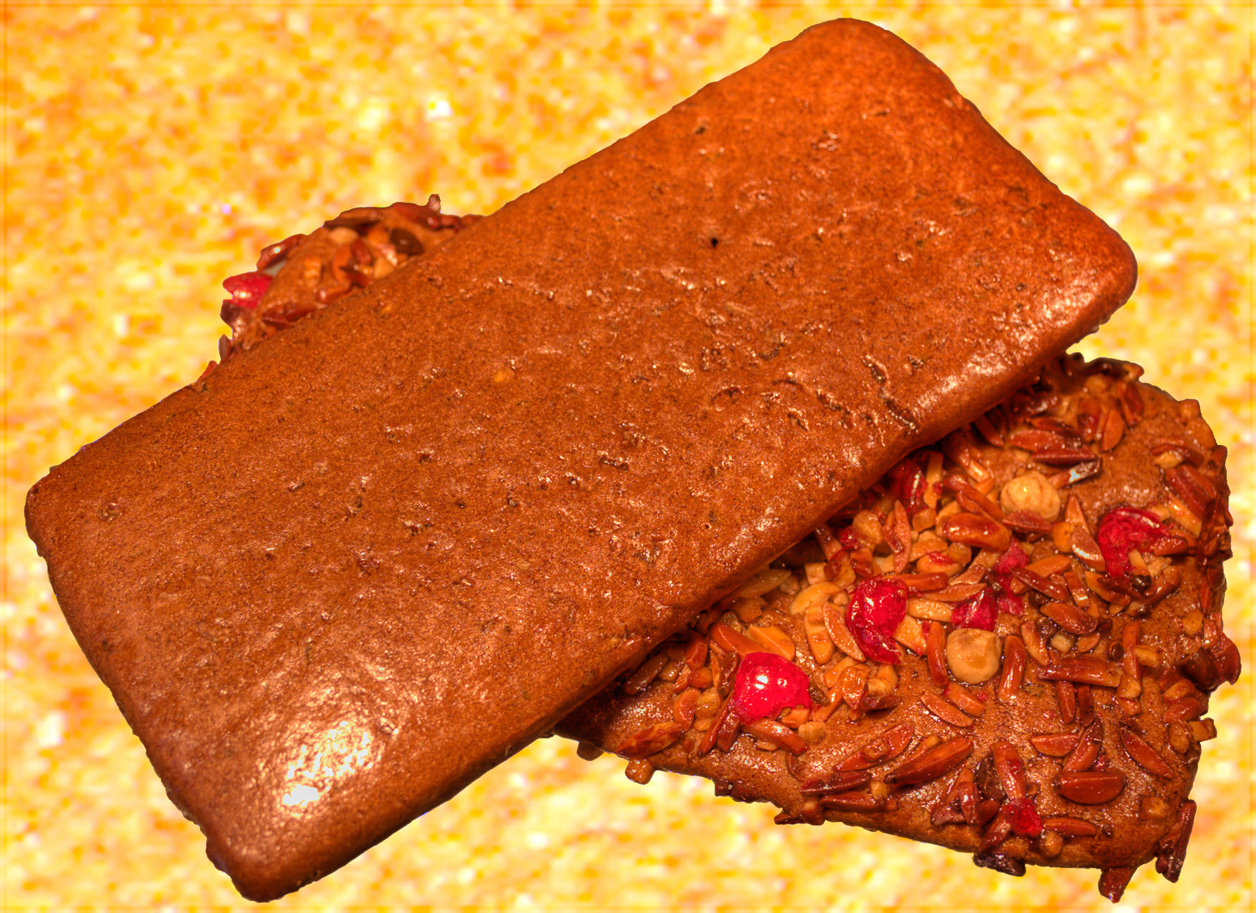
What sets Aachener Printen apart from ordinary gingerbread is a combination of rigorous regional law and closely guarded recipes. The EU has granted the name a protected geographical indication, meaning every manufacturer must operate in or near Aachen, and no producer outside that radius may legally use the name. This certification has cemented the pastry's undisputed status well beyond the city's borders. The dough itself is built on a simple foundation of flour, water, and sweeteners—brown sugar, rock candy crumbs, beet syrup, and honey—leavened with potash (originally hartshorn) and notably free of any fats such as butter or nut flour. The spice blend, which typically includes cinnamon, anise, cloves, cardamom, coriander seeds, allspice, candied orange and lemon peel, and ginger, is the closely held secret of each individual bakery. Toppings range from a plain sugar glaze to liquid chocolate and marzipan, and some varieties incorporate almonds. The result is a pastry whose identity is as much about legal protection and regional pride as it is about flavor.
Gallery

Frequently Asked Questions
Who is Aachener Printen?
Aachener Printen is a spiced gingerbread cookie that hails from the city of Aachen in western Germany. It sits in the same family as Lebkuchen and has been a beloved regional treat since at least the 1530s.
What special traits or 'powers' does Aachener Printen possess?
Its signature flavor comes from a warm spice blend paired with a sweetener made from sugar-beet syrup rather than the honey used in older gingerbread recipes. That syrup-based sweetness traces back to Napoleon's 1806 trade blockade, which cut off traditional honey supplies and forced a permanent shift in the recipe.
How does Aachener Printen's story end?
Rather than fading into obscurity, Aachener Printen secured a protected geographical indication that locks its production to bakers working in or around Aachen. This legal shield ensures the recipe and its regional identity remain intact for future generations of fans.
Why is Aachener Printen important to the German cuisine canon?
It stands as one of the oldest documented gingerbread traditions in Germany, with written records dating to the early sixteenth century. Its protected status also makes it a prime example of how a single city can claim and preserve a culinary heritage through law.
What is the origin of Aachener Printen's signature sweetness?
The original recipe relied on honey as its sweetener, a practice common across medieval European confections. After Napoleon's continental blockade in 1806 disrupted honey trade, local bakers switched to sugar-beet syrup, and that substitution stuck as the standard to this day.
More in German cuisine 1-24
Spotted an error? Know more?
This is a living reference — every entry is fact-audited, and reader corrections feed straight into our audit queue. Suggest an edit · See this site's audit record